What is the Eaves Ceiling (Nokiten)? Introducing the Role of Eaves Ceilings and Examples of Actual Replacement Work!
Hello everyone! This is Kakeru Koumuten Co., Ltd.!

This time, I would like to introduce the eaves ceiling in detail!
Many of you may not have heard the term “eaves ceiling” before.
I will explain what part of the house the eaves ceiling refers to, as well as its maintenance methods and functions.
Please take a look!
What is the Eaves Ceiling?
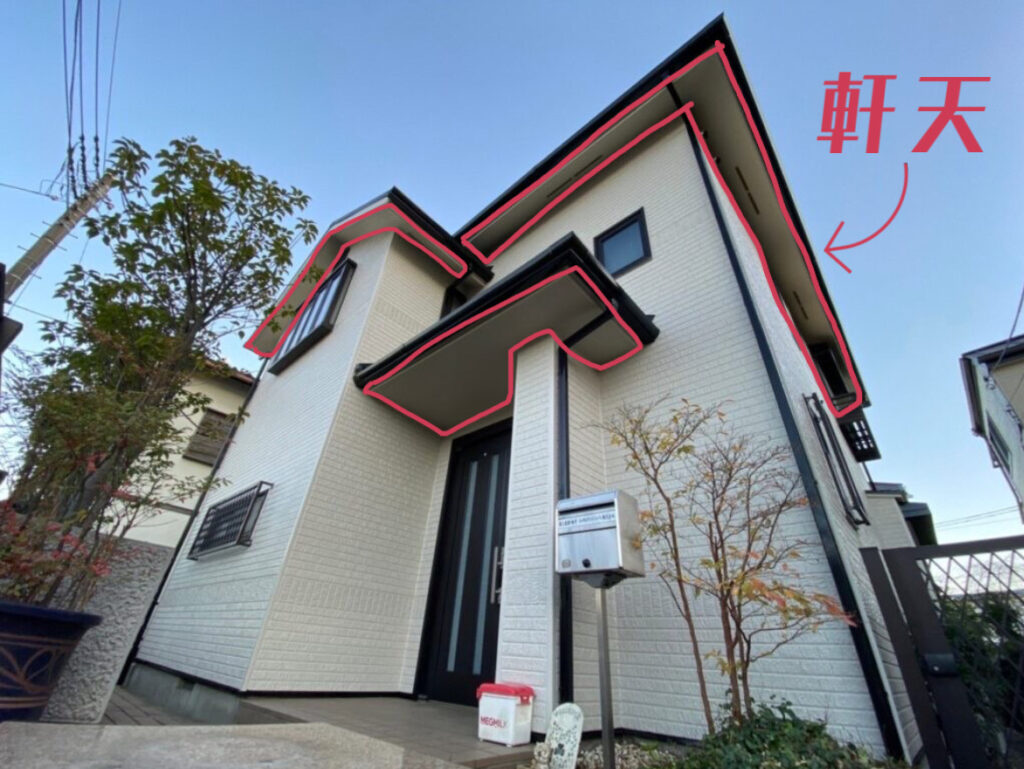
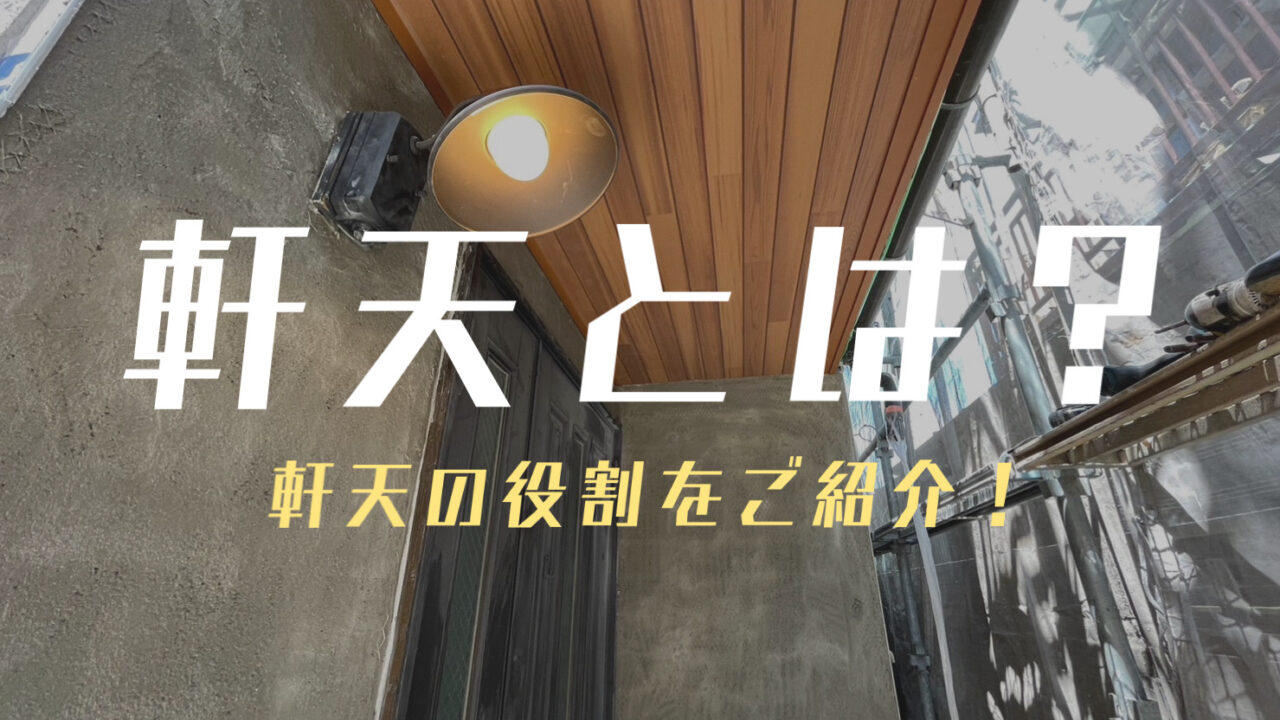
First of all, the eaves ceiling is the ceiling on the underside of the eaves! (It is also called the eaves underside)
The eaves refer to the edge of the roof that extends beyond the exterior wall.
There are two types of eaves ceilings: one is the method of attaching eaves ceiling boards, and the other is the eaves ceiling that is integrated with the exterior wall.
I will introduce each type.
Types of Eaves Ceilings
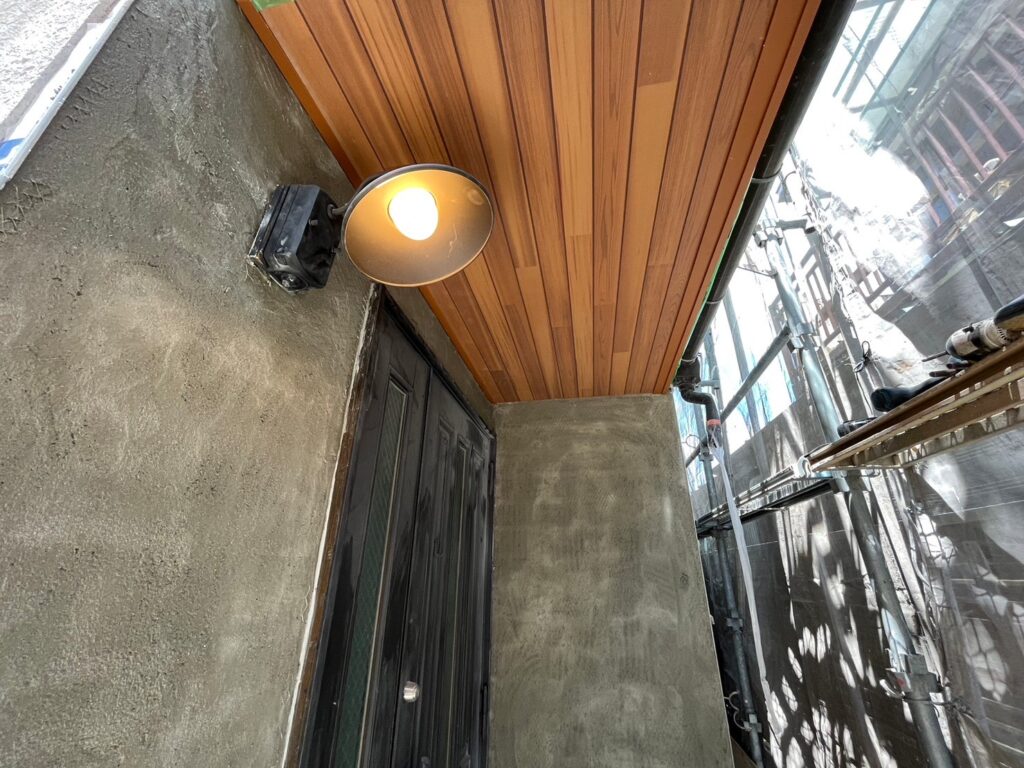
There are various materials for eaves ceilings, so let me introduce them!
Cost-effective Plywood
Plywood is easily available at home improvement stores, and its reasonable price makes it attractive due to its cost-effectiveness.
It is also common to cover plywood with a patterned sheet, which is referred to as “decorative plywood.”
Plywood is easy to work with and inexpensive, making it a good choice for those looking to keep costs down. However, its durability is weaker due to its low price, and recently, the use of calcium silicate boards, which I will introduce next, has been increasing.
Non-combustible Materials like Calcium Silicate Board
Calcium silicate board is a type of board made by mixing diatomaceous earth or silicate with water.
As I will explain later, the eaves ceiling plays a role in slowing the spread of flames in the event of a fire. Since it is a non-combustible material, it is an ideal construction material for eaves ceilings considering safety during a fire.
The history of calcium silicate boards mainly involves the use of asbestos, which is now prohibited by law for use in construction materials. You can rest assured that they are now free of asbestos.
If you are concerned that your home’s eaves ceiling may contain asbestos, I recommend having a professional take a look at it.
Metals Used for Covering
Galvalume sheets and aluminum spans may also be used for the eaves.
Being metal, they are lightweight and excellent in durability and fire resistance.
You might have concerns like, “I’m worried about rust because it’s metal,” but please rest assured that Galvalume sheets and aluminum spans are “rust-resistant metals”!
It is also common to use rust-resistant metals for exteriors.
Integrated Exterior Wall
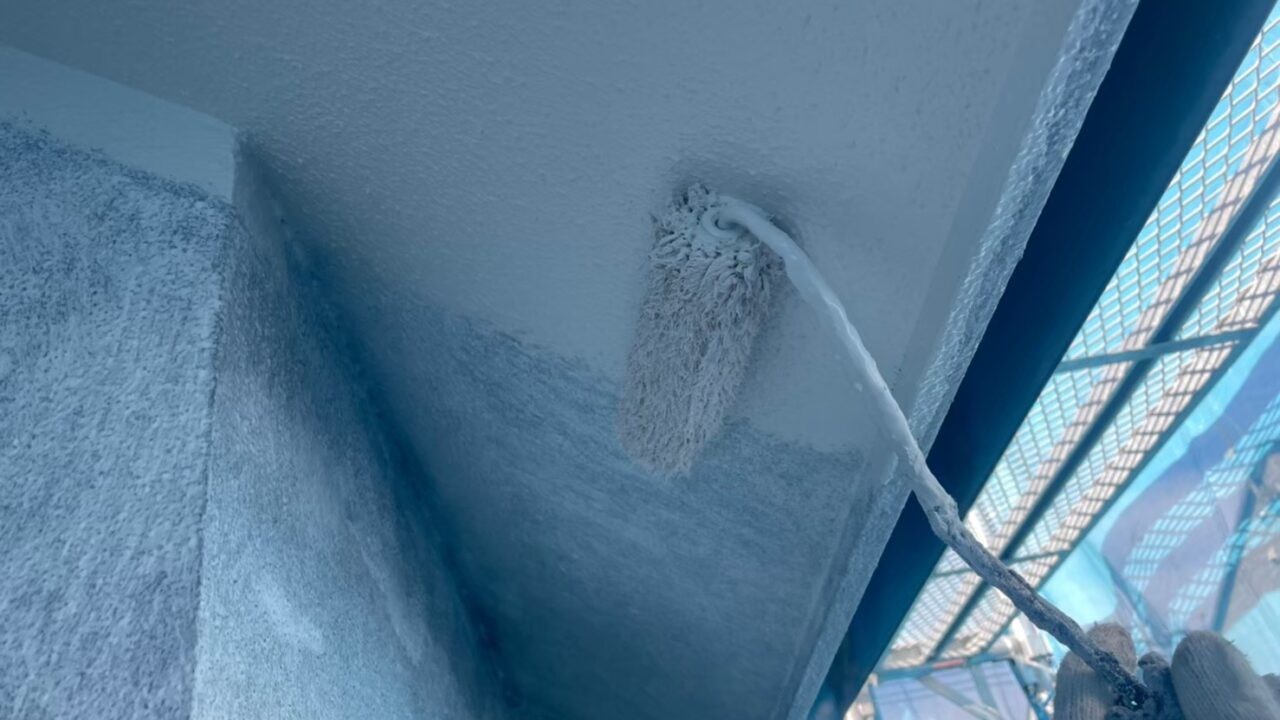
The integrated exterior wall method involves applying the exterior wall paint along with the eaves in homes with mortar exterior walls.
This method is commonly seen in buildings such as condominiums and apartments.
Role of Eaves
Protecting the Building from Rain
The eaves are designed to prevent direct rain and wind from hitting the exterior walls, which significantly slows down the deterioration speed of the exterior walls. They serve a role similar to that of an umbrella.
Additionally, they help prevent rainwater from entering through the junction between the roof and the exterior wall, protecting the building from rain. However, as deterioration progresses, gaps may begin to form between the exterior wall and the roof, allowing rain to seep in, so regular maintenance is necessary.
Preventing Fire Spread
Next, they play a role in preventing the spread of fire in case of a fire. Japanese homes are often densely packed, and when a fire occurs, it tends to spread rapidly. Since flames spread upward, it is crucial to prevent fire from spreading using the eaves.
The materials used for eaves are generally fire-resistant, but there are cases where fire resistance may not be effective.
・Deterioration causing the eaves to peel off
・Water leakage causing the eaves to decay and fall off
・The interior of the eaves being exposed
In such cases, rather than providing fire resistance, it may actually accelerate the spread of fire, so caution is necessary!
Aesthetic Appeal
Next is aesthetic appeal. The eaves are visible when looking up from below, making them more noticeable than one might think.
If there are no eaves, the rafters and sheathing become fully visible, which detracts from the appearance. Therefore, eaves are installed to enhance the exterior’s appearance.
Attic Ventilation
Next is attic ventilation. Have you ever seen eaves with many small holes (ventilation openings)?
The attic tends to accumulate moisture and condensation, so improving ventilation can help prevent this.
Additionally, it helps prevent the growth of mold, bacteria, and mites, making it essential to finish the eaves with good ventilation.
Symptoms of Eaves Deterioration
Stains on the Eaves
First, we have stains caused by deterioration. The cause of these stains is that the roof cannot repel rainwater completely, allowing it to reach the eaves. If you find stains on the eaves, it is likely that there is a leak. Additionally, the presence of stains indicates that moisture is likely accumulating inside, which may lead to other deterioration symptoms progressing within the building, so caution is necessary.
If the leak has progressed, you may need to replace the boards, so please contact us promptly if you discover any stains!
Peeling of the Eaves
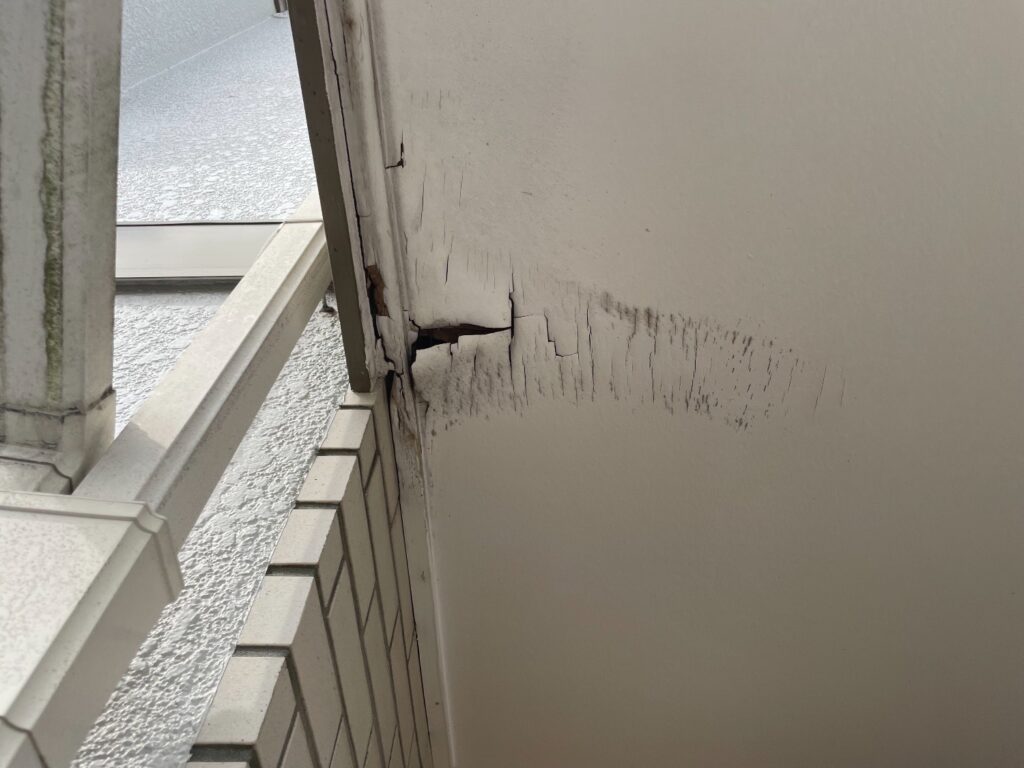
Next, we have the peeling of the eaves’ paint. If the paint on the eaves is peeling, it can absorb rainwater and cause corrosion, so we recommend repainting as soon as possible.
If corrosion occurs, there is a risk of termite infestation or boards falling off, so we would appreciate it if you could consult with us.
Growth of Mold and Moss
Next is the growth of mold and moss. Mold and moss thrive due to moisture caused by condensation or rainwater. Most of these issues are deterioration symptoms resulting from the decline of the waterproofing function of the paint film.
If left unattended, mold can invade the interior of the house, so let’s carry out maintenance at an early stage!
Case Studies of Eaves Replacement Work
1. Demolition of Existing Eaves
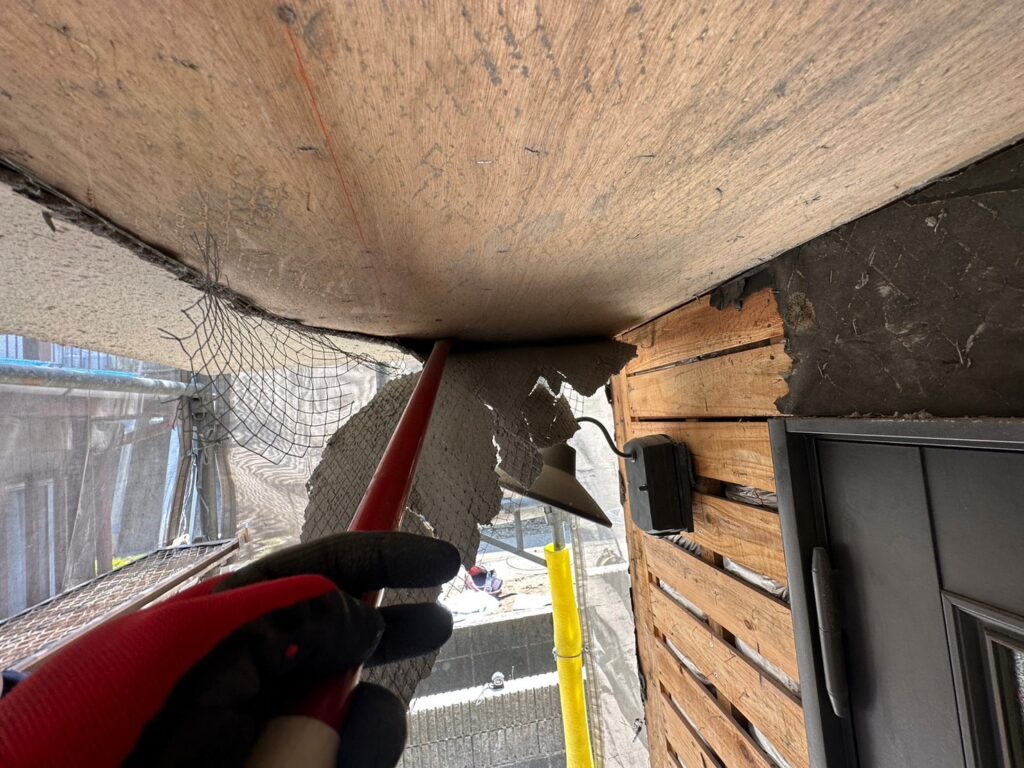

2. Cutting the Eaves to Size
3. Installing Fasteners
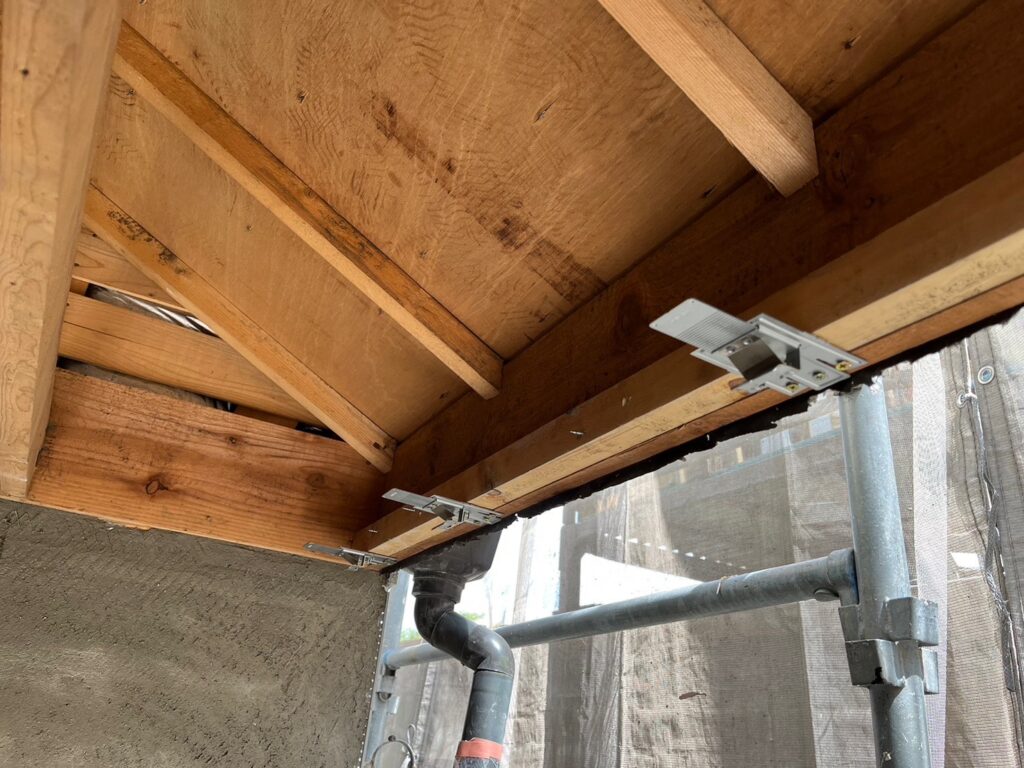
4. Installing New Eaves and Trim Materials
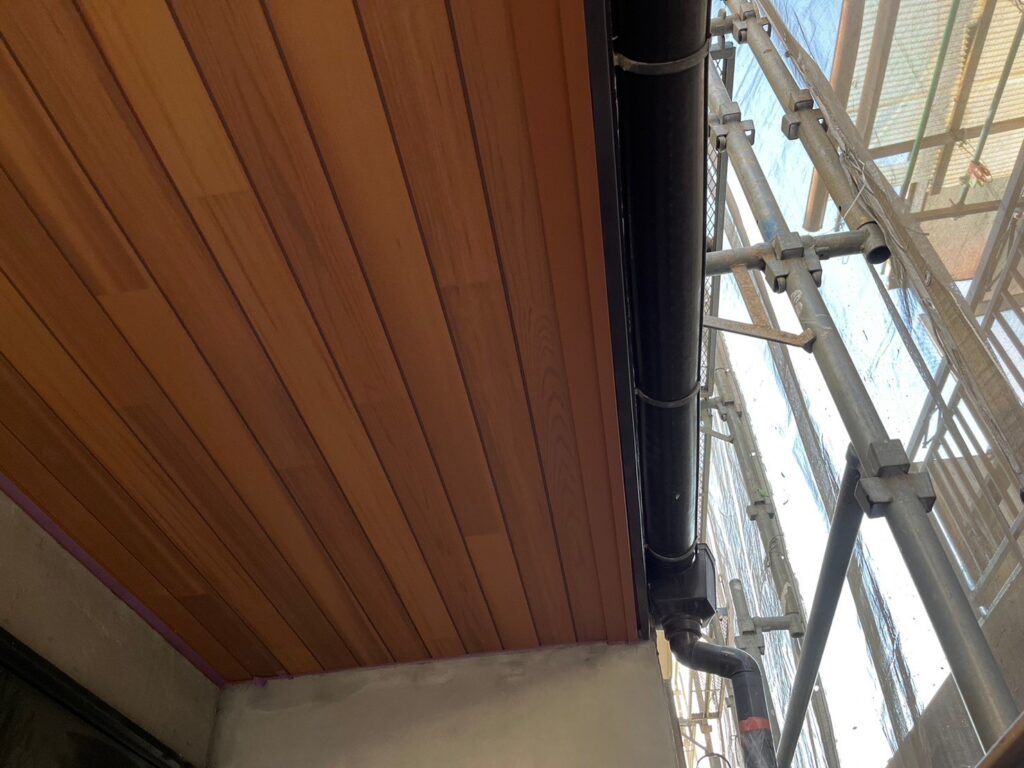
We install finishing materials to hide the metal parts on the eaves side.
The eaves material used this time is Kamishima Chemical Industry’s
Altezart Red Cedar Aging!
It has a wood grain pattern that creates a warm atmosphere and looks very cute (^^)!
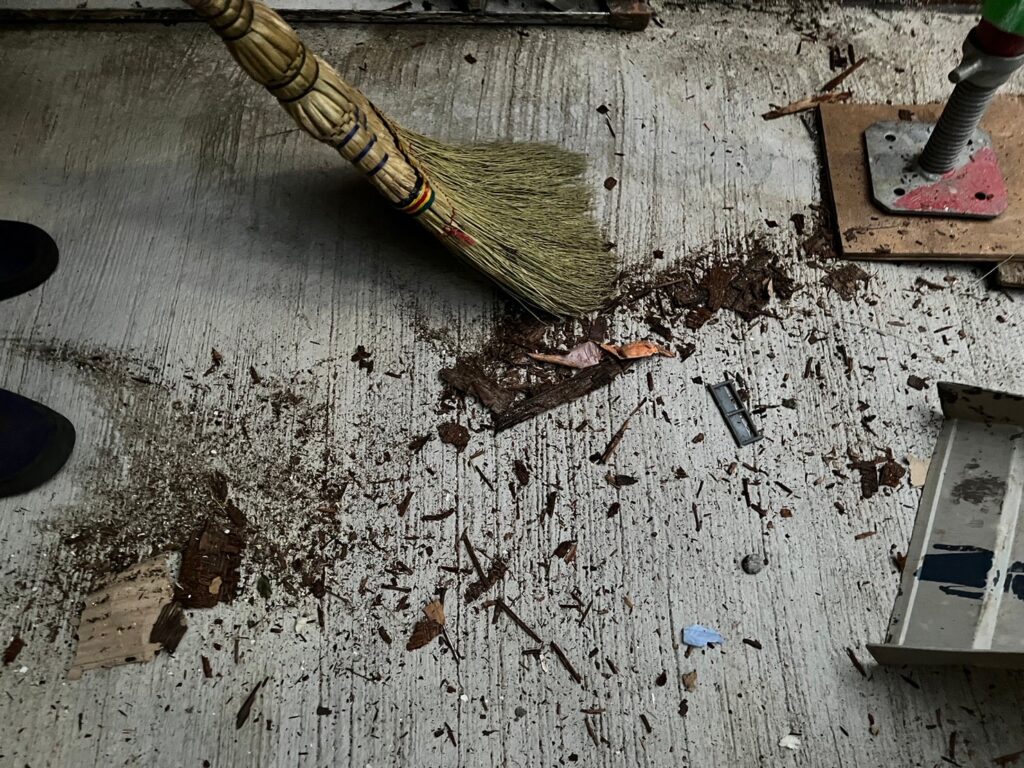
4. Cleaning
Summary
Have you gained a bit of understanding about eaves?
Estimates and inspections are, of course, free! If you have any concerns regarding roofs, rain gutters, exterior walls, or exterior work, please consult Kakeru Koumuten Co., Ltd.!
We carry out everything from temporary scaffolding work to roof construction and exterior painting entirely in-house. We are confident that our costs, quality, and efficiency in exterior work are unmatched compared to other companies!
We welcome competitive estimates as we are confident in our services!
You’ll be glad you chose us! We take every request seriously to ensure you feel this way.
We also have information on roofing costs and pricing plans for the roof overlay method, so please take a look if you’re interested!
We look forward to your inquiries. Thank you very much.
Helpful information about exterior renovations can be found here!
・Aoba-ku, Yokohama | We performed siding work and eaves replacement at the front entrance!
・Aoba-ku, Yokohama | Roof remodeling | We performed a roof overlay using Super Galtect!
・Aoba-ku, Yokohama | We performed a roof overlay using Urbanie – Super Galtect!
・Painting DIY Plan! A must-see for those who want to try DIY roof and exterior wall painting! We will only set up the scaffolding!
・What is the market price for roof remodeling? Types of construction and how to choose a contractor!
・Latest | Grants and subsidies available for remodeling, and reduction systems!
・How much does it cost for roof work? We introduce the cost market!
・What is the market price for rain gutter repair and cleaning? Tips on timing, fire insurance, and choosing a contractor!
・Renovation Store in Kanagawa Prefecture, Yokohama | What is Roof Overlay (Roof Cover Method)?
We welcome consultations via LINE as well◎

We are also updating our Instagram regularly◎Please follow us◎

contact Kakeru Koumuten Co., Ltd.
Kakeru Koumuten is a young company whose team is, on average, in their late twenties, but our skills are second to none.
Our greatest strength is that we handle scaffolding, roofing and painting entirely in-house. In an industry where these tasks are usually divided among contractors, our complete service simplifies project management and helps keep costs down. Above all, if a problem arises, we respond promptly.
We proudly describe ourselves as the youngest and most helpful renovation company in Kanagawa!