Air Conditioner Replacement Costs
Kakeru Koumuten
We handle not only single-family homes but also rental properties such as apartments and condominiums.
Feel free to consult us about any air conditioning issues like “not cooling or heating,” “strange noises or leaks,” “high electricity bills,” or “having used it for over 10 years.”
From ¥80,000
Approx. 2–3 Hours
Free of Charge
Air Conditioner Replacement Costs
This is a standard estimate for replacement construction, including the air conditioner unit (indoor and outdoor units), removal of the existing air conditioner, installation of the new air conditioner (standard construction), piping connection, evacuating the refrigerant piping, trial operation, and recycling disposal of the existing unit.
The cost may vary depending on the size of the room (number of tatami mats), the grade of the unit (energy-saving performance, automatic cleaning function, etc.), the length of the piping, the installation method of the outdoor unit, and the presence of a dedicated outlet.
Costs by Room Size
This is suitable for rooms around 6 tatami mats, such as children’s rooms, bedrooms, and studies. It can be used with a standard 100V outlet and is the most common size, making it easy to keep costs down.
Example Models
Daikin “E Series” / Mitsubishi Electric “Kirigamine GE Series”
This is suitable for Western-style rooms or dining rooms of 8 to 10 tatami mats. Like the 6-tatami mat model, it can be used with a 100V outlet and is chosen when more capacity is desired for the room size.
Example Models
Panasonic “Eolia F Series” / Hitachi “Shirokuma-kun AJ Series”
This is suitable for living rooms or LDKs of 12 to 14 tatami mats. Models typically use 200V, and a voltage switch for the dedicated outlet may be necessary. There are many products available with automatic cleaning and energy-saving features.
Example Models
Daikin “Urusara X” / Mitsubishi Electric “Kirigamine Z Series”
This is a large-capacity type suitable for spacious LDKs and rooms with high ceilings. It is dedicated to 200V, and since the outdoor unit will also be large, it is necessary to check the installation space. There will be a higher proportion of high-grade models.
Example Models
Panasonic “Eolia X Series” / Hitachi “Shirokuma-kun X Series”
* The cost is an estimate “per unit.” If multiple units are replaced at the same time, we will provide a quote based on the number of units.
* Standard installation assumes piping within 4m, the outdoor unit placed on the ground or balcony, and the ability to use existing piping holes and dedicated outlets.
* If a new dedicated circuit, voltage switch from 100V to 200V, or changes to outlet shape are necessary, additional electrical work costs will apply.
* Extensions of piping, wall or roof placement of the outdoor unit, two-tier placement, installation of decorative covers, and handling of concealed piping (if piping runs through the wall) will be quoted separately.
* Disposal of existing air conditioners incurs additional costs for recycling fees and collection and transportation fees.
* In the case of apartments, the installation location and construction hours for the outdoor unit may be specified by management regulations.
If you send us photos of your current air conditioner’s indoor unit, outdoor unit, and outlet, along with the room size and model number (listed on the side of the indoor unit), we may be able to provide an estimated quote.
Request a Quote from Photos or Plans
Air Conditioner Subsidies
Replacing air conditioners (room air conditioners) is not eligible for national housing energy-saving subsidies like water heaters or windows, but depending on your local municipality, there may be subsidy programs available for replacing energy-efficient appliances. Here are some representative programs as of 2026.
This program provides points (such as gift certificates) when installing energy-efficient air conditioners in homes in Tokyo. The following are the estimates for replacements.
- Under 2.4kW (for about 6 tatami mats): 9,000 yen
- 2.4 to 3.6kW (for about 8 to 12 tatami mats): 10,000 yen
- 3.6 kW and above (14-tatami rooms and larger): ¥23,000
- Replacing air conditioners used for 15 years or more increases the amount (up to 70,000 yen)
* This is for residents of Tokyo, and the condition is to purchase a new energy-efficient model from a registered retailer (applications are accepted until the end of March 2027 / details may change).
In Kanagawa Prefecture, there may be subsidies for replacing energy-efficient appliances depending on the municipality (for example, Minamiashigara City offers up to 10,000 yen per air conditioner). The implementation status and amounts in areas such as Yokohama City and Kawasaki City vary by fiscal year. There may also be grants available for heatstroke measures targeting elderly households.
※Subsidies and grants may vary based on the fiscal year, budget, your residential area, and eligible products, and they may end even within the application period once the budget is reached.
※There are systems that require purchases from specific retailers. We will provide information on eligibility and application methods as much as possible during the on-site survey and estimate.
Replacement Projects
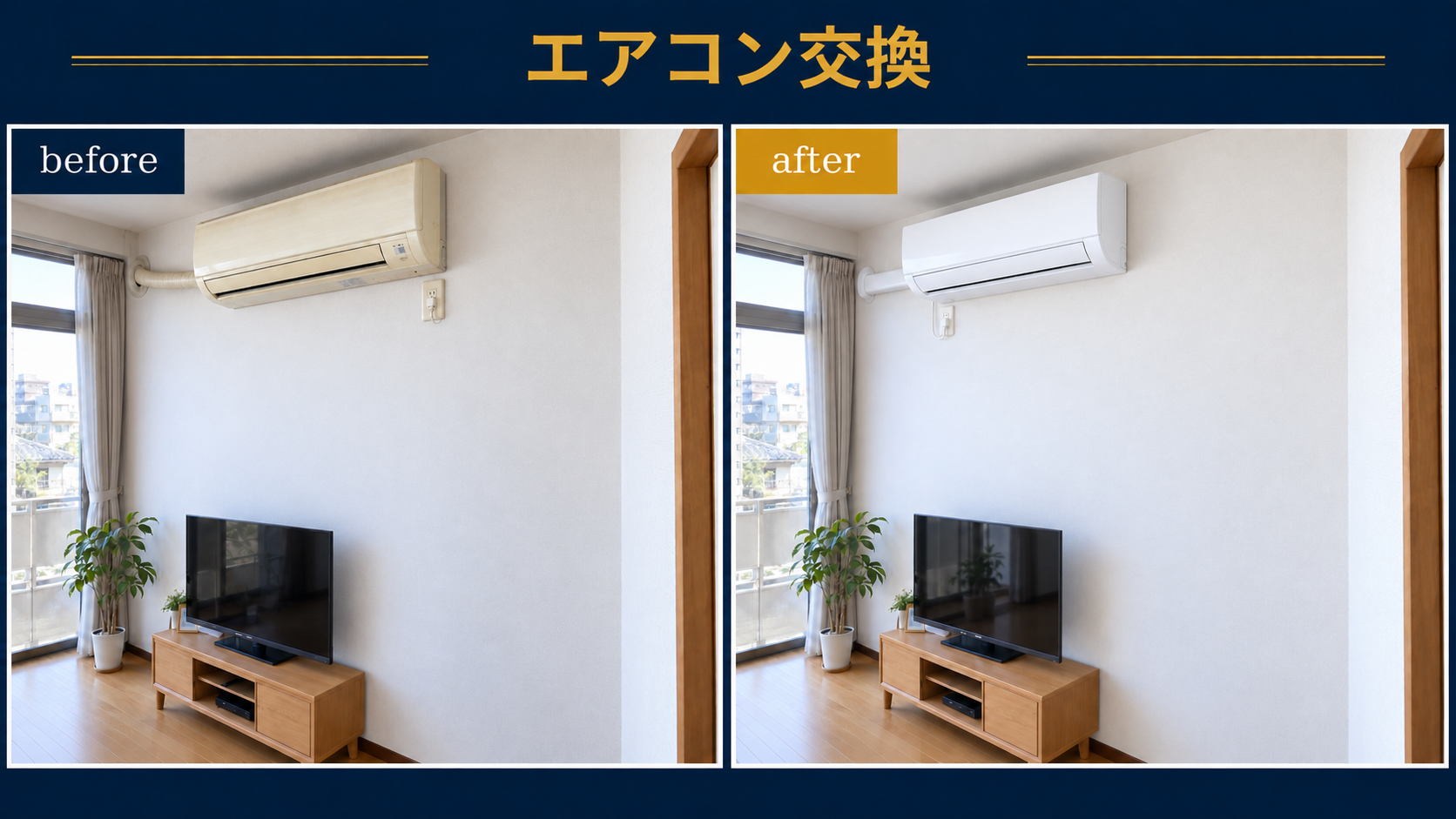
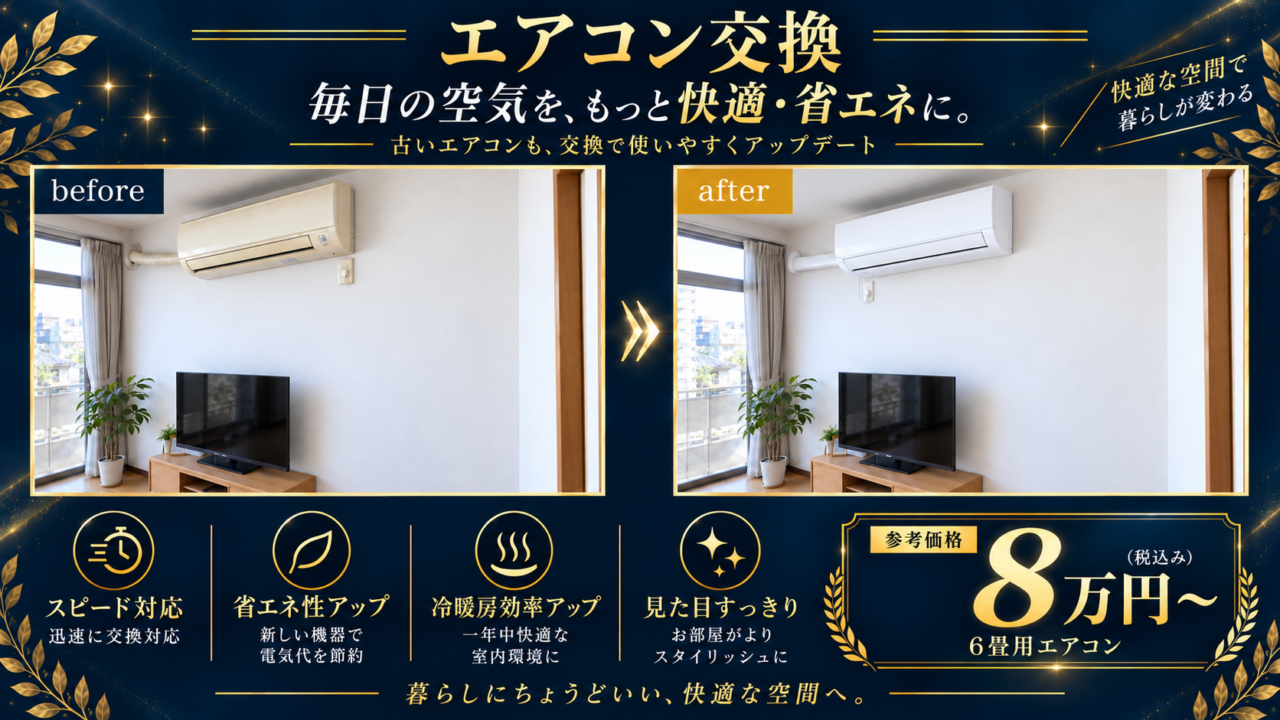
We replaced the living room air conditioner that had been in use for over 15 years and was showing signs of yellowing and poor cooling. We utilized the existing piping holes and dedicated outlet, replacing the piping with new ones. The room’s impression brightened, and both the heating/cooling efficiency and electricity costs improved.
When to Replace Your Air Conditioner
The timing for replacing an air conditioner depends on usage frequency and maintenance conditions, but a general guideline is around 10 to 15 years.
Manufacturers typically keep parts for about 10 years after production ends, so after 10 years, it may be difficult to obtain repair parts, making repairs impossible. Additionally, models over 10 years old often consume more power compared to newer models, and replacing them can lead to reduced electricity costs.
If you notice any of the following symptoms, please consider repair or replacement.
- It doesn’t cool or heat even when set to the desired temperature; the efficiency has weakened.
- Water is dripping from the indoor unit, and there are sounds of dripping.
- There are unusual noises like rattling or squeaking during operation.
- There is a musty or sour smell (indicating internal dirt that cannot be removed).
- The power won’t turn on, it stops unexpectedly, or the remote control is unresponsive.
- Electricity costs have clearly increased compared to before.
Some symptoms can be improved with simple maintenance, such as cleaning the filter, replacing remote control batteries, or clearing clogged drain hoses. If the air conditioner is relatively new, repairs may be more cost-effective, and we will provide suggestions during the on-site survey.
If issues arise shortly after installation, you may be eligible for manufacturer or contractor warranties. Before requesting paid repairs or replacements, we recommend checking the warranty and consulting the contractor or manufacturer who installed it.
If you leave water leakage from the indoor unit unattended, it can lead to stains and mold on wallpaper and flooring, as well as leaks to the lower floors. If you notice any abnormalities, please consider inspection or replacement as soon as possible.
Need a Replacement Quote?
If you send us a photo and model number, we may be able to provide an estimated quote.
How to Choose an Air Conditioner
When selecting an air conditioner, it is most important to choose one with the appropriate capacity (kW, compatible tatami mats) for the size of your room. If the capacity is insufficient, it will run continuously, increasing electricity costs and shortening its lifespan. The required capacity also varies depending on whether the building is wooden or reinforced concrete, as well as sunlight exposure and the presence of atriums. If you are unsure, we can provide suggestions through an on-site survey.
Recently, many products come equipped with features that enhance comfort and reduce maintenance efforts, such as:
- “Automatic cleaning function” that cleans the filter automatically
- “Internal clean function” that dries and disinfects the interior after operation to prevent mold
- “Sensor function” that detects human position and sunlight to adjust airflow direction and volume
- “Wi-Fi and smartphone connectivity” that allows operation from your smartphone while you are out
- High energy-saving performance that reduces electricity costs (energy-saving standard achievement rate, APF)
- Models with “cold climate specifications” and humidifying functions for those prioritizing heating
Before Replacing Your Air Conditioner
An air conditioner requires a dedicated circuit outlet. For models suitable for 14 tatami mats or more, 200V models are common. If you currently only have a 100V outlet, you will need to switch the voltage at the distribution board and replace the outlet. If there is no dedicated circuit, wiring work from the distribution board will be necessary.
Existing piping is often unusable due to deterioration or differences in refrigerant types, so it is generally replaced with new piping. If the piping is concealed within the wall, the compatible models are limited. The outdoor unit must be installed in a location that allows for good airflow and easy inspection and repair.
The new indoor unit may be larger than the existing one, and if there is not enough space between the unit and the ceiling or walls, installation may not be possible. Additionally, after removal, there may be sun-faded areas or dirt exposed on the wallpaper. If you plan to replace the wallpaper at the same time, it can be done while the air conditioner is removed, resulting in a clean finish.
Combine Replacements and Interior Work
Replacing multiple air conditioners at the same time can consolidate travel costs and collection and transportation fees for existing units, reducing the cost per unit. If you are considering wallpaper replacement or exterior wall painting, coordinating the timing with the removal of the air conditioner and piping cover can save on detachment costs and ensure a neat finish.
Which Model Suits Your Home?
We will check the size of the room, outlets, piping, and outdoor unit placement during the on-site survey.
Replacement Steps
The air conditioner replacement work is completed in about 2 to 3 hours per unit (about half a day if electrical work is involved). On the day of the work, please move some furniture under the indoor unit, and we will perform the work after protecting the floor and walls.
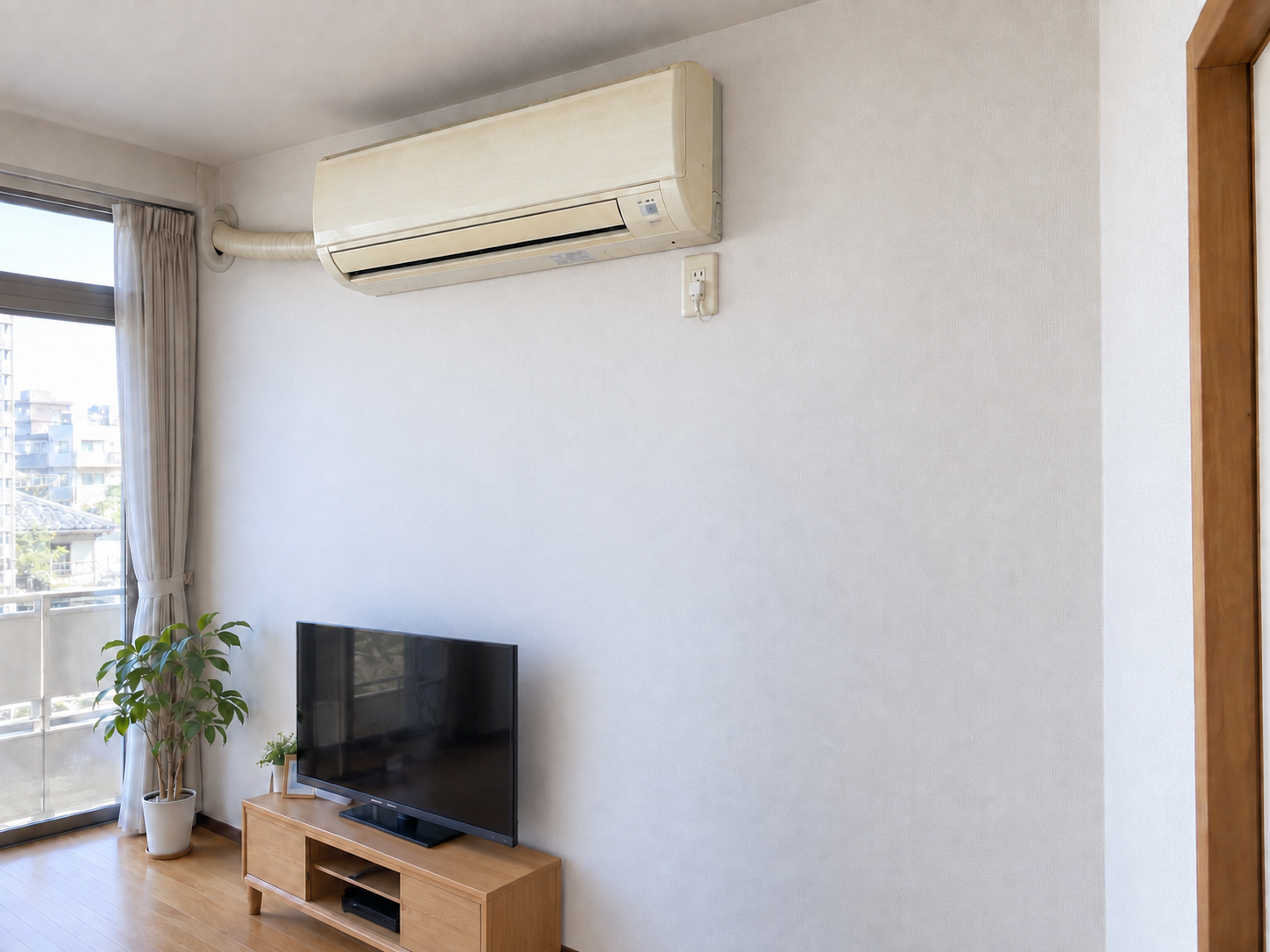
Before the work, the air conditioner showed noticeable yellowing and had weak cooling and heating.
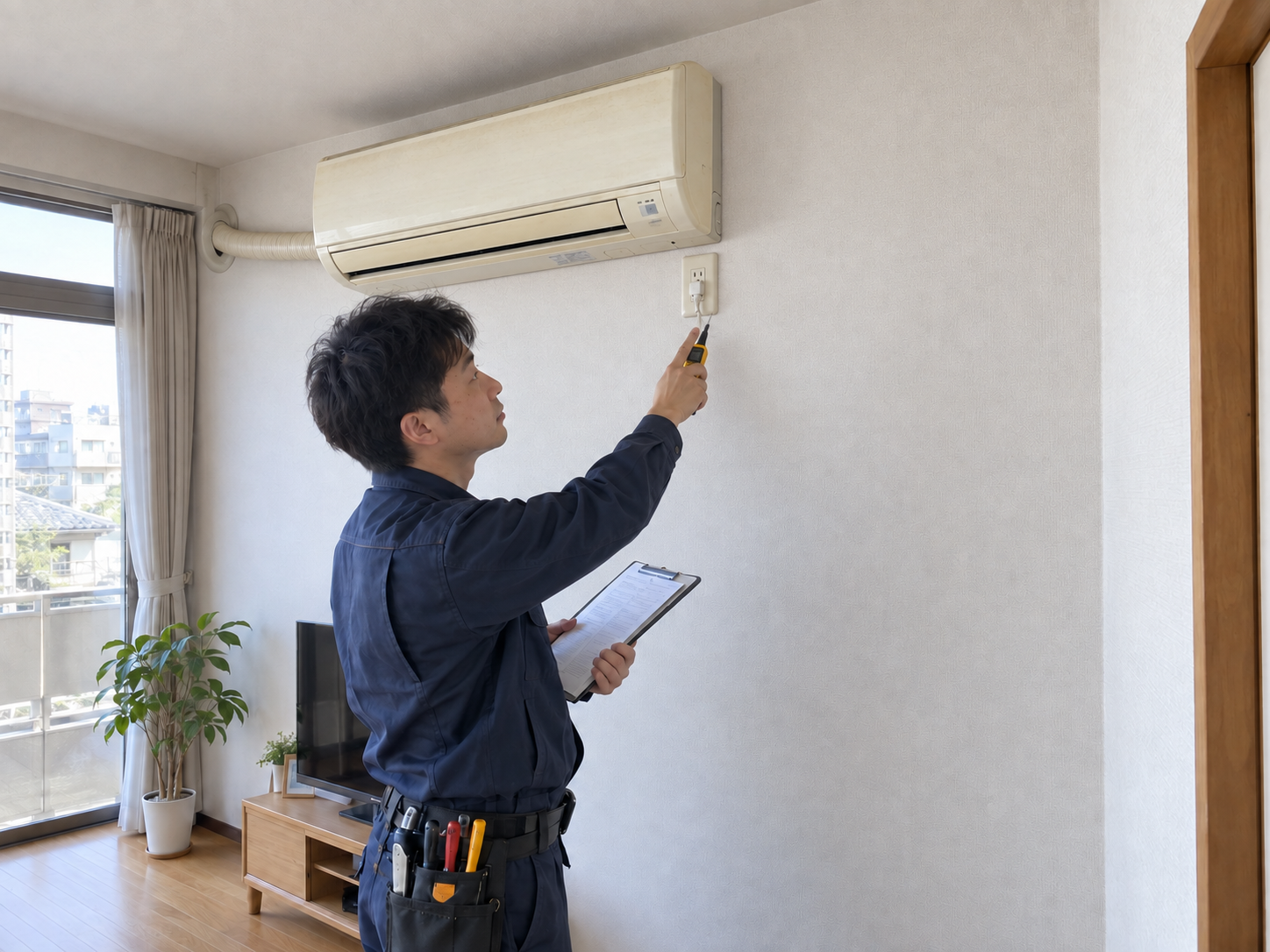
We check the room size, the model number of the existing air conditioner, the shape and voltage of the outlet, the position of the piping hole, and the installation location of the outdoor unit. Based on your desired features and budget, we will propose a model that fits your room.
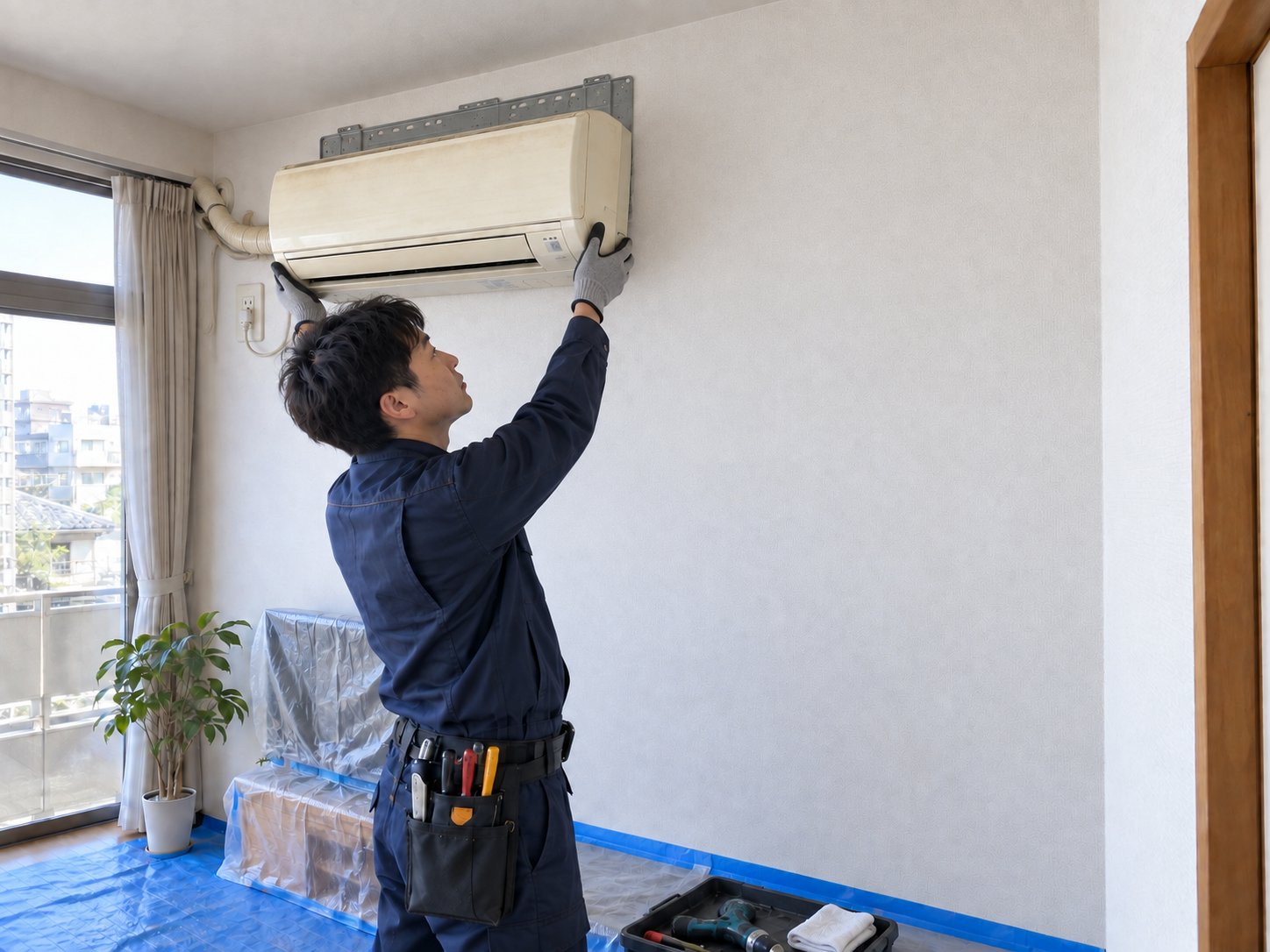
After performing a pump-down (the process of recovering refrigerant gas to the outdoor unit), we remove the outdoor unit, piping, and indoor unit in that order. To prevent refrigerant gas from being released into the atmosphere, we will handle it properly and recycle the existing unit.
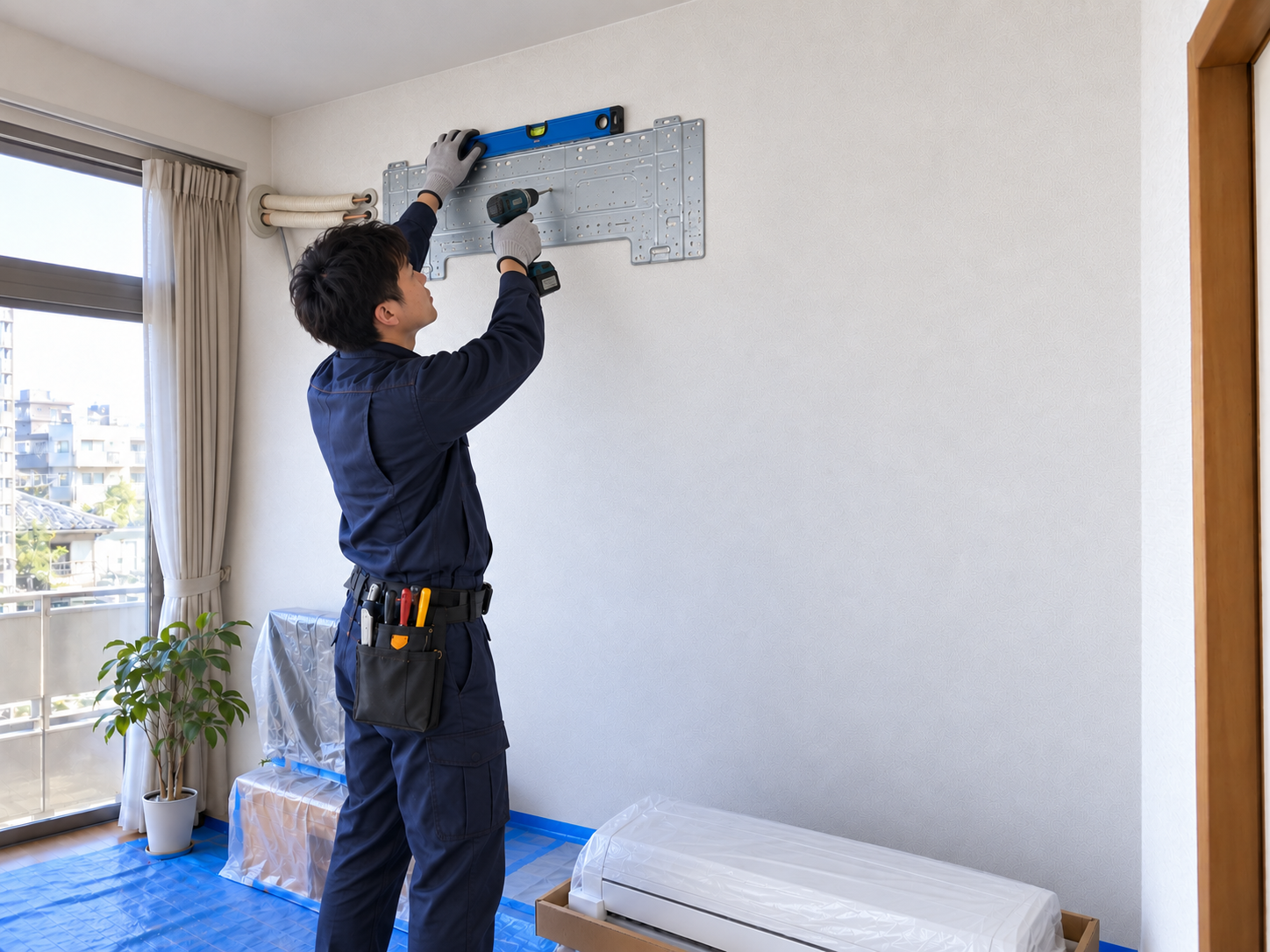
We check the wall’s structure and securely fix the mounting plate while ensuring it is level. We pass the new piping, drain hose, and electrical wires through the piping hole, and hang the indoor unit on the mounting plate. We seal around the piping hole with putty to prevent rainwater and insects from entering.
We will install the outdoor unit and connect the pipes using flared joints. We use a vacuum pump to remove air and moisture from the piping before releasing the refrigerant. Skipping this step can lead to reduced performance and malfunctions, so we take the time to ensure it is done correctly.
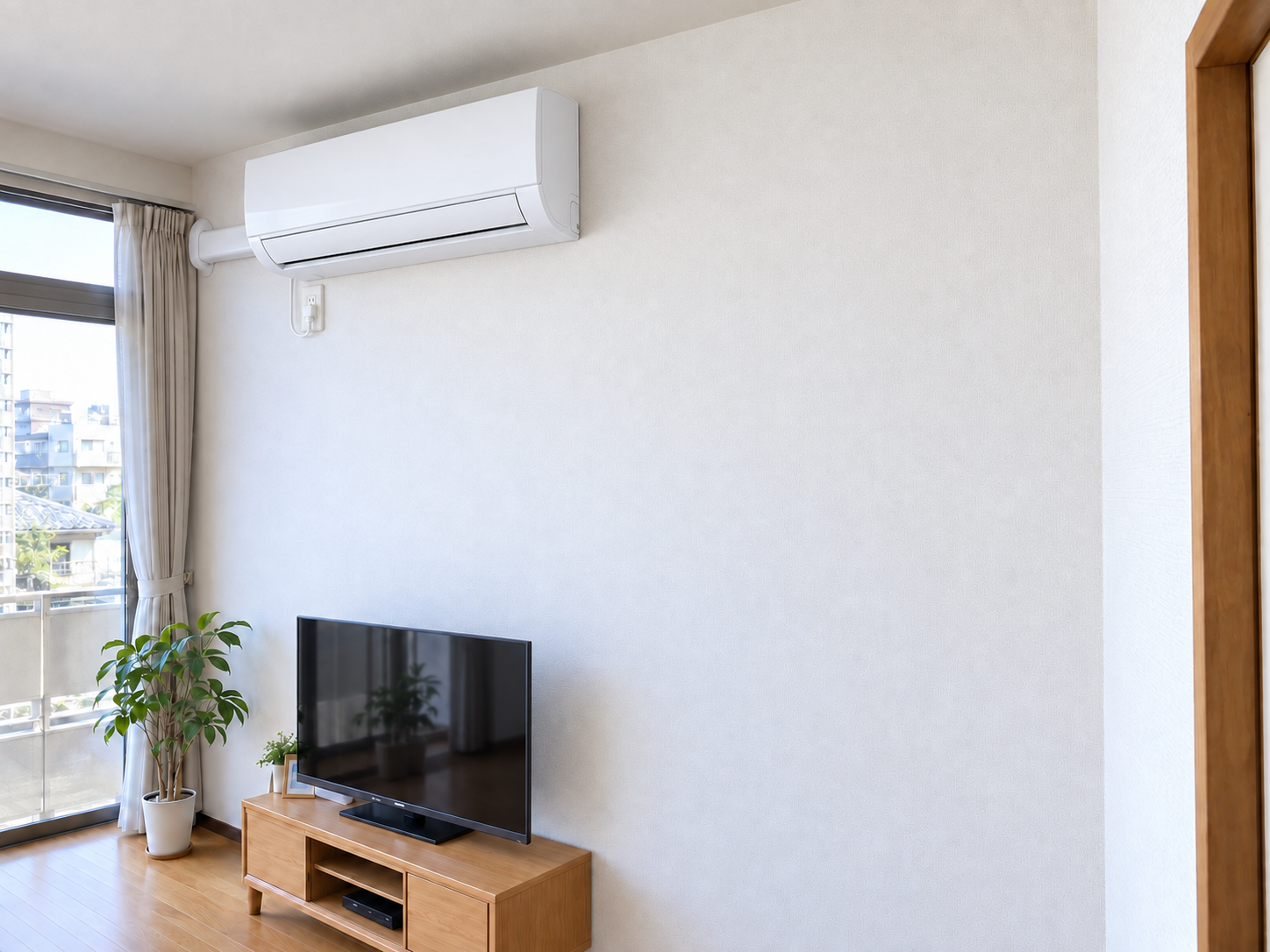
We will conduct trial operations for cooling and heating to ensure that it cools and heats properly, check if water is being drained from the drain, and confirm that there are no gas leaks or unusual noises. We will provide instructions on operating the remote control and maintenance, completing the replacement.
Service Areas
Based in Aoba-ku, Yokohama, we primarily serve Kanagawa Prefecture and Tokyo. We can also accommodate some areas in Chiba Prefecture and Saitama Prefecture, so please feel free to consult with us.
View service areas in Tokyo
Akishima City / Akiruno City / Adachi Ward / Arakawa Ward / Itabashi Ward / Inagi City / Edogawa Ward / Ome City / Ota Ward / Katsushika Ward / Kita Ward / Kiyose City / Kunitachi City / Koto Ward / Koganei City / Kokubunji City / Kodaira City / Komae City / Shinagawa Ward / Shibuya Ward / Shinjuku Ward / Suginami Ward / Sumida Ward / Setagaya Ward / Taito Ward / Tachikawa City / Tama City / Chuo Ward / Chofu City / Chiyoda Ward / Toshima Ward / Nakano Ward / Okutama Town / Nishi-Tokyo City / Nerima Ward / Hachioji City / Hamura City / Higashi-Kurume City / Higashimurayama City / Higashiyamato City / Hino City / Fuchu City / Fussa City / Bunkyo Ward / Machida City / Mitaka City / Minato Ward / Musashimurayama City / Musashino City / Meguro Ward
View service areas in Kanagawa Prefecture
Aikou-gun Aikawa Town / Ashigarakami-gun Oi Town / Ashigarakami-gun Kaisei Town / Ashigarakami-gun Nakai Town / Ashigarakami-gun Matsuda Town / Yamakita Town, Ashigarakami District / Ashigarashimo-gun Hakone Town / Ashigarashimo-gun Manazuru Town / Ashigarashimo-gun Yugawara Town / Isehara City / Odawara City / Kamakura City / Kawasaki City / Kawasaki City Kawasaki Ward / Kawasaki City Asao Ward / Kawasaki City Saiwai Ward / Kawasaki City Takatsu Ward / Kawasaki City Tama Ward / Kawasaki City Nakahara Ward / Kawasaki City Miyamae Ward / Koza-gun Samukawa Town / Zushi City / Chigasaki City / Nakagun Oiso Town / Nakagun Ninomiya Town / Hadano City / Hiratsuka City / Fujisawa City / Miura-gun Hayama Town / Miura City / Minamiashigara City / Yokosuka City / Yokohama City / Yokohama City Aoba Ward / Yokohama City Asahi Ward / Yokohama City Izumi Ward / Yokohama City Isogo Ward / Yokohama City Kanagawa Ward / Yokohama City Kanazawa Ward / Yokohama City Konan Ward / Yokohama City Kohoku Ward / Yokohama City Sakae Ward / Yokohama City Seya Ward / Yokohama City Tsuzuki Ward / Yokohama City Tsurumi Ward / Yokohama City Totsuka Ward / Yokohama City Naka Ward / Yokohama City Nishi Ward / Yokohama City Hodogaya Ward / Yokohama City Midori Ward / Yokohama City Minami Ward / Sagamihara City / Sagamihara City Midori Ward / Sagamihara City Minami Ward / Sagamihara City Chuo Ward / Ebina City / Atsugi City
Kakeru Koumuten!
By replacing your old air conditioner with a new one, you can resolve issues such as poor cooling, water leaks, and unusual noises, while also saving on electricity costs. We will thoroughly check the size of the room, the outlets, and the placement of the piping and outdoor unit, ensuring that we carefully perform basic processes like evacuating the refrigerant piping without skipping any steps.
On-site surveys and estimates are free of charge. We also welcome competitive estimates, so please feel free to contact us.
Related Pages
Consultations via LINE are also very welcome!

We are also updating our Instagram regularly. Please follow us!

contact Kakeru Koumuten Co., Ltd.
Kakeru Koumuten is a young company whose team is, on average, in their late twenties, but our skills are second to none.
Our greatest strength is that we handle scaffolding, roofing and painting entirely in-house. In an industry where these tasks are usually divided among contractors, our complete service simplifies project management and helps keep costs down. Above all, if a problem arises, we respond promptly.
We proudly describe ourselves as the youngest and most helpful renovation company in Kanagawa!