[Yokohama City] Exterior Painting Estimate | Cost Average and Comparison Points for Multiple Estimates

the first step to success is to obtain “estimates from three or more companies.”
Hello! We are Kakeru Koumuten Co., Ltd., a specialist in exterior renovations based in Yokohama. Our company has five locations within Yokohama, and we receive many requests for exterior painting services throughout the city. On this page, we will explain important points and comparison factors when obtaining estimates for exterior painting!

- The most important thing in exterior wall painting is getting estimates from three or more companies. However, deciding solely based on “cost” can be dangerous. There are many ways to cut corners and reduce costs, such as thinning the paint or reducing the number of coats.
- What you should compare in the estimate is not the amount, but the “product name of the paint,” “number of coats,” “quantity (㎡),” “paint for auxiliary parts,” and “type of sealing.” Companies that provide clear details here can be trusted.
- As of September 2026, there are no subsidies for exterior wall painting alone in Yokohama City. The possibilities available are energy-saving renovations accompanied by exterior wall insulation (such as Mirai Eco Housing 2026) and fire insurance for typhoon damage.
- Kakeru Koumuten Co., Ltd. offers free estimates and inspections, and we welcome competitive estimates. We handle everything from temporary scaffolding to painting with our own staff, responding quickly from five locations within Yokohama City.
Table of Contents
- 9 Points to Know When Getting Estimates
- 【Yokohama City】Procedure for Getting an Estimate for Exterior Wall Painting
- Comparison Points in the Estimate for Exterior Wall Painting by Process
- Cost of Exterior Wall Painting in Yokohama City【Per Square Meter Unit Price and Examples by Kakeru Koumuten’s Plans】
- By Location in Yokohama City|Regional Characteristics to Keep in Mind for Exterior Wall Painting
- Summary|To Avoid Mistakes in Getting Estimates for Exterior Wall Painting in Yokohama City
- Reasons Why Kakeru Koumuten is Chosen for Exterior Wall Painting in Yokohama City
- Frequently Asked Questions About Estimates for Exterior Wall Painting in Yokohama City
- Areas We Serve
When obtaining competitive estimates, while it is certainly better if the costs are low, deciding on a contractor based solely on the estimate cost can also be dangerous. This is because there are many ways to cut corners to keep costs down, such as excessively thinning the paint or reducing the number of coats.
To avoid regrets in exterior wall painting work, it is essential to obtain competitive estimates and carefully consider them. To confidently request painting work, it is crucial to identify a trustworthy contractor.
That said, among those who are requesting exterior wall painting work for the first time, there are likely many who have

such questions. Therefore, in this article, we will provide a detailed explanation of points to know when getting estimates for exterior wall painting and important items and comparison points in actual exterior wall painting estimates.

9 Points to Know When Getting an Estimate

When getting an estimate for exterior painting, there are nine main points to keep in mind.
- Obtain estimates from three or more companies and compare them
- Check if the contents of the estimate differ too much from other companies
- Carefully check if there is a breakdown of materials and types
- Confirm if insurance or subsidies from Yokohama City can be used
- Ensure that the details of the work are clear
- Check the warranty and after-support details
- Verify not only the exterior paint but also the paint for auxiliary parts and the number of coats
- Confirm if the paint is suitable for the substrate
- Check if the exterior painting plan considers the location and natural environment in Yokohama City
We will explain each point in detail!
POINT 1 Obtain estimates from three or more companies and compare them

As mentioned earlier, the most important thing in exterior painting work is obtaining estimates. Obtaining estimates means requesting quotes from multiple contractors and comparing them.
There are many painting contractors, and even for the same work, the methods of construction and materials used can differ. Therefore, the costs can vary significantly depending on the contractor you choose.
Even if the request details are the same, if you decide based on only one estimate, you may not realize that you are being charged more than the market rate. By comparing multiple companies, you can understand the appropriate construction details and price range. However, it is recommended to not only look at the costs in comparative estimates but also to check the construction methods (number of coats and cleaning methods), track record, and reviews to make a comprehensive judgment!
If you proceed without obtaining comparative estimates,
“The color faded earlier than the years mentioned…”
the likelihood of regret increases, so we at Kakeru Koumuten recommend obtaining comparative estimates to all our customers.
Some contractors may extremely dislike comparative estimates or pressure you to sign a contract quickly. Do not rush into a contract; take your time to obtain comparative estimates and think carefully based on the estimate contents! If you already have estimates from other companies, we also accept non-face-to-face rough estimates based on other companies’ estimates and drawings.
POINT 2 Check if the contents of the estimate differ too much from other companies
When obtaining comparative estimates, it is also important to check if the contents differ too much from other companies. It is not uncommon for the construction area to be extremely large or the amount to be too high.
While it is not necessarily bad to have significant differences in amounts or construction details, make sure to confirm with the contractor the clear reasons for the differences from other companies.
POINT 3 Confirm if there is a breakdown of materials and quantities
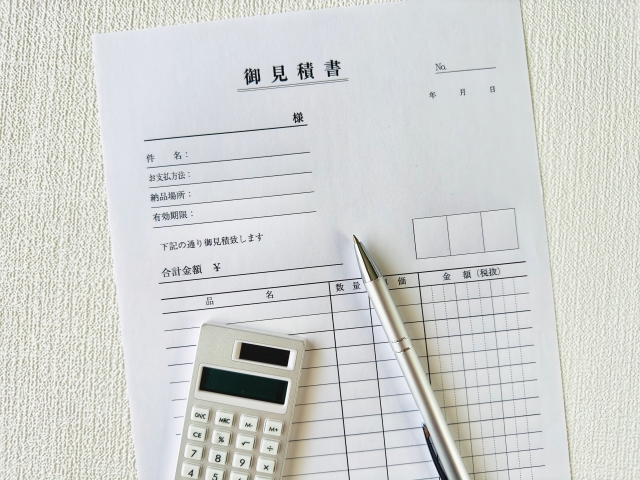
When you receive an estimate for exterior wall painting from a contractor, be sure to check whether a breakdown is included.
Some contractors may only list quantities as “one set”, but this does not clarify what is being charged for what. If the quantities are unclear, the contractor can freely adjust the amounts, increasing the likelihood of additional charges.
We recommend contractors that specify what is being charged for and how much. Contractors who clarify the amounts will provide peace of mind for those requesting the work.
POINT 4 Check if insurance or subsidies can be used

To reduce the cost of exterior wall painting work, it is advisable to check with the contractor whether fire insurance or subsidies can be utilized.
If the exterior wall is damaged due to a typhoon or flying objects, it may be covered under the “wind damage” compensation of fire insurance. Additionally, if you are conducting insulation renovations of the exterior wall simultaneously with exterior wall painting, you may be eligible for energy-saving subsidies from the national or local government.
Using grants or subsidies requires separate procedures. Before obtaining a quote, please check if there are any applicable programs!
Possible subsidies and grants for exterior wall painting in Yokohama City【Latest for 2026 (Reiwa 8 fiscal year)】
Up to 1 million yen per unit (for houses built before 1991. For those built between 1992 and 2016, up to 800,000 yen)
Insulation renovations for exterior walls, roofs (ceilings), and floors, as well as energy-saving renovations such as high-efficiency windows and water heaters are eligible. If insulation renovations of the exterior wall are conducted simultaneously with exterior wall painting, exterior wall insulation will be one of the subsidized works. However, it is necessary to meet certain “required construction” criteria, such as conducting insulation renovations for openings and structures in one room, and there is no program that provides subsidies solely for exterior wall painting or exterior wall insulation. The target is generally houses built before December 31, 2016, and applications are made by registered contractors. The program will end once the budget limit is reached (by December 31, 2026, at the latest).
Damage such as cracked exterior materials due to typhoons or strong winds, dents from flying objects, or detached rain gutters and eaves boards may be covered under the “wind damage” compensation of your fire insurance. If the conditions such as contract details, deductible amounts, and damage circumstances are met, there is a possibility that insurance payments will be made. Fading and chalking due to aging are generally not covered, and applications must be made within three years of the damage. Kakeru Koumuten Co., Ltd. supports the preparation of necessary documents for insurance claims, including taking photos of the damage and creating estimates.
Other potential programs available in Yokohama (Yokohama’s insulation renovation subsidy, Kanagawa Prefecture’s energy-saving renovation, etc.)
Up to 1.2 to 1.5 million yen (1.5 million yen for families with children moving, 1.2 million yen for permanent residents)
Insulation renovations for windows, exterior walls, ceilings, and floors are eligible, and exterior wall insulation is included in the eligible work. However, the program is designed with conditions for moving or permanent residence, and the application process is conducted by businesses registered or planning to register with the city’s “Yokohama Health and Energy-Saving Housing.” Please note that exterior painting alone cannot be utilized. Applications are accepted until November 30, 2026.
Source: Yokohama Existing Housing Insulation Renovation Subsidy Program
Subsidy rate 1/3; up to 150,000 yen
Insulation renovations for windows and entrance doors are mandatory, and insulation for exterior walls, ceilings, and floors can be added optionally. The application must be made by the homeowner themselves, and applications by contractors on behalf of the homeowner are not allowed. Construction before the grant decision is not eligible, and additional recruitment will be from September 7 to 30, 2026 (electronic application, approximately the first 25 cases).
Source: Kanagawa Prefecture Existing Housing Energy-Saving Renovation Project Cost Subsidy
POINT 5 Confirm that the details of the work are clear

When considering the estimate, it is necessary to confirm whether the work details align with your objectives and requests.
“I want to change the design and color.”
“I am considering exterior painting due to fading and cracks.”
“The interior is hot, so I want to improve heat insulation.”
These are some of the reasons or concerns that may lead you to consider exterior painting.
For example, if you have decided to move or demolish in 10 years, using a highly durable paint with a lifespan of nearly 20 years would be a waste of money. It is necessary to consider using a lower-cost paint with a shorter durability or performing partial repairs as one of the options. Similarly, if you are renovating to improve heat insulation and use aesthetically focused paint, the original purpose will not be fulfilled, and the work will be wasted.
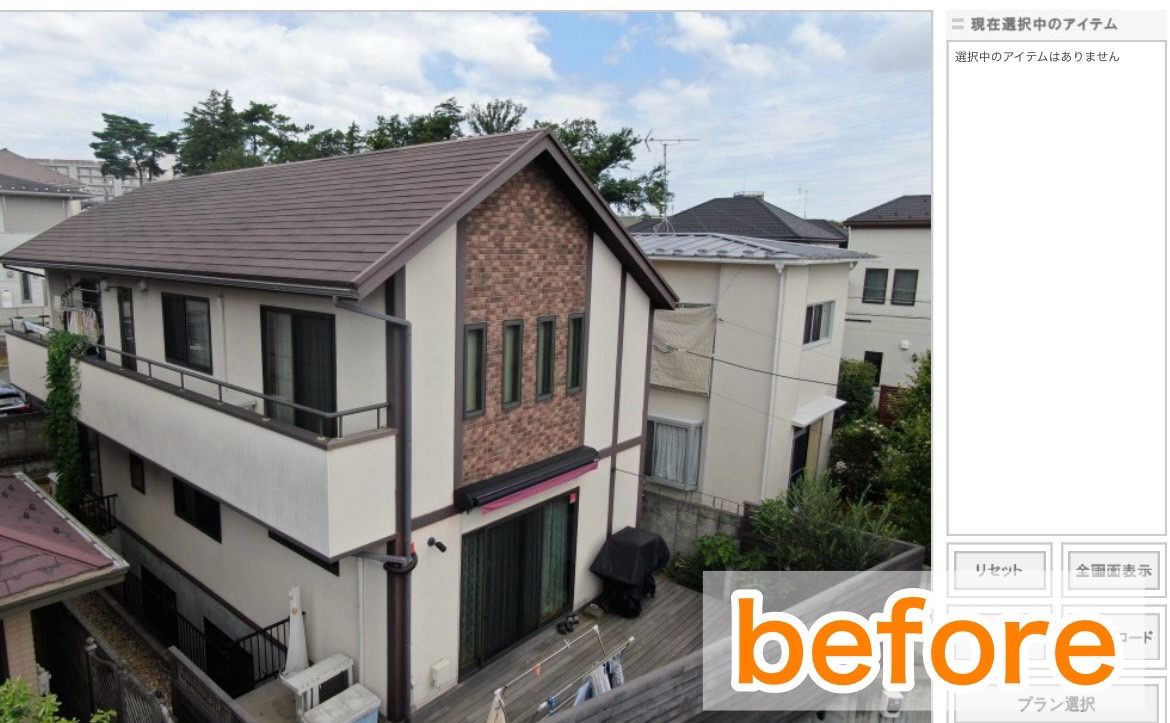
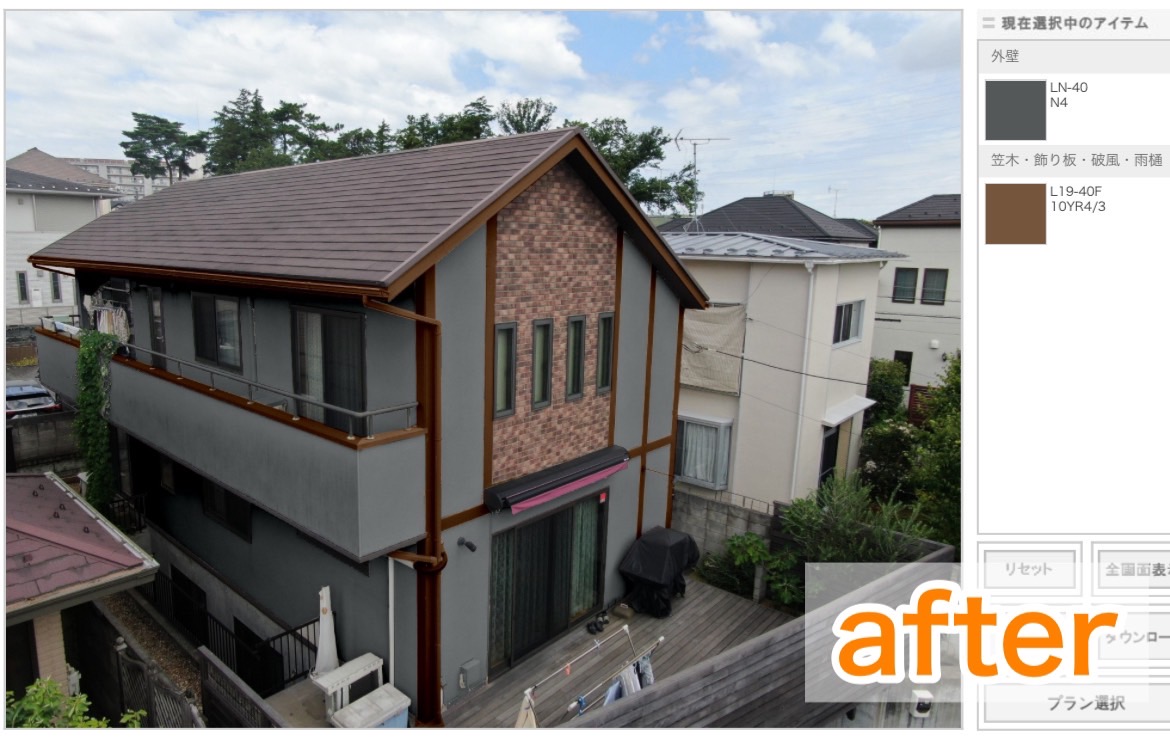
The above photos show the left is the photo of the building and the right is the color simulation! Various colors can be simulated like this.
Learn more about color simulation for exterior painting
Basically, the estimate will list the processes in order, so it is necessary to check in advance how the work will progress and to confirm any uncertainties with the contractor.
POINT 6 Check the contents of the warranty and after-support

It is recommended to choose a contractor who explains the warranty and after-support in advance in case any issues arise after construction. Regarding the warranty, be sure to check not only the warranty period but also the contents of the warranty!
How long is the warranty period? What kind of after-support is available? Let’s confirm these details at the time of the estimate.
POINT 7 Check not only the exterior paint but also the paint and number of coats for auxiliary parts

When performing exterior painting, it is common to also paint the auxiliary parts. Auxiliary parts refer to “rain gutters, eaves, water drainage, fascia boards, nose boards, awnings, etc.”, and each has different materials. The materials include “wood, metal, calcium silicate, etc.”, and the type of primer used also varies.
The three points to confirm are as follows:
- Is the rank of the auxiliary part paint at the desired level? (Silicone, fluorine, etc.)
- What type of primer is used for the auxiliary parts?
- How many coats will be applied?
Make sure to check what paint is being used for the auxiliary parts as well as the exterior paint!
POINT 8 Confirm that the optimal paint for the substrate is being used
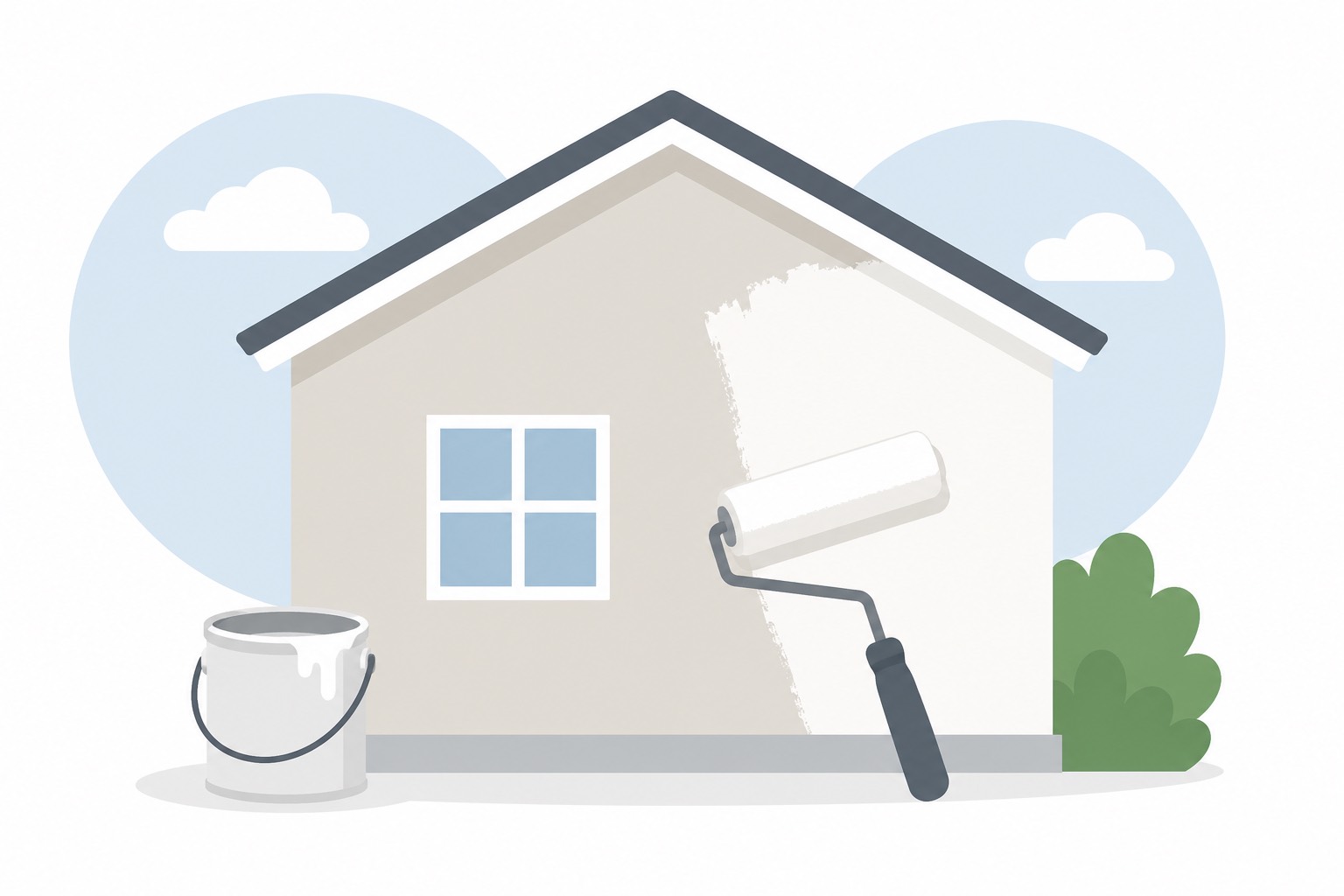
There are various types of exterior wall materials, and it is necessary to use paint suitable for each! In single-family homes in Yokohama, the most common is ceramic siding, along with mortar, metal siding, ALC, and tiles, and the selection of primer materials (sealer, filler, primer) changes depending on the substrate.
During the on-site survey, whether the contractor checks the type of existing exterior wall material and the paint used in the previous painting is also a point to distinguish a reliable contractor.
POINT 9 Check the exterior painting plan considering the location and natural environment in Yokohama
In Yokohama, there are areas close to the sea, such as Isogo-ku and Kanazawa-ku, regions where humidity tends to accumulate like valleys and northern slopes, and elevated areas exposed to strong winds. Being close to the sea may accelerate rust on metal parts and deterioration of the paint film due to sea breezes, and on the poorly sunlit northern side, moss, algae, and mold are likely to occur, which affects the selection of paint (weather resistance, anti-algae, and anti-mold properties).
It’s important to confirm not only the cost but also whether the proposed paint and process are suitable for the building’s location! (Please also refer to the points to consider for exterior painting based on locations in Yokohama)
【Yokohama】Procedure for Exterior Painting Estimates
We will explain in detail the procedure for requesting an estimate for exterior painting. Specifically, it will be carried out in the following steps.
- Search for contractors that operate in Yokohama
- Request an estimate
- Have a site survey conducted
- Compare the estimates
Most contractors will generally provide this service for free, but it’s a good idea to confirm whether there will be any costs involved just to be safe!
STEP 1 Research contractors that operate in Yokohama

Currently, most contractors have information available on the internet or on signboards, so you can research there. When searching for contractors, it’s advisable to look for multiple contractors with the intention of getting comparative estimates. By keeping the nine points mentioned earlier in mind, the likelihood of making a mistake decreases.
When narrowing down from the many contractors, it’s recommended to read Google reviews carefully for reference and to contact companies with good ratings. In doing so, consider not only the rating points but also the number of reviews, posting dates, specificity of content, presence of construction photos, and responses from the company to get a clearer picture of the actual service provided by that company.
STEP 2 Request an estimate
To narrow down excellent contractors for exterior wall painting estimates, it is essential to request at least three companies. With only one or two companies, it becomes difficult to compare the details, increasing the likelihood of not finding a quality contractor.
STEP 3 Have a site survey conducted
Once you have requested an estimate, the contractor will conduct a site survey. Since the contractor will come to your home, be sure to ask any questions you have about the work at that time. Examples of things you might want to ask or convey include:
- Communicate your requests and future life plans (how many years you plan to live there, whether you want to change colors)
- Whether the work will be done by their own staff
- How they will manage the storage of materials, scaffolding placement, and measures to prevent the splattering of washing water and paint
- If you have preferred paint or manufacturers, let them know
- Confirm the type of existing exterior wall materials, the paint used in the last job, and the condition of the sealing
STEP 4 Compare estimates
After receiving estimates from multiple contractors, please compare each company’s estimates. The three main points to pay attention to are:
- Check if the product name and manufacturer name of the paint are listed
- Check if the area (㎡) and unit price are listed
- Check if the process and specifications (number of coats) are listed
Make sure to check if the product names and manufacturer names for the exterior walls, additional work, and sealing are listed. Be cautious if it only states “silicone paint.”
Always check that the painting area of the exterior wall is not abbreviated as “one set.” Contractors that provide detailed area descriptions are likely to have conducted more accurate surveys and can be trusted.
It is important to clearly define the processes and the number of coats, such as “high-pressure washing,” “substrate repair,” “caulking replacement,” and “primer, intermediate coat, and top coat.”
If you request Kakeru Koumuten Co., Ltd., you can check the flow from inquiry to on-site investigation, estimate, construction start, and completion on the flow of construction page.
Exterior Painting Estimate | Comparison Points by Process
We will explain the processes and items that must be confirmed in an exterior painting estimate in order. If any of the items explained here are not included in the estimate, we recommend confirming with the contractor whether they are part of the work!
*For exterior painting work, it is generally necessary to install temporary scaffolding and mesh sheets for safety and to prevent debris from scattering to neighboring areas. Conditions may vary depending on the shape of the building and the scope of work, so we will omit the mention of scaffolding in the subsequent processes.
View the 8 processes of exterior painting in detail by item (tap to open)
1. High-Pressure Washing
We will remove dirt, chalking powder, moss, and algae from the exterior walls and attached parts using high-pressure washing. If the dirt and moss are severe, bio-washing is recommended. Inadequate washing can prevent paint adhesion, leading to early peeling.
2. Preparation
We will protect areas that may get stained with paint, such as windows, entrances, air conditioning outdoor units, plants, and vehicles.
3. Substrate Repair
We will repair cracks, chips, and lifting in siding, as well as perform rust treatment on metal parts. Be cautious if the estimate does not include substrate repair items, as there is a possibility of painting over deteriorated areas.
4. Caulking Replacement and Addition
It is basic to perform caulking around siding joints and sashes at the same time as exterior painting. What to confirm is whether it is “replacement” or “addition” and the “type of caulking material.” The basic method is to remove the existing caulking and fill it anew, and using low-durability caulking materials can lead to leaks before the paint wears out. We recommend using high-durability caulking materials (such as Auton Exceed) that match the durability of the paint. Learn more about the cost and construction methods for caulking work
5. Primer
There are different types of primers, and it is necessary to select a primer suitable for the existing exterior material and condition. For severely deteriorated exteriors, a penetrating sealer is needed; for mortar with many cracks, a micro-elastic filler; and for difficult-to-adhere siding, a dedicated primer. Using an unsuitable primer can lead to peeling of the paint film. Be sure to check if the product name of the primer is listed in the estimate!
6. Intermediate Coat and Top Coat
Basically, exterior wall painting consists of three coats: a primer, an intermediate coat, and a top coat. The intermediate and top coats are applied twice with the same paint to ensure the film thickness specified by the manufacturer. Check whether the estimate includes the “number of coats” and the “product name of the paint,” and whether the specified dilution rate and drying time are being followed.
7. Painting of Accessory Parts
We will paint accessory parts such as rain gutters, eaves, fascia boards, water drainage, canopies, and storm shutters. As explained in POINT 7, check the rank of the paint for accessory parts, the primer used, and the number of coats. If the accessory parts are summarized as “one set,” it is necessary to confirm what is included.
8. Completion Inspection and Scaffold Dismantling
We will dismantle the scaffold after confirming that there are no missed spots, paint splatters, and that the protective coverings have been removed. At Kakeru Koumuten, we have customers check the finished work during the completion inspection, and we provide construction photos (before, during, and after completion).
View Kakeru Koumuten’s Exterior Wall Painting Plans and Price List
Exterior Wall Painting Costs in Yokohama City [Kakeru Koumuten’s Price per Square Meter by Plan and Reference Examples]
Knowing “approximately how much it will cost” makes it easier to determine whether an estimate is high or low. Here, we will introduce the price per square meter by plan listed in Kakeru Koumuten’s construction menu, rather than general online market prices.
| Kakeru Koumuten Plans | Published Prices for Construction Menu (Exterior Painting Price per ㎡) |
Estimated Durability Years | Suitable Cases |
|---|---|---|---|
| Silicone Plan (Radical Control) |
¥2,200〜/㎡ | 12〜15 years | Focus on balancing cost and durability. Suitable for those planning to move or rebuild within 10 to 15 years. |
| Premium Silicone Plan (Radical Control) |
¥2,300〜/㎡ | 14〜16 years | For those who want to enhance weather resistance at a price close to silicone. This is the most requested plan at Kakeru Koumuten. |
| Heat-Reflective Fluorine Plan | ¥3,000〜/㎡ | 16〜20 years | For those who want to reduce the number of repainting and also address summer heat. Suitable for locations close to the sea or areas with strong sunlight. |
| Inorganic Plan | ¥3,000〜/㎡ | 18〜20 years | For those planning to live for a long time and want to postpone the next repainting as much as possible. |
Reference Estimate Example: 33.24 tsubo, exterior painting area 149.5㎡, using Silicone REVO1000-IR + high-durability sealing for a total of ¥940,000 including tax (including temporary scaffolding and painting of auxiliary parts, a reference example from the construction menu).
*The above is the price per ㎡ listed in Kakeru Koumuten’s Exterior Painting Construction Menu. The cost for temporary scaffolding is generally around ¥110,000 to ¥130,000 for a typical two-story house, but it may vary depending on building shape, area, road conditions, elevation, and horizontal transport. The amount may vary based on building shape, exterior wall area, substrate repairs, sealing quantity, auxiliary parts, and delivery conditions, so please confirm the exact amount after a site survey.
Examples Actual Exterior Painting Case Studies in Yokohama
Kakeru Koumuten Co., Ltd. is headquartered in Aoba-ku, Yokohama, and has numerous achievements in exterior wall painting within the city of Yokohama. For details on “how much it actually cost” and “what the finished result will look like,” please check our construction performance page along with the project details and prices.
Regional Characteristics to Keep in Mind for Exterior Wall Painting in Yokohama
Yokohama City has 18 wards with a population of approximately 3.77 million. It is characterized by a complex terrain of hills, plateaus, lowlands, and reclaimed land, with many slopes and valleys. The climate is humid, making it easy for moss and algae to develop on exterior walls. In Typhoon No. 15 in 2019, the Yokohama Local Meteorological Observatory recorded the highest instantaneous wind speed in its history, causing significant damage to many homes in the city. When comparing estimates, be sure to check if the paint and specifications are suitable for the location of your home.
The salt contained in the sea breeze can lead to rust on metal parts (rain gutters, water drainage, eaves), chalking, and peeling of the paint film. Be sure to check for high weather-resistant paints such as fluorine and inorganic types, as well as whether rust prevention treatment for metal parts is included in the estimate.
North-facing surfaces and those surrounded by neighboring houses or retaining walls are prone to moss, algae, and mold, making it important to select biocide cleaning and mold-resistant paints before painting. For locations where trucks cannot be parked due to stairs or steep slopes, check whether the cost of transporting materials is included in the estimate.
In homes built in the 1980s and 90s, direct application methods of fiber cement siding may have been used, which can lead to paint film blistering and deterioration of sealing. It is a key point to compare whether high permeability paints and “replacement of sealing” are included in the estimate.
If strong winds damage exterior materials, eaves boards, or rain gutters, it may be covered under fire insurance wind damage compensation. During the on-site inspection for exterior wall painting, be sure to have the condition of attached parts and any damage checked as well.
Summary | To Avoid Mistakes in Exterior Wall Painting Estimates in Yokohama
The following are the 9 key points to pay special attention to when obtaining estimates for exterior wall painting.
- Obtain estimates from at least three companies and compare them with each other
- Check if the contents of the estimate differ too much from other companies
- Confirm whether there is a breakdown of materials and quantities
- Check if insurance or subsidies can be used
- Ensure that the construction details align with your goals and requests
- Review the warranty and after-support details
- Check the paint and number of coats for auxiliary parts
- Verify if the paint and primer are suitable for the base material
- Confirm if the plan is suitable for the location and natural environment of Yokohama City
By referring to the items introduced this time, it will be easier to distinguish between reputable contractors and those that are not, so please give it a try!
Reasons Why Kakeru Koumuten is Chosen for Exterior Painting in Yokohama City

At Kakeru Koumuten Co., Ltd., estimates and inspections are of course free! We have five bases within Yokohama City and receive numerous requests for exterior painting. We are happy to consult with you even if it’s just for an estimate.
Our headquarters is located in Aoba-ku, Yokohama. Kakeru Koumuten is a remodeling company strong in exterior renovations, and we perform complete in-house construction from scaffolding work to exterior painting and roofing. Since one person is assigned from investigation and estimation to construction, what you communicate is directly reflected on-site.
We own our scaffolding materials, which eliminates intermediary margins, so we are confident that our “cost, quality, and good planning” in exterior renovation work cannot be beaten! We have certified painting and sheet metal technicians on staff (Reasons Why Kakeru Koumuten Can Offer Low Prices).
We are confident in our exterior renovations, so we welcome multiple estimates! The names of the paints, number of coats, quantities, sealing materials, and paints for auxiliary parts are all clearly stated in the estimates.
Exterior painting comes with a construction warranty based on the paints used, and we send out after-maintenance DM every year. We have received positive feedback for our appropriate proposals that match cost performance and our customers’ future life plans!
Payments are made after the completion of the work. We do not require upfront or interim payments, so there are no worries about “being rushed into a contract” or “concerns about advance payments.” We accommodate bank transfers, collections, and loans.
We can provide color simulation based on actual photos of your building. For fire insurance claims due to typhoon damage, we will assist you in preparing the necessary documents based on our past achievements (the payment of insurance benefits is subject to the insurance company’s review).
We want you to think, “I’m glad I asked!” Therefore, we take every request seriously. If you have any concerns regarding exterior walls, roofs, rain gutters, or exteriors, please consult Kakeru Koumuten Co., Ltd.! Learn more about exterior wall painting in Yokohama
Exterior Wall Painting Estimates in Yokohama | Frequently Asked Questions
Is the estimate for exterior wall painting in Yokohama free?
How long does it take from requesting an estimate to submission?
What is the construction period for exterior wall painting?
Is it okay if the estimate for exterior wall painting has many “sets” listed?
Should I choose silicone or fluorine?
Can Yokohama city subsidies be used for exterior wall painting?
My exterior wall and rain gutter were damaged by a typhoon. Can I use fire insurance?
I was told by a visiting contractor that “the exterior wall is cracked and dangerous.” Is that true?
I’m near the coast of Yokohama (Kanazawa-ku, Isogo-ku, etc.), are there any precautions for choosing paint?
Free estimates and inspections / We welcome competitive estimates / Complete in-house construction / Payment after completion
We also provide plans and price lists for exterior wall painting. We look forward to your inquiries.
Service Areas
Kakeru Koumuten Co., Ltd. serves not only Yokohama, where our headquarters is located, but also almost all of Kanagawa Prefecture and Tokyo.
Yokohama City (All 18 Wards)
See other service areas in Kanagawa Prefecture and Tokyo
Kanagawa Prefecture
Kawasaki City (Kawasaki-ku / Saiwai-ku / Nakahara-ku / Takatsu-ku / Miyamae-ku / Tama-ku / Asao-ku) / Sagamihara City (Midori-ku / Chuo-ku / Minami-ku) / Yokosuka City / Kamakura City / Fujisawa City / Chigasaki City / Hiratsuka City / Hadano City / Isehara City / Atsugi City / Ebina City / Yamato City / Zama City / Ayase City / Zushi City / Miura City / Odawara City / Minamiashigara City / Aikou-gun Aikawa Town / Kouza-gun Samukawa Town / Nakagun Oiso Town / Nakagun Ninomiya Town / Miura-gun Hayama Town / Ashigarakami-gun (Ooi Town / Kaisei Town / Nakai Town / Matsuda Town / Yamakita Town) / Ashigarashimo-gun (Hakone Town / Manazuru Town / Yugawara Town)
Tokyo
Chiyoda-ku / Chuo-ku / Minato-ku / Shinjuku-ku / Bunkyo-ku / Taito-ku / Sumida-ku / Koto-ku / Shinagawa-ku / Meguro-ku / Ota-ku / Setagaya-ku / Shibuya-ku / Nakano-ku / Suginami-ku / Toshima-ku / Kita-ku / Arakawa-ku / Itabashi-ku / Nerima-ku / Adachi-ku / Katsushika-ku / Edogawa-ku / Hachioji-shi / Tachikawa-shi / Musashino-shi / Mitaka-shi / Ome-shi / Fuchu-shi / Akishima-shi / Chofu-shi / Machida-shi / Koganei-shi / Kodaira-shi / Hino-shi / Higashimurayama-shi / Kokubunji-shi / Kunitachi-shi / Fussa-shi / Komae-shi / Higashiyamato-shi / Kiyose-shi / Higashikurume-shi / Musashimurayama-shi / Tama-shi / Inagi-shi / Hamura-shi / Akiruno-shi / Nishitokyo-shi / Nishitama-gun (Mizuho-machi / Hinode-machi / Hinohara-mura / Okutama-machi)
・Saitama Prefecture, Chiba Prefecture, and part of Yamanashi Prefecture (please consult us)
Helpful information about exterior renovations can be found here!
- Reasons why Kakeru Koumuten is chosen for exterior wall painting in Yokohama
- Reasons why Kakeru Koumuten is chosen for exterior renovations and roof repairs in Yokohama
- Self-estimate!! Easy exterior renovation estimate simulation!
- About the costs of exterior wall painting | Kakeru Koumuten’s exterior wall painting plans!
- Non-face-to-face rough estimate from other companies’ quotes and drawings
- About the costs of roof overlays | Kakeru Koumuten’s roof construction plans!
- About the costs of roof painting | Kakeru Koumuten’s roof painting plans!
- About the costs of exterior wall cleaning | Exterior wall washing plan without scaffolding!
We welcome consultations via LINE as well◎

We are also updating our Instagram regularly◎ Please follow us!
contact Kakeru Koumuten Co., Ltd.
Kakeru Koumuten is a young company whose team is, on average, in their late twenties, but our skills are second to none.
Our greatest strength is that we handle scaffolding, roofing and painting entirely in-house. In an industry where these tasks are usually divided among contractors, our complete service simplifies project management and helps keep costs down. Above all, if a problem arises, we respond promptly.
We proudly describe ourselves as the youngest and most helpful renovation company in Kanagawa!