[No Roof Painting!] Introducing Roofing Materials That Cannot Be Painted or Are Not Recommended for Painting!
Hello! Kakeru Koumuten Co., Ltd.!
 I am Yamanaka, the representative director of Kakeru Koumuten Co., Ltd., a specialist in roofing, exterior wall painting, and exterior renovations located in Aoba-ku, Yokohama, Kanagawa Prefecture!
Today, I will explain about “Roofing Materials Not Suitable for Painting“!
Roof Painting Not Recommended!! To avoid wasteful construction!!
To conclude, regarding roofing materials that are not suitable for painting, I recommend either the “Roof Overlay (Cover Method)” or “Roof Replacement” work!
Details about costs and services are introduced on the pages below.


Roofing Materials Not Suitable for Painting
Next, we will introduce the “Roof Materials Not Suitable for Painting”. During our on-site inspections, we often observe roofs that have been painted unnecessarily.
While roof material manufacturers publicly state that certain materials are not suitable for painting, the painting of colonial (slate, color best) roofs is primarily for aesthetic enhancement. Painting does not increase durability or extend the lifespan of the roof.
It seems that some painting contractors with limited knowledge about roofs may suggest painting…
Roof painting is not inexpensive. Careful selection of contractors is necessary to avoid wasting money on unnecessary painting work.
To avoid mistakenly choosing to paint, it would be beneficial for homeowners to understand the type of roofing material they have for future renovations.
1. Roof Materials That Cannot Be Painted: Pamil
Pamil is a roof material that has manufacturing issues and is currently discontinued; it cannot be painted.
Due to various defects, it is referred to as a roof material that is “meaningless to paint,” hence it cannot be painted.
“Pamil” is one of the product names for roofing materials manufactured by Nichiha, Japan’s largest exterior building material manufacturer, from 1996 to 2008.
At the time Pamil was produced, the use of asbestos in roofing materials was prohibited.
Therefore, Pamil is one of the products that switched to non-asbestos materials.
Issues When Painting Pamil
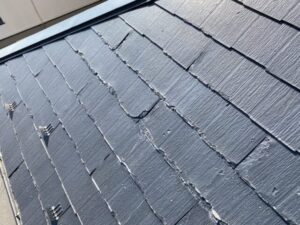
The paint is peeling off in layers like a mille-feuille.
Even if paint is applied to the surface, the entire roof material will peel off, so painting is meaningless.
No Painting Work! Proper Maintenance Methods for Pamil
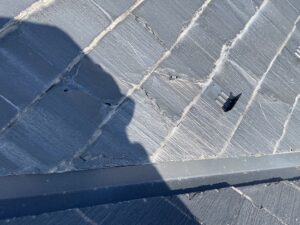
Pamil cannot be maintained through painting due to its tendency to crack and peel in layers.
Replacement is also not possible as it may cause the roofing material to crack internally.
Therefore, the only maintenance options for the roof are “roof overlay (cover method)” or “roof replacement.”
We recommend performing the overlay method while the underlying structure is still strong!
Replacement is also possible, but it generates a large amount of waste, leading to disposal costs.
Additionally, during the replacement of Pamil, debris may scatter, so if the underlying structure is strong, the overlay method is recommended.
Details about the roof overlay (cover method) work for Pamil are introduced below! Please take a look!
・Aoba-ku, Yokohama | We performed a roof overlay technique using exterior wall painting and Gartect!
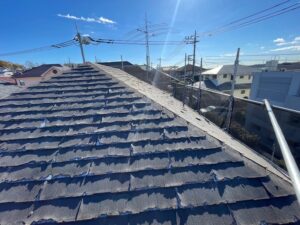
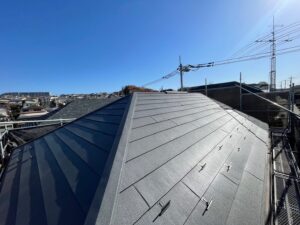
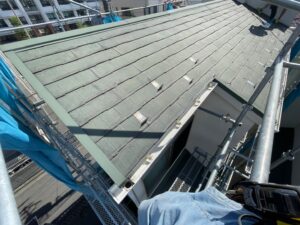
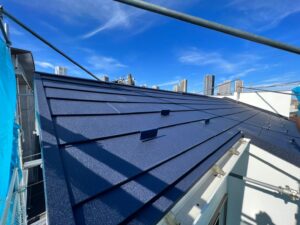
・Adachi-ku, Tokyo | Request from Company S: We performed a cover work from Pamir to Super Galtect!
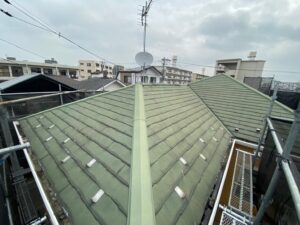
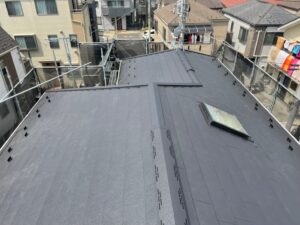
・Machida City, Tokyo | Performed roof overlay construction from Nichiha/Pamir to Diplomat Star!
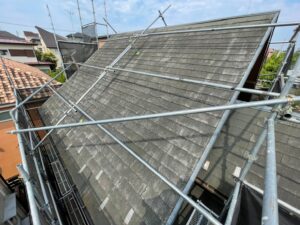
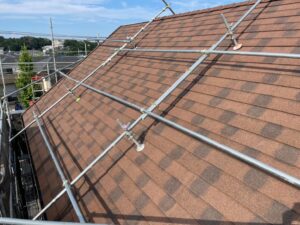
2. Roof Materials That Cannot Be Painted: Kubota Corporation (now Keimyuu Corporation) / Colonial NEO
Colonial NEO is a type of slate roof developed by Kubota Corporation (now Keimyuu Corporation) that does not contain asbestos.
Due to numerous cracks and significant chipping, Colonial NEO has been discontinued from production.
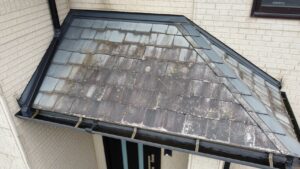
Signs of deterioration appear in about 10 years, making Colonial NEO one of the “roofs that cannot be painted.”
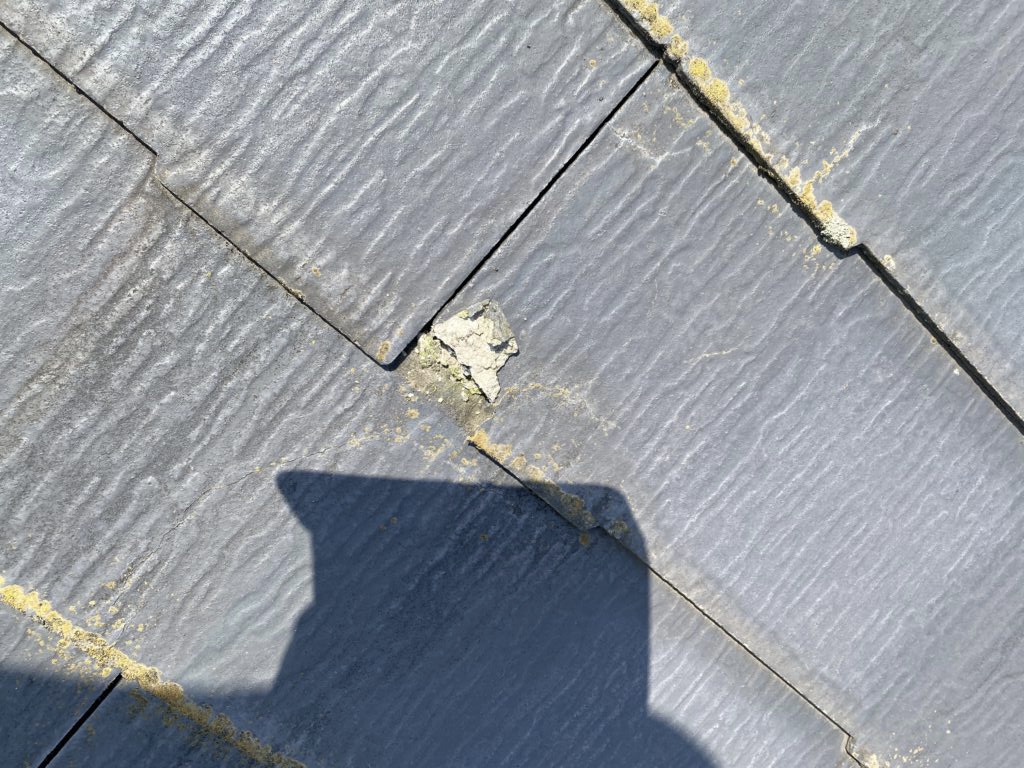
This is what happened after the painting work! Symptoms of Colonial NEO
■Symptoms After Colonial NEO Painting 1: Countless directionless cracks
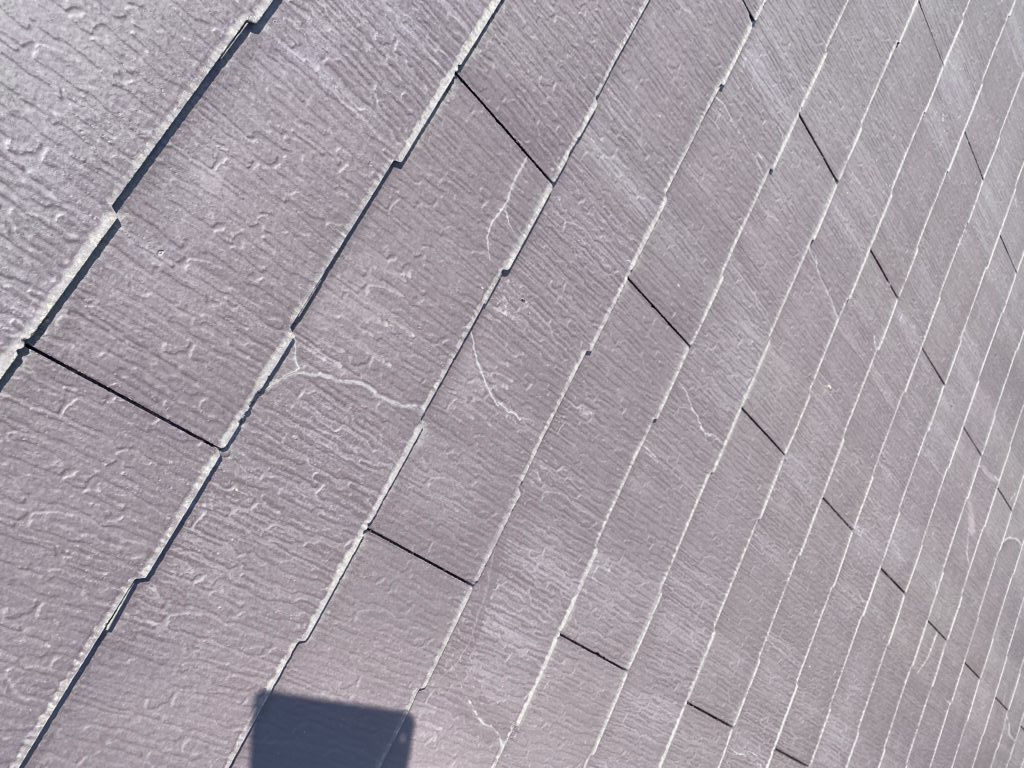
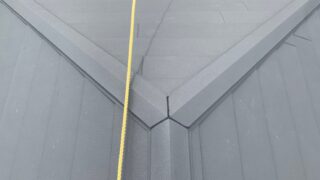
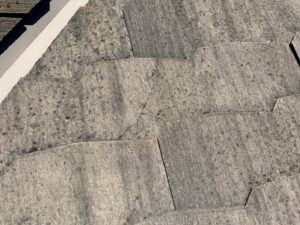
The cracks in the photo appeared within a year after the Colonial NEO painting.
One of the symptoms of Colonial NEO after painting is the presence of countless directionless cracks.
Due to the weak durability of Colonial NEO, it can crack easily, and sometimes even break under a person’s weight when climbing on the roof.
■Symptoms After Colonial NEO Painting 2: Large chips (broken)
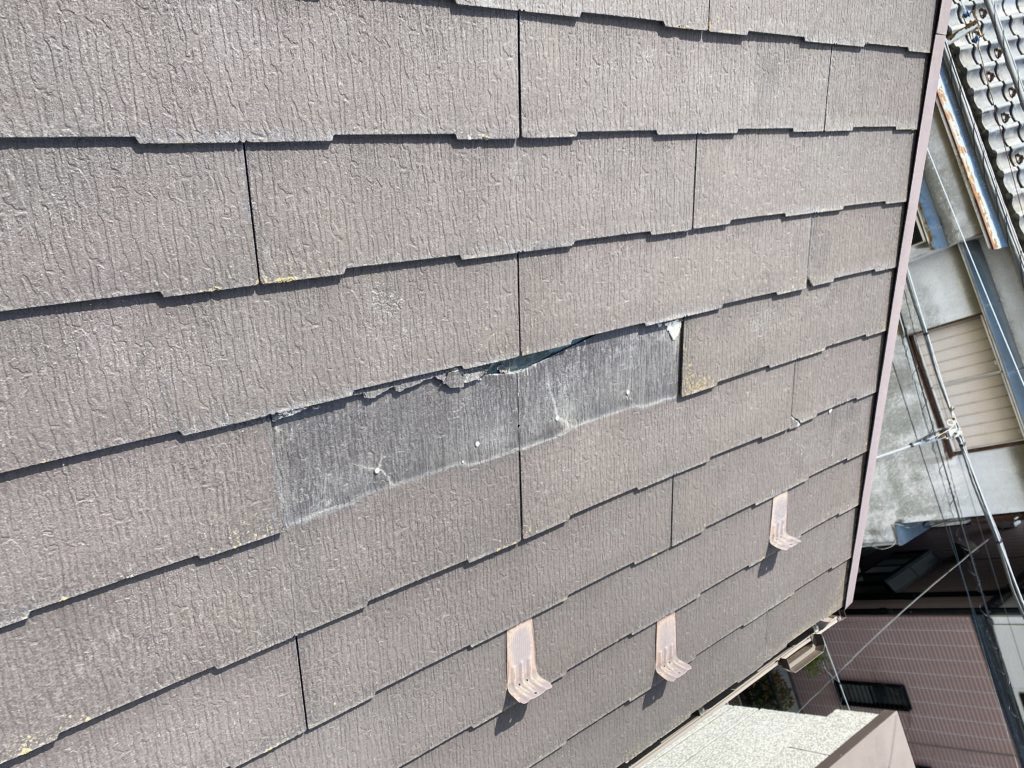
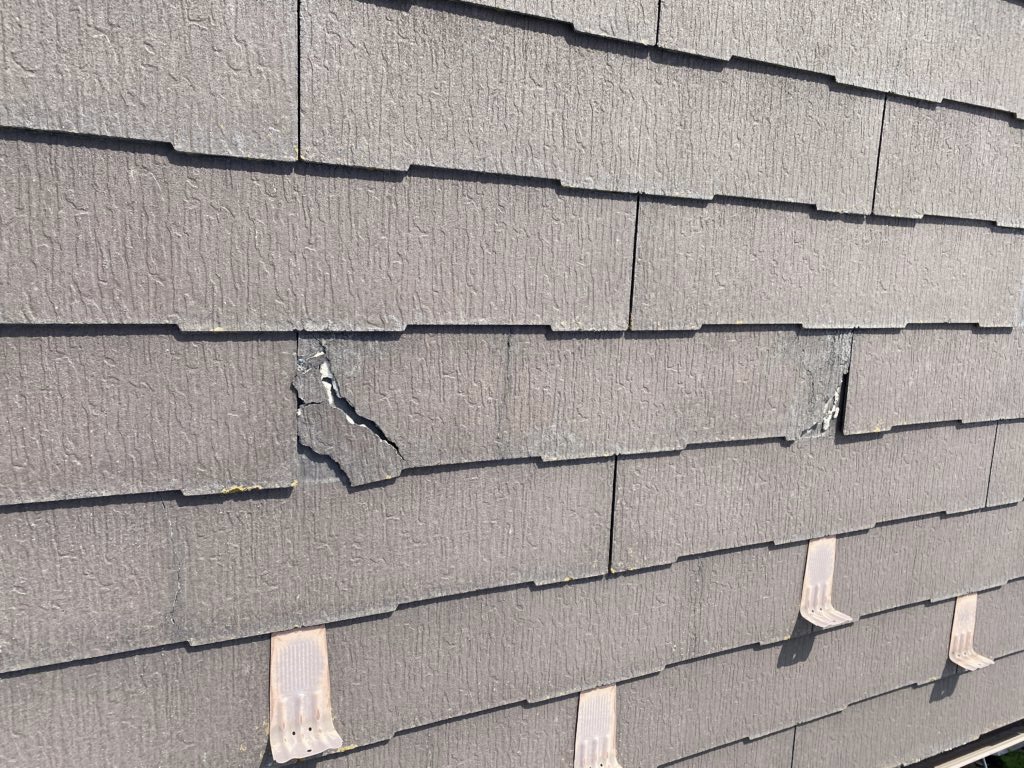
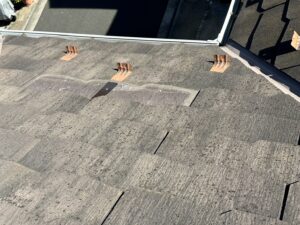
The presence of numerous large chips is also one of the symptoms of Colonial NEO after painting.
It is not uncommon for Colonial NEO to crack and fall off.
■Symptoms After Colonial NEO Painting 3: Discoloration
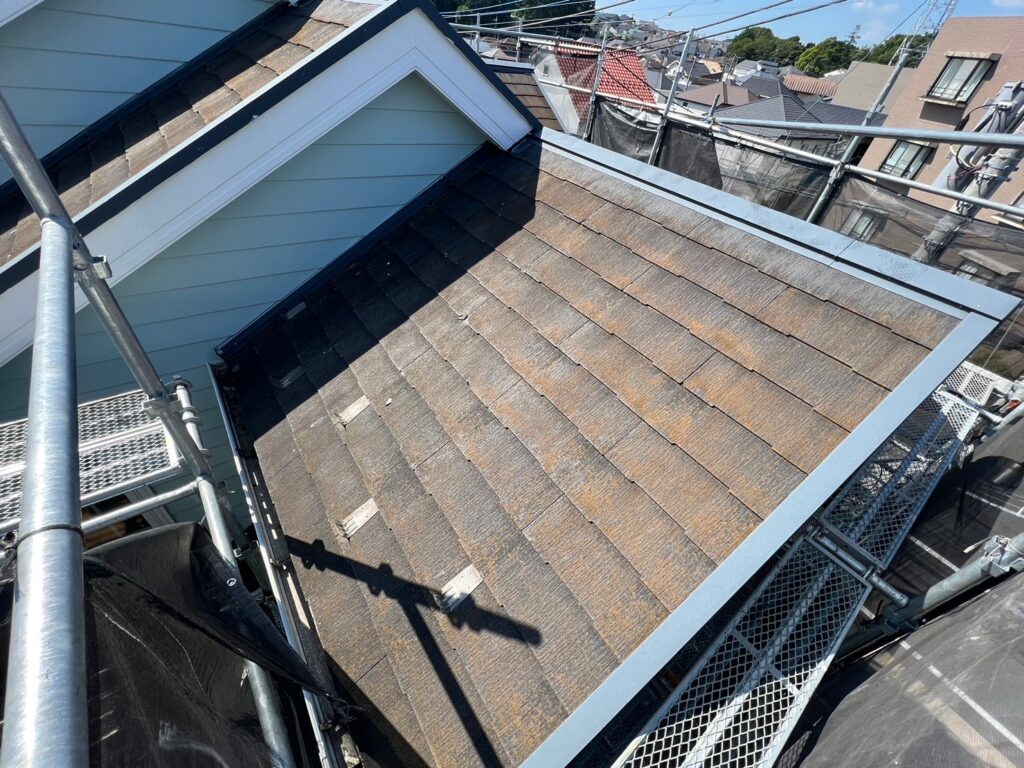
Discoloration can occur as a symptom of Colonial NEO. The discoloration of Colonial NEO can lead to risks such as the detachment or scattering of ridge flashing, which may cause inconvenience to neighbors in some cases.
For information on roof overlay (cover method) work from Colonial NEO, please see below! We hope you check it out!
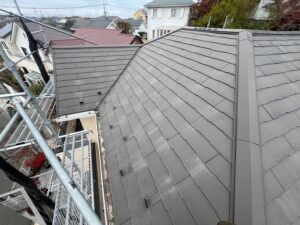
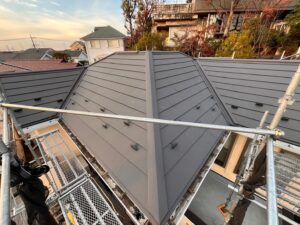
・Asao-ku, Kawasaki City | Roof Cover | We performed cover work from Colonial NEO to Super Galtuct!
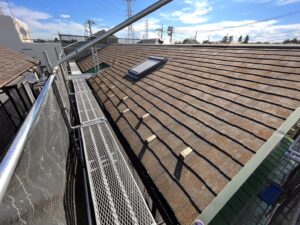
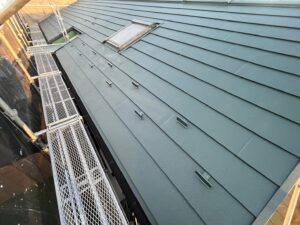
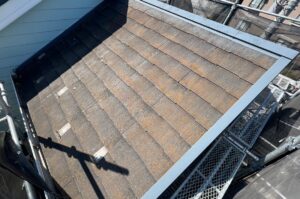
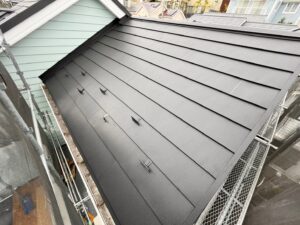
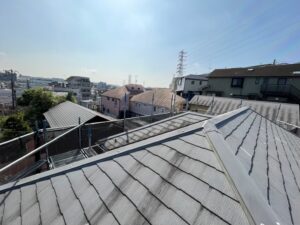
・Aoba-ku, Yokohama City | We performed a roof cover technique from Colonial NEO to Super Galtuct!
3. Roof materials that cannot be painted: Matsushita Electric Works (now: Kameyu) / Resas
Cracks and damage to Resas three months after painting
The photos below show the condition of the roof that was reported to have had materials fall off three months after painting.
This roof material cracks just by walking on it during the roof painting process.
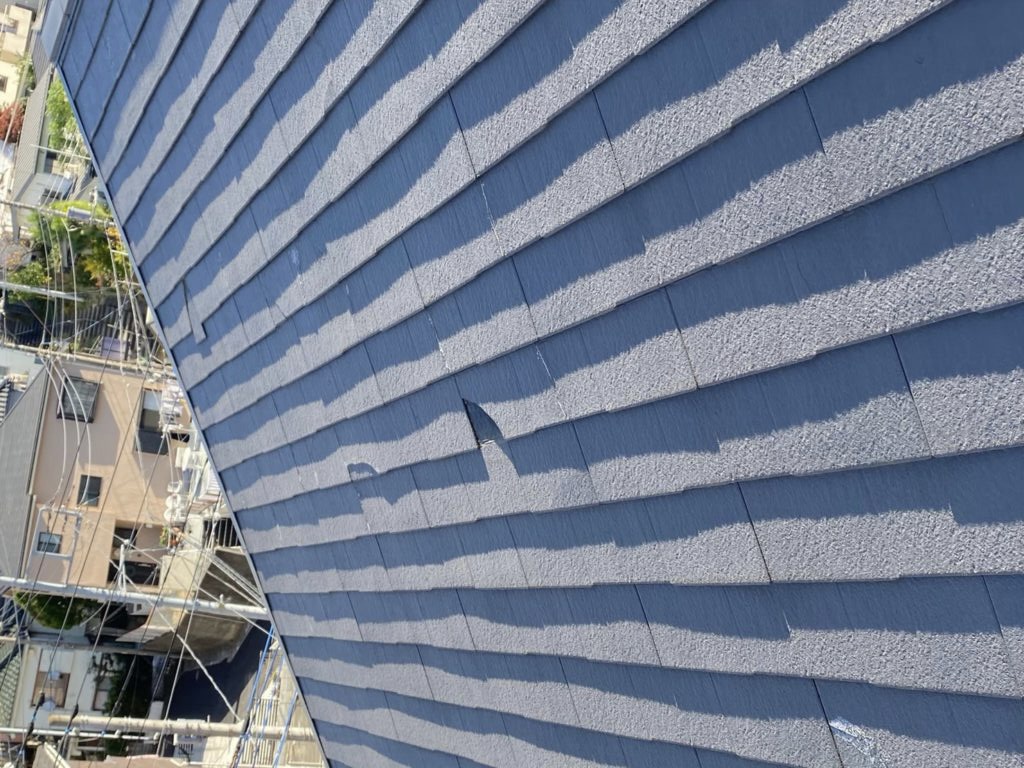

Although it was just painted, we decided to proceed with a roof replacement for safety in the future.
It seems to be more prone to cracking than Colonial NEO.
Care is needed as it can crack just by walking on it during inspections!
For information on the roof overlay (cover method) work from Resas, please see the details below! Be sure to check it out!
・【Aso-ku, Kawasaki】|Roof Repair|Solar Panel Removal and Roof Overlay (Cover Method) Completed! (Resas → Super Galtuct)
4. Roof Materials Not Recommended for Painting: Kubota Matsushita Electric Works (now: Keimyuu) / Grishade NEO
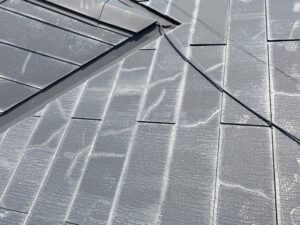
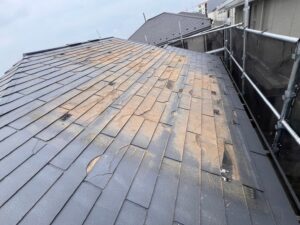
Although not widely known, cracks and breaks have been reported shortly after painting.
The photo shows the condition three years after roof painting.
There were an astonishing number of cracks.
Many contractors may propose roof painting at a lower cost compared to overlay work.
However, we feel it is unfair to our customers if the work becomes wasted, so we generally do not recommend roof painting.
Additionally, there is a roof material that looks the same as Grishade NEO called “Grishade Grassa“.
Grishade Grassa was used by some house manufacturers and is said to be a roof material that does not require painting for 30 years!
However, this material can also occasionally have significant cracking, so regular maintenance is necessary.
If the cracking is severe, it may be better to consider overlay methods or complete replacement.
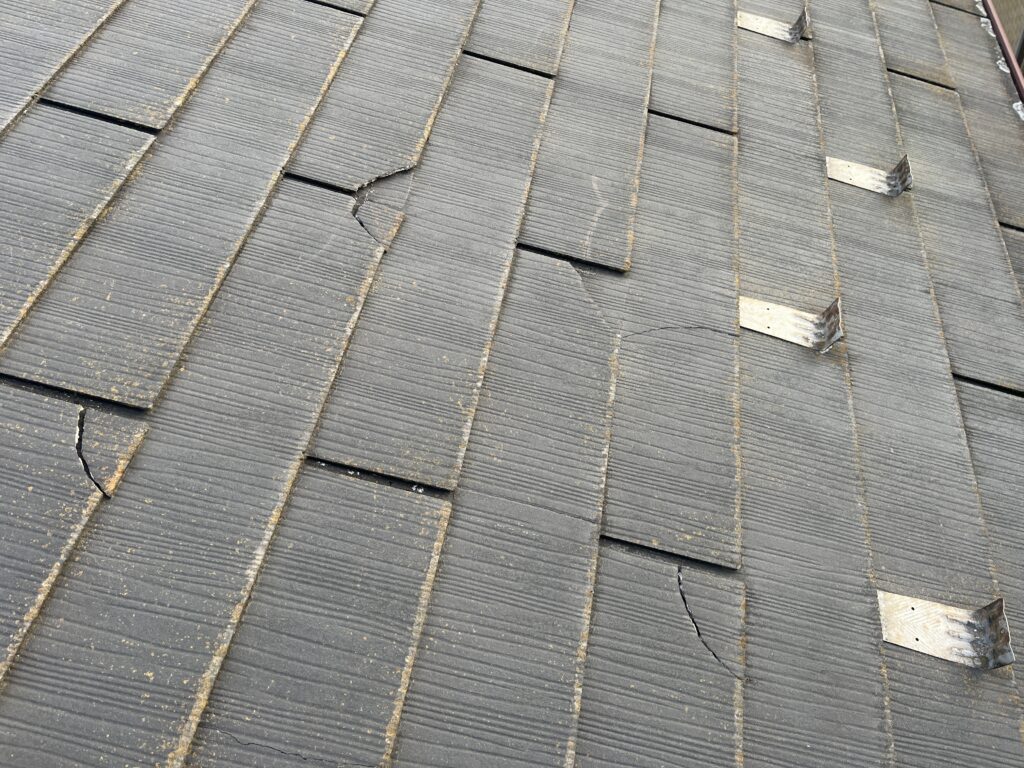
Photo of a 20-year-old Grishade Grassa
Grishade NEO roof overlay construction method is detailed below! Please take a look!
・Nerima-ku, Tokyo|Roof overlay method from Grishade NEO to Super Galtect has been completed!
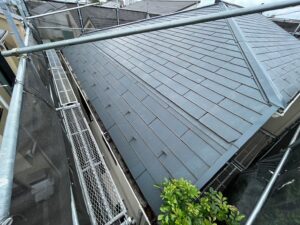
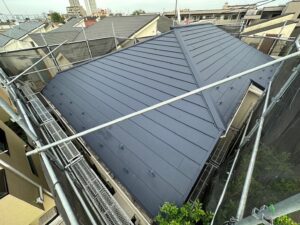
・【Kouhoku-ku】|Roof construction, exterior wall painting, and siding replacement|Exterior remodeling has been completed! (Grishade NEO → Super Galtect)
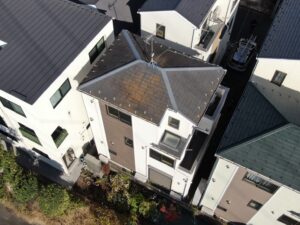
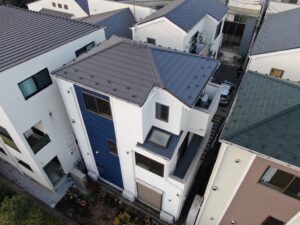
・Aoba-ku, Yokohama | Roof Repair | We performed the roof overlay (cover method) using Super Galtect! (Grisheid NEO → Super Galtect)
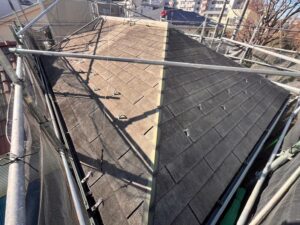
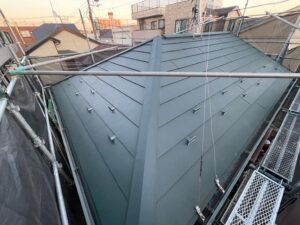
・Asahi-ku, Yokohama | Roofing Work | We performed the roof overlay (cover method) and joint sealing work! (Grisheid NEO → Super Galtect)
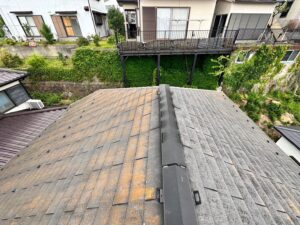
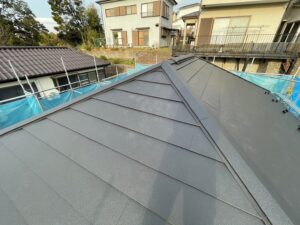
5. Roof Materials Not Recommended for Painting: Kubota Matsushita Denko / Eco Simple
This roof has also been painted frequently, but it is prone to cracking and breaking easily.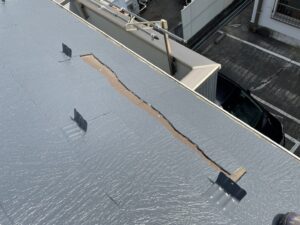
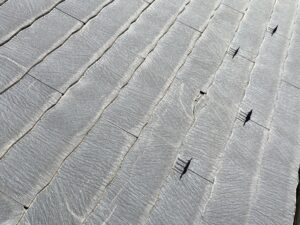
This is an example of cracking that occurred two years after painting.
The roofing materials mentioned above are not listed as paintable materials, but our company prohibits painting them.
Colonial NEO, Pamir, Resas, Grishade NEO, and Eco Simple do not contain asbestos.
Originally, Colonial, slate, and color best contained asbestos.
The non-asbestos roofing materials that were introduced when the use of asbestos was banned have many issues…
Eco Simple roof overlay construction is detailed below! Please take a look!
・Aoba-ku, Yokohama | We performed a roof overlay using Super Gartets from Eco Simple!
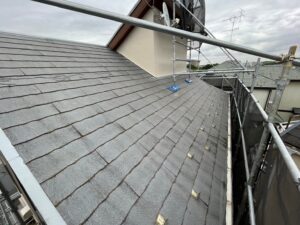
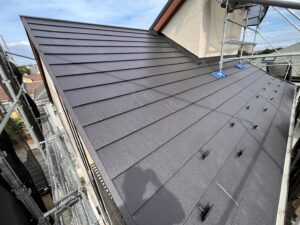
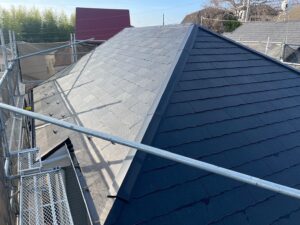
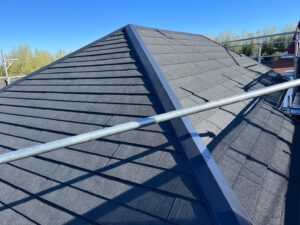
・Machida City, Tokyo | Roof Work | We performed a roof renovation using Dipromat Star! (Eco Simple → Dipromat Star)
6. Roof materials not recommended for painting: Sekisui Roof Tech (now Sekisui Roofing System Co., Ltd.) / Sekisui Tile U
This roofing material was discontinued in 2007. It was sold for about 40 years and is still commonly seen today.
There are Sekisui Tiles U that contain asbestos and those that do not.
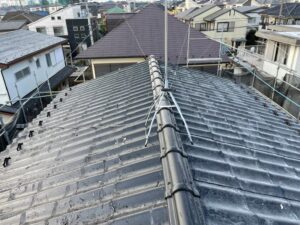
Sekisui Tiles U that do not contain asbestos have severe cracking, and we consider them not suitable for painting.
As this is a discontinued product, replacement is also not possible.
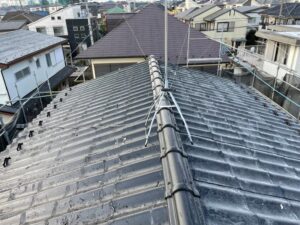 ※This is a photo of Sekisui Tile U (without asbestos).
For roof overlay work using Sekisui Tile U, we have detailed information below! Please take a look!
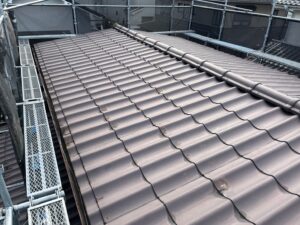
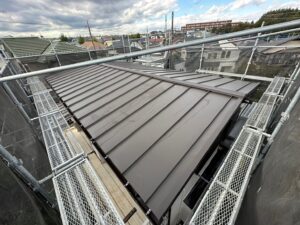
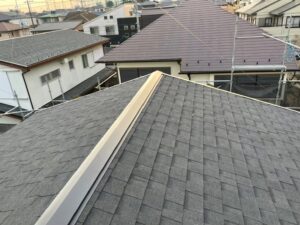
・Tsuzuki-ku, Yokohama City | We performed roof replacement work using Stanby 333! (Roof Renovation) (Tile U to Stanby 333)
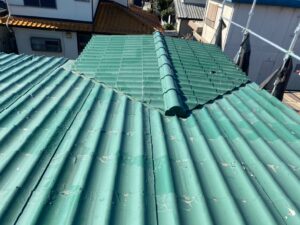
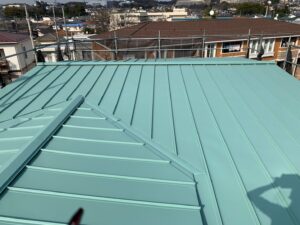
7. Roof materials not recommended for painting: Kubota Corporation / Zalfgrasa
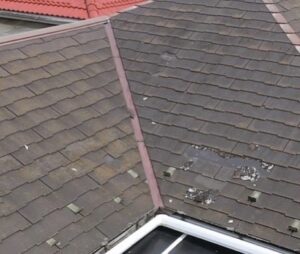
It looks similar to Colonial NEO, but Zalfgrasa has a more angular shape. (I apologize for the poor explanation.)
Like Colonial NEO, it is very prone to cracking, and even if painted, it will crack quickly, so in the long run, the roof overlay method is safer.
We have detailed information about the roof overlay method using Zalfgrasa below! Please take a look!
・Tama Ward, Kawasaki City | We performed a roof overlay method from Zalfgrasa to Hulan Bee 220!
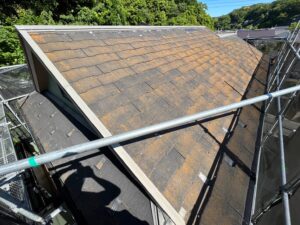
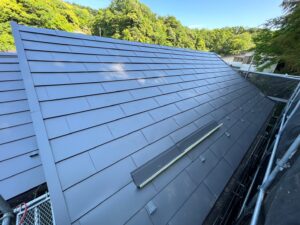
8. Roof materials not recommended for painting: Kubota / Urbanie
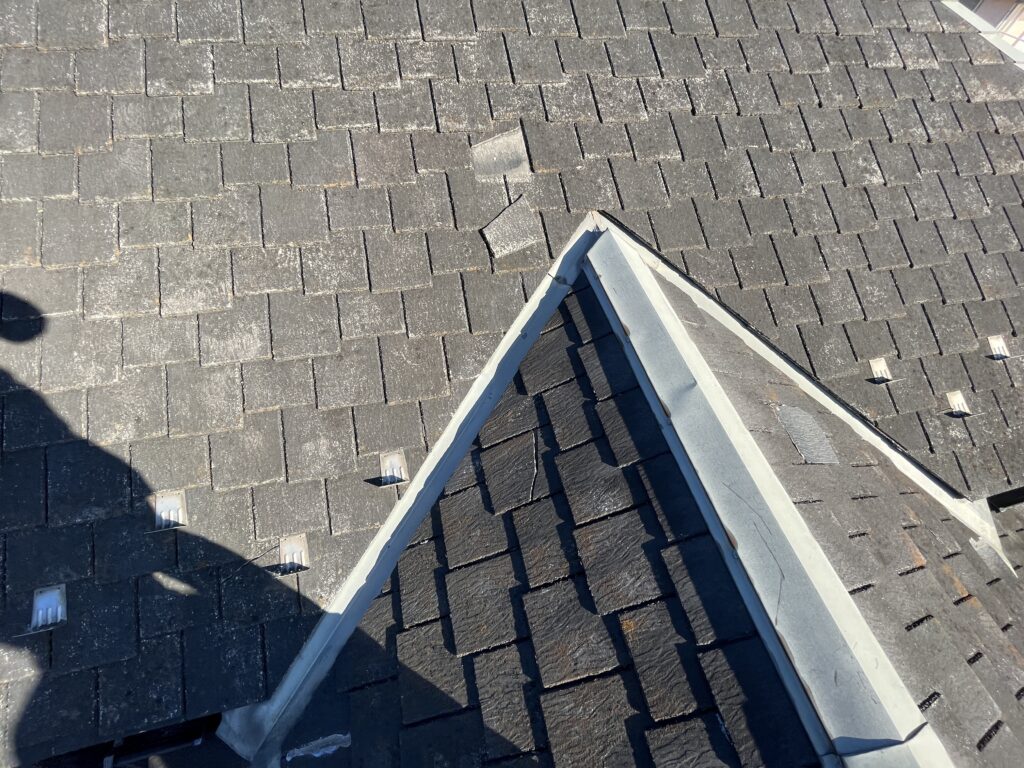
Urbanie, with its distinctive appearance, has excellent design qualities and is still a commonly seen roofing material!
Compared to other roofing materials, it is thicker, but it is also prone to falling and breaking.
There are two types of Urbani: those that contain the now-banned asbestos and those that do not.
The type of Urbani that does not contain asbestos is particularly brittle, leading to frequent breakage and falling off. During inspections, it may come loose like a skateboard, so caution is advised.
There are three types of Urbani, as listed below.
Types of Urbani
・Urbani
Asbestos content: 10–15%
Manufacturing years: 1982–1994
・New Urbani
Asbestos content: 0.1%–1%
Manufacturing years: 1994–2001
・Urbani Grasa
Asbestos content: None
Manufacturing years: 2001–2005
Another reason why painting Urbani is not recommended
When painting colonial (slate) roofs, the gaps between the roofing materials can be sealed by the paint, so it is generally necessary to perform ” cutting the edges ” or ” installing spacers ” to ensure ventilation and moisture escape.
Unlike other slate roofing materials, Urbani is hard, and attempting to install edge cuts or spacers can lead to breakage, making the edge cutting process difficult.
Since edge cutting is an important step when painting roofs, the difficulty of edge cutting on Urbani roofs is one reason why painting them is not recommended.
For more information on spacers, click here!
For information on roof overlay work using Urbani, please see the details below! We encourage you to check it out!
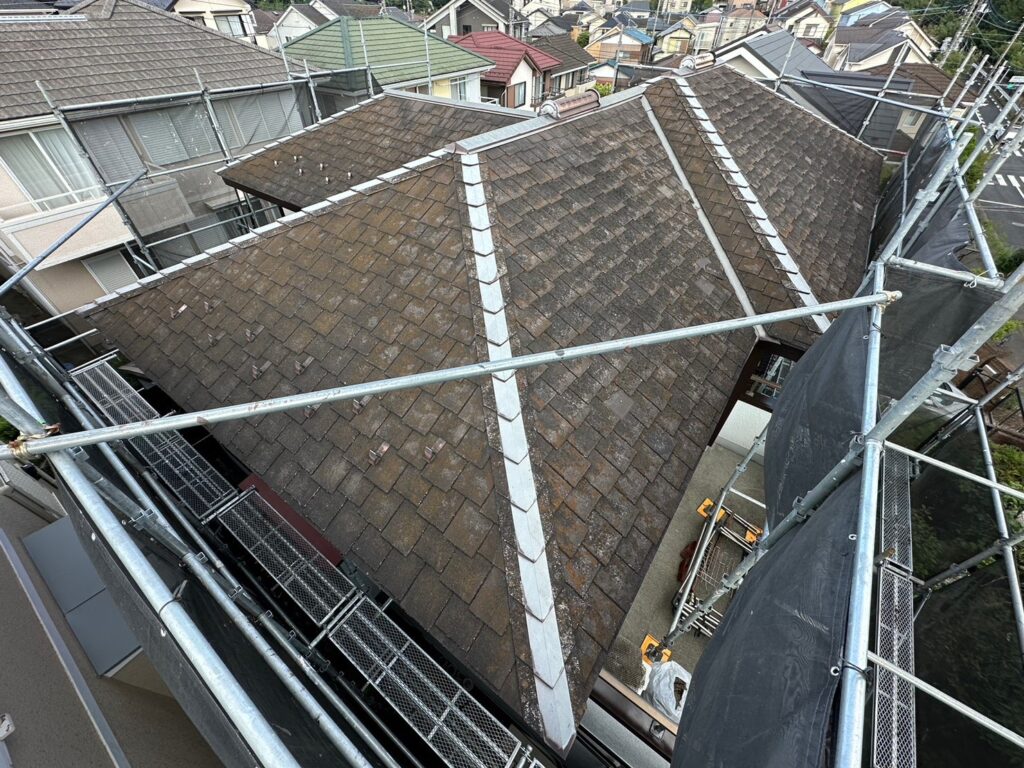
9. Roof Materials Not Recommended for Painting: Daiken Industries/Nature
At first glance, the shape of this roofing material resembles Urbanie.
This roof has a unique impression and is not commonly seen.
However, upon inspection, there are quite a few cracks and breaks present.
10. Roof Materials Not Recommended for Painting: Kubota Corporation/Savory NEO
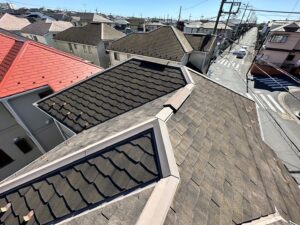
Savory NEO has a distinctive shape. This roofing material is also prone to cracking, so painting is not recommended.
Can Roof Materials That Cannot Be Painted Be Replaced?
Replacing roofing materials refers to the process of replacing damaged roofing materials one at a time!
If the ceramic tiles are not discontinued, they can be replaced without tools.
Colonial (slate, color best) requires special tools for replacement.
To conclude, replacement is possible but not recommended.
Roof materials that cannot be painted are discontinued, so current roofing materials will be used as substitutes.
Reasons Not to Recommend Replacing Roof Materials That Cannot Be Painted

・Because it can damage other roofing materials during replacement
The replacement of colonial roofing involves using special tools to remove the existing roofing materials, as explained earlier. When removing them, it inevitably impacts the other roofing materials.
・Because they can easily crack and it becomes endless
Even roofing materials that are not damaged have been in place for the same number of years as those that are damaged. During inspections three months after replacement, new cracks or fissures may appear. This can lead to a never-ending cycle of replacements, resulting in wasted costs.
For roofing materials that cannot be painted like Pamir, the roof overlay method is recommended!‼︎
What is the roof overlay method?
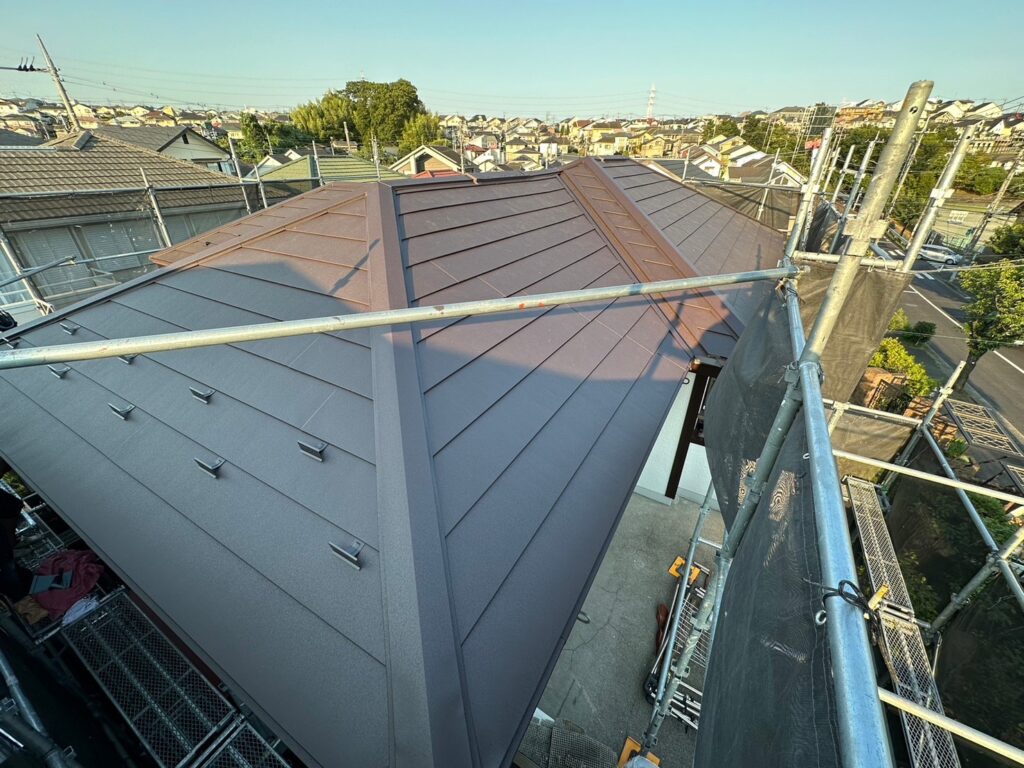
The roof overlay method involves leaving the current roof almost intact and placing a new roof on top of it, effectively covering it.
Literally, it is a method of covering a roof with another roof. Therefore, the roof becomes double-layered. Since the roof is laid over, it is also referred to as “overlapping roofing.”
Advantages of the overlay method
Since you are placing a “new roof” over the “current roof,” dismantling work is almost unnecessary, meaning very little waste is generated.
This is its most significant feature, leading to various advantages.
The only part that requires dismantling and waste disposal is the ridge cap, making it more cost-effective compared to complete roof replacement!
If you are unsure whether your roof materials can be painted or if you know they cannot and are wondering what to do, please consult us!
We will propose solutions!
For exterior renovations, trust Kakeru Koumuten Co., Ltd.!
Our company specializes in roofing work, and the roof overlay method is the most frequently performed service we offer. We are very grateful that we continuously carry out roof overlay projects without interruption.
The roofing material we install the most is Aiji Gokyo/Super Galtect!
It excels in durability, insulation, and wind resistance!
Please take a look at our construction achievements as well!
If you have any concerns regarding roofs, rain gutters, or exterior walls, please consult Kakeru Koumuten Co., Ltd.!
We carry out everything from temporary scaffolding work to roofing and exterior painting completely in-house. We are confident that we excel in cost, quality, and organization compared to other companies in exterior work!
We welcome competitive estimates as we are confident in our services!
We are committed to handling every request with sincerity to ensure you feel satisfied with your choice.
We look forward to your inquiries. Thank you very much.
・Aoba-ku, Yokohama | We have completed a roof replacement from Monier tiles to Super Gartects!
・Aoba-ku, Yokohama | We have performed exterior wall painting with premium silicon!
・Kohoku-ku, Yokohama | Balcony cap replacement | Leak prevention measures through cap metal replacement!
・Painting DIY Plan! A must-see for those who want to try DIY roof and exterior wall painting! We will only set up the scaffolding!
・About the cost of roof overlay | Kakeru Koumuten’s roof construction plan!
・About the cost of exterior wall painting | Kakeru Koumuten’s exterior wall painting plan!
・About the cost of leak repairs | Kakeru Koumuten’s leak repair plan!
・Ridge cap replacement | About the cost of surface plaster | Kakeru Koumuten’s construction plan!
・Latest | About subsidies and reduction systems available for renovations!
・What is Kasagi? We will explain the role and repair methods of kasagi in detail!
・Renovation store in Yokohama, Kanagawa Prefecture | What is roof overlay (roof cover method)?
LINE consultations are also very welcome◎

We are also updating our Instagram regularly◎ Please follow us◎
contact Kakeru Koumuten Co., Ltd.
Kakeru Koumuten is a young company whose team is, on average, in their late twenties, but our skills are second to none.
Our greatest strength is that we handle scaffolding, roofing and painting entirely in-house. In an industry where these tasks are usually divided among contractors, our complete service simplifies project management and helps keep costs down. Above all, if a problem arises, we respond promptly.
We proudly describe ourselves as the youngest and most helpful renovation company in Kanagawa!