Leave the repairs and renovations of condominiums and apartments in Ebina City, Kanagawa Prefecture to Kakeru Koumuten Co., Ltd.!
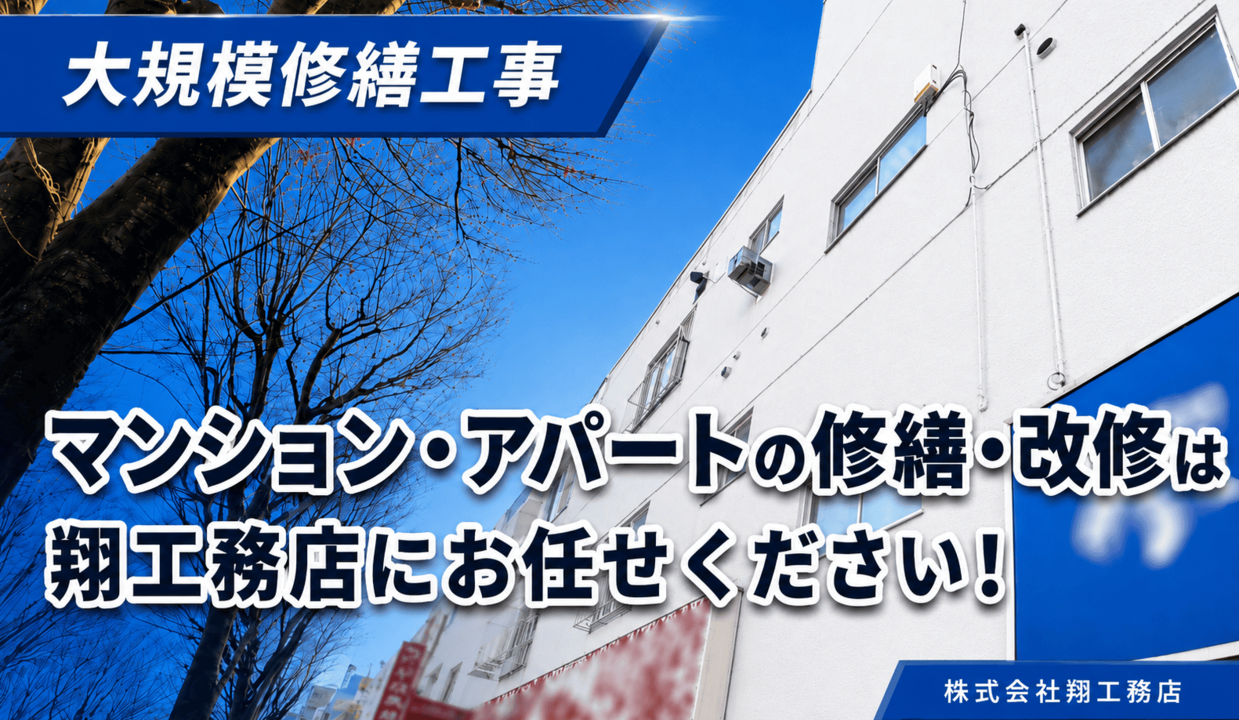
Large-Scale Repairs for Condominiums, Apartments, and Buildings in Ebina City, Kanagawa Prefecture
To owners, management associations, and management companies considering large-scale repairs for condominiums, apartments, and buildings in Ebina City, Kanagawa Prefecture.
Kakeru Koumuten Co., Ltd. is an exterior repair company that handles everything from the installation of temporary scaffolding to substrate repairs, exterior wall painting, tile repairs, sealing, waterproofing for rooftops and balconies, and roofing work, all managed and performed by our own team. We have undertaken numerous large-scale repairs and exterior renovations for apartments, condominiums, and commercial facilities in Ebina City.
- On-site surveys and estimates are completely free (multiple estimates are welcome)
- Comprehensive management from temporary scaffolding to exterior and roofing work
- Our own scaffolding team handles sites in Ebina City, from condominiums to apartments
- Consultations for partial repairs and emergency measures for leaks are also possible
- Cost Estimate / For condominiums, the cost is approximately 750,000 to 1,500,000 yen per unit (about 70% fall within this range according to the Ministry of Land, Infrastructure, Transport and Tourism’s 2021 survey, with the most common being 1,000,000 to 1,250,000 yen. This amount excludes consumption tax and common temporary costs). For wooden apartments, the estimate is around 2,000,000 to 4,000,000 yen per building.
- Cycle Estimate / 12 to 15 years. However, the deciding factor is not the number of years but the condition of deterioration.
- Particularly Relevant in Ebina City / Approximately half of households live in collective housing, and about half of the residences are over 26 years old, making second and third repairs the focus. The temperature differences caused by high summer temperatures and sub-zero winter temperatures, intense short-duration rainfall, and the color standards of the landscape plan applied throughout the city are significant factors.
- Available Funds / While there are no confirmed subsidies specifically for large-scale repairs, if requirements are met, there may be a one-third reduction in fixed asset tax (for work completed by the end of March 2027), national subsidies if including windows and insulation, and public financing may be available.
- Tips for Success / At least three comparative estimates. Compare not just the amounts but also the quantities, methods, and materials.
Large-scale repair work that can be handled in Ebina City, Kanagawa Prefecture
Large-scale repairs are not just “exterior wall painting” or “waterproofing,” but a comprehensive repair of the entire building’s deterioration while scaffolding is in place. At Kakeru Koumuten, we can handle all of the following work in-house, ensuring clear responsibility and coordination of the process.
| Type of Work | Main Contents |
|---|---|
| Temporary Scaffolding Work | Installed by our own scaffolding team using our own scaffolding materials. We handle mesh sheets, protection, and fall prevention measures. |
| Substrate Repair Work | Crack repairs, injection of floating mortar and tiles, explosion (exposed rebar) repairs, resin mortar repairs for missing parts. |
| Exterior Wall Painting Work | High-pressure washing, three coats of paint from primer to topcoat, painting of ancillary parts (iron parts, gutters, water cut-offs, etc.). We accommodate radical control type, fluorine, and inorganic paints. |
| Tile Repair Work | Replacement of broken tiles, joint repairs, clear waterproofing of tile surfaces (such as Seven S). |
| Sealing Work | Re-sealing around sashes and exterior wall joints, additional sealing. |
| Waterproofing Work | Urethane waterproofing for rooftops, roof balconies, shared corridors, and stairs, PVC sheet waterproofing, and installation of long sheets. |
| Roof Work | Roof painting, roof overlay (cover method), re-roofing, and ridge cap replacement. We have sheet metal craftsmen on staff and can handle large roofs such as factories. |
| Iron and Metal Work | Surface painting of steel stairs, handrails, and PS doors, replacement of caps and water cut-offs. |
| Drainage and Wastewater Work | Cleaning and renovation of roof drains (inserting renovation drains), resolving gutter clogs. Drainage issues can cause puddles and leaks, making this work particularly important for buildings with rooftops. |
| Others | Replacement of rain gutters, rooftop and exterior wall inspections using drones, leak investigations using thermography, and preliminary investigations of asbestos-containing materials. |
Scope of Major Repairs Determined by Building Diagnosis
It is not always necessary to perform all of the above works. The extent of the work will be determined based on the results of the building diagnosis. At Kakeru Koumuten, we conduct a free on-site survey to confirm the items below and compile a deterioration diagnosis report with photos, after which we will propose the scope of work.
| Diagnosis Area | Main Inspection Method | Construction Scope Determined by Diagnosis Results |
|---|---|---|
| Exterior Wall (Painted Surface) | Visual inspection, checking the width of cracks and the condition of the paint film | Method and quantity of crack repairs, specifications for painting (whether to repaint or paint after removing the existing paint film) |
| Exterior Wall (Tile Surface) | Tap testing. High areas checked with a drone | Scope and estimated quantity for injection and replacement, whether clear waterproofing is necessary |
| Sealing | Checking for cracks, shrinkage, peeling, and hardening | Whether to replace or add to the existing seal, scope of joints to be worked on |
| Rooftop, Balcony, Shared Corridor | Checking for blisters or breaks in the waterproof layer, puddles, and the condition of drains | Full renovation or partial repair, method (urethane waterproofing, PVC sheet waterproofing, long sheet), whether drain renovation is necessary |
| Leak Areas | Investigation using thermal imaging cameras and drones | Identification of the cause and the priority areas for repair |
| Metal Parts, Roof, Accessories | Checking for rust, corrosion, lifting, and cracking | Whether painting is sufficient or if material replacement or cover method is necessary |
| Site and Surroundings | Checking retaining walls, slopes, trees, access routes, and parking | Planning for scaffolding and the scope of temporary construction |
Reasons Why Kakeru Koumuten is Chosen for Large-Scale Renovations in Ebina City, Kanagawa Prefecture

The reason why we can be entrusted with large-scale renovations in Ebina City is due to our “initiatives that cannot be imitated by other companies in large-scale renovation work”, which have received high praise from many customers.
1. Equipment Specialized for Exterior Renovations
At Kakeru Koumuten, we have prepared the following warehouses and material storage areas to provide exterior wall painting and waterproofing work for large-scale renovations at low cost and high quality. We have established five bases centered around Yokohama City for material storage and showrooms.
In-house Ownership of Scaffolding Materials
 We own the scaffolding materials necessary for temporary scaffolding required for large-scale renovations and can assemble the scaffolding ourselves.
By performing scaffolding work with our own scaffolding team instead of outsourcing, we can cut costs related to scaffolding work and provide quick and flexible responses.
We have approximately enough scaffolding materials for 100 single-family homes!
Storage of Materials in Our Large In-house Warehouse
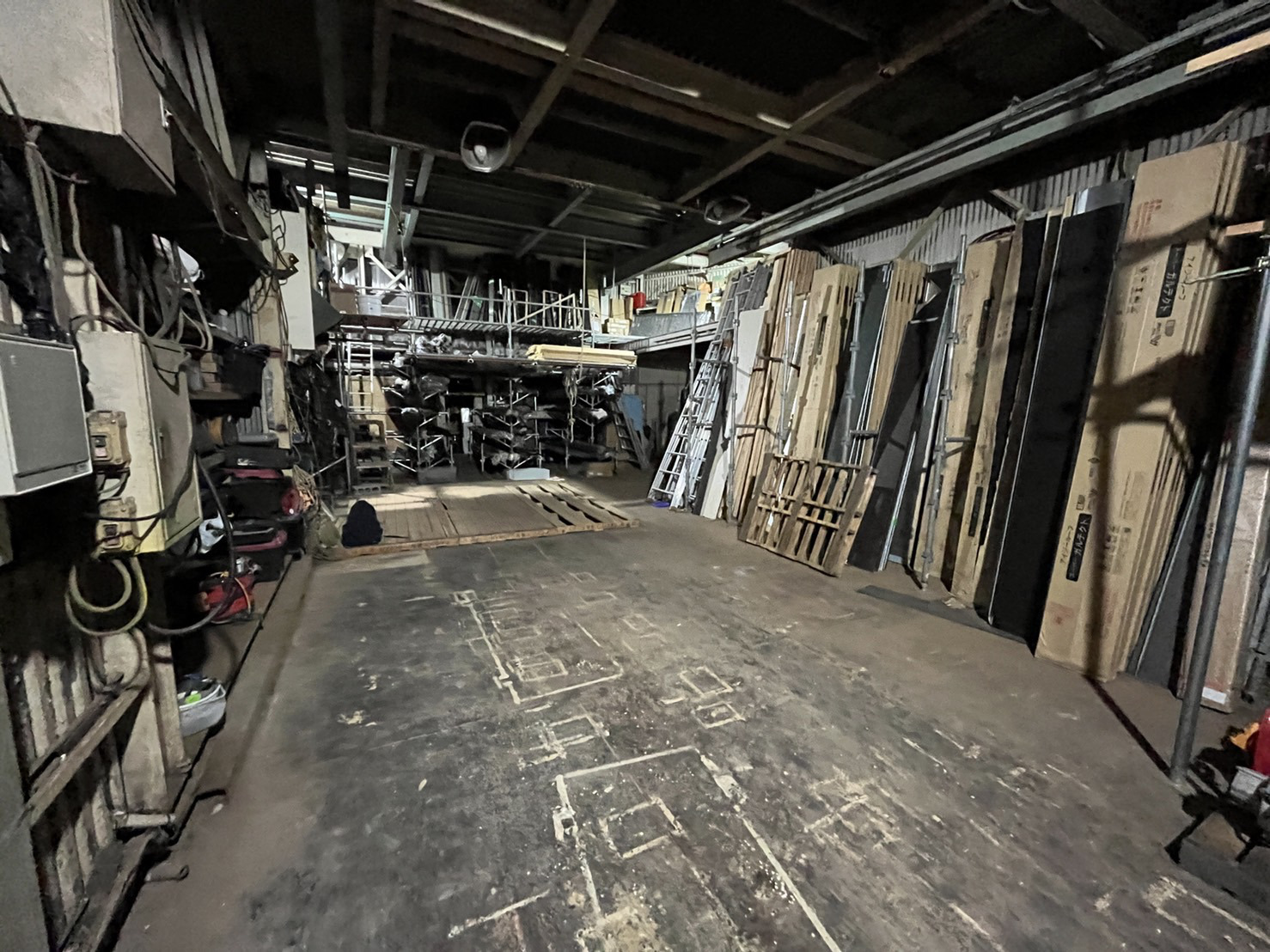 We store paints and substrate repair materials used for exterior renovations. By ordering a large quantity of materials at once, we canprocure materials at a lower cost! Additionally, since we always have stock available, we can provide speedy responses in emergencies!
In-house Sorting of Waste Materials
 In large-scale renovations, various waste materials such as waste paint, metal, and wood are generated. At Kakeru Koumuten, we sort and recycle waste materials in-house, leading to cost reductions in waste disposal fees.
Showroom Dedicated to Exterior Renovations

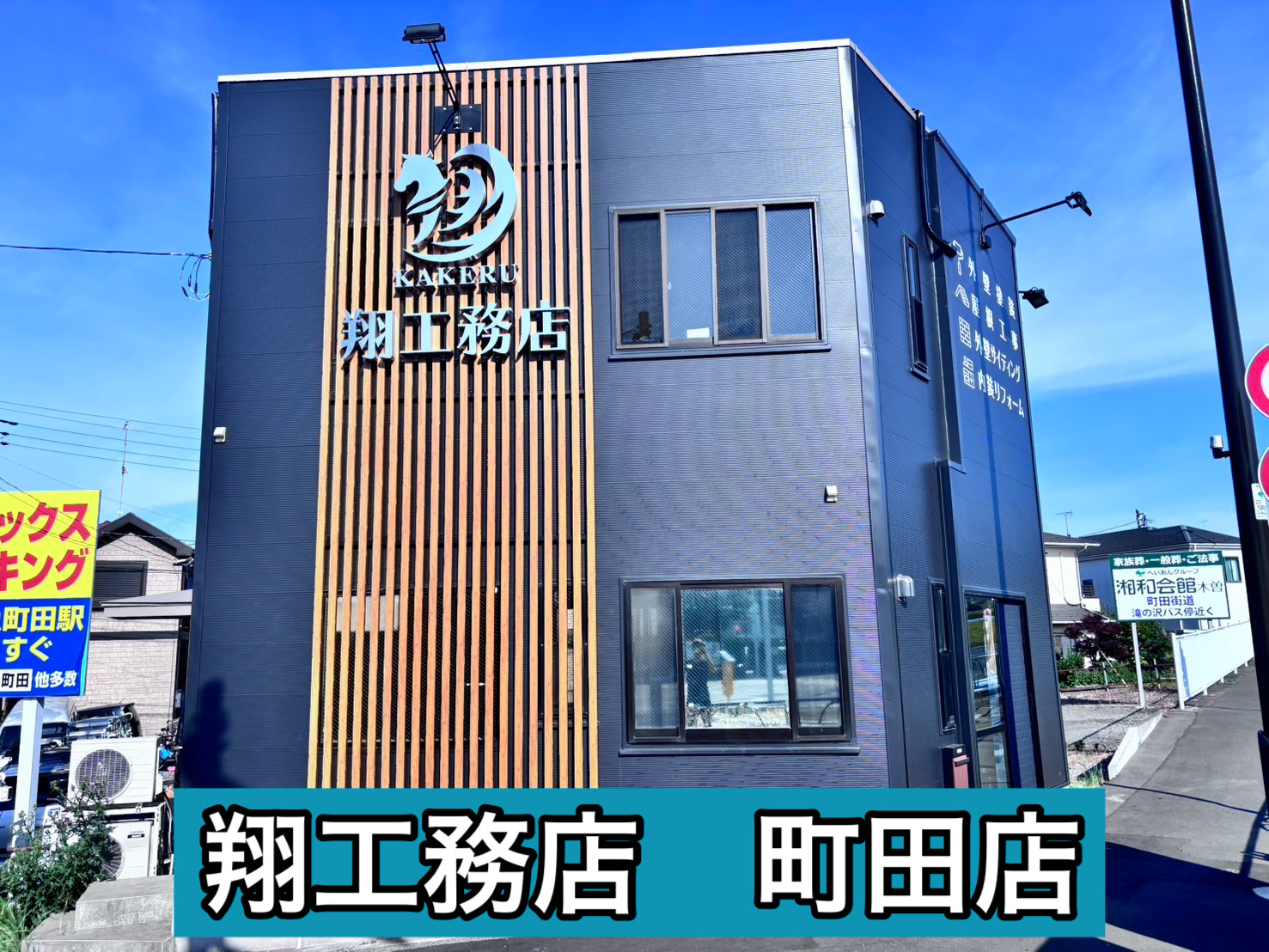
In the showroom, not only can you have meetings, but you can also check actual samples and colors of exterior materials. Color simulations for exterior wall painting and heat insulation tests are also available!
2. Cost Reduction through In-House Management and Construction
 One of Kakeru Koumuten’s major strengths is in-house management and construction.
From inquiry to project completion, everything is managed by Kakeru Koumuten in a consistent system, allowing for high-quality large-scale repairs at reduced costs. Additionally, one representative will handle everything from the estimate to project completion. Since the same person is responsible for sales and construction management, smooth communication is possible.
We can handle everything from temporary scaffolding installation to exterior wall painting, substrate repair, waterproofing work, and tile repairs with complete in-house construction! Those with specialized knowledge and experience conduct inspections and actual construction for each process!
3. Obtaining Various Permits and Skilled Workers
 We have obtained construction industry permits and permits for industrial waste collection and transportation! We also have national certified sheet metal and painting skilled workers on staff, giving us confidence in our construction techniques. We can also handle large-scale roofing work for factories! We have qualified personnel for asbestos work supervisors and building material asbestos surveyors, allowing us to handle asbestos-containing roofing materials and conduct preliminary surveys.
4. Warranty and Aftercare
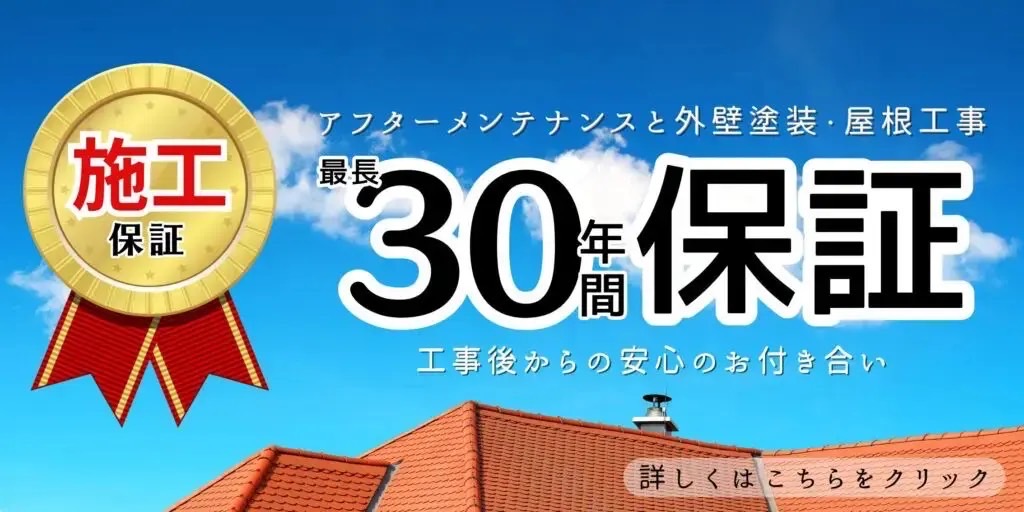
Most large-scale repair works, including “painting work,” “substrate repair work,” and “waterproofing work,” come with a warranty!
Aftercare is available every year, and we send out notification DM each year.
5. Flexible and Prompt Response

Our company is equipped to handle various troubles and situations in apartments and condominiums.
We can also address exterior walls and rooftops that cannot be checked from high places using drones! During leak investigations, we can use a thermal imaging camera to help identify the cause of leaks!
We will respond according to your wishes. We also accept emergency measures for sudden leaks! We will promptly respond to urgent requests and emergencies!
6. Staff Development
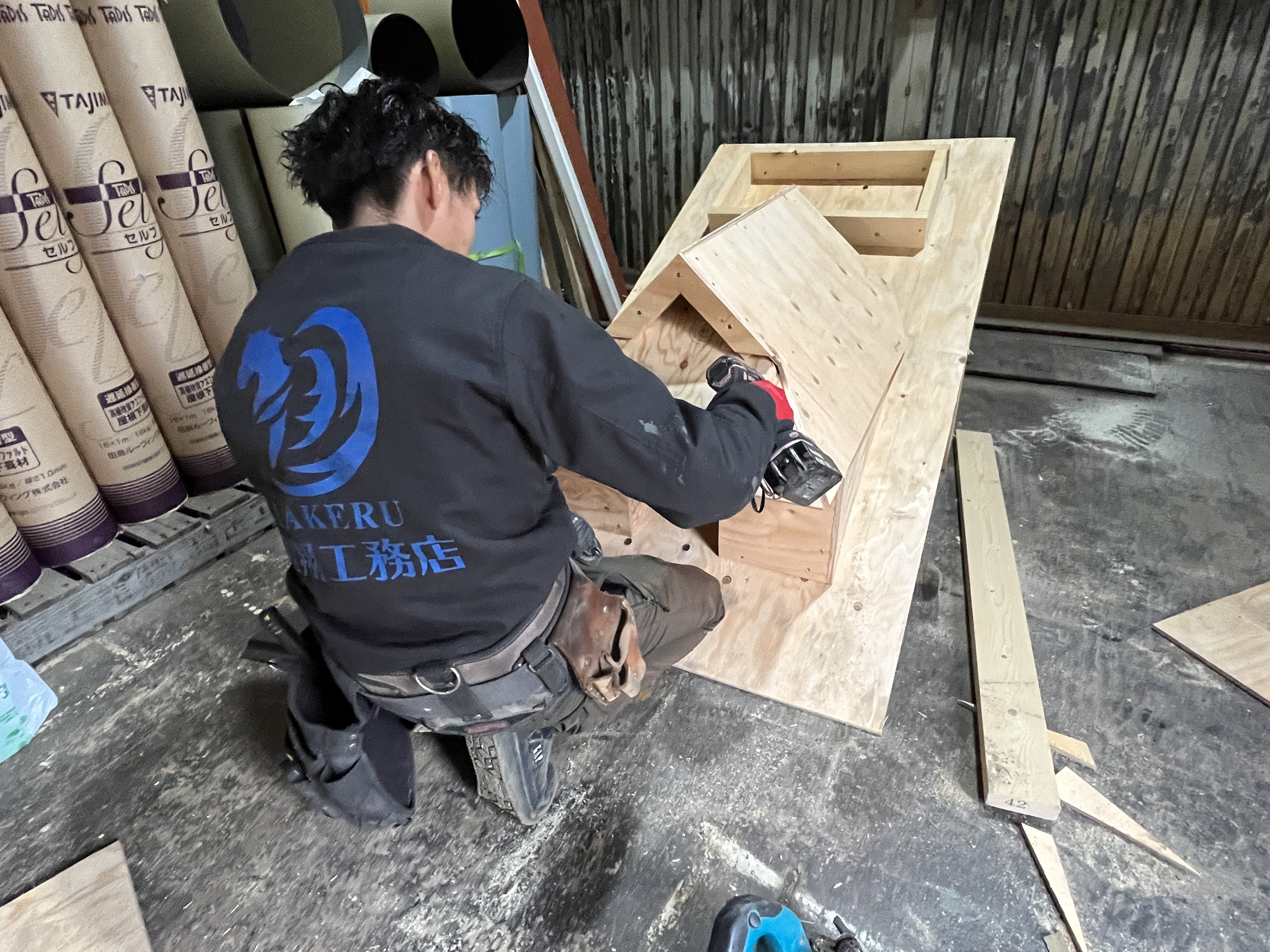
Our staff create various models for skill improvement and conduct practical training. Since different sites require various processing and techniques, we regularly provide skill enhancement education to ensure that each staff member can respond appropriately. We also educate on points to pay attention to and areas to check in each process of large-scale repair work.
7. Consideration for Residents and Neighbors
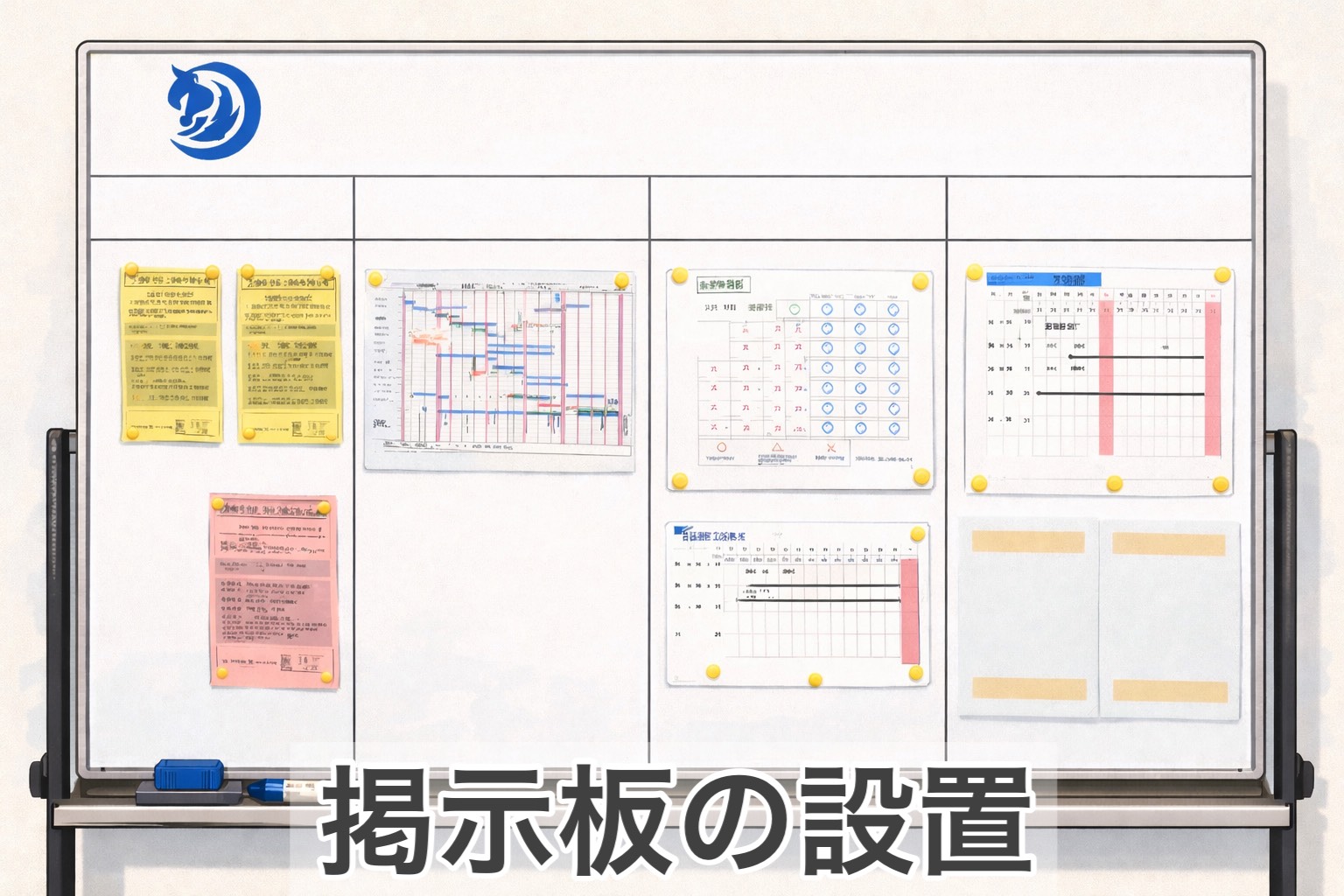
During large-scale repair work, we will not only notify residents and greet nearby residents, but also install a bulletin board at the entrance to display the construction schedule and notices! Additionally, we will thoroughly educate visitors on proper manners to minimize any inconvenience to residents and neighbors.
8. Strict Quality Control
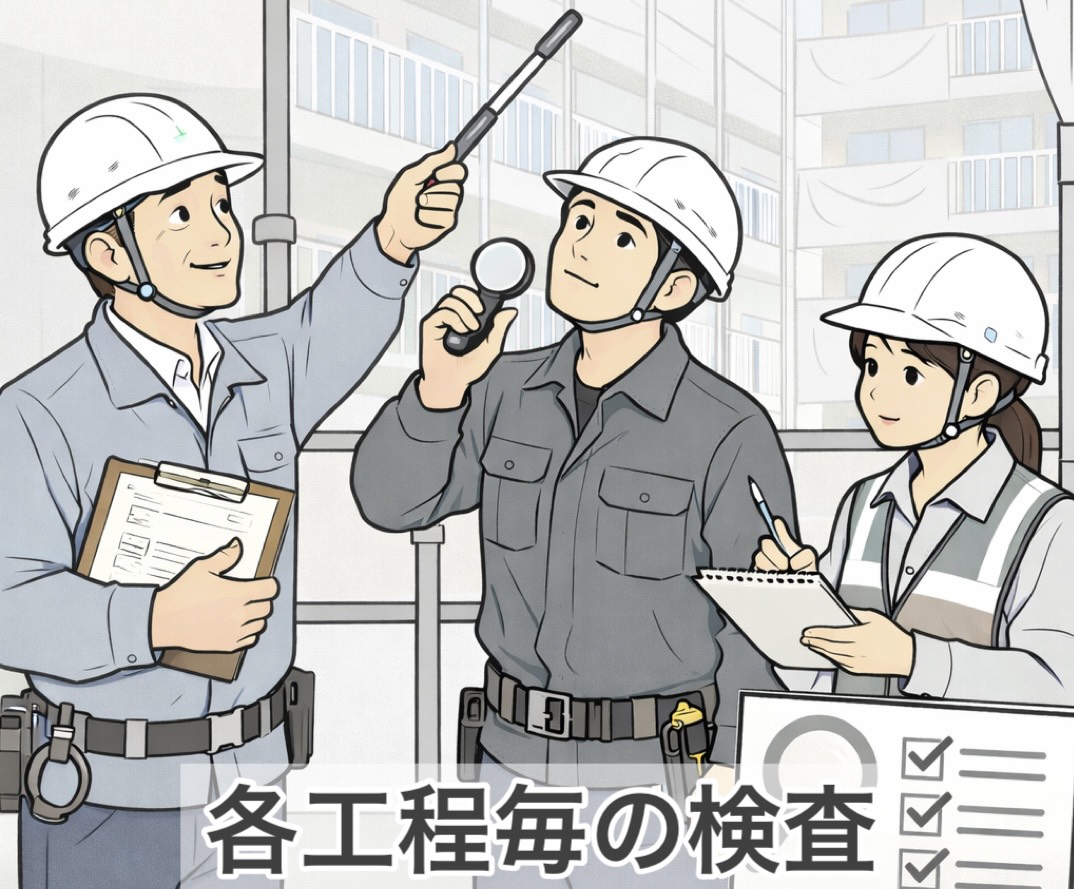
Each process will be inspected by a responsible person, and detailed construction photos will be taken. We will use a film thickness inspection machine and check sheets to ensure that there are no oversights during inspections. When performing exterior wall painting or waterproofing work, we will check the number of used paint cans to confirm that the specified amount of paint has been used, and we will order paint directly from our company to prevent construction defects. Of course, we will also take photos of the used paint and report them.
9. Exterior Wall Painting Color Simulation
9-1 Self Color Simulation
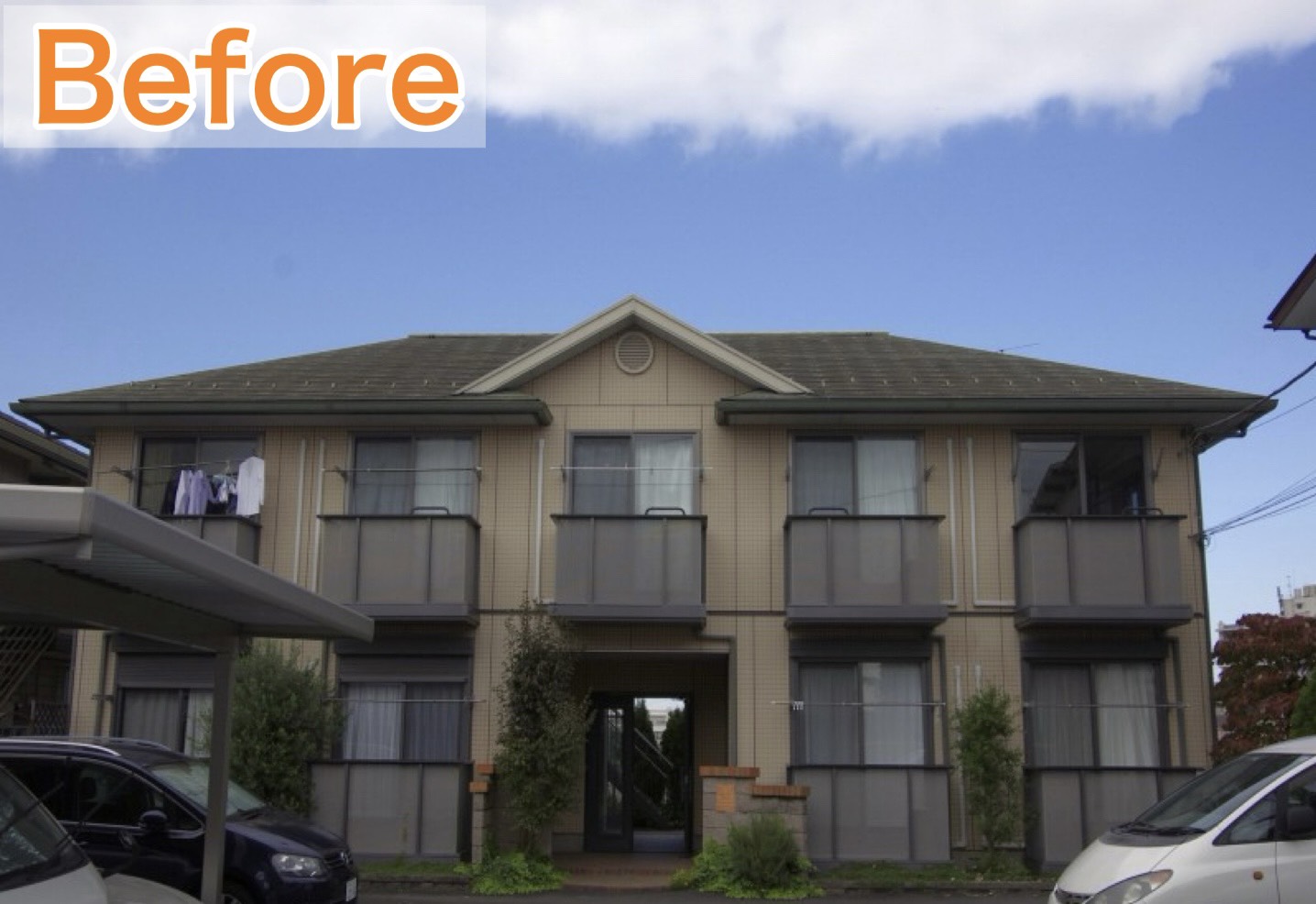
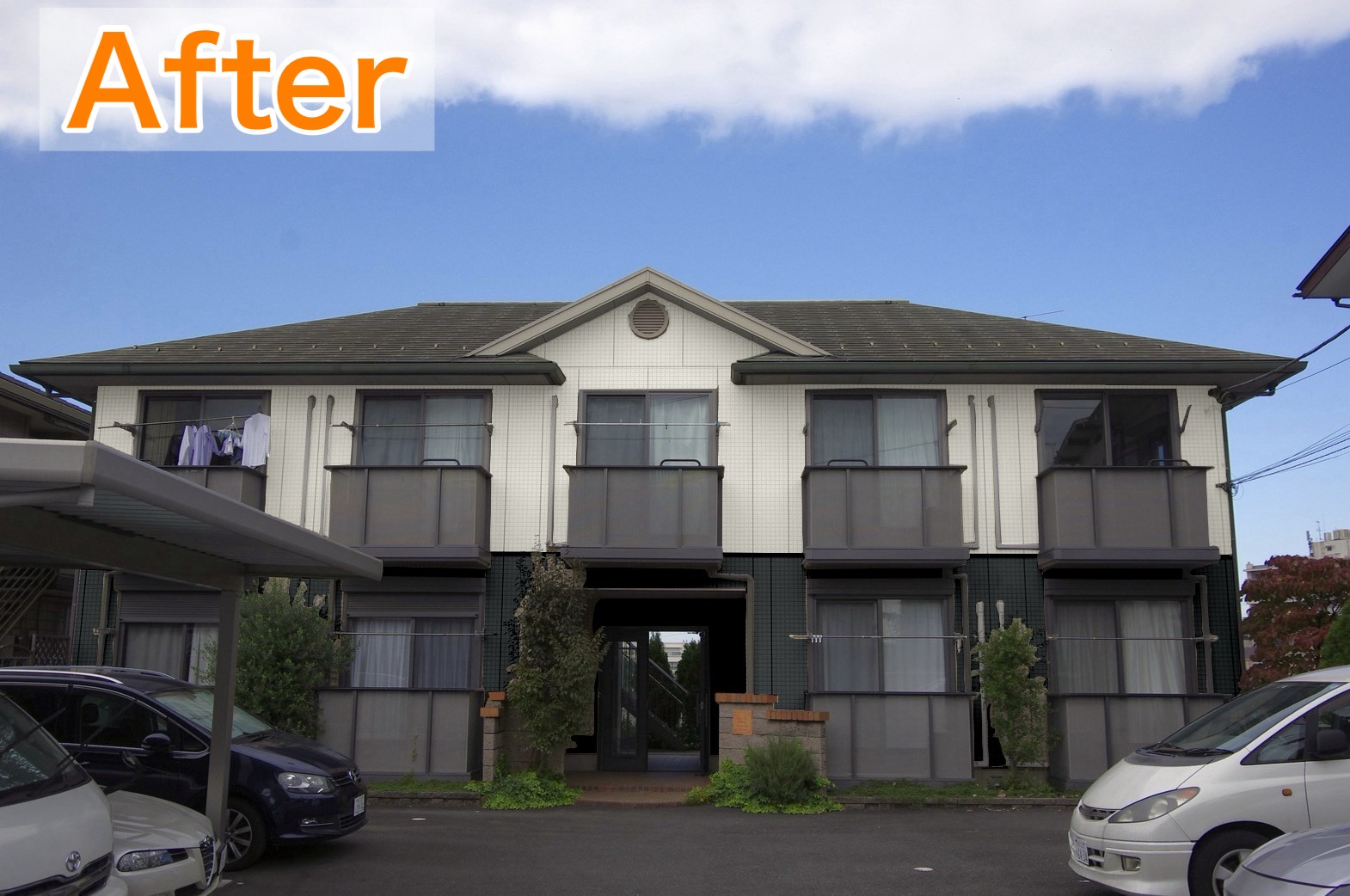
The simulations created by our company can be done using actual photos of your apartment or building!You can also perform the simulation on your smartphone or computer. By simulating and then applying a two-tone color or making an image change, we hope to enhance the stylish appearance and contribute to an increase in occupancy rates! Of course, we can also arrange paint samples for actual color confirmation.
* In Ebina City, the entire area is designated as a landscape planning zone, and color standards for exterior walls and other elements are established based on classifications such as urbanization areas and urbanization adjustment areas. When deciding on colors, it is also necessary to check for the presence of landscape town planning districts, district plans, and building agreements. Having a color simulation screen allows for smooth explanations to the general meeting, neighbors, owners, and residents.
9-2 Confirm the actual color with a trial paint!
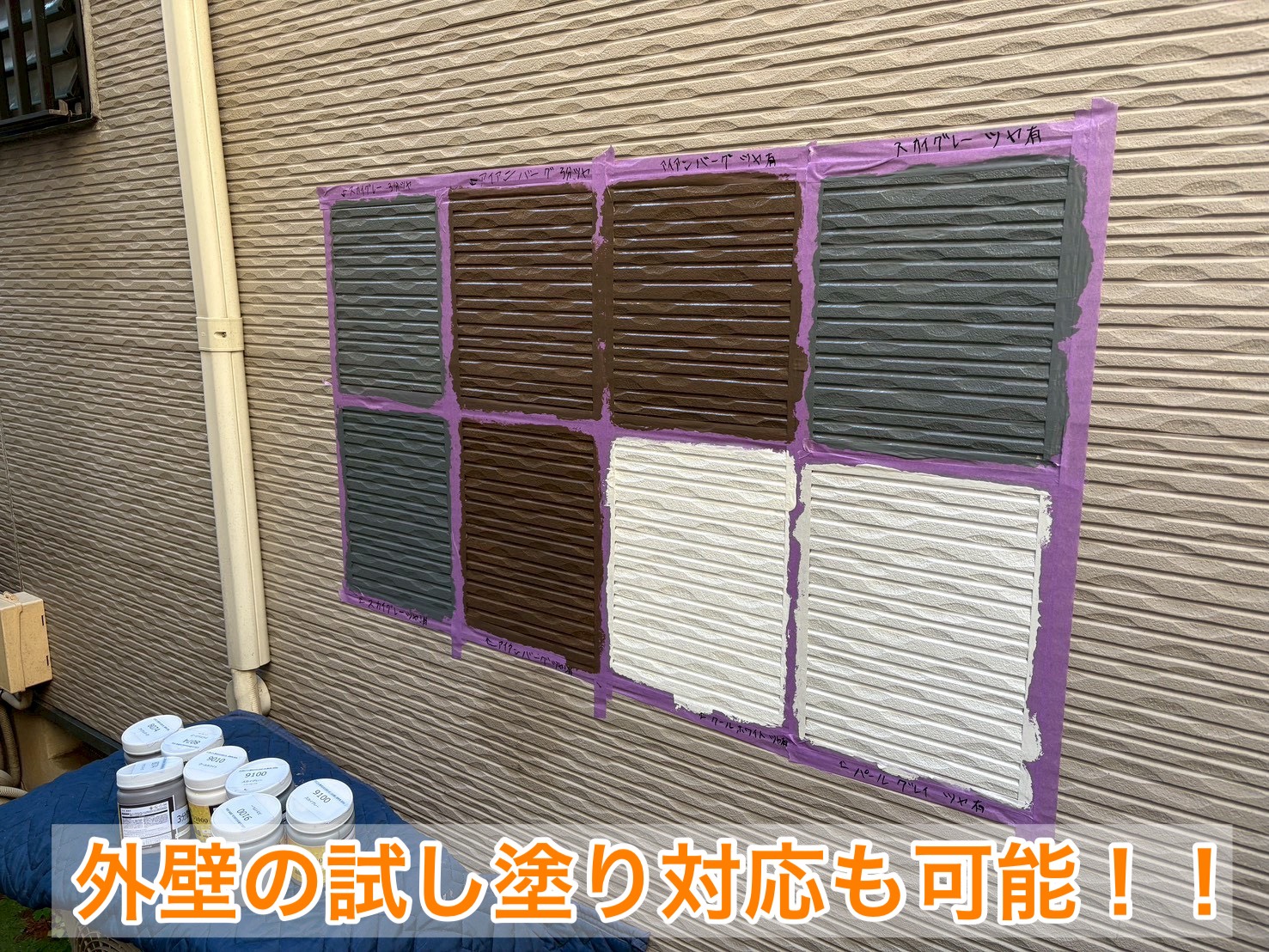 You can order samples of the paint being considered and conduct trial painting on your exterior wall. By performing a trial paint, you can confirm the actual color and gloss!
9-3 Exterior Renovation Simulation
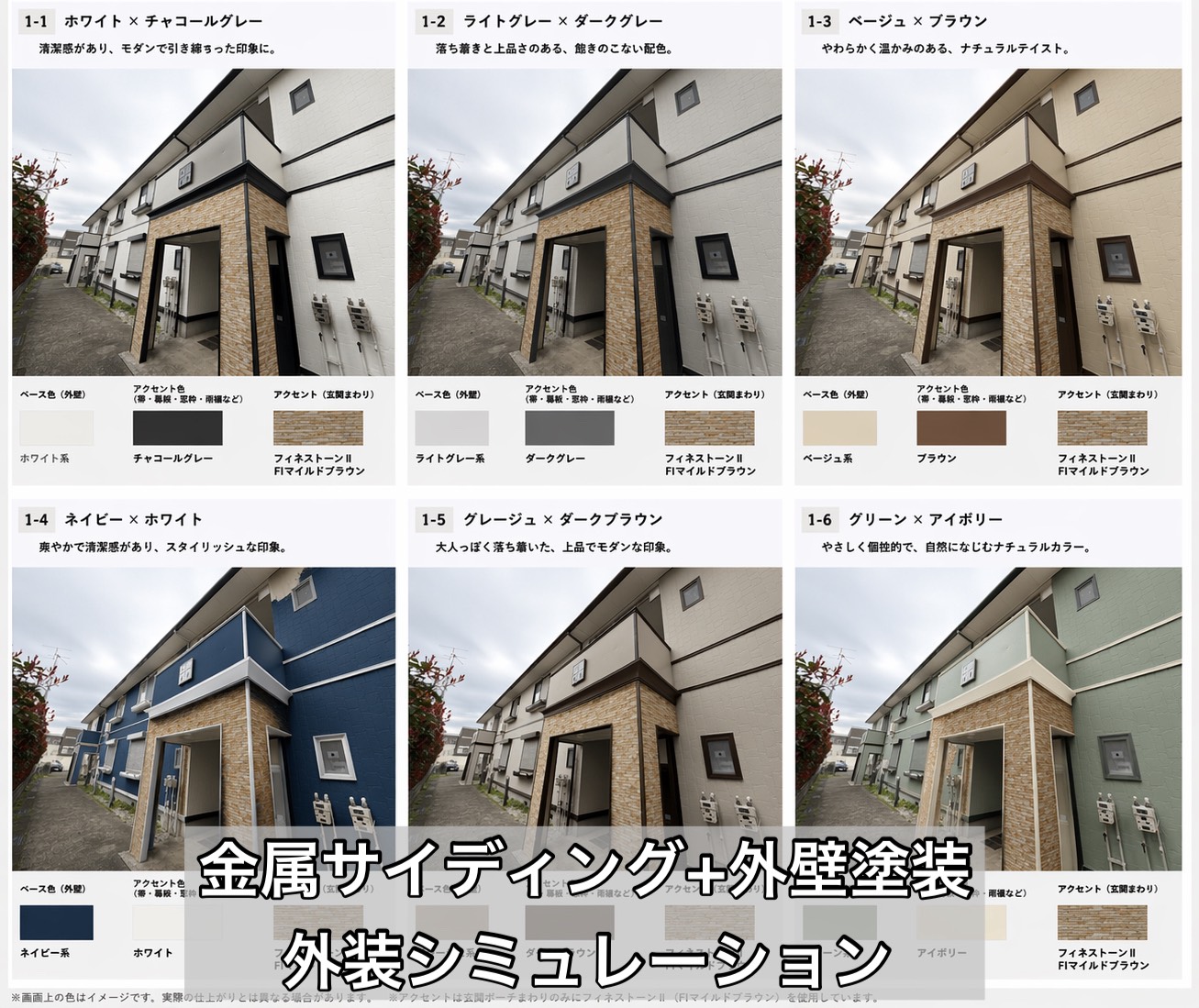
Exterior simulations for apartments and condominiums are also possible!
・Exterior wall color simulation (two-tone colors are also possible)
・Simulation for when metal siding is applied
・Simulation for when accent materials such as cornices and louvers are used
・Simulation for roof painting and roof replacement work
With the exterior renovation simulation, you can minimize the risk of failure in changing the image! We hope that renovating the appearance of your apartment or condominium will help increase occupancy rates.
Cost Estimates for Major Repairs in Ebina City, Kanagawa Prefecture
The cost of major repairs varies significantly depending on the size of the building, the degree of deterioration, the scope of work, and the materials used. First, refer to the national average based on official statistics, then to our company’s cost estimates based on past performance by scale, and finally to examples of unit prices for each project.
The national average for condominiums is 750,000 to 1,500,000 yen per unit
According to a survey conducted by the Ministry of Land, Infrastructure, Transport and Tourism, which compiled 818 construction cases (FY 2021), approximately 70% of the costs for major repairs are concentrated in the range of 750,000 to 1,500,000 yen per unit, with the most common price range being 1,000,000 to 1,250,000 yen. Note that the amounts in this survey do not include consumption tax and common temporary construction costs, so they differ from the current total construction costs including tax.
| Construction Cost per Unit | Percentage | Construction Cost per Unit | Percentage |
|---|---|---|---|
| Up to 750,000 JPY | 15.1% | 1,250,000 to 1,500,000 JPY | 17.4% |
| 750,000 to 1,000,000 JPY | 24.7% | 1,500,000 to 2,000,000 JPY | 9.1% |
| 1,000,000 to 1,250,000 JPY | 27.0% (most common) | Over 2,000,000 JPY | 2.8% |
Source: Ministry of Land, Infrastructure, Transport and Tourism “Survey on Large-Scale Renovation Work for Condominiums in FY2021” (200 companies, 818 cases) *Amounts do not include consumption tax or common temporary construction costs. Percentages may not total 100% due to rounding and non-responses.
Breakdown of Construction Costs (What the Money is Spent On)
| Category | Composition Ratio | Main Contents |
|---|---|---|
| Construction-related Work | 60.3% | About half for exterior walls, about one-third for waterproofing. Substrate repairs, tiles, painting, waterproofing |
| Temporary Construction | 22.8% | Scaffolding, mesh sheets, protection, etc. (does not include common temporary construction costs) |
| Miscellaneous Expenses | 10.3% | Site management costs, general management costs, statutory welfare costs, etc. (9.5%), insurance premiums for large-scale renovation defect insurance (0.8%) |
Source: Ministry of Land, Infrastructure, Transport and Tourism “Survey on Large-Scale Renovation Work for Condominiums in FY2021” (Second aggregation of large-scale renovation work. Overall average is construction-related 59.0%, temporary construction 22.3%, miscellaneous expenses 9.9%). *The total does not equal 100% because equipment-related work, exterior works, and others are included. This is an average value and is not a criterion for judging the appropriateness of individual estimates.
Cost Estimates by Building Size (Scaffolding, Substrate Repairs, Exterior Wall Painting, Waterproofing, Sealing as a Whole)
| Type and Scale of Building | Estimated Cost | Estimated Construction Period |
|---|---|---|
| Wooden Apartment (2 stories, 6-10 units) | 2,000,000 – 4,000,000 JPY | 3 – 5 weeks |
| Steel and RC Apartment (3 stories, 10-20 units) | 4,000,000 – 9,000,000 JPY | 1 – 2 months |
| Mixed-Use Building / Small Apartment (4-5 stories) | 5,000,000 – 15,000,000 JPY | 1.5 – 3 months |
| Medium-Sized Apartment (30-50 units) | 20,000,000 – 50,000,000 JPY | 3 – 5 months |
| Large Apartment (100 units or more) | Around 100,000,000 JPY or more | 6 months or more |
*The above estimates are based on Kakeru Koumuten’s construction records and may vary depending on the presence of roofing work, steel work, plumbing, etc. For apartments, please also consider the amount calculated by multiplying the national statistics (750,000 – 1,500,000 JPY per unit) by the number of units as a guideline.
Breakdown of Costs for Temporary Works, Substrate Repairs, Exterior Walls, and Waterproofing
The estimate for large-scale repairs is broadly divided into “Temporary Works,” “Substrate Repairs,” “Sealing,” “Exterior Wall Painting,” “Waterproofing,” and “Miscellaneous Expenses.” Before comparing total amounts, please check what each item includes, how much, and at what cost.
| Item | What to Check in the Estimate |
|---|---|
| Building Prerequisites | Structure (wooden, steel, RC), number of stories, number of units, exterior wall area, and waterproofing area. Also confirm whether the area is based on drawings or actual measurements. |
| Common Temporary Works and Scaffolding | Area and unit price of scaffolding, contents of mesh sheets, protection, temporary toilets, etc. According to the Ministry of Land, Infrastructure, Transport and Tourism’s survey for Reiwa 3, temporary works such as scaffolding account for about 20% of construction costs (excluding common temporary costs). |
| Substrate Repairs | Quantities and unit prices for each repair method, such as cracks, bulging, and spalling. Since these items are not finalized until scaffolding is set up, please confirm whether it is estimated quantities or actual settlement, and the settlement method if quantities increase or decrease. |
| Sealing | Whether it is a replacement or additional sealing, length to be applied (m), and material name. |
| Exterior Wall Painting | Painting area (㎡), manufacturer name, product name, grade of paint, number of coats, and scope of additional parts. |
| Waterproofing | Area for each part such as rooftops, balconies, and common corridors, construction method, material name, and whether drain renovations are included. |
| Inspection and Reporting | Whether inspections for each process, construction photos, completion reports, and warranty documents are included. |
| Miscellaneous Expenses | Contents and ratios of site management fees, general management fees, statutory welfare expenses, etc. According to the Ministry of Land, Infrastructure, Transport and Tourism’s survey for Reiwa 3, this averages about 10% of construction costs, but varies depending on the scale and conditions of the building, so there is no uniform standard. |
| Tax Classification | Whether the amounts are tax-inclusive or tax-exclusive. Since companies may display this differently, be sure to align them before comparing total amounts. |
Examples of Unit Prices for Repair Work
| Repair Method | Materials Used | Cost |
|---|---|---|
| Tile Replacement | Similar Existing Tiles | per piece / 2,000 JPY〜4,000 JPY |
| Repair of Floating Tile and Mortar Areas | Epoxy Resin Injection | per square meter / 3,000 JPY〜5,000 JPY (Varies depending on the degree) |
| Tile Joint Mortar Repair | Mortar for Tile Joints | per square meter / 1,000 JPY〜2,000 JPY (Varies depending on the degree) |
| Repair of Concrete Spalling Areas | Rust Prevention for Rebar + Resin Mortar | per area / 1,000 JPY〜2,000 JPY (Varies depending on the degree) |
| Crack Repair | Filler or Polymer Cement | per meter / 100 JPY〜2,500 JPY (Varies depending on the degree) |
| Exterior Wall Painting (3 Coats) | Radical Control Silicone Paint | per square meter / 2,500 JPY〜3,500 JPY |
| Roof Top Urethane Waterproofing (Ventilated Buffer Method) | High Strength Urethane | per square meter / 6,500 JPY〜9,500 JPY |
| Sealing Replacement | Modified Silicone | per meter / 900 JPY〜1,500 JPY |
| Temporary Scaffolding | In-House Owned Scaffolding Materials (Wedge Type) | per square meter / 700 JPY〜1,000 JPY |
*Costs and warranty periods vary depending on shape, quantity, substrate condition, and type of materials. If you would like a detailed estimate, please feel free to contact us. Estimates are completely free.
Select Paint and Waterproofing Grades Based on “Years Until Next Repair”
“Good paint does not equal the right choice.” The best way to choose is to align when the next major repair will be with the lifespan of the materials to avoid waste.
| Grade | Estimated Lifespan | Suitable Cases |
|---|---|---|
| Silicone / Radical Control Type | 10-16 years | Buildings that are cycled every 12-15 years. A good balance between cost and performance. Lifespan varies by product, so choose specifications that match the cycle. |
| Fluorine | 16-20 years | Buildings where the next repair is planned for after 15 years, high-rise or complex-shaped buildings with high scaffolding costs. |
| Inorganic | 18-22 years | Buildings that want to suppress dirt adhesion. Effective for suppressing moss and algae on the north side or poorly sunlit areas. |
| Urethane Waterproofing (Rooftop) | 8-15 years | Complex-shaped rooftops, when wanting to renovate while utilizing the existing waterproof layer. Mid-term inspections and repairs, such as re-coating the top coat, are prerequisites. |
| Vinyl Sheet Waterproofing | 20-25 years | Rooftops with a large area and simple shape. Short construction period. |
| Asphalt Waterproofing | 15-20 years | Rooftops planned for long cycles. The cost per instance will increase. |
*The estimated lifespan is a general guideline and may vary based on sunlight, location, and substrate condition. Choosing paints with anti-algae and anti-mold properties can change durability in shaded and humid areas.
Guidelines for Repair Reserve Funds and Options When Insufficient
The Ministry of Land, Infrastructure, Transport and Tourism guidelines indicate the estimated repair reserve fund on a monthly basis per unit area. Additional charges are required if there is a mechanical parking lot.
| Building Size (Less than 20 Stories) | Monthly Estimate (Average) | Range Covering Two-Thirds of Cases | Conversion for 70㎡ |
|---|---|---|---|
| Less than 5,000㎡ | 335 JPY/㎡ | 235-430 JPY/㎡ | Approximately 16,500-30,100 JPY |
| 5,000-10,000㎡ | 252 JPY/㎡ | 170-320 JPY/㎡ | Approximately 11,900-22,400 JPY |
| 10,000-20,000㎡ | 271 JPY/㎡ | 200-330 JPY/㎡ | Approximately 14,000-23,100 JPY |
| More than 20,000㎡ | 255 JPY/㎡ | 190-325 JPY/㎡ | Approximately 13,300-22,750 JPY |
Source: Ministry of Land, Infrastructure, Transport and Tourism “Guidelines on Repair Reserve Funds for Condominiums” (Reiwa 6, June Revision, PDF) / National average is 13,378 JPY per unit per month (Reiwa 5 Fiscal Year Comprehensive Survey of Condominiums)
In the Reiwa 5 Fiscal Year Comprehensive Survey of Condominiums, 36.6% of management associations reported that “the repair reserve fund is insufficient compared to the plan.” There are four main options when there is a shortfall.
| Options | Considerations and Points of Caution |
|---|---|
| ① Adjusting the Construction Schedule | Based on the deterioration diagnosis, postpone less urgent work to the next time. However, it is essential to differentiate between work that can be postponed and work that cannot, as delaying waterproofing and tile fall prevention measures can ultimately be more costly. |
| ② Reviewing the Scope and Specifications of Work | Revising the paint grade, changing from full renovation to partial renovation, etc. Please consider this separately from “apparent cost reductions” that skip processes. |
| ③ Utilizing Subsidies and Tax Systems | Subsidies for energy-saving renovations, etc. (to be discussed later). The reduction of fixed property tax is a system that lowers the tax amount for each unit owner and does not directly increase the repair funds of the management association. |
| ④ Increasing Reserve Funds, Borrowing, and One-Time Payments | In addition to considering an increase in repair reserve funds at the general meeting, the Housing Finance Agency’s condominium common area renovation loans require no collateral. Interest rates can be lowered by obtaining management plan certification. |
Subsidies, Tax Systems, and Loans to Check for Large-Scale Renovations in Ebina City, Kanagawa Prefecture
As of the official website of Ebina City and Kanagawa Prefecture, there are no subsidies specifically for large-scale renovation work confirmed. The available options can be broadly categorized into the following five types. The eligibility and application status of these systems may change even during the fiscal year, so please be sure to confirm with our company or the respective offices before contracting or starting work. (As of October 9, 2026)
| Type | Details |
|---|---|
| ① Tax Incentives | Reduction of property tax under the condominium longevity promotion tax system (Ebina City is one-third) |
| ② Management Plan Certification System | Certification system of Ebina City that serves as an entry point for tax incentives and reduced loan interest rates |
| ③ Support for City Condominiums | Free consultation sessions for management associations, advisor dispatch, and seismic reinforcement subsidies for old earthquake-resistant condominiums |
| ④ Construction Subsidies by Purpose | Energy-saving (windows, insulation), etc. National projects can be incorporated into large-scale repairs (Kanagawa Prefecture’s subsidies for the fiscal year 2026 have ended. Prefectural and city housing subsidies are for individual residents’ homes) |
| ⑤ Public Loans | Renovation loans for common areas of condominiums from the Japan Housing Finance Agency |
① Condominium Longevity Promotion Tax System (Property Tax Reduction)
If large-scale repairs (such as exterior painting, floor waterproofing, and roof waterproofing) that contribute to the longevity of condominiums meeting certain requirements are carried out, the property tax amount for the following year will be reduced by one-third (up to the equivalent of 100㎡ per unit; urban planning tax is not included). The reduction rate is determined by local ordinances, and Ebina City is one-third.
| Main Requirements | Condominiums with more than 20 years since construction and more than 10 units, with residential exclusive parts / At least one instance of exterior painting, floor waterproofing, and roof waterproofing each having been completed in the past / Must meet one of the following: ① A condominium certified under Ebina City’s management plan that has raised the amount of the repair reserve fund (average amount for the entire planning period) from below the certification standard to above the standard after September 1, 2021 ② A management association that has received advice and guidance from the city based on the Condominium Management Improvement Act, resulting in a long-term repair plan that conforms to national standards (the city’s advice and guidance may not be available upon request) |
|---|---|
| Construction Deadline | From April 1, 2023, to March 31, 2027, construction must be completed |
| Application | Application is required for the application of the special provisions. The application destination is the Ebina City Finance Department, Property Tax Division (Building Section 046-235-8597). The national system requires a declaration within three months after completion. Documents confirming the details of the repairs (such as certificates from architects) are also required. |
| Notes | Certification of the management plan must be obtained at both the property tax assessment date (January 1) and the declaration date. If you are receiving reduction measures for residential seismic retrofitting, barrier-free renovations, or energy-saving renovations, they cannot be combined in the same fiscal year. Since obtaining management plan certification and reviewing long-term repair plans can take time, preparation is recommended at least one year before construction. |
② Management Plan Certification System (Entry for Tax and Interest Benefits)
This is a system certified by Ebina City. Once certified, it leads to interest benefits on loans and bonds from the Japan Housing Finance Agency, as well as meeting one of the requirements for the long-life promotion tax system (certification alone does not result in tax reductions). The city’s operation will start in October 2024, and the certification standards comply with national standards (Ebina City does not have its own standards). The main criteria include holding meetings at least once a year, organizing management regulations, separate accounting for management fees and repair reserves, having no more than 10% of the total amount in arrears for repair reserves for more than three months, and “having created or reviewed a long-term repair plan that includes large-scale repair work twice or more within 30 years, within the last seven years”, among others.
| Application Process | Receive pre-confirmation through the condominium management center’s “Management Plan Certification Procedure Support System,” and apply online to the city with the issued pre-confirmation compliance certificate attached. Change applications and renewal applications are submitted directly to the city. |
|---|---|
| Cost | The application fee for certification to the city is 2,000 yen (an additional 1,000 yen is charged for each long-term repair plan added). Additionally, there are separate fees for pre-confirmation review and system usage. |
| Validity Period | 5 years (renewal application is required by the expiration date). |
| Consultation Desk | Ebina City Housing Development Division (Housing Policy Section 046-235-9606 / Urban Development Support Section 046-235-9392) / Japan Condominium Management Association “Condominium Management Certification System Consultation Dial” 03-5801-0858 (Mon-Sat 10:00-17:00) |
*Ebina City added the “Condominium Management Improvement Promotion Plan” to the Housing Master Plan in March 2024 and signed an agreement with the Kanagawa Prefecture Condominium Management Association in October 2024 regarding the promotion of proper management of condominiums.
③ Support for Condominiums in Ebina City (Consultation, Advisors, Earthquake Resistance)
This is not a system that subsidizes the costs of large-scale repair work, but consultation on the review of long-term repair plans and repair reserve funds can be helpful in the preliminary stages of construction.
| Free Consultation for Condominium Management | A condominium management consultant will assist with the review of management regulations and management contracts, the formulation and review of long-term repair plans, and consultations regarding large-scale repair work. Targeted at management association executives and unit owners, consultations are free. In the 2026 fiscal year, these will be held once a month in the city hall conference room, with a reservation system of one hour per group (reservations must be made by 5 PM on the Thursday before each event). Applications should be directed to the Housing and Urban Development Division (4th floor of city hall). |
|---|---|
| Condominium Advisor Dispatch Project | Experts such as condominium management consultants and architects will be dispatched free of charge to management associations to provide consultations on management operations, long-term repair plans, and increases in repair reserve funds. The application period for the 2026 fiscal year is until February 26, 2027, and may close early if there are many applicants. For inquiries, contact the Kanagawa Condominium Management Association Network (045-620-6300). |
| Subsidy for Promoting Earthquake Resistance in Condominiums | This is targeted at management associations of condominiums that began construction after obtaining building confirmation before May 31, 1981. Subsidies cover half of the costs for earthquake diagnosis (up to 1.5 million yen per building) and earthquake retrofitting work (up to 500,000 yen per unit), among others (preliminary diagnosis and creation of earthquake retrofitting plans are also eligible). Prior consultation and application are required before implementation of diagnoses, etc. Please check the reception status with the Housing and Urban Development Division. |
④ National Energy Saving Support | Housing Energy Saving 2026 Campaign
Changes for the 2026 Fiscal YearThe “Child-Rearing Green Housing Support Project” from the 2025 fiscal year has been abolished and reorganized into the successor “Mirai Eco Housing 2026 Project.” Additionally, the “Long-Term Excellent Housing Renovation Promotion Project” will end in the 2026 fiscal year and will not be implemented in the 2027 fiscal year. Please be careful not to establish financial plans based on outdated information.
Future Eco Housing 2026 Project
| Eligible Properties | Renovations of existing homes built before December 31, 2016, regardless of whether they are single-family or multi-family residences. Management associations and management corporations can also become joint contractors (i.e., can be used for common area renovations). Rental properties are also eligible. |
|---|---|
| Required Works | Combination of insulation upgrades for openings, structural (floor, wall, ceiling) insulation upgrades, and installation of eco-friendly housing equipment is mandatory. |
| Subsidy Limit | Depending on the age of the building and the energy-saving performance achieved, 400,000 to 1,000,000 yen per unit (1,000,000 yen for homes built before 1991 that meet mandatory standards). |
| Period | Works must commence after signing a construction contract, and must start by November 28, 2025, and no later than December 31, 2026. The application for the subsidy will generally be made by the registered contractor (construction contractor) after the completion of the work (the client cannot apply themselves). Reservations for subsidy applications must be made by November 16, 2026, and applications must be submitted by December 31, 2026, at the latest (will end once the budget limit is reached). |
Advanced Window Renovation 2026 Project
| Eligible Properties | Renovations to existing homes (single-family and multi-family) including the installation of interior windows, replacement of exterior windows, and glass replacement to high-performance thermal windows. Subsidy rates are set for multi-family residences categorized as “low-rise” and “mid to high-rise.” |
|---|---|
| Bulk Application for Multi-Family Residences | For multi-family residences, there is a method for “bulk application” that allows for the application of all units at once. The application process is handled by registered contractors (window renovation contractors), and management associations cannot apply themselves, but this system works well with window and entrance door renovations that coincide with large-scale repairs. |
| Subsidy Limit | For residential properties, 1,000,000 yen per unit (changed from 2,000,000 yen in fiscal 2025). For non-residential properties over 240 square meters, the limit is 10,000,000 yen per building. |
| Period | Works that commence after November 28, 2025, and no later than December 31, 2026, are eligible. Applications for the subsidy will be made after the completion and handover of the work, with reservations due by November 16, 2026, and applications due by December 31, 2026, at the latest (will end once the budget limit is reached). |
⑤ Subsidies for Housing in Ebina City, Kanagawa Prefecture (for individual residents’ homes)
| Existing Housing Energy Efficiency Renovation Subsidy | Houses (including exclusive parts of condominiums) that the applicant resides in and owns or has a share in within the prefecture are eligible. Renovation of windows (including entrance doors) that are exposed to the outside air is mandatory. The subsidy covers one-third of the eligible expenses, or a maximum of 150,000 yen, whichever is lower. The second phase for the fiscal year 2026 reached the budget limit on September 30, and applications have closed. Construction that commenced before the notification of grant approval is not eligible, and applications by contractors on behalf of the applicant are not permitted. |
|---|---|
| Subsidy for Residential Solar Power Generation and Storage Battery Installation | Management associations of condominium complexes in the prefecture are also eligible. Solar power is subsidized at 70,000 yen/kW, and storage systems at 150,000 yen/unit. The second phase for the fiscal year 2026 reached the budget limit on the application start date of September 7, and applications have closed. If construction commenced before the date of grant approval, it is not eligible. This is a system to consider if you are thinking of installing solar power along with rooftop waterproofing. |
| Ebina City Housing Renovation Support Project Subsidy | Single-family homes or exclusive parts of condominiums owned by individuals within the city, where the applicant resides at the time of application and intends to continue residing for at least 10 years, are eligible. The subsidy rate is one-fifth of the construction cost, with a maximum of 200,000 yen for general housing and 300,000 yen for multi-generational housing. Eligible projects must have a construction cost of 100,000 yen or more (excluding tax), be completed and fully paid for within the fiscal year 2026, and the eligible construction can be confirmed in the city’s renovation project list. Large-scale repairs of common areas in condominiums are not included as eligible. The contractor must be a member of the city’s “Housing Renovation Support Project Contractors” or the Ebina Chamber of Commerce. Applications will be accepted until February 15, 2027, and will close once approximately 200 applications are reached. Applications must be made to the Ebina Chamber of Commerce after the completion and payment of the construction, and photos of before, during, and after construction are required. |
| Ebina City Housing Insulation Renovation Promotion Project Subsidy | Single-family homes, row houses, and residential parts of mixed-use buildings (where the owner has resided for over a year) within the city are eligible, while condominiums are not listed as eligible. Insulation of openings (two or more locations) such as windows is mandatory. The subsidy amount is either two-fifths of the eligible project cost or 200,000 yen for projects meeting energy-saving standards, or four-fifths or 500,000 yen for projects meeting ZEH standards, whichever is lower. Construction must be performed by a contractor registered with the city, and applications are limited to 25, closing by December 25, 2026 (or when the limit is reached). Contracts and construction will commence after receiving notification of grant approval. |
* The prefectural existing housing energy efficiency renovation subsidy does not cover common areas of rental apartments or units not occupied by the owner. The city’s subsidy program has conditions for the contractors (such as registration with the city and membership in the Chamber of Commerce). Kakeru Koumuten Co., Ltd. will provide guidance on whether it can qualify as a contractor based on the conditions of each program.
- Kanagawa Prefecture: Subsidy for Energy-Saving Renovation of Existing Homes (Official)
- Kanagawa Prefecture: Subsidy for Installation of Residential Solar Power Generation and Storage Batteries (Official)
- Ebina City: FY 2026 Housing Renovation Support Project Subsidy (Official)
- Ebina City: FY 2026 Housing Insulation Renovation Promotion Project Subsidy (Official)
⑥ Financing System (Housing Finance Agency Condominium Sumairu Loan)
If the management association borrows funds for large-scale repairs, they can utilize the Housing Finance Agency’s “Condominium Common Area Renovation Loan (Condominium Sumairu Loan).”
| Eligible Work | Large-scale repairs, seismic retrofitting, flood prevention measures, energy-saving measures, balcony repairs, safety measures for elevators and parking lots, asbestos measures, costs for diagnosis and design by specialists |
|---|---|
| Collateral | No collateral required (joint guarantee by the condominium management center, etc.) |
| Repayment Period | Generally 1 to 10 years; for specific works, 1 to 20 years; if obtaining management plan certification and conducting seismic, flood, and energy-saving works, up to 35 years |
| Interest Rate Reduction | ① Holding of Sumairu Bonds ② Obtaining Management Plan Certification ③ Implementation of seismic, flood, and energy-saving works, each reducing by 0.2% per year (maximum 0.6% per year) |
| Main Requirements | Improvement of management regulations, resolution at the general meeting, the delinquency rate of repair reserve funds must be generally within 10%. Applications are accepted year-round |
Source: Housing Finance Agency “Condominium Sumairu Loan” (Official)
Cases Where Fire Insurance Can Be Used and Cases Where It Should Not Be Used
Damage caused by “accidental incidents” such as the scattering of rooftop waterproof sheets, caps, and fences due to typhoons or strong winds, hail damage, and lightning strikes may be covered by fire insurance. It is important to separate and record damage caused by accidents from wear and tear during deterioration diagnosis.
On the other hand, the aging deterioration itself is not covered. There have been numerous troubles nationwide caused by contractors who entice customers by saying, “You can repair it without any out-of-pocket expenses with insurance,” and the National Consumer Affairs Center has repeatedly issued warnings. False claims may be prosecuted as insurance fraud. Please confirm the eligibility of your claim directly with your management association or property owner with the insurance company or agent. Kakeru Koumuten Co., Ltd. does not provide such guidance.
Building Conditions and Repair Points in Ebina City, Kanagawa Prefecture
Ebina City is located in central Kanagawa Prefecture, covering an area of 26.59 km². According to the national census, the population surged from 17,938 in 1960 (Showa 35) to 59,783 in 1975 (Showa 50), and then to 93,159 in 1985 (Showa 60) after the city was established in 1971 (Showa 46). By 2020 (Reiwa 2), the population reached 136,516. The population has continued to grow, and it is characterized by a mix of buildings ranging from over 40 years old to newly constructed ones.
(as of September 1, Reiwa 8)
(as of September 1, Reiwa 8)
(2020 National Census)
(2020 National Census)
(as of April 1, Reiwa 7)
Source: Ebina City Website (Population and Number of Households) / Statistics Ebina Reiwa 7 Edition “Population” (Table 1) / Same “National Census” (C-9・C-15) / Same “Land and Weather” (A-4)
Housing in Ebina City is divided into “four layers”
According to the 2020 National Census, out of 57,581 households in Ebina City, 27,757 were single-family homes (about 48%), and 29,309 were multi-family residences (about 51%). The table below shows the construction periods of all housing in the city, including single-family homes, based on the 2023 Housing and Land Statistics Survey, alongside population trends. The type of major repairs required for your building will vary depending on which layer it falls into.
| Construction Period | Population Trends (Census) | Age of Building (as of 2026) | Major Repairs in Next Renovation |
|---|---|---|---|
| Before 1980 Period of Rapid Population Growth (Approximately 8,270 residential units in the city) |
1970: 17,938 people → 1980: 77,498 people. City system established in 1971 | Over 46 years old | Repairs after the 3rd time. Replacement of water supply and drainage pipes, replacement of steel stairs and handrails, seismic diagnosis for old seismic standards (before May 1981) will be key points |
| 1981–1990 Continued Population Increase (Approximately 10,400 residential units) |
1980: 77,498 people → 1990: 105,822 people | 36–45 years old | Around the 3rd time. Measures against tile lifting and peeling, renovation of sashes and entrance doors will become more significant |
| 1991–2000 Moderate Population Increase (Approximately 11,330 residential units) |
1990: 105,822 people → 2000: 117,519 people | 26–35 years old | 2nd and 3rd times. Complete renovation of rooftop waterproofing, replacement of long sheet flooring in common corridors will be the focus |
| After 2001 Steady Population Growth (Approximately 27,670 residential units) |
2000: 117,519 people → 2020: 136,516 people | 25 years old or younger | 1st and 2nd times. Re-caulking and exterior wall painting will be the main tasks |
Source: Statistics Ebina Reiwa 7 Edition “Population” (Table 1: Census, as of October 1 each year) / Same “Civil Engineering and Construction” (Table 10: Housing and Land Statistical Survey as of October 1, Reiwa 5) *The number of housing units is an estimate based on sample surveys and is rounded to the nearest ten units, so totals may not match. Since 2001, the total is for 2001–2005, 2006–2010, 2011–2015, 2016–2020, and 2021–September 2023. The age of the building is an estimate calculated from the construction period classification.
In Multi-Family Dwellings, Repair Issues Change by “Number of Floors”
According to the 2020 Census, among the 29,309 households in multi-family dwellings in Ebina City, about 60% were 5 stories or fewer, and about 40% were 6 stories or more. The figures represent the number of residential households, including rentals, not the number of buildings.
| Number of Floors in Apartment Buildings | Number of Households (Reiwa 2) | Common Repair Issues |
|---|---|---|
| 1-2 Stories | 7,748 households | This number of floors tends to focus on exterior wall and roof painting, waterproofing of balconies and rooftops, and painting of steel staircases and handrails (varies by building structure). |
| 3-5 Stories | 9,496 households | The emphasis on waterproofing of common corridors and staircases, as well as rooftop waterproofing, increases. The presence or absence of elevators changes the material lifting plan. |
| 6-10 Stories | 5,270 households | Scaffolding becomes higher, increasing the emphasis on temporary construction. For buildings with tile finishes, measures against detachment and lifting are important. |
| 11-14 Stories | 5,031 households | Utilizing drones for high exterior wall inspections is effective. Temporary plans, including scaffolding methods, will be considered individually. |
| 15 Stories and Above | 1,764 households (563 households in Heisei 17) |
Common areas are large, necessitating temporary plans that include methods other than scaffolding, and individual long-term repair plans must be established. Responses will be provided after on-site inspections of each building. |
Source: Statistics Ebina Reiwa 7 Edition “Census” (C-9 Number of Households by Building Type)
Four Factors Affecting Buildings and Construction in Ebina City
Based on city statistics and public documents, we have organized four characteristics that lead to large-scale repairs. As it is an inland city away from the sea, the issues are more about temperature differences, rain, and water flow than salt damage.
① Climate | Temperature Differences, Rain, Wind
According to the Ebina City Statistical Book (Weather Overview), the highest annual temperatures from Reiwa 3 to 7 ranged from 35.5 to 38.2℃, the lowest annual temperatures ranged from -2.4 to -4.7℃, the maximum daily rainfall ranged from 68.5 to 207.5mm, and the maximum hourly rainfall ranged from 24.0 to 70.5mm. The maximum instantaneous wind speeds were 17.7m/s in Reiwa 6 and 19.0m/s in Reiwa 7 (records from June 2024 onwards). With high summer temperatures and winter sub-zero conditions, exterior walls, sealing, and waterproof layers undergo repeated expansion and contraction every year. Sealing materials should be chosen for their movement compatibility, and care is needed for the management of water-based paints during periods when temperatures drop below 5℃. Since there are years with heavy rainfall in a short time, we recommend inspecting waterproof layers, sealing, and drains before issues arise.
② Topography | Elevation of Approximately 11-84m and Rivers Flowing Through the City
The elevation of Ebina City is approximately 11 to 84m, and the Sagami River, Mekujiri River, Nagaiike River, and Hato River flow through the city (Statistics Report “River Conditions”). Among these, the Mekujiri River, Nagaiike River, and Hato River are designated by Kanagawa Prefecture as flood inundation risk areas (December 21, 2018). Since the ground height and water flow vary by site, the foundation for scaffolding and the transportation routes for materials will differ from those on flat sites. For buildings on sites close to rivers or in low-lying areas, it is recommended to check the inundation assumptions in the city’s disaster prevention guidebook (hazard map) and also inspect the drainage routes for rainwater and waterproofing around the first floor.
③ Age of Buildings and Types|Approximately Half are Multi-Family Dwellings
In Ebina City, households living in multi-family dwellings account for about half (29,309 households), with 1,764 households residing in buildings of 15 stories or more. As shown in the table above, about half of the houses are over 26 years old, so buildings that are undergoing their second or third repairs will be the focus. As more buildings require attention to water supply and drainage pipes, tiles, and metal parts beyond just painting, it is important to categorize “current repair work” and “work that can be postponed” during the deterioration diagnosis.
④ City Regulations|Landscape Planning, District Planning, and Building Agreements
Ebina City is entirely designated as a landscape planning area (Ebina City Landscape Promotion Plan), with color standards for exterior walls established for different classifications such as urbanization areas and urbanization control areas. In urbanization areas, for colors exceeding one-fifth of the exterior wall surface, red, yellow-red, and yellow hues are limited to a saturation of 6 or lower, while other hues are limited to a saturation of 3 or lower (according to the plan revised in April 2018). The values for the area around Ebina Station’s east exit and the urbanization control area are different. Additionally, there are four key landscape formation areas (around Ebina Station, around interchanges, historical resources, and rural landscapes), landscape development districts (Ebina Ogi Town), 15 district plans, and 8 building agreements published on the city’s page. It is important to confirm the existence of these regulations before deciding on colors.
Source: Statistics Ebina Reiwa 7 Edition “Land and Weather” (A-2・A-6・A-7)/Ebina City “Flood Inundation Risk Areas”・Disaster Prevention Guidebook (Hazard Map)/Ebina City Landscape Promotion Plan (PDF)・About the Landscape Promotion Plan/Ebina City “District Plans”・“Building Agreements”
Key Points to Consider When Proceeding with Construction in Ebina City
| Key Point | Actual Situation in Ebina City and Kakeru Koumuten’s Response |
|---|---|
| Parking During Construction | Vehicles on the side where scaffolding will be set up need to be temporarily moved. The number of parking spaces and availability can vary greatly by building, and it may take time to secure a relocation spot. We will coordinate together regarding the availability of nearby coin parking and monthly parking starting 2 to 3 months before construction begins. |
| Material Delivery and Scaffolding | Of the total length of municipal roads (approximately 459 km), about 73% are less than 6.5m wide, and about 37% are less than 4.5m wide (as of April 1, Reiwa 7). There are sites where large vehicles have difficulty accessing, and where there is a lot of pedestrian and vehicle traffic nearby. Our own scaffolding team will assess the site and plan the delivery route and scaffolding layout. We will confirm parts that are likely to lead to cost increases after the estimate during the estimation phase. |
| Proximity of Residential Areas to Factories and Warehouses | In the urbanized area, approximately one-quarter (25.1%) is designated as quasi-industrial, industrial, or industrial exclusive zones, meaning there are locations where factories and warehouses are close to residential areas. We ensure that high-pressure washing, paint odors, and the movement of delivery vehicles do not affect the neighbors by thoroughly explaining in advance and adhering to the work schedule. |
| Confirmation of Landscape Plans | The entire city is within a landscape planning area. Buildings over 10m in height or with a building area of 300㎡ or more require notification for changes in exterior color (repainting in the same color does not require notification), and construction cannot commence until 30 days have passed since the notification (unless early notification is received from the city). The Ebina Ogi Town Landscape Development District has separate regulations for notifications. Please confirm with the city’s Urban Planning Division, Urban Policy Section (046-235-9391) in advance. We will also check this during our investigation. |
| At-Home Time Slots | The daytime and nighttime population ratio in Ebina City is 93.8% (according to the 2020 national census), indicating that more people commute to work or school outside the city than those who come from outside. However, the at-home time slots vary by building and household, so we will ask for your convenience regarding requests for balcony tidying and at-home confirmation in advance. |
Source: Statistics Ebina Reiwa 7 Edition “Civil Engineering and Construction” (Table 4 Condition of Municipal Roads by Width) / Same “Land and Weather” (A-4 Area by Land Use) / Same “National Census” (C-15 Daytime and Nighttime Population) / Ebina City “Notification System Based on the Landscape Law and Ebina City Landscape Ordinance [Entire City]” *The percentages by width were calculated from the total length of municipal roads in Table 4 (private roads are not included).
*We accept consultations throughout the city of Ebina, including Izumi, Imazato, Ogi-cho, Otani, Kashiwagatani, Katsuse, Kamimaizumi, Kamigou, Kawaraguchi, Kokubunji-dai, Kokubun-minami, Kokubun-kita, Satsuki-cho, Shimomaizumi, Shakke, Sugikubo, Chuo, Nakashinden, Hamada-cho, Megumi-cho, and Bouchi.
Deterioration Symptoms and Timing Requiring Major Repairs
Generally, major repairs are estimated to occur in a 12 to 15-year cycle. According to the Ministry of Land, Infrastructure, Transport and Tourism’s survey, the actual repair cycle is most commonly 13 years, with about 70% falling within the 12 to 15-year range, and the cycle tends to shorten with each occurrence. However, the actual judgment should be based on the deterioration condition rather than the number of years, so if you observe symptoms like those listed below, we recommend an early on-site inspection.
| Part | Dangerous Deterioration Signs if Left Untreated | Main Countermeasures |
|---|---|---|
| Exterior Wall (Painted Surface) | Chalking (white powder on hands), fading, cracks wider than 0.3mm, blistering or peeling of the paint film | Substrate repair + exterior wall painting |
| Exterior Wall (Tile Surface) | Tile lifting or falling off, chipping of joints, efflorescence, hollow sounds when tapped | Injection for lifting, replacement, clear waterproofing |
| Sealing | Cracks in joints, shrinkage, peeling, hardening | Reapplication |
| Roof and Balcony | Bloating or breaking of the waterproof layer, puddles, clogged drains, rain leaks to lower floors | Urethane waterproofing, sheet waterproofing, drain renovation |
| Metal Parts and Steel Stairs | Rust, peeling of the paint film, corrosion of treads | Grinding + rust prevention + painting, component replacement |
| Roof | Lifting of ridge cap, cracking or warping of slate, moss, misalignment of tiles | Roof painting, roof overlay (cover method), re-roofing |
| Concrete | Spalling (exposed rebar with rust stains), water leakage from cracks | Spalling repair + resin mortar filling |
| Common Corridor and Stair Floors | Lifting or peeling of long sheet flooring, exposed substrate | Replacement of long sheet flooring + substrate waterproofing |
Estimated Repair Cycles by Part (Ministry of Land, Infrastructure, Transport and Tourism Guidelines)
| Part/Work | Estimated Cycle | Part/Work | Estimated Cycle |
|---|---|---|---|
| Exterior Wall Painting (Repainting) | 12 to 15 years | Sealing Reapplication | 12 to 15 years |
| Exterior Wall Painting (Existing Removal + Painting) | 24 to 30 years | Metal Parts Painting | 5 to 7 years |
| Roof Waterproofing (Repair) | 12 to 15 years | Water Supply Pipe (Rehabilitation/Replacement) | 19 to 23 years / 30 to 40 years |
| Roof Waterproofing (Removal + New Installation) | 24 to 30 years | Drain Pipe (Rehabilitation/Replacement) | 19 to 23 years / 30 to 40 years |
*The above is a reference example from the guidelines and is not a uniform construction deadline. The actual cycle will be set according to the building’s specifications, location conditions, and deterioration status.
Source: Ministry of Land, Infrastructure, Transport and Tourism “Guidelines for Creating Long-Term Repair Plans” (Reiwa 6 June revision – PDF) / Ministry of Land, Infrastructure, Transport and Tourism “Survey on the Actual Conditions of Large-Scale Repair Work for Condominiums in FY2021”
Examples of Large-Scale Renovation Work
This is an example of exterior renovation work on a mixed-use building undertaken by Kakeru Koumuten. The building had leaks occurring in several places, and we combined clear waterproofing for the tile exterior wall with rooftop waterproofing for the renovation.
Exterior Renovation Work for Mixed-Use Building (Tile Wall Waterproofing + Roof Waterproofing)
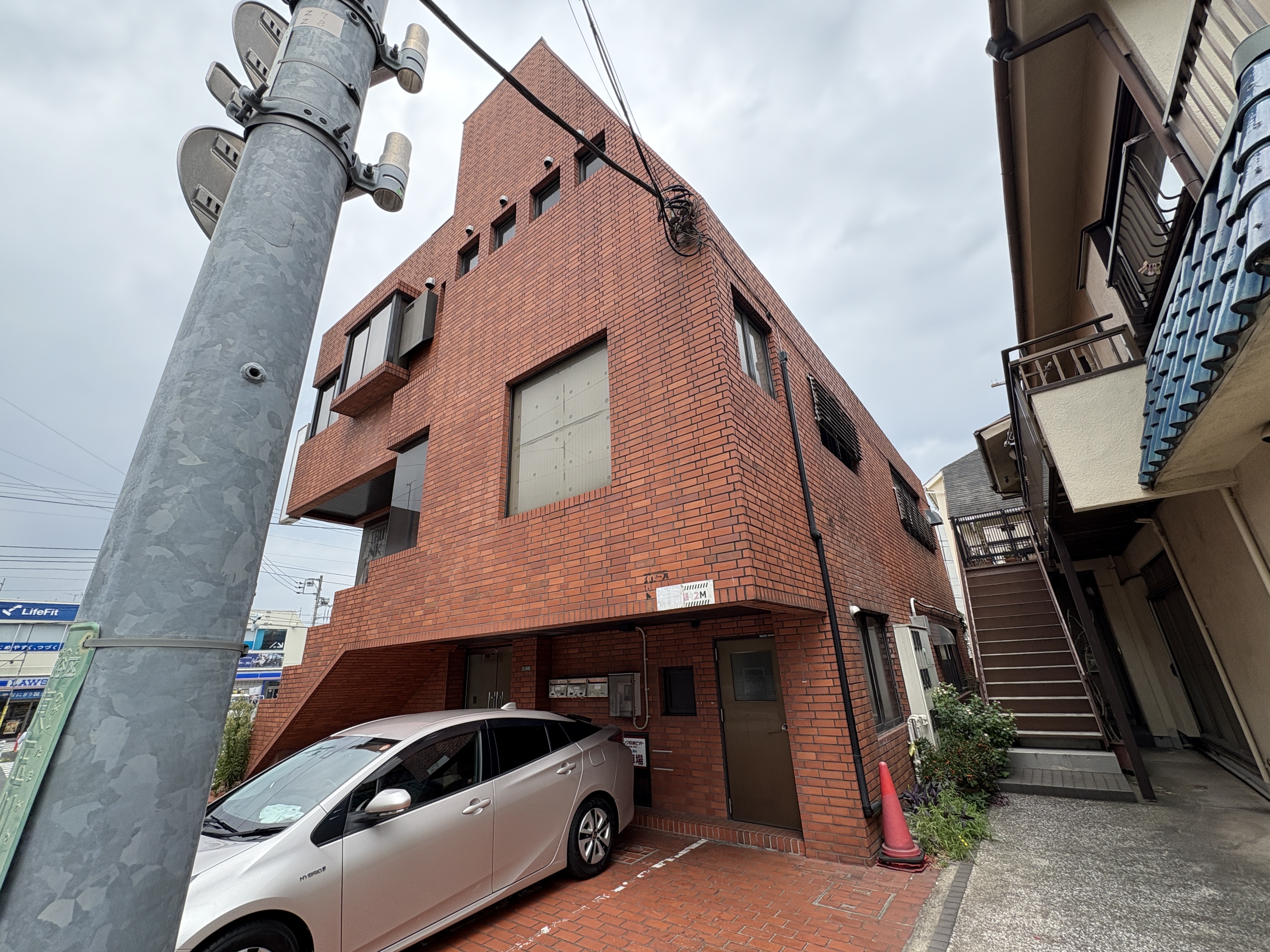
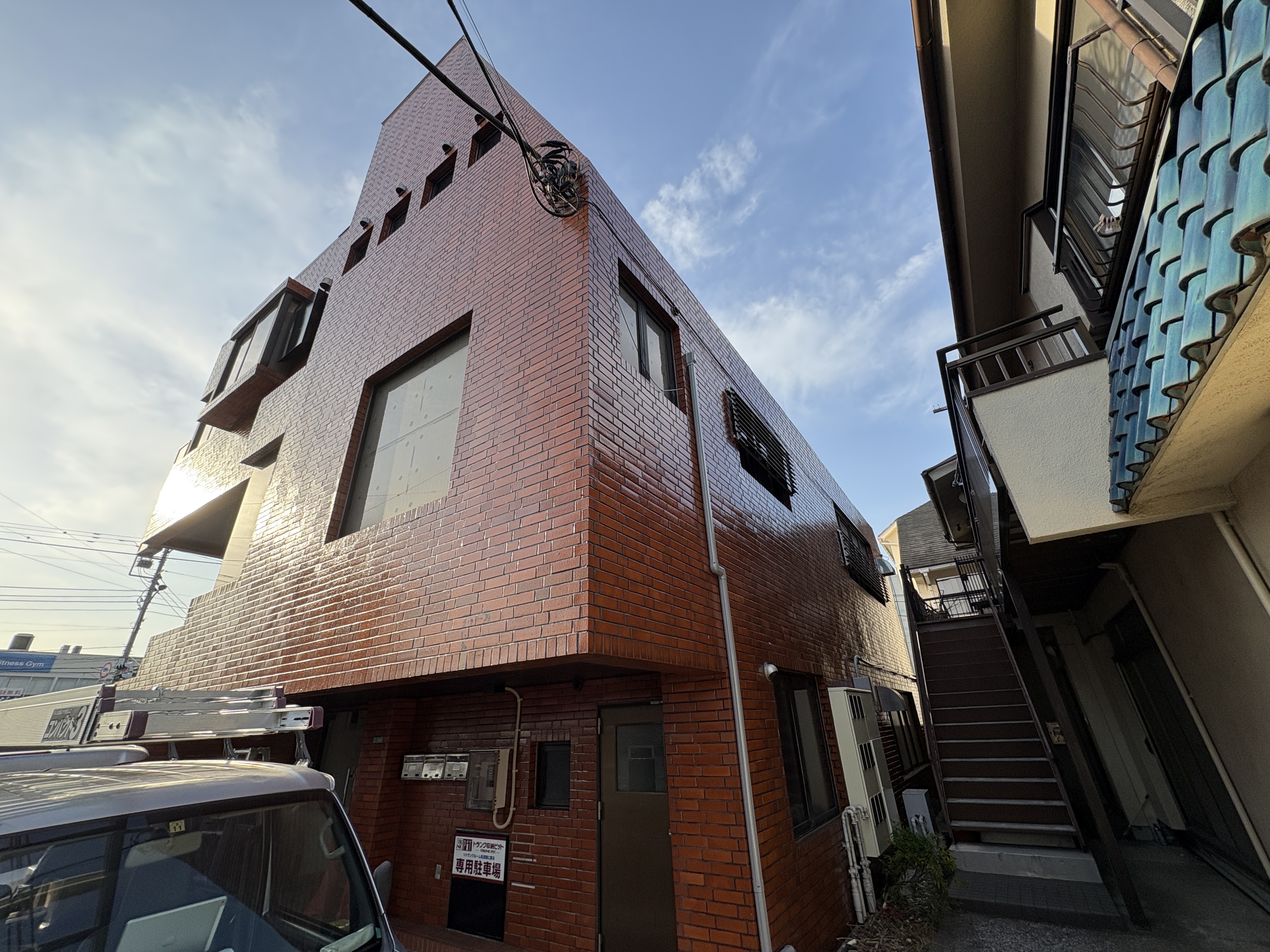
| Work Details | Partial tile replacement / Painting of ancillary parts (pipes, water drainage) / Roof waterproofing work (urethane waterproofing) / Wall tile waterproofing (Seven S) / Sealing work around windows / Repair of wall tile mortar joints / Ivy removal |
|---|---|
| New Materials Used | Wall tiles: Kunishiro Tiles / Ancillary part painting: Radical silicone paint / Roof waterproofing: High-strength urethane (Sarasene A) / Wall tile waterproofing: Seven S |
| Price Range | 4,000,000 to 4,100,000 yen |
| Construction Period | 45 days |
| Location | Not disclosed |
| Background to the Work | Due to leaks occurring from several areas including the exterior walls and roof, we proposed comprehensive waterproofing for the entire exterior. Seven S is a clear waterproofing material for tile walls, and while it is somewhat expensive, it offers high waterproofing performance, making it recommended for cases where leaks are occurring from multiple areas of the exterior walls. |
Customer Feedback
Flow from On-Site Survey to Completion of Work
From the initial inquiry to the completion of the work and aftercare, a single representative will consistently handle your case. For management associations, a resolution at the general meeting is required, so starting the process 1 to 1.5 years before the desired start date allows for a smoother progression.
- Inquiry (Free) Please contact us via phone, form, or LINE. If you have estimates from other companies, just presenting them is fine.
- On-site Investigation & Building Diagnosis (Free) We will conduct a survey of the exterior walls, check for cracks, sealing, and waterproof layers, and if necessary, investigate the rooftop, high places, and leak areas using drones or thermal imaging. For properties in Ebina City, we will also check the site conditions, trees, delivery routes, and parking.
- Investigation Report & Estimate Submission We will provide a deterioration diagnosis report with photos and an estimate detailing quantities, methods, and materials for each work item. Proposals for multiple plans are also possible.
- Plan Decision & Contract We will confirm colors using color simulations, paint boards, and trial painting. For management associations, we will assist in preparing materials for the general meeting. We will also explain the color standards for landscape planning and areas subject to district plans and building agreements.
- Notification to Residents & Neighbors We will distribute construction notices, visit neighbors to greet them, and set up a bulletin board at the entrance (with a schedule and laundry information). If temporary relocation of parking is necessary, adjustments will be made at this stage.
- Temporary Scaffold Installation & Various Works Our in-house scaffold team will set up the scaffolding, followed by high-pressure washing → substrate repair → sealing → exterior wall painting & tile repair → waterproofing → ironwork & ancillary work in that order. A supervisor will inspect and take construction photos for each stage.
- Completion Inspection, Scaffold Dismantling & Handover We will confirm the finish in the presence of the customer and provide construction photos, a report on the paint used, and the warranty.
- Aftercare We will send out annual DM notifications, allowing for yearly inspections. Simple repairs such as partial sealing are provided free of charge.
Resident Communication, Additional Work Approval, Inspection Reports
Equally important as the construction itself is “when, what, and with what materials we report”. At Kakeru Koumuten, we will provide materials and reports in the following four situations.
| Situation | Materials Provided / Actions Taken |
|---|---|
| Before Construction Building Diagnosis |
We will provide a deterioration diagnosis report with photos. This document summarizes the deteriorated areas and the basis for the proposed work scope. |
| Before Construction to During Construction Notification to Residents & Neighbors |
We will distribute construction notices, visit neighbors to greet them, and provide information on the schedule and laundry via the entrance bulletin board. |
| During Construction Approval for Additional Work |
Deterioration discovered after scaffolding is set up will be addressed by presenting photos along with quantities and costs for approval before proceeding with the work. |
| During Construction to Completion Inspection Report |
A supervisor will inspect each stage and take construction photos. Upon completion, we will confirm the finish in the presence of the customer and provide construction photos, a report on the paint used, and the warranty. |
* For management associations, it is smooth to decide in advance who will approve additional work (chairperson, repair committee, etc.) and the estimated amount that requires approval before the contract.
How Will Life Be During Construction? Impact on Residents
Major repairs are principally carried out while residents remain in their homes. However, there will be restrictions on daily life while scaffolding is in place. Most troubles can be prevented by providing advance notice, so Kakeru Koumuten Co., Ltd. thoroughly explains and posts information before construction begins.
| What Will Be Affected | What Actually Happens / Our Response |
|---|---|
| Laundry | On days of high-pressure washing, painting, and waterproofing, outdoor drying is not possible. We will inform you via bulletin boards and each unit’s mailbox about “which side is being worked on today” and will ensure as many days as possible for drying. |
| Window Opening and Closing | In addition to washing and painting days, there may be times when windows cannot be opened during other processes such as protection, drying, and waterproofing. We will provide information for each process, so please check the postings and notifications. We will schedule the work to avoid continuous closures. |
| Balcony | During floor waterproofing and handrail painting, we ask for temporary relocation of personal items, potted plants, and air conditioning outdoor units. The timing will be notified in advance for each unit. |
| Noise and Odor | The period of substrate repair (chipping and drilling) will produce the most noise. Work hours are generally from 8 AM to 5 PM, and we will accommodate requests such as refraining from work on Sundays and holidays. Low-odor paint options are also available. |
| Security and Privacy | Scaffolding can become an access route. We can take measures such as blocking sightlines with mesh sheets and installing locks and sensor lights on the scaffolding’s access stairs at night. We also ensure proper etiquette training for visitors. |
| Parking | Vehicles on the side where scaffolding will be erected will need to be temporarily relocated. Since securing a new parking location may take time, we will begin securing a new location 2 to 3 months before construction starts. |
| Pets, Small Children, and Working from Home | If you have sensitivities to noise, please inform us in advance, and we may be able to adjust the work schedule accordingly. Please feel free to let us know. |
| Rented Rooms | We can assist property owners in creating notification documents for tenants. If there are concerns about the impact of construction on occupancy rates, we can also propose a color simulation for an image change. |
How to Choose a Major Repair Contractor and Ordering Method
There are many major repair contractors that cover Ebina City, Kanagawa Prefecture, and you may be unsure which one to choose. When requesting renovations for apartments, condominiums, or buildings, please check the following four points.
● Have extensive experience in major repairs
● Confirm the availability of warranties and aftercare services
● Obtain estimates from multiple contractors (at least 3 companies)
● Confirm if they are self-managed
Have Extensive Experience in Major Repairs
Major repair contractors often have websites that showcase their exterior renovation achievements. If they provide detailed explanations of repair work with photos, it can give you peace of mind as a reference when you actually request work.
Using Google and review sites to evaluate major repair contractors can also be effective! Be cautious if there are many negative reviews. If there are few reviews, also check their construction achievements, explanation content, and management system.
Large-scale repair work involves not only the construction itself but also the potential for troubles with residents and nearby neighbors. Therefore, it is necessary to post updates on the progress of the work and information about laundry on bulletin boards to prevent issues before they arise. Kakeru Koumuten Co., Ltd. specializes in exterior work, and we receive many requests for exterior renovations of apartments and condominiums.
Check for Warranty and Aftercare Services
When choosing a large-scale repair company, let’s confirm the availability of a warranty. If any issues such as leaks occur after the work is completed, having a leak warranty from the contractor ensures that repairs can be made at no cost, providing peace of mind! Companies that offer a warranty demonstrate confidence in their work, making it a key criterion for selecting a contractor.
The warranty period varies by contractor and the nature of the work, but it is generally set between 1 and 10 years. Emergency repairs or partial repairs often do not come with a leak warranty. Some contractors offer aftercare services in addition to warranties, so be sure to check for the availability of warranties and aftercare services.
At Kakeru Koumuten Co., Ltd., we send out annual direct mail for aftercare maintenance, allowing for yearly inspections. We also provide free support for simple repairs such as partial sealing.
Obtain Estimates from Multiple Contractors (at least 3 companies)
When requesting large-scale repairs, obtain estimates from multiple contractors. It is important to acquire estimates from at least 3 companies and compare their estimates and reports! Even for the same work, costs can vary by contractor, and warranties and aftercare services may differ. Additionally, obtaining multiple estimates makes price negotiations easier.
When comparing estimates, consider not only the cost but also the “items in the estimate,” “methods and materials for substrate repair and exterior wall painting,” and “confirmation of the process” to make a detailed judgment! If the quality of auxiliary materials is low or if steps are skipped, costs can be reduced, so avoid making decisions based solely on price. Especially since substrate repair work can be difficult to assess from appearance alone, ensure that the repair method is suitable for the condition of the substrate!
Check This on the Estimate (Checklist)
| Confirmation Items | Points to Consider |
|---|---|
| Is there an excessive use of “one set” notation? | Are the quantities and unit prices clearly stated? With “exterior wall repair one set,” comparisons and verifications cannot be made. |
| Do the quantities match the actual measurements? | Are there quantities recorded that are far from the drawings or actual measurements? This is the area where inflation is most likely to occur. |
| Proportion of miscellaneous expenses | Details and proportions of site management costs, general management costs, statutory welfare costs, etc. According to the Ministry of Land, Infrastructure, Transport and Tourism’s survey for the fiscal year 2021, the average is about 10% of the construction cost (excluding common temporary costs), but it varies depending on the size and conditions of the building, so there is no uniform standard. |
| Are the names of materials written down? | Are the manufacturer names, product names, grades, and number of coats for paints and waterproofing materials specified? |
| Treatment of quantities for substrate repairs | This is an item that cannot be accurately measured until scaffolding is set up. Is it stated whether it is “estimated quantity” or “actual quantity settlement,” and are there agreements for increases or decreases? This is the most important point. |
| Warranty and after-inspection | Warranty period for each construction, frequency of inspections, and scope of free support. |
| Company backing | Types of construction industry licenses, track record of similar scale and structure, presence of qualified personnel. |
Confirm if it is managed in-house
Large-scale repair work includes various tasks such as “substrate repair work,” “exterior wall painting,” “waterproofing work,” and “pipe replacement,” and the plan content will change based on the actual deterioration state and customer preferences.
Contractors that completely outsource to subcontractors lack knowledge and experience, which may lead to proposals for repairs in irrelevant areas or unnecessary work. If you investigate and then request a subcontractor, it may incur additional time and costs. By having knowledge and experience and managing in-house, responsible construction that keeps costs down becomes possible.
Additionally, contractors that outsource may also respond slowly in the event of any troubles during construction. It is safer to avoid having a company that has not actually met with the customer manage the construction. Kakeru Koumuten performs everything from temporary scaffolding setup to exterior wall painting and waterproofing work in-house, with knowledgeable and experienced personnel managing the construction!
There are three ordering methods. The choice affects how the process proceeds.
Especially for management associations, it is necessary to decide “how to request” before “which company to hire.” The main ordering methods are the following three.
| Method | Procedure | Advantages | Disadvantages |
|---|---|---|---|
| Responsible Construction Method | The construction company handles everything from investigation, design, construction to management | No additional costs for design consulting (investigation and design costs may be included in the construction costs) / Single point of contact reduces the burden on the management association / Clear accountability / May shorten the period until ordering | Specifications can easily be left to the construction company, making it difficult to compare side by side / Third-party checks are hard to implement, requiring the management association to verify price, specifications, and construction status |
| Design Supervision Method | A design office or consultant conducts the investigation and design, while a separate company handles the construction | Allows comparison of construction companies under the same conditions / Independent supervision during construction | Consulting fees are required separately / Attention needed for risks of conflicts of interest and collusion / Tends to extend the duration |
| Management Company General Contractor Method | The management company acts as the general contractor, with subcontractors performing the construction | Easy coordination with daily management / Minimal burden on the management association | Intermediate margins can make it more expensive / Competition principles are hard to apply |
Collusion and Improper Consulting Issues in Large-Scale Renovations and Self-Defense Measures
Latest 2026 In the large-scale renovation industry, improper orders linked between design consultants and construction companies have long been a problem. The Ministry of Land, Infrastructure, Transport and Tourism issued warnings and notifications to management associations in January 2017 and April 2023, and on September 28, 2026, the Japan Fair Trade Commission announced that it had issued exclusion orders to 38 companies and a total of 1.63788 billion yen in payment orders to 37 companies regarding large-scale renovation work commissioned by condominium management associations in the Kanto region to design consulting firms (two design consulting firms were also subject to exclusion orders).
*This content is based on the announcement by the Japan Fair Trade Commission (September 28, 2026).
Three Typical Methods
① Dummy Estimates
Prior to placing an order, companies decide on a contractor, and other companies only provide high estimates in a formal manner, creating a “fixed race.” This gives the impression to the management association that they have “properly obtained competitive estimates.”
② Collusion with Design Supervisors
Consultants contract at extremely low design supervision fees while receiving kickbacks from the high construction costs of their partnered contractors. Be cautious of design supervision fees that are too low.
③ Back Margin
A certain percentage of the contract amount is given as a kickback, which is then added to the construction costs as an expense. As a result, the management association ends up paying extra.
Self-Defense Measures for Management Associations
- Obtain independent estimates from multiple companies
- Consult with neutral third parties such as condominium management professionals or architects
- Document the contractor selection process in meeting minutes to ensure transparency
- Confirm the reasons for unusually low consulting fees
- Include a penalty clause in the contract for cases of collusion
- Avoid concentrating information with a single consultant and verify specifications independently
Frequently Asked Questions about Large-Scale Repairs in Ebina City, Kanagawa Prefecture
- How much does large-scale repair in Ebina City, Kanagawa Prefecture cost?
- For condominiums, according to the Ministry of Land, Infrastructure, Transport and Tourism’s survey for the fiscal year 2021, about 70% fall within the range of 750,000 to 1,500,000 yen (excluding consumption tax and common temporary costs), with the most common range being 1,000,000 to 1,250,000 yen. Based on our company’s construction records, the cost for a two-story wooden apartment ranges from 2,000,000 to 4,000,000 yen, for a three-story steel or RC apartment from 4,000,000 to 9,000,000 yen, and for small condominiums or mixed-use buildings from 5,000,000 to 15,000,000 yen. The cost varies depending on the condition of the substrate and whether waterproofing and roofing work is required, so we provide free on-site estimates.
- How often should large-scale repairs be conducted?
- Generally, the recommended cycle is every 12 to 15 years, and the actual cycle is most commonly 13 years according to the Ministry of Land, Infrastructure, Transport and Tourism’s survey, with about 70% falling within the 12 to 15 year range. However, the decision should be based on the condition of deterioration rather than just the number of years. If deterioration of sealing, tile lifting, or breakage of the waterproof layer is observed, it is advisable to carry out repairs without waiting for the cycle, as this can ultimately reduce costs. In Ebina City, there are approximately 18,700 homes built before 1990 (according to the 2023 Housing and Land Statistics Survey, including single-family homes), and during the second and third repairs, there tends to be a greater focus on tile repairs, replacement of iron parts, and updating of water supply and drainage pipes.
- How long does the construction period take? Can residents stay during the work?
- For apartments, the construction period is typically 3 weeks to 2 months, for small condominiums and buildings it is about 1.5 to 3 months, and for condominiums with more than 50 units, it is approximately 4 to 6 months. Residents can remain in their homes during the construction. However, while scaffolding is in place, there may be restrictions on drying laundry outside and opening windows, so we take thorough measures to minimize the impact on daily life, such as distributing advance notices, providing information on the schedule and laundry via bulletin boards, and strictly adhering to working hours.
- How long should we expect from the start of planning to the completion of construction?
- For management associations, it typically takes about 1 to 1.5 years for the establishment of the repair committee, building diagnosis, contractor selection, and general meeting resolutions, followed by 3 to 6 months for the construction itself. Overall, it is advisable to plan for about 2 years to proceed with ample time. If using subsidies or tax incentives, obtaining management plan certification (resolutions at the general meeting, prior confirmation, and application to the city) will also take time, so please factor this into your timeline.
- Are there any subsidies available for large-scale repairs in Ebina City, Kanagawa Prefecture?
- As of October 9, 2026, there are no confirmed subsidies for large-scale repair work itself on the official websites of Ebina City and Kanagawa Prefecture. However, for condominium owners, if certain requirements are met, a one-third reduction in fixed property tax can be applied under the “Condominium Longevity Promotion Tax System.” One of the requirements for this tax system is the management plan certification, which is operated by Ebina City. If the work includes windows and insulation, it may be eligible for “Advanced Window Renovation 2026” or “Mirai Eco Housing 2026.” The city also offers subsidies for housing renovations, but the targets are individual residences (exclusive parts), and there are conditions for contractors as well. The timing of applications and applicants varies by system, so please check the eligibility conditions and application procedures for each system before contracting and starting work.
- I heard that fixed property tax can be reduced through large-scale repairs. Is that true?
- It is true if the requirements are met. Under the Condominium Longevity Promotion Tax System, if a condominium that is over 20 years old and has more than 10 units conducts large-scale repairs (such as exterior wall painting, floor waterproofing, and roof waterproofing) that contribute to longevity, the fixed property tax amount for the following year can be reduced by one-third for up to 100 square meters per unit (according to the reduction rate in Ebina City). This applies to work completed between April 1, 2023, and March 31, 2027, and an application to Ebina City (Finance Department, Property Tax Division) is required for the special exemption. The national system requires declaration within three months after the completion of the work. For management plan certified condominiums, there are also requirements such as raising the repair reserve fund, which can take time to prepare, so it is recommended to start the process more than a year before the construction.
- Are there any changes to subsidies starting from the fiscal year 2026?
- There is. The national “Childcare Green Housing Support Project” has been abolished and reorganized into the successor “Mirai Eco Housing 2026 Project.” Management associations and management corporations can also become joint contractors, allowing for insulation renovations in common areas. Additionally, the “Long-term Excellent Housing Renovation Promotion Project” will end in the fiscal year 2025, and it will not be implemented in fiscal year 2026. The “Advanced Window Renovation 2026 Project” has a method for collective applications for apartment buildings (the application process is handled by registered contractors). Please be careful not to establish financial plans based on outdated information.
- What should I do if the repair reserve fund is insufficient?
- There are mainly four options. ① Postpone low-urgency work based on a deterioration diagnosis to the next time, ② Review the scope and specifications of the work, ③ Check for support systems such as subsidies, ④ Consider increasing the repair reserve fund or financing from the Japan Housing Finance Agency. The agency’s financing for apartment common area renovations does not require collateral, and interest rates can be reduced by up to 0.6% per year by obtaining management plan certification and implementing energy-saving and seismic work. Please note that postponing waterproofing and tile peeling measures often ends up being more expensive, so please consult us for decisions on separation.
- Can scaffolding be set up even if there is a height difference on the site or if the front road is narrow?
- Yes, it can be set up. The elevation in Ebina City is approximately 11 to 84 meters, and about 73% of the city road extension is less than 6.5 meters wide (as of April 1, 2025). The height difference and delivery routes vary by building. Kakeru Koumuten Co., Ltd. owns its own scaffolding materials and has its own scaffolding team, allowing us to plan support for the boards, layout, and delivery routes after confirming the site. This is a part where additional costs are likely to arise after seeing the site, so it is important to confirm the delivery route during the estimation stage.
- What will happen to the parking for residents during construction?
- Vehicles on the side where scaffolding will be erected will need to be temporarily moved. The number of parking spaces and availability varies by building, and securing a relocation spot may take time depending on the availability of nearby parking lots. Kakeru Koumuten Co., Ltd. will coordinate with you, including checking the availability of nearby coin parking and monthly parking lots, starting 2 to 3 months before construction begins.
- Can I freely decide the color of the exterior walls?
- Ebina City is entirely within a landscape planning area, and color standards for exterior walls are established by categories such as urbanization areas and urbanization adjustment areas. Buildings over 10 meters in height or with a building area of 300 square meters or more are subject to notification for changes in exterior color (repainting in the same color does not require notification), and construction cannot begin until 30 days have passed since the notification. There are also areas with separate regulations, such as the Ebina Ogi Town Landscape Town Development District. In addition, there are 15 district plans and 8 building agreements published on the city’s page. Whether notification is necessary depends on the building and the nature of the work, so please confirm in advance with the Urban Planning Division, Urban Policy Section (046-235-9391). We will also check this during our investigation. Sharing a color simulation to visualize the completed image can facilitate discussions at general meetings and with neighbors.
- Why is the north-facing exterior wall covered in moss and algae?
- This is because areas with poor sunlight and trapped moisture are prone to the growth of algae, moss, and mold. In addition to the north side, areas that do not receive sunlight due to neighboring buildings or trees are also likely to be affected. By thoroughly removing it with high-pressure washing and choosing paint with anti-algae and anti-mold properties, recurrence can be suppressed. We also recommend checking for blockages in roof drains and gutters caused by leaves and mud, as these can lead to puddles on the roof and leaks.
- Which should I choose, the responsibility construction method or the design supervision method?
- In smaller buildings, the burden of consulting fees tends to be heavier, so we believe that the responsibility construction method is often more suitable for medium-sized buildings. On the other hand, for large buildings with many units, the design supervision method allows a third party to standardize specifications, making it easier to compare under the same conditions. While the design supervision method allows for comparison of construction companies under the same conditions since a third party creates the specifications, consulting fees are incurred separately, and there are risks of conflicts of interest and collusion that need to be considered. Verification of price, specifications, and construction status is essential even with the responsibility construction method. Kakeru Koumuten Co., Ltd. provides estimates that clearly state quantities, methods, and materials for each construction item, allowing you to compare with other companies on the same level.
- How can I detect collusion in large-scale repairs?
- There are three typical methods. ① Deciding on a contractor in advance and having other companies submit only formal high estimates, known as “dummy estimates.” ② Consultants contract at extremely low design management fees and receive kickbacks from partner companies, creating collusion. ③ Adding a portion of the contract amount as a back margin to the construction costs. The countermeasures are to obtain independent estimates, consult a neutral third party, keep minutes of the selection process, and include penalty clauses in the contract. On September 28, 2026, the Japan Fair Trade Commission announced exclusion orders and payment orders for surcharges related to large-scale repair work.
- How many companies should I get estimates from?
- We recommend at least three companies. If there are too many, it becomes difficult to compare, and if there are too few, competition does not occur. What is important is not the number of companies but “comparing after creating the same playing field.” By creating a common specification sheet and quantity table and requesting under the same conditions, and making detailed breakdowns mandatory without allowing “one set” notation, it becomes clear whether the price difference is due to differences in range or unit price.
- What is the difference if you have your own scaffolding?
- In large-scale repair construction, temporary construction accounts for about 20% of the costs (according to the Ministry of Land, Infrastructure, Transport and Tourism’s fiscal year 2021 survey). By not outsourcing scaffolding work, it is easier to control costs in this area, and our own scaffolding team can flexibly respond to sudden changes in the schedule or additional work. Kakeru Koumuten Co., Ltd. owns scaffolding materials for about 100 detached houses and plans according to the site, even in areas with height differences or narrow front roads.
- I’m in the middle of getting estimates, but can I just have my estimate reviewed?
- Of course, that’s possible. If you bring estimates from other companies, we will check whether the items, quantities, construction methods, and materials are appropriate for free and provide you with an estimate under the same conditions. We welcome competitive estimates.
- Can I request just emergency repairs for a leak?
- Yes. As a preliminary step before large-scale repairs, we also accept requests for emergency repairs or partial repairs for leaks. We will identify the cause using thermal imaging and drones and propose the minimum necessary repairs.
- Can you handle roofing or exterior wall materials that contain asbestos?
- Yes, we can. We have qualified personnel who are asbestos work supervisors and building material inspectors for asbestos-containing materials, and we can handle everything from the legally required preliminary surveys to the cover method and removal of asbestos-containing roofing materials. The availability of municipal subsidies for the investigation and removal of sprayed asbestos varies by municipality, so please check with the Ebina City office.
- What happens if large-scale repairs are not done?
- There are risks such as personal injury from falling exterior wall tiles, structural deterioration due to corrosion of rebar, leaks, and a decrease in asset value. Furthermore, for buildings subject to periodic reporting under Article 12 of the Building Standards Act, investigations through comprehensive tapping, etc., are required under certain conditions, such as when the exterior wall has exceeded 10 years since completion or renovation. Ebina City is an area under the jurisdiction of Kanagawa Prefecture, and for collective housing, it is limited to service-equipped housing for the elderly. Mixed-use buildings, including stores, restaurants, hospitals, and hotels, may be subject to regulations depending on their location and scale, so individual confirmation is necessary. Even if not subject to statutory investigations, regular inspections and maintenance are essential, so please consult us if you are unsure about your judgment.
- How much does large-scale repair for an apartment (about 10 units) cost?
- For a two-story wooden building with 6 to 10 units, it is estimated to be between 2 million and 4 million yen, and for a three-story steel or RC building with 10 to 20 units, it is estimated to be between 4 million and 9 million yen based on our company’s track record (including scaffolding, substrate repairs, exterior wall painting, sealing, and waterproofing). It is common for apartments to undergo repairs every 10 to 15 years. For owners, there is an increasing trend to change the exterior appearance using color simulations during repairs to improve occupancy rates.
If you are looking for a large-scale repair contractor in Ebina City, Kanagawa Prefecture, contact Kakeru Koumuten Co., Ltd.
We handle exterior wall renovations and large-scale repairs for apartments and condominiums in Ebina City, covering all of Kanagawa and Tokyo. We are happy to assist not only with large-scale repair work but also with partial repairs and leak repairs. “I want it to last long with one renovation” “I want to keep costs down as much as possible” “I want to improve insulation performance because the indoors are hot” We will propose the best solutions for your specific requests and future repair plans.
From temporary scaffolding work to roofing and exterior painting, all work is performed by our own team. We are confident that we won’t be outdone by others in terms of cost, quality, and efficiency, so we welcome comparative estimates!
On-site surveys, estimates, and color simulations are all free of charge
Please feel free to consult us via the inquiry form, phone, or LINE.
It’s perfectly fine to just present estimates from other companies.
Large-scale Repair Work Service Area
Kakeru Koumuten Co., Ltd. accepts requests throughout Kanagawa Prefecture and Tokyo Metropolis.
Izumi / Imazato / Ogi-machi / Otani / Otani Kita / Otani Minami / Kashiwagatani / Katsuse / Monzawabashi / Kamimizo / Kamigo / Kamikawachi / Kawaraguchi / Kokubunji-dai / Kokubun Minami / Kokubun Kita / Satsuki-cho / Shimoimizo / Shaka / Sugikubo / Sugikubo Kita / Sugikubo Minami / Chuo / Nakakawachi / Nakashinden / Nakano / Hamada-cho / Higashi Kashiwagatani / Hongou / Megumi-cho / Bouchi
・When Should Large-Scale Renovations Be Carried Out? An Explanation of Optimal Timing and the Risks of Delaying!
・Estimates Are Essential for Large-Scale Renovations! Key Comparison Points and Precautions!
・5 Common Issues in Large-Scale Renovations for Condominiums! Thorough Explanation of Causes and Preventive Measures!
・What Is Waterproofing Work in Large-Scale Renovations? Roles, Signs of Deterioration, and Precautions Explained!
・Not Enough Funds for Large-Scale Renovations… Solutions for Funding Shortages and Immediate Preparations Explained!
・What Is Substrate Repair in Large-Scale Renovations? Reasons for Necessity, Signs of Deterioration, and Types of Work Explained!
・What Is Sealing Work in Large-Scale Renovations? Roles, Methods, and Tips for Success!
・What Is Tile Repair in Large-Scale Renovations? Signs of Deterioration, Types of Work, and Cost Estimates Explained!
・What Is Exterior Wall Painting in Large-Scale Renovations? Necessity, Signs of Deterioration, and Cost Estimates Explained!
・For Exterior Renovations in Ebina City, Kanagawa Prefecture, Trust Kakeru Koumuten!
・For Roof Renovations in Ebina City, Kanagawa Prefecture, Trust Kakeru Koumuten!
・For Exterior Wall Painting in Ebina City, Kanagawa Prefecture, Trust Kakeru Koumuten!
We welcome inquiries via LINE as well◎

We are also updating our Instagram regularly◎ Please follow us!
contact Kakeru Koumuten Co., Ltd.
Kakeru Koumuten is a young company whose team is, on average, in their late twenties, but our skills are second to none.
Our greatest strength is that we handle scaffolding, roofing and painting entirely in-house. In an industry where these tasks are usually divided among contractors, our complete service simplifies project management and helps keep costs down. Above all, if a problem arises, we respond promptly.
We proudly describe ourselves as the youngest and most helpful renovation company in Kanagawa!