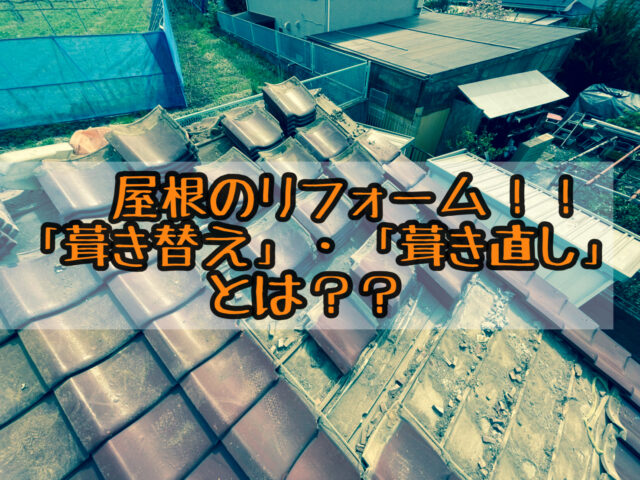
[Repairing Tile Roofs] An Explanation of the Dry Method for Ridge Tiles!

Hello! This is Kakeru Koumuten Co., Ltd.!
This time, I would like to explain the 【dry method】 for ridge tiles!

“I want to keep my tile roof, but I’m worried about seismic resistance…”
“Isn’t it possible to strengthen the seismic resistance of a tile roof…?”
To help alleviate the concerns and questions of homeowners with tile roofs,
I will explain the dry method for ridge tiles!
What is the Dry Method?
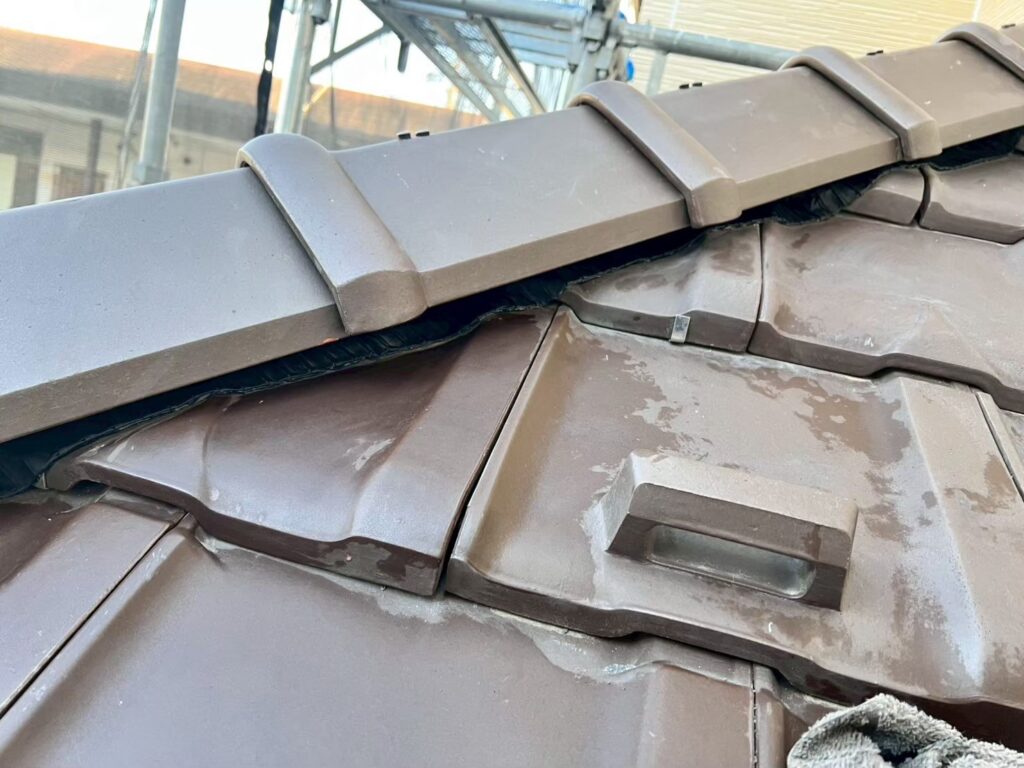
The dry method is a technique that uses specialized waterproof sheets, metal fittings, and wood, unlike the traditional wet method (which uses clay or plaster containing water) for ridge tiles (the top part of the roof).
This is a maintenance method that improves and maintains the lightweight and seismic resistance of tile roofs.
The most common cause of damage to tiles due to earthquakes is the plaster on the ridge tiles.
By implementing the dry method, which achieves the lightweight of tile roofs, we can prepare for earthquakes and typhoons.
Comparison Table of Wet Method and Dry Method for Ridge Tiles
|
Comparison Item |
Wet Method (Traditional Method) |
Dry Method (Latest Method) |
|
Construction Method |
Fixing tiles with clay or plaster |
Fixing tiles with brackets, screws, and specialized sheets |
|
Weight |
Approximately 10kg/m (including clay and plaster) |
Approximately 600g/m (significantly lighter) |
|
Seismic Resistance |
Heavy and prone to collapse |
Lightweight and resistant to shaking |
|
Waterproofing |
Cracks and peeling due to plaster deterioration can lead to leaks |
Strong waterproofing with waterproof tape + sheets |
|
Durability |
Repairs needed every 10 to 15 years due to plaster deterioration |
High durability with no maintenance required for over 20 years |
|
Construction Time |
2 to 4 days |
1 to 2 days |
|
Appearance |
Traditional and charming appearance |
A clean and modern impression |
|
Maintenance |
The peeling and dirt of the plaster are noticeable, requiring regular repairs. |
It is resistant to dirt, but repairs are necessary if tears occur. |
|
Cost |
Initial costs are relatively low, but long-term repair costs can accumulate. |
Initial costs are somewhat high, but it is cost-effective in the long run. |
|
Recommendation Level |
Recommended for traditional houses and Japanese-style architecture. |
Recommended for modern homes and earthquake-resistant houses. |
Advantages and Disadvantages of Dry Method
We will introduce the advantages and disadvantages of the dry method.
◯Advantages of Dry Method
1. Lightweight
The weight of the Nanban plaster using the wet method is approximately 10,000g per meter, but
the dry method does not use clay or plaster, making it
approximately 600g per meter, significantly reducing the overall weight of the roof.
If the ridge length is 30m,
Wet Method: 10kg × 30m = 300kg
Dry Method: 0.6kg × 30m = 18kg
There is about a 16-fold difference!
2. Quick Installation
It takes about half the time compared to the wet method.
Even if it rains during work, the plaster will not wash away.
3. High Durability
The waterproof sheet has a manufacturer warranty of over 10 years. Its lifespan is expected to exceed that, allowing for long-term cost savings.
4. Easy Maintenance
There is no concern about mud stains like with plaster repairs, and only tape replacement is needed, keeping the roof clean and making maintenance simpler and superior compared to the wet method.
×Disadvantages of Dry Method
1. Initial Costs are Slightly Higher
Special dry surface sheets, waterproof reinforcement fittings, and tiles compatible with screw fixation are required, necessitating more materials than the wet method, leading to higher costs.
When to Maintain Ridge Tiles and Signs of Deterioration?
Ridge tiles are located at the highest point of the roof and are most susceptible to rain, wind, and earthquakes.
Here are the timing for maintenance and signs of deterioration for ridge tiles!
Timing for Ridge Tile Maintenance
☑️General Inspection
Every 5 years (Regular roof inspections are ideal)
☑️Repair Work Guidelines
10 to 15 years old, or after an earthquake or typhoon
☑️Repair of Plaster
Every 10 to 15 years (for wet method)
☑️Roof Replacement or Re-roofing
25th year (when the roofing material reaches the end of its lifespan)
If constructed using the dry method, maintenance may not be needed for over 10 years, but regular inspections should still be conducted!
Signs of Deterioration in Ridge Tiles
・Plaster is peeling off
・Tiles are misaligned or lifting
・The ridge is wavy or bent
・Signs of water leakage
・Growth of weeds or moss
・Deterioration of copper wire (loose or broken)
・Cracking in the face area
There are various signs of deterioration like these.
If regular maintenance is neglected, it may lead to water leakage, so be attentive to the signs of deterioration.
Dry Method Construction Steps
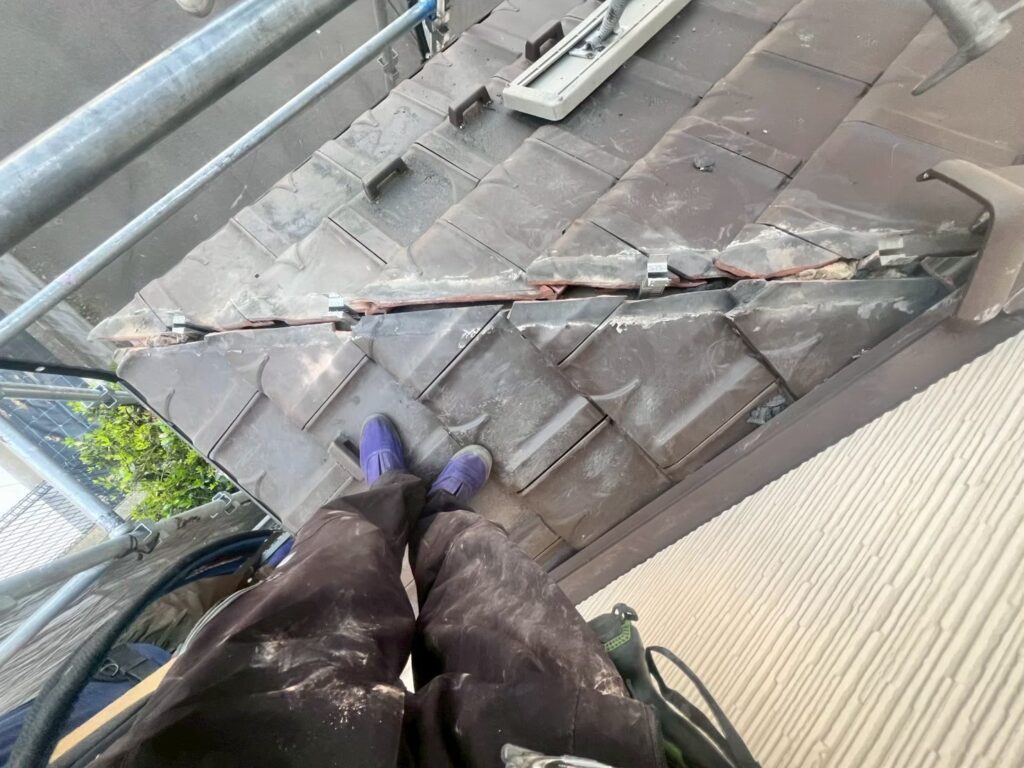
1. Installation of Reinforcement Brackets

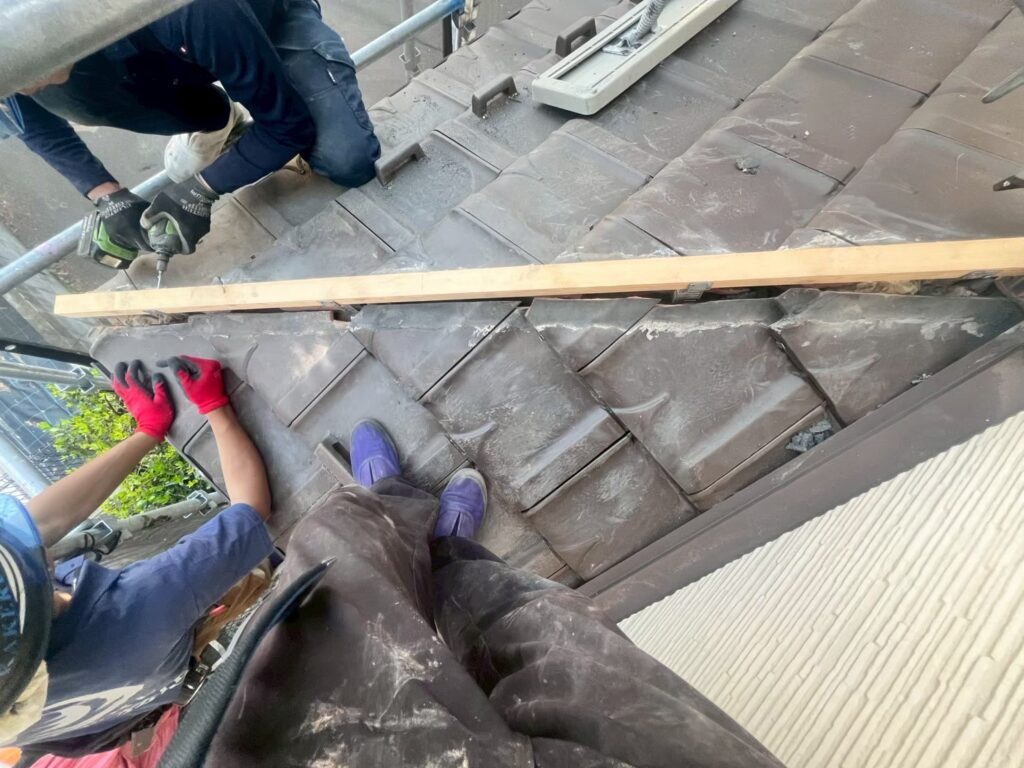
2. Installation of Core Wood
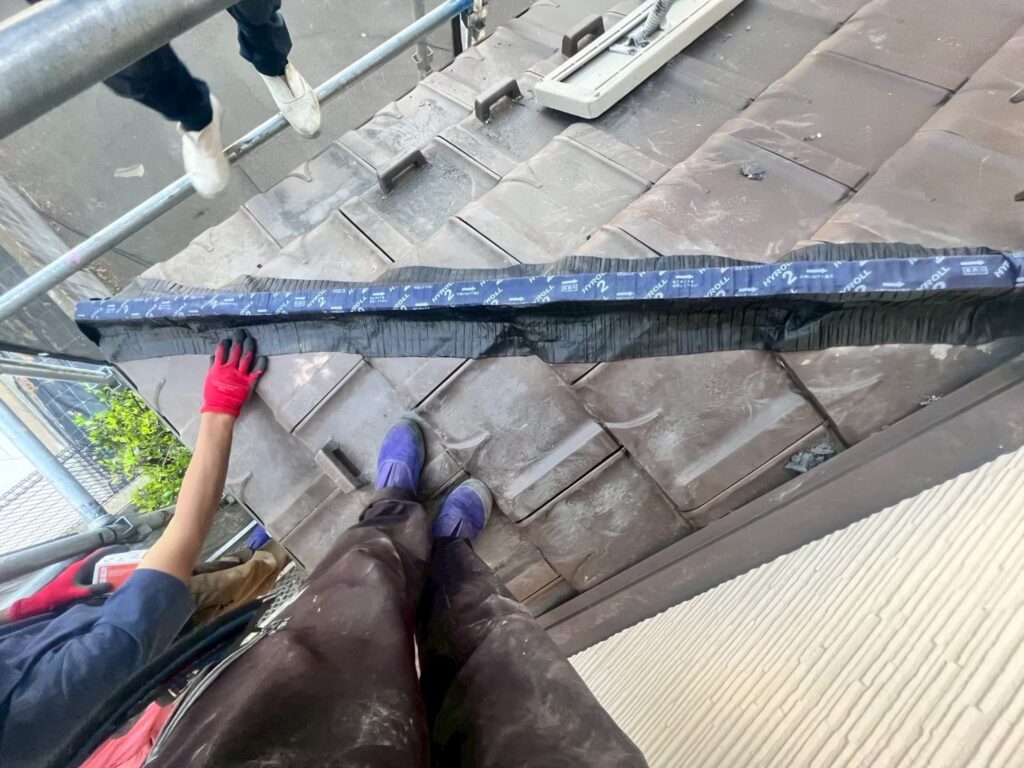
3. Installation of Sheets
4. Fixing the Tiles
Summary
This concludes our discussion on the dry method for ridge tiles. If you have any other questions or concerns about ridge tiles, please feel free to consult Kakeru Koumuten!
We accept emails and inquiry forms 24 hours a day!!
Kakeru Koumuten has extensive experience in the dry method for ridge tiles, and we welcome competitive estimates!
Kakeru Koumuten can handle everything from temporary scaffolding to roof renovation work with our own team.
Free estimates and consultations are also very welcome, so if you are considering exterior renovations or repairs, please feel free to contact us!
Service Areas
Tokyo
Akishima City / Akiruno City / Adachi Ward / Arakawa Ward / Itabashi Ward / Inagi City / Edogawa Ward / Ome City / Edogawa Ward / Ome City / Ota Ward / Katsushika Ward / Kita Ward / Kiyose City / Kunitachi City / Koto Ward / Koganei City / Kokubunji City / Kodaira City / Komae City / Shinagawa Ward / Shibuya Ward / Shinjuku Ward / Suginami Ward / Sumida Ward / Setagaya Ward / Taito Ward / Tachikawa City / Tama City / Chuo Ward / Chofu City / Chiyoda Ward / Toshima Ward / Nakano Ward / Okutama / Nishitokyo City / Nerima Ward / Hachioji City / Hamura City / Higashikurume City / Higashimurayama City / Higashiyamato City / Hino City / Fuchu City / Fussa City / Bunkyo Ward / Machida City / Mitaka City / Minato Ward / Musashimurayama City / Musashino City / Meguro Ward
Kanagawa Prefecture
Aikou-gun, Aikawa Town / Ashigarakami-gun, Oi Town / Ashigarakami-gun, Kaisei Town / Ashigarakami-gun, Nakai Town / Ashigarakami-gun, Matsuda Town / Ashigarakami-gun, Yamukita Town / Ashigarashimo-gun, Hakone Town / Ashigarashimo-gun, Manazuru Town / Ashigarashimo-gun, Yugawara Town / Isehara City / Odawara City / Kamakura City / Kawasaki City / Kawasaki City, Kawasaki Ward / Kawasaki City, Asao Ward / Kawasaki City, Saiwai Ward / Kawasaki City, Takatsu Ward / Kawasaki City, Tama Ward / Kawasaki City, Nakahara Ward / Kawasaki City, Miyamae Ward / Koza-gun, Samukawa Town / Zushi City / Chigasaki City / Nakagun, Oiso Town / Nakagun, Ninomiya Town / Hadano City / Hiratsuka City / Fujisawa City / Miura-gun, Hayama Town / Miura City / Minamiashigara City / Yokosuka City / Yokohama City / Yokohama City, Aoba Ward / Yokohama City, Asahi Ward / Yokohama City, Izumi Ward / Yokohama City, Isogo Ward / Yokohama City, Kanagawa Ward / Yokohama City, Kanazawa Ward / Yokohama City, Konan Ward / Yokohama City, Kohoku Ward / Yokohama City, Sakae Ward / Yokohama City, Seya Ward / Yokohama City, Tsuzuki Ward / Yokohama City, Naka Ward / Yokohama City, Nishi Ward / Yokohama City, Hodogaya Ward / Yokohama City, Midori Ward / Yokohama City, Minami Ward / Sagamihara City / Sagamihara City, Midori Ward / Sagamihara City, Minami Ward / Sagamihara City, Chuo Ward / Ebina City / Atsugi City
・Saitama Prefecture, Chiba Prefecture, and parts of Yamanashi Prefecture (Please consult with us)
For more helpful information on exterior renovations, click here!
We also welcome inquiries via LINE◎

We are also regularly updating our Instagram◎ Please follow us◎

contact Kakeru Koumuten Co., Ltd.
Kakeru Koumuten is a young company whose team is, on average, in their late twenties, but our skills are second to none.
Our greatest strength is that we handle scaffolding, roofing and painting entirely in-house. In an industry where these tasks are usually divided among contractors, our complete service simplifies project management and helps keep costs down. Above all, if a problem arises, we respond promptly.
We proudly describe ourselves as the youngest and most helpful renovation company in Kanagawa!