For Those Affected by Fire Damage in Tokyo | Explanation of Repair Process, Fire Insurance, and Support Systems!
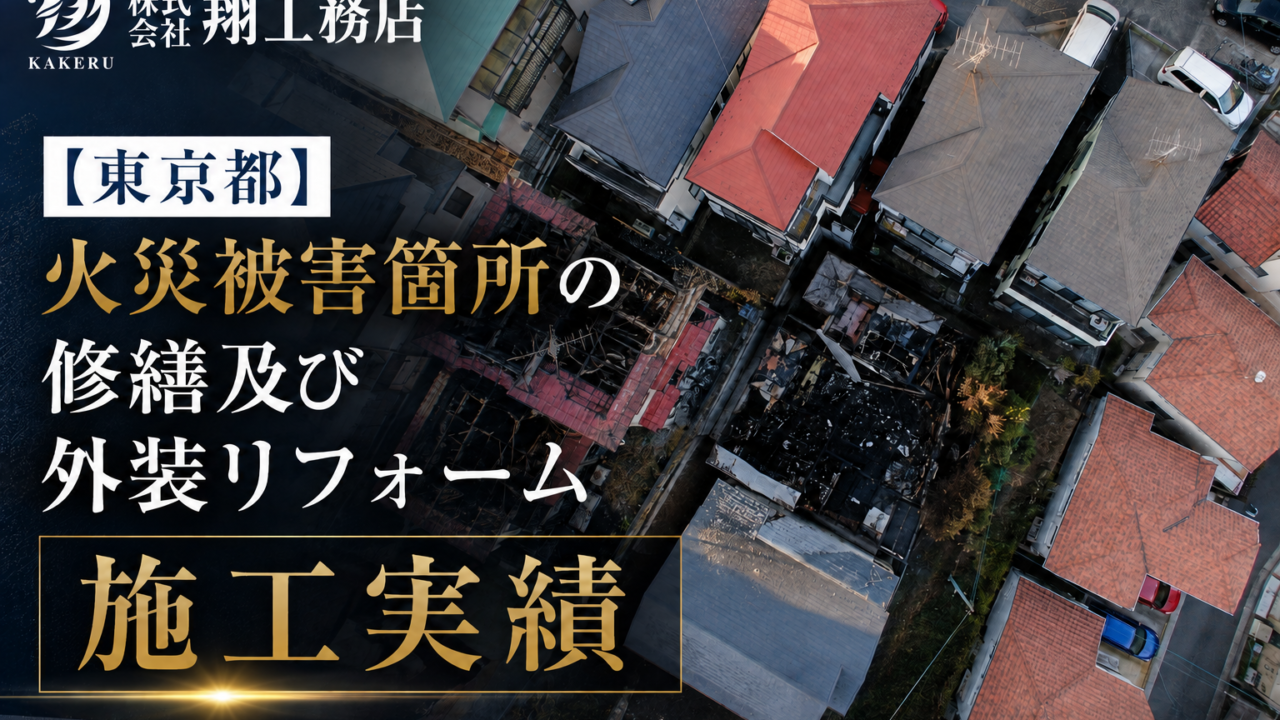
A clear explanation of response, procedures, and repairs
We have organized the necessary steps from applying for a disaster certificate to fire insurance, support systems, and building repairs in the order you need.
Initial extinguishing should only be done within a safe range, and if flames reach the ceiling or smoke fills the area, do not attempt to extinguish the fire and evacuate outdoors. Do not return to a building once you have evacuated.
6 Steps When Experiencing Fire Damage in Tokyo
This is the basic flow from the occurrence of a fire to the restoration of the building. The order may vary depending on the damage situation and instructions from the fire department and insurance companies.
Notify Surroundings, Call 119, and Evacuate
Alert those around you with a loud voice or emergency bell, and inform 119 of your location and situation. If using a fire extinguisher, ensure an escape route is secured, and evacuate immediately if you feel danger.
Receive Fire Investigation After Extinguishment
After extinguishment, an investigation into the cause and damage will be conducted by the fire department and police. Please do not enter the site without permission until the investigation is complete, and do not clean up any burnt items.
Disaster Declaration and Disaster Certificate Procedures
The Tokyo Fire Department advises that the disaster declaration form should be submitted to the relevant fire station or fire branch office within approximately 7 days from the date of the disaster or the date the fire department became aware of the fire. A disaster certificate may be required for insurance or exemption procedures.
Administrative Procedures and Confirmation of Lifelines
Check for condolence money, temporary housing, disaster waste, and tax/insurance exemptions at your local municipal office. Please follow the instructions of the fire department and each utility provider regarding the suspension and resumption of electricity, gas, and water.
Report the Incident to Your Fire Insurance Company
Contact your insurance company or agent. Provide your policy number, date of occurrence, and details of the damage, and confirm the necessary documents, how to take photos, and the process for damage assessment.
Request Investigation and Estimate from Repair Contractors
Request an investigation from a contractor who can assess not only visible burns and deformations but also the underlying structure, waterproofing paper, wiring, plumbing, and insulation. Gather damage photos, investigation reports, and estimates that detail the work items.
The window for obtaining a disaster certificate varies by type of disaster. Fires are handled by the fire station, while earthquakes and wind/water damage are handled by municipal offices. It is easy to confuse the reception period for wind/water damage (which can be several months), but for fires, the guidance is generally within 7 days, which is quite short. Please consult your fire station as soon as possible.
The Tokyo Fire Department oversees the 23 wards and the Tama region (excluding Inagi City). For residents of Inagi City, the Inagi City Fire Department (Inagi Fire Station) is the point of contact.
Items to Prepare Before Contacting Contractors
- Explanations and documents received from the fire department and police
- Photos and videos of the damaged areas from wide, medium, and close-up angles
- Fire insurance policy or documents that clarify the contract details
- Building plans, past renovation documents, equipment model numbers
- A list of damaged household items and equipment
Five Points for Choosing a Repair Contractor for Fire Damage in Tokyo
Fire damage repairs are more complex than regular renovations, involving assessments of the extent of damage and document preparation. Let’s compare not only prices but also investigation skills, explanation abilities, and construction systems.
- Rich experience in investigating and repairing fire damage
- Ability to check exterior, interior, and housing equipment all at once
- Can provide detailed estimates showing damage photos and work items
- Clear warranty details and aftercare maintenance
- Does not rush for comparative estimates or insurance company confirmations
Is the estimate full of “lump sums”?
Estimates that break down damage areas, removal, substrate repairs, materials, construction, and waste disposal make it easier to compare repair contents and explain the relationship to the insurance company.
Beware of contractors who rush contracts
Avoid contractors who rush contracts with explanations like “If you sign today, it’s free” or “The insurance payout will definitely be full.” It is important to sign the contract after confirming with the insurance company and agreeing on the scope of work.
Are you judging solely by the finishing materials?
Even if it only appears to be discoloration of the exterior wall, the effects of heat may have impacted the waterproof paper, wooden substrate, and insulation materials. Partial dismantling or investigations using specialized equipment will be conducted as necessary.
Are you leaving everything to subcontractors?
Fire damage spans multiple trades, including interior, exterior, air conditioning, and water heaters. If everything is left to subcontractors, the repair contents may change after construction begins, requiring reapplication, or there may be delays in emergency responses.
Support funds and tax reduction systems available for fire damage in Tokyo
The systems are not uniform across Tokyo and vary depending on your ward, city, town, household situation, and extent of damage. Below are representative examples. Always check the latest official information and the relevant contact points.
【23 wards】 Fixed asset tax and city planning tax reductions are handled by the “Tokyo Tax Office”
The fixed asset tax and city planning tax within the 23 wards are levied by Tokyo Metropolitan Government, not the wards. Therefore, the application window for disaster reductions is the Tokyo Tax Office, not the ward office. This is a point where many people mistakenly go to the ward office. In the Tama region, the city or town hall serves as the application window since municipalities are the taxing authorities.
| Main Applicable Metropolitan Taxes | Property Tax, City Planning Tax (within the 23 wards) / Personal Business Tax / Real Estate Acquisition Tax / Personal Inhabitant Tax / Business Office Tax (within the 23 wards) / Automobile Tax Type Division, etc. |
|---|---|
| Requirements for Property Tax | The damage to land, buildings, or depreciable assets is 10% or more. |
| Application Destination | Each Metropolitan Tax Office within the 23 wards (attach documents certifying the damage situation, such as disaster certificates) |
| Timing of Application | Reductions will be applied from the due date following the date of application. As a general rule, applications must be made by the due date, so please proceed as early as possible. |
Reduction Amounts Based on the Degree of Damage (Tokyo Metropolitan Tax Ordinance Enforcement Regulations)
| Degree of Damage (Damage Ratio) | Reduction Amount |
|---|---|
| 10% or more but less than 20% | 1/5 of the tax amount |
| 20% or more but less than 30% | 3/10 of the tax amount |
| 30% or more but less than 50% | 1/2 of the tax amount |
| 50% or more but less than 70% | 7/10 of the tax amount |
| 70% or more | Full Amount |
Examples of Disaster Relief Funds in the 23 Wards
Disaster relief funds from the wards typically vary based on total loss / partial loss and multiple households / single households. Here are examples from wards where details can be confirmed on official websites.
Adachi-ku
| Category | Multiple Households | Single Household |
|---|---|---|
| Total Loss / Total Destruction | 40,000 yen | 20,000 yen |
| Partial Loss / Partial Destruction, etc. | 20,000 yen | 10,000 yen |
Households with partial loss or more of their residence are eligible. Applications should be made at each ward office. Information on tax and insurance fee reductions, emergency small loans, and fee reductions for disaster-related waste is also provided.
Koto-ku
| Category | Ordinary Household | Single Person |
|---|---|---|
| Complete Burn/Total Destruction | 30,000 yen | 15,000 yen |
| Partial Burn/Partial Destruction | 15,000 yen | 8,000 yen |
This applies to fires and wind and flood damage that do not fall under the Disaster Relief Act. Applications should be directed to the Disaster Prevention Division, Disaster Response Section. Blankets and other supplies are also available.
Arakawa-ku
| Category | General Household | Single Person |
|---|---|---|
| Complete Burn/Total Destruction | 30,000 yen | 15,000 yen |
| Partial Burn/Flooding | 20,000 yen | 10,000 yen |
Applications should be directed to the Citizens’ Affairs Division, General Affairs Section. Information on temporary use of public housing, nursery school admission, tax benefits, and insurance premium deferral or reduction is also provided.
In addition, Shinjuku-ku offers condolence payments and supplies for fire damage of partial burn or greater, assistance with lodging arrangements, temporary housing, and subsidies for temporary housing costs. Setagaya-ku also accepts inquiries about condolence payments and various reductions. The amounts and requirements vary by ward, so please check with the Disaster Prevention Division or Citizens’ Office in your ward.
【Tama Region】Examples of City Support Systems
Fuchu City
- Disaster certificate is issued for free at Fuchu Fire Station
- Disaster condolence payments and relief supplies (such as blankets) are provided
- Reduction of fixed asset tax and city planning tax (for amounts due not yet reached)
- Emergency small loans / temporary housing in city-owned housing (up to about 3 months)
Musashino City
- Disaster certificate is issued by Musashino Fire Station
- Disaster condolence payments may be provided depending on the extent of damage
- Reductions for citizen tax, fixed asset tax, national health insurance tax, and long-term care insurance premiums
- Household items that have become unusable may be collected as “disaster waste”
Machida City and Others
- In Machida City, the fire debris disposal fee may be waived depending on the application and site confirmation (a copy of the disaster certificate is required).
- Hino City has its own disaster relief fund. It is clearly stated that disaster condolence money does not apply to fire victims.
- Similar systems exist in Hachioji City, Tachikawa City, Kodaira City, and others.
Parts Prone to Fire Damage and Repair Methods
Damage from fire heat, smoke, soot, and extinguishing water may spread internally more than it appears on the surface. It is important to check not only the surface but also the underlying structure, waterproofing layers, wiring, and plumbing.
Exterior materials, sashes, fences, and coping may have the same products discontinued due to the year of manufacture. What you thought could be resolved with partial replacement may turn into a full replacement, changing both the estimate amount and the construction period. Therefore, it is essential to confirm the part numbers and production status during the investigation phase.
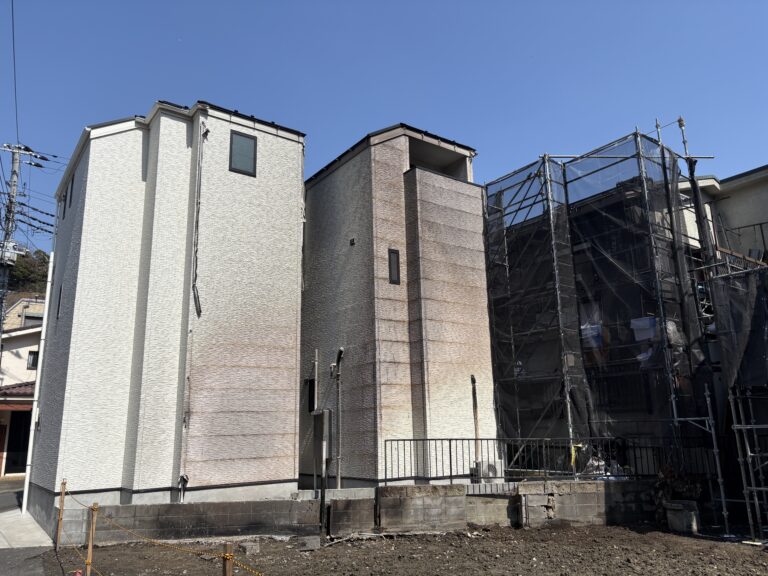
Exterior Wall
Mortar and Concrete: Check for cracks, discoloration, paint film shrinkage and peeling, and bulging. Repair with patching mortar and pattern repair (skin matching) along with color matching paint. In cases of fire originating from indoors, the exterior wall may peel off.
Metal Siding: In addition to discoloration and deformation, check for thermal degradation of internal wood and insulation materials. Partial replacement can be difficult, and extensive replacement or detachment may be necessary.
Ceramic Siding: Check for cracks, warping, and deformation, as well as damage to internal wood and waterproof sheets. This area often requires replacement due to the difficulty of repair.
Roof and Eaves
In addition to cracks and deformation in tiles, slate, and metal roofs, check for thermal effects on the sheathing, rafters, roofing, eaves wood, and insulation. While roofing materials themselves are relatively resistant to damage, they can become severely damaged depending on the intensity of the fire.
Depending on the situation, we will choose the appropriate method from replacement, partial re-roofing, or full re-roofing.
Sash and Glass
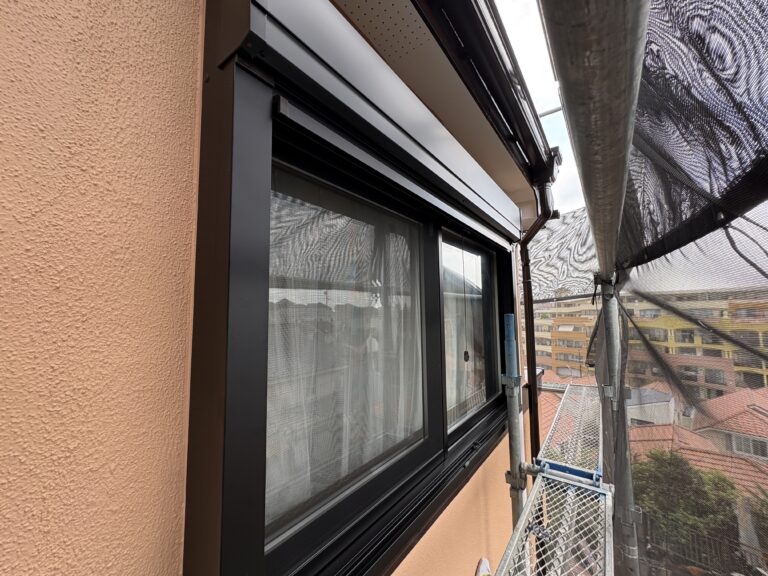
This area is quite susceptible to damage. Glass breakage, melting of the resin parts of the rails and shutter boxes, tearing of the screens, deformation, and discoloration can occur. If parts are discontinued, the entire window will need to be replaced, and repairs to the interior wallpaper, wooden frames, and exterior walls around the sash may also be necessary.
Air Conditioner and Water Heater
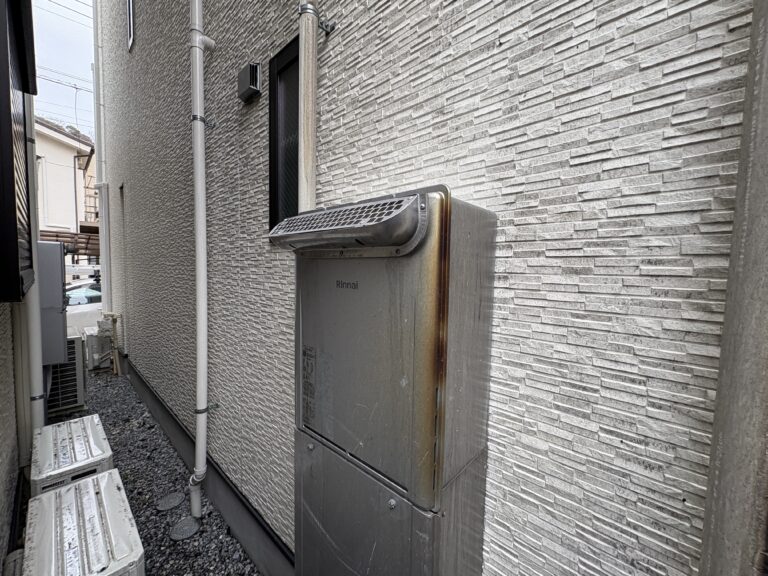
Air Conditioner: The outdoor unit and slim duct (protective cover) are made of resin and can melt due to heat. Generally, a complete replacement is required.
Water Heater: The piping may melt or deform, and the main unit can also suffer burns and deformation. If there is damage to the main unit, a complete replacement is generally necessary. A professional will handle the situation after ensuring safety.
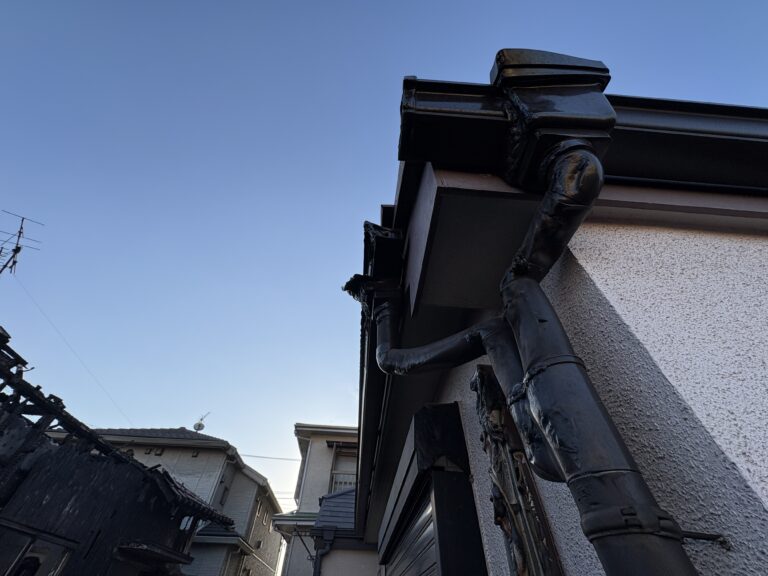
Rain Gutters and Drainage Pipes
Rain gutters:Melting and deformation are common. Normally, only the damaged sections are replaced. With eaves gutters, the fascia board is often damaged as well, so it must also be checked.
Pipes (mainly wastewater pipes):Deformation may extend into the exterior walls. In some cases, toilets must be removed and reinstalled, or flooring removed. The extent of damage must be checked before work begins.
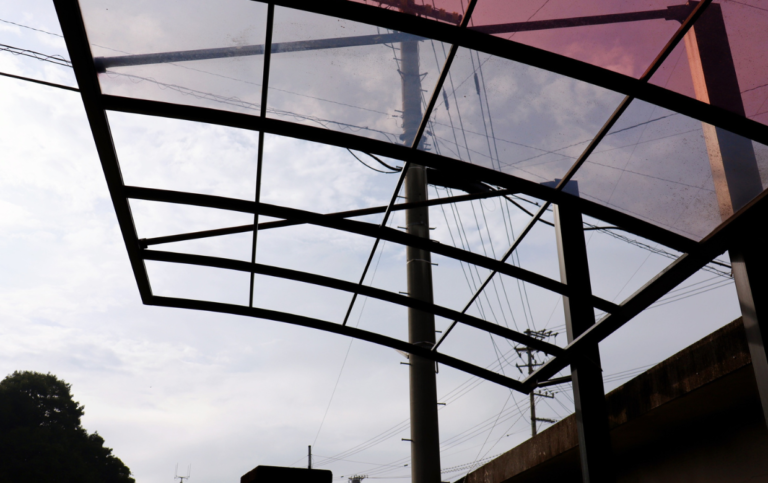
Fences, Carports and Copings
Aluminum sections may deform, and resin joints or polycarbonate panels may melt. If the original product has been discontinued, an entire connected section may need to be replaced.
Aluminum copings may discolor or deform, while resin corner pieces may melt. Product availability must also be checked.
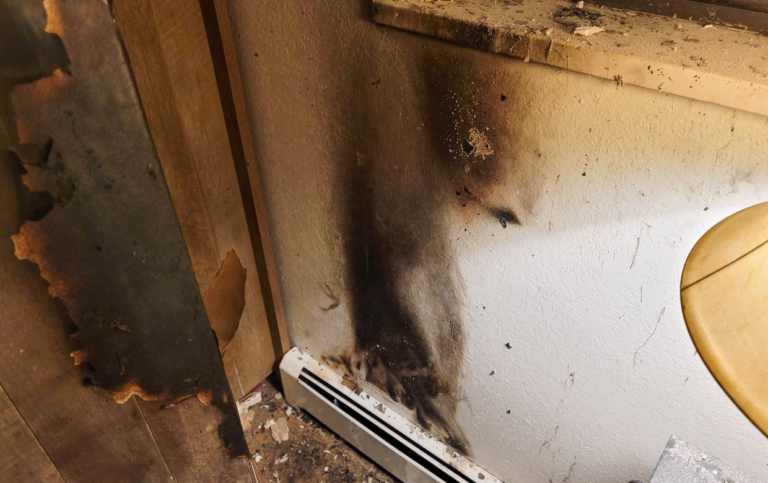
Interiors and Structural Substrates
In addition to charring and discoloration of wallpaper, flooring and fittings, we inspect plasterboard, studs, beams, rafters, insulation and electrical wiring, as well as moisture and mold caused by firefighting water. If soot or odors remain, specialist cleaning and deodorization are also carried out.
Solar Panels & Storage Batteries
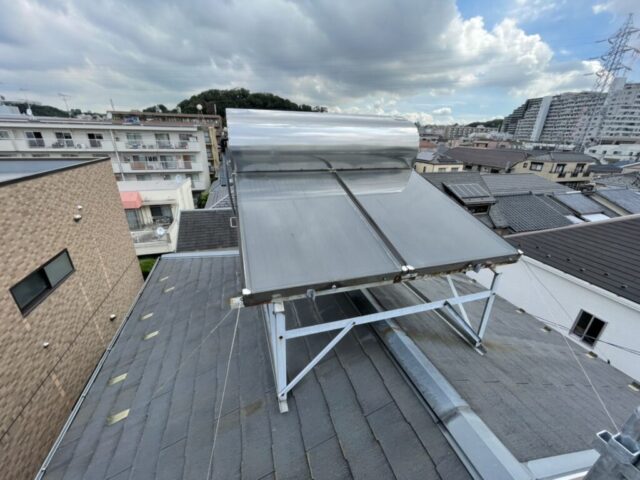
Even after a fire, solar panels may continue to generate electricity when exposed to light, and there is a risk of electric shock if you inadvertently touch damaged wiring or equipment. It is necessary to have a judgment made by the manufacturer or electrical contractor regarding disconnection, insulation, or replacement. Please avoid removing or inspecting them yourself.
Reasons Kakeru Koumuten is Chosen for Fire Damage Repairs in Tokyo
We handle everything from investigation, estimation, to construction in-house. You can consult us not only about the fire-damaged areas but also about the necessary repairs for roofs, exterior walls, windows, facilities, and interiors all at once.
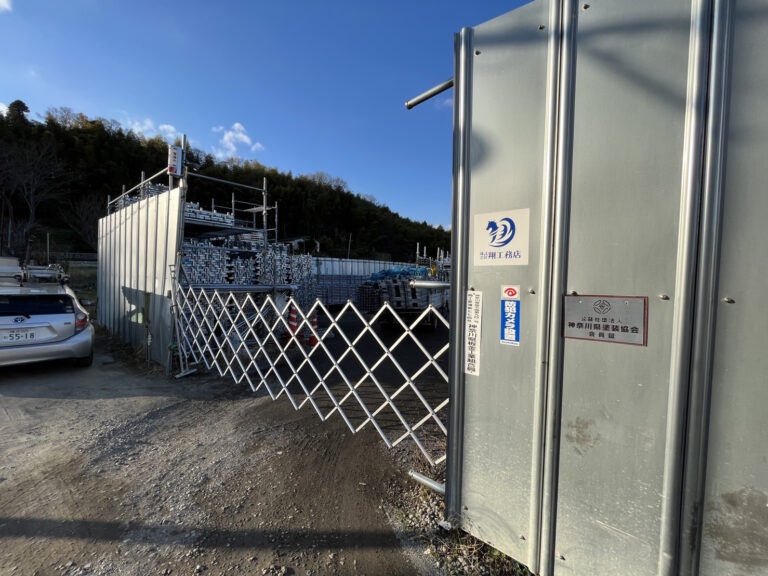
In-House Scaffolding Materials & Team
We own enough scaffolding materials for about 50 detached houses and assemble them with our own scaffolding team. By not outsourcing, we can keep costs down and respond quickly to urgent temporary measures.
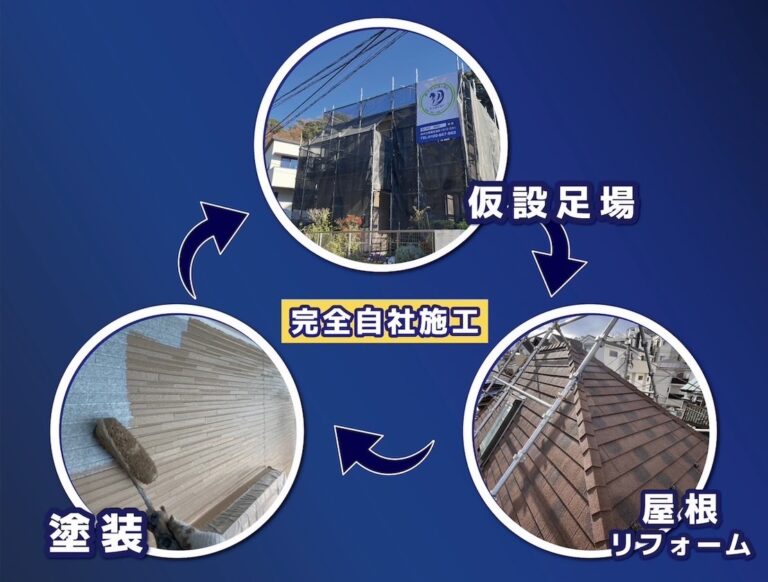
Complete In-House Construction with a Single Responsible Person
We provide a consistent system from inquiry to project completion. Your representative remains the same from the estimate to the final completion, ensuring there are no discrepancies between sales and the site.
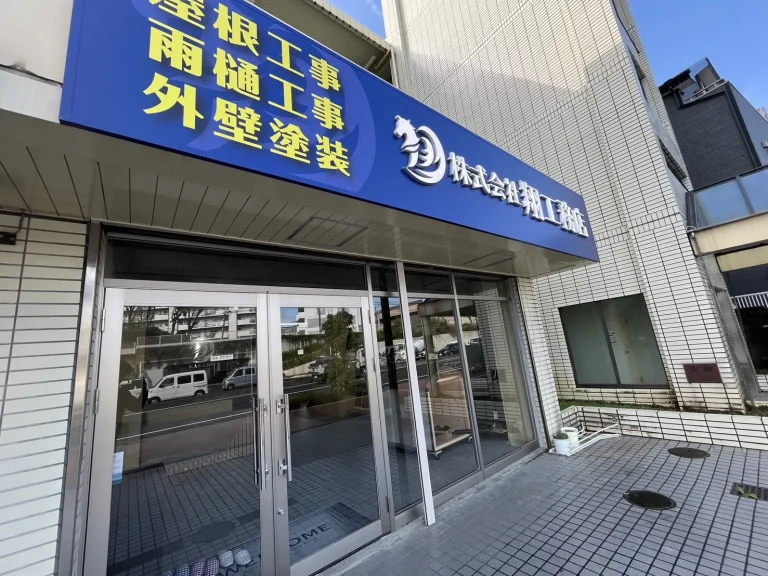
Material Storage and Showroom at 5 Locations
We keep a constant stock of paints and repair materials in our large warehouse, minimizing procurement costs through bulk orders. In our showroom, you can directly check actual exterior materials and colors, and color simulations are also available.
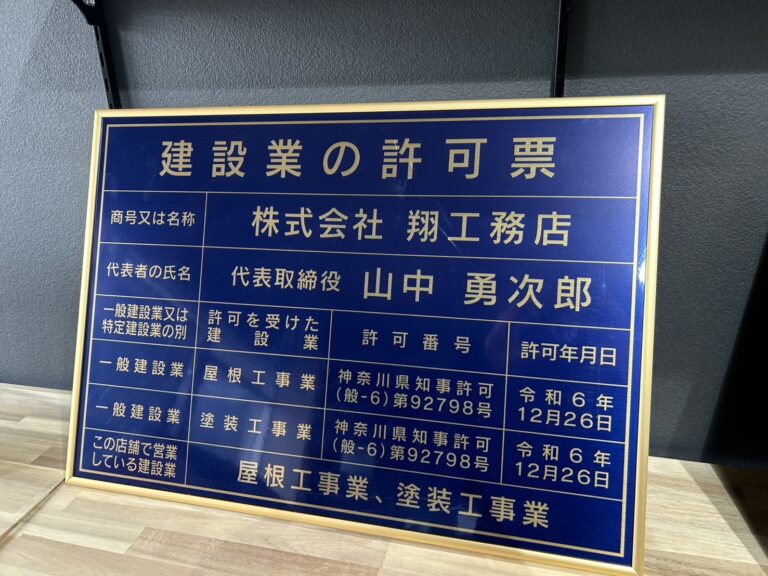
Acquisition of Various Permits and Qualified Personnel
We have obtained construction industry licenses and industrial waste collection and transportation permits. We have nationally certified sheet metal workers and painting specialists on staff. We sort and recycle waste materials in-house, reducing disposal costs.
Guarantees and Aftercare Maintenance
We issue a warranty certificate according to the scope of work. Even after completion, we send annual notification DM and offer yearly inspections. It can be difficult to notice changes at heights, so regular inspections allow for early detection.
Drone and Thermography Surveys
When unable to access the roof, we utilize drones and thermal imaging cameras to check for leaks and temperature differences, allowing us to identify damage that is difficult to assess visually. We also regularly conduct in-house training using self-made models to enhance our skills.
We are confident in our costs, quality, and plans, so we welcome estimates from any number of companies.
Please feel free to compare with other companies’ estimates.
Case Study of Fire Damage Repair Work
This is a case where extensive damage occurred to the exterior and facilities of a residence due to a neighboring fire. Please refer to it when consulting us in Tokyo.
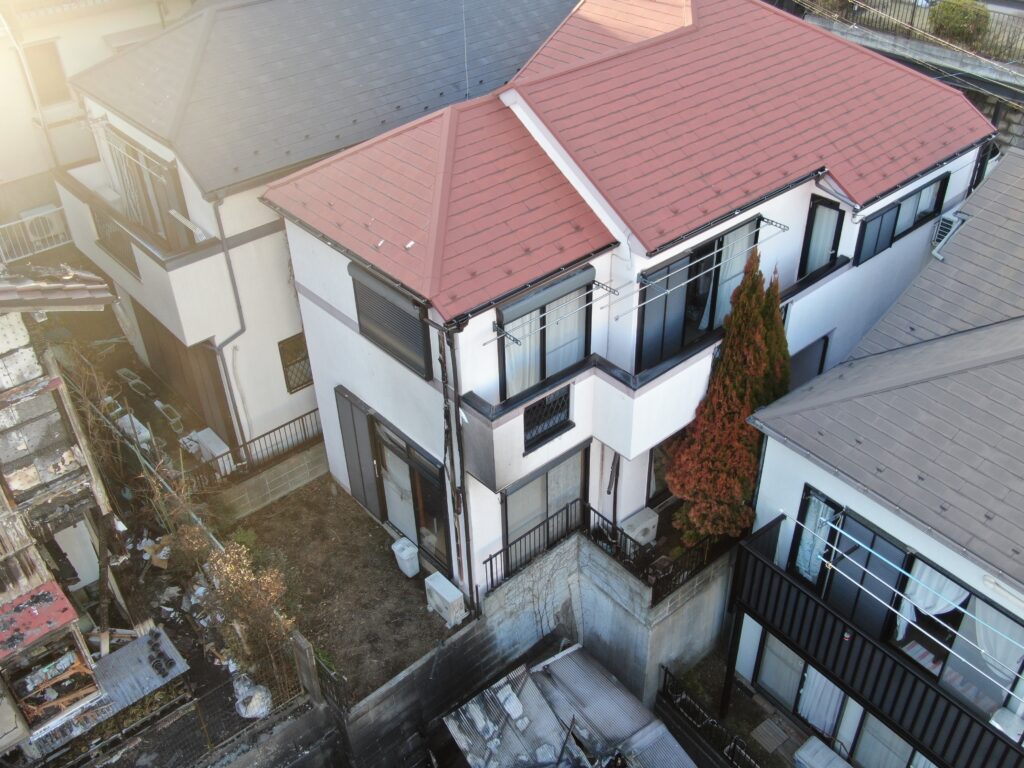
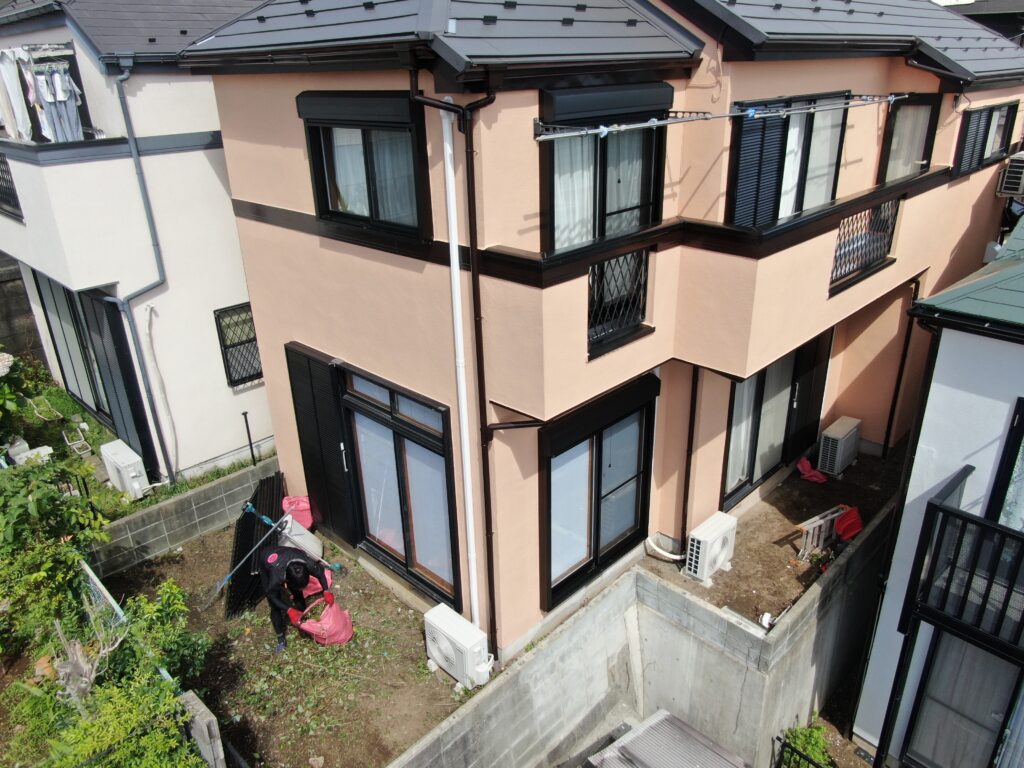
Details of Fire Damage Repairs
- Window frame replacement (broken glass, melted shutter box)
- Exterior wall mortar repair (cracks and discoloration due to high heat)
- Partial fence replacement (replaced from the post due to discontinuation)
- Replacement of air conditioning units and slim ducts (2 units)
- Shoji replacement and special indoor cleaning (soot and odor)
- Partial replacement of rain gutters
Investigation and Proposal Process
We confirmed the extent of the damage on-site and prepared a repair estimate necessary for restoration, along with a photo report for submission to the insurance company. We successfully obtained approval from the insurance company for the fire-damaged areas and received a request for the repair work.
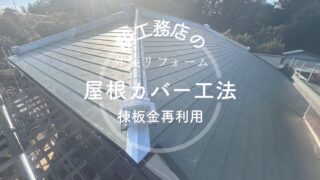
At the same time, we were also requested to carry out roof overlay work, exterior painting, and weed control in the garden, with separate estimates provided for the fire damage work.
Frequently Asked Questions about Fire Damage Repairs in Tokyo
Can I definitely use my fire insurance?
Is it okay to start repairs before the insurance company confirms?
Where do I apply for a disaster certificate in Tokyo?
Where do I apply for property tax reductions in the 23 wards?
Can I request just emergency measures?
Do I need to be home during the construction period?
Can you handle work other than exterior walls and roofs?
Will there be additional costs after the estimate?
Can you assist with administrative procedures and insurance claims?
What are the payment timing and methods for the construction?
Can I request a quote even if I am comparing multiple estimates?
When will construction start after the contract is signed?
Can you notify neighbors and residents?
How many fire damage repairs have you completed?
Related Construction Costs and Service Menu
Customer Testimonials
-
customer reviews
Asao-ku, Kawasaki City | We received reviews about the ridge cap and rain gutter replacement work!
-
customer reviews
Kohoku-ku, Yokohama | We received reviews about the roof overlay (cover method)!
-
customer reviews
Kohoku-ku, Yokohama | We Received Reviews About Exterior Painting!
-
customer reviews
Hodogaya-ku, Yokohama | We received reviews about our exterior fence construction!
-
customer reviews
Tsurumi-ku, Yokohama | We received reviews about roof and exterior wall painting, as well as metalwork and rain gutter replacement work!
-
customer reviews
Higashiyamato City, Tokyo | We received reviews about exterior painting and roof overlay (cover method)!
For Fire Damage Repairs in Tokyo, Consult Kakeru Koumuten
In the event of damage caused by nearby fires or fires originating from your home, it is important to proceed with necessary confirmations in the order of Fire Department → Government → Insurance Company → Repair Contractor without panicking.
Kakeru Koumuten provides comprehensive support from damage assessment, photography, estimate preparation, emergency measures, to repair work. If you are considering renovations outside of the fire-damaged areas at the same time, we will provide clear estimates separately.
Service Areas in Tokyo
We have a “Machida Store” located in Machida City, Tokyo, and can promptly visit not only the Tama area but also within the 23 wards.
Tokyo 23 Wards: Chiyoda-ku / Chuo-ku / Minato-ku / Shinjuku-ku / Bunkyo-ku / Taito-ku / Sumida-ku / Koto-ku / Shinagawa-ku / Meguro-ku / Ota-ku / Setagaya-ku / Shibuya-ku / Nakano-ku / Suginami-ku / Toshima-ku / Kita-ku / Arakawa-ku / Itabashi-ku / Nerima-ku / Adachi-ku / Katsushika-ku / Edogawa-ku
Tama Area: Hachioji City / Tachikawa City / Musashino City / Mitaka City / Ome City / Fuchu City / Akishima City / Chofu City / Machida City / Koganei City / Kodaira City / Hino City / Higashimurayama City / Kokubunji City / Kunitachi City / Fussa City / Komae City / Higashiyamato City / Kiyose City / Higashikurume City / Musashimurayama City / Tama City / Inagi City / Hamura City / Akiruno City / Nishitokyo City / Mizuho Town / Hinode Town / Hinohara Village / Okutama Town
* The response method may vary depending on the island areas and site conditions. For more details, please contact us. We also serve all areas of Kanagawa Prefecture.
If you have suffered fire damage in Kanagawa Prefecture, please also check the Kanagawa Prefecture Fire Damage Repair Page.
Free Investigation and Estimate
If you are unsure about the extent of repairs needed, need an estimate for your insurance company, or would like immediate emergency measures, please let us know your current situation.
If you find that our company is inferior to others, you are free to decline our services.
We also accept inquiries via LINE

We are also updating our Instagram regularly
* The information in this article is based on the official information from the Tokyo Fire Department, Tokyo Metropolitan Taxation Bureau, and various city wards as of August 20, 2026. The content, eligibility, amounts, and application deadlines may change, so please be sure to check the latest official information and contact points. The eligibility for fire insurance compensation and the amount of insurance will be determined by the insurance company.
Main sources: Tokyo Fire Department “Disaster Report Form” / Tokyo Metropolitan Taxation Bureau “Tax Reduction and Exemption” / Adachi Ward / Koto Ward / Arakawa Ward / Fuchu City
contact Kakeru Koumuten Co., Ltd.
Kakeru Koumuten is a young company whose team is, on average, in their late twenties, but our skills are second to none.
Our greatest strength is that we handle scaffolding, roofing and painting entirely in-house. In an industry where these tasks are usually divided among contractors, our complete service simplifies project management and helps keep costs down. Above all, if a problem arises, we respond promptly.
We proudly describe ourselves as the youngest and most helpful renovation company in Kanagawa!