Should You Address Roof Leaks Early?! A Thorough Explanation of the Causes of Roof Leaks and Effective Countermeasures!
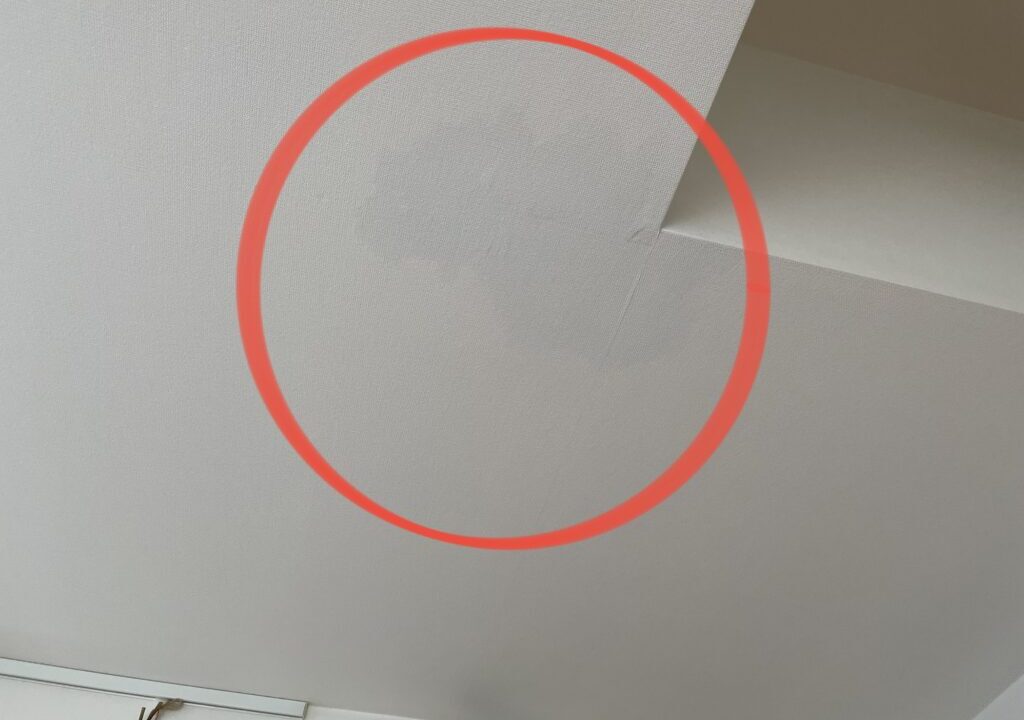
Many people may be wondering whether they should take measures against rain leaks.
Some might think,
“Rain leaks only occur in properties that are several decades old,”
but this is a significant misconception.
If you have a careless mindset of “It’s still okay,” you might suddenly experience a rain leak.
In this article, we will provide a detailed explanation of the causes of rain leaks and effective measures to prevent them.
If you have any awareness of the causes of rain leaks, it’s best to take preventive measures immediately.
What are the causes of rain leaks?
Let’s quickly introduce some possible causes of rain leaks.
Displacement or Cracks in Roofing Materials
Displacement or cracks in roofing materials can also lead to rain leaks.
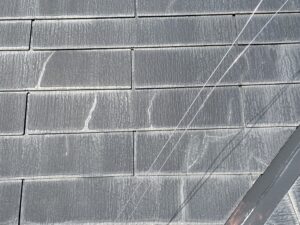
For example,
・In the case of tile roofs → Rainwater can enter through displaced or cracked tiles
・In the case of flat roofs → Rainwater can enter due to cracks from foot traffic or warping over time
・In the case of metal roofs → Rainwater can enter from around the roof
Various factors can lead to rain leaks.
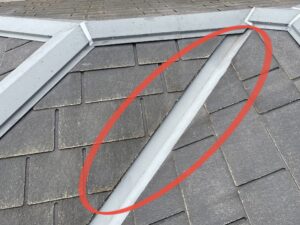
Deterioration of Valley Flashing
Valley flashing refers to the metal channels that allow for rapid drainage of water.
However, since it is made of metal, the likelihood of holes forming due to deterioration increases after a certain number of years.
If holes form, rainwater can enter through them, leading to leaks.
Overflow of Rainwater
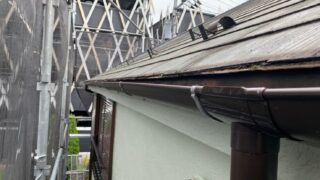
The edges of the roof are called eaves, and there are many cases where leaks occur from these eaves.
This is because there is a “drainage channel” under the roofing material at the eaves, but if dirt, dust, and branches accumulate here, it can block the gap between the drainage channel and the roofing material.
When this happens, it becomes impossible to efficiently drain rainwater, leading to overflow.
Loose or Raised Ridge Flashing
Some of you may have seen this from a distance,
・Flat roofs
・Metal roofs
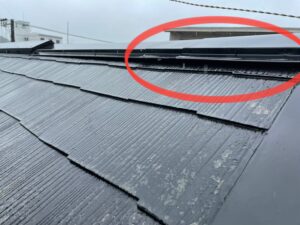
At the top of these roofs, there is ridge flashing, which is the metal covering the ridge of the roof. It is prone to causing leaks and is a critical point of the roof.
The ridge cap is fixed with nails, but after about 7 to 8 years, the nails may start to lift due to deterioration.
When this happens, rainwater can enter the inside of the ridge cap, causing the wood to rot and leading to leaks.
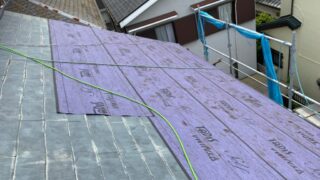
The inside of the ridge cap is not covered by roofing material, and the roofing sheet (waterproof sheet) is visible.
Peeling of the plaster
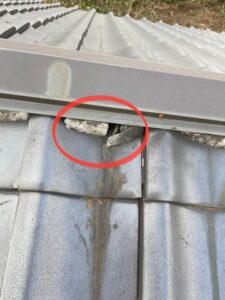
The soil that secures the tiles is called “fuki-doko.”
The part that covers this fuki-doko is called plaster, and when this plaster peels off, the fuki-doko is exposed to rain and wind.
Even if the plaster peels off, it doesn’t immediately cause leaks, but over a few years, the fuki-doko can be eroded, leading to leaks.
Lack of cutting edges during painting
For slate roofs, repainting is typically done every 10 years to maintain the appearance.
However, if the cutting edge process is not properly performed during painting, the system that allows rainwater and moisture to escape can be blocked by the paint. This can cause water to accumulate and lead to leaks.
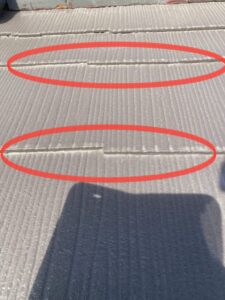
That said, since the cutting edge work cannot be managed by the client, it is important to hire a reputable contractor that performs careful work. It is recommended to install plastic components called tasupēsā after the primer coat to ensure a path for water to escape.
Let’s take photos for confirmation!
Our blog also provides detailed explanations about tasupēsā!
What are effective methods for leak prevention?
Next, we will introduce several effective methods for leak prevention.
Sealing repairs
Sealing repairs refer to the work of preventing cracks and gaps in the roof with adhesive sealing materials.
By doing this, you can prevent rainwater from entering the inside of the roof, which serves as a measure against leaks.
There is a term similar to sealing, called “caulking,” but there is no clear distinction between the two.
If we must differentiate,
・Caulking → Filling in gaps on the roof (such as exterior walls)
・Sealing → Filling in gaps on the roof (such as exterior walls) to enhance waterproofing performance
is about the extent of the difference.
However, caulking repairs often end up being temporary, so there are many cases where proper repairs become necessary.
Cover Method
The cover method refers to the construction technique of placing a new roof over an old roof.
Since a new roof is placed on top, it is also referred to as “overlapping roofing.”
By using the cover method for leak prevention, you can shorten the construction period and reduce costs, making it ideal for those looking to address leaks affordably.
This is limited to existing roofs made of colonial or shingle materials.
However, if the underlying structure is weakened, the cover method will not be possible, so early repairs are necessary.
Tile or corrugated metal roofs cannot use the cover method.
Can You Prevent Leaks with DIY? Steps for Performing Sealing Yourself?
Among those reading this article,
there may be people who think,
“I want to prevent leaks myself.”
For such individuals, DIY sealing is recommended.
Now, let’s take a closer look at the specific methods and steps.
1: Remove Old Sealing Material
If you are doing sealing repairs yourself, you must first remove the old sealing.
Some may think,
“It’s enough to fill in the gaps,”
but the adhesion between old sealing and new sealing is very poor, and if you just fill over it, the effect will be diminished.
2: Apply Masking Tape
After peeling off the old sealing, apply masking tape on both sides of the area where the sealing material will be applied.
This step helps prevent sealing material or primer from getting on unwanted areas, making subsequent work easier.
3: Apply Primer
Once the masking tape is applied, apply primer to the area where the sealing material will be used.
Applying primer increases the adhesion with the sealing material.
4: Apply Sealing Material
Now that you’ve reached this point, it’s time to apply the sealing material.
Once you have finished applying the paint evenly, use a trowel to smooth it out to avoid any voids.
If you apply it too thinly, there is a possibility that its effectiveness will diminish, so
“Is this a bit too thick?”
Fill it to the extent that you feel this way.
5: Remove the masking tape
After that, remove the masking tape to complete the process.
If you take too long to remove the masking tape, it may harden together with the sealing material, so be careful.
Additionally, if you want to strengthen your measures against leaks, it is also recommended to apply waterproof repair tape on top.
Points to note when performing DIY leak prevention
It is possible to carry out roof leak prevention even as a DIY project.
However, it is generally not highly recommended.
Let’s take a closer look at the reasons for this.
High risk of injury
If it’s about preventing leaks in exterior walls or sealing repairs, it can be done easily as a DIY project.
However, in the case of roof leak prevention, you obviously need to go up on the roof, which involves working at heights.
If you have experience, that’s a different story, but if someone with no experience tries to handle leak prevention themselves, it can lead to fall accidents.
Effectiveness diminishes without specialized knowledge
While it is quite possible to perform sealing repairs on your own, the effectiveness will diminish without specialized knowledge.
If you don’t follow the correct order, no matter how much time you spend doing it carefully, you won’t be able to effectively prevent leaks, so if you lack confidence, it’s best to consult a professional.
For serious leak prevention, leave it to “Kakeru Koumuten Co., Ltd.”!
If you want to seriously address leak prevention, it is recommended to hire a specialized contractor.
Our company, Kakeru Koumuten Co., Ltd., also provides leak prevention services.
You can see from our track record that we have successfully implemented leak prevention measures in various homes.
We will carry out leak prevention measures tailored to each household, so if you are interested in leak prevention, please feel free to contact us.
Conclusion
If you do not properly implement leak prevention measures, there is a high possibility that water will suddenly leak from the ceiling, affecting your daily life.
Many people think that leaks only occur in very old houses, but that is not the case at all, so it’s best to take preventive measures in advance.
While you can perform sealing repairs on the roof as a DIY project, it comes with significant risks, and doing it incorrectly can halve its effectiveness.
If you are looking to implement more serious leak prevention measures, please contact Kakeru Koumuten Co., Ltd.
・Summary of Popular Exterior Wall Paint Colors! Recommended Color Combinations!
・For those who want to try DIY exterior wall and roof painting! Scaffolding only! DIY Plan for Roof and Exterior Wall Painting!
・Latest! Subsidies in Kanagawa Prefecture! Information on Grants and Reduction Systems!
・Is exterior wall painting necessary? Risks of neglecting it!
・How much does exterior wall painting cost? Are there tips to reduce costs?
・What is the best time for exterior wall painting? How to determine the best timing!
・What are the market prices for rain gutter repair and cleaning? Tips on timing and choosing contractors, including fire insurance!
・What are the ventilation methods for siding exterior walls and the direct application method? Introduction to maintenance methods!
・About Joint and Sealing Work | Information on Cost Estimates and Construction Methods!
LINEConsultations via LINE are also very welcome◎

We are also updating our Instagram regularly◎Please follow us◎

contact Kakeru Koumuten Co., Ltd.
Kakeru Koumuten is a young company whose team is, on average, in their late twenties, but our skills are second to none.
Our greatest strength is that we handle scaffolding, roofing and painting entirely in-house. In an industry where these tasks are usually divided among contractors, our complete service simplifies project management and helps keep costs down. Above all, if a problem arises, we respond promptly.
We proudly describe ourselves as the youngest and most helpful renovation company in Kanagawa!