Ventilated vs. Direct-Fixed Siding: Maintenance & How to Identify Your Installation

Hello everyone! Kakeru Koumuten Co., Ltd. is here!
What we are introducing here is
“Causes and Solutions for Peeling and Bubbling of Siding Exterior Walls”
“Ventilation Method and Direct Pasting Method for Siding Exterior Walls”
is what we will discuss!
Siding Exterior Walls
First, let’s talk about siding exterior walls! There are two types of siding installation methods. Knowing which method your home uses can help prevent troubles and mistakes with contractors, so please take a look!
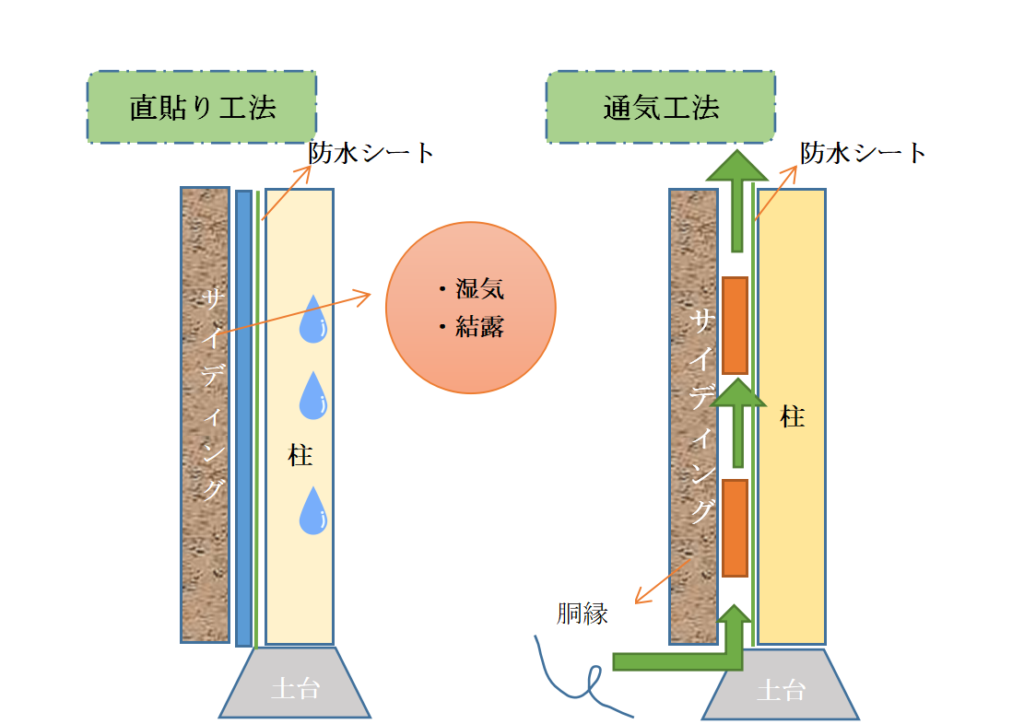 *Created by our company
What is the Direct Pasting Method?
The direct pasting method for siding involves applying a waterproof sheet to the wall substrate (structural plywood) and then attaching the siding boards on top.
This method has been used since the 1990s, but concerns arose that moisture could accumulate inside the wall without a way to escape, leading to bubbling, swelling, and peeling of the siding. As a result, after 2000, the method was switched to a different ventilation method.
What is the Ventilation Method?
The ventilation method, in contrast to the direct pasting method, involves applying a waterproof sheet to the wall substrate (structural plywood) and creating a gap between the waterproof sheet and the siding boards! By creating this gap, moisture can escape. This helps prevent swelling and peeling of the siding, reduces the likelihood of leaks, and significantly impacts the lifespan of the home!
A wooden material called a ventilation batten (通気胴縁) is placed between the waterproof sheet and the siding boards to create the gap. Since around 2000, more contractors have adopted this ventilation method, and it has now become a common practice.
Direct Pasting Method Siding
Signs of Deterioration
Now, let’s explain what the signs of deterioration for direct pasting siding are!
First of all, everyone has probably seen peeling or swelling at least once. This phenomenon occurs because, as previously explained, there is no escape route for moisture inside the walls, causing humidity to accumulate, which leads to the lifting, swelling, and peeling of the siding.
If left unattended, not only the exterior walls but also the underlying columns can suffer from corrosion, ultimately leading to deterioration inside the home. Many people only realize this when it results in leaks.
If the deterioration reaches the interior, it will be necessary to remove the interior wallpaper and boards, resulting in additional construction costs.
First, check your home’s exterior walls for any peeling or lifting, and if peeling is occurring, it is advisable to consider repairs as soon as possible.
Maintenance Methods
Exterior Wall Overlay Method
The exterior wall overlay method is a technique that involves installing new exterior wall materials over the existing ones. This method saves the labor of dismantling the existing walls, significantly reducing construction costs and duration.
However, a disadvantage is that depending on the condition of the underlying structure, the overlay method may not be possible. It is advisable to thoroughly investigate the internal deterioration symptoms before considering the overlay method.
Exterior Wall Replacement Work
The exterior wall replacement work involves removing the existing wall and replacing it with new siding. During this process, repairs to the underlying structure and waterproof sheets will also be carried out.
If longevity is a priority, it is best to think that homes with direct-attach siding do not have a long lifespan unless they are replaced.
If your home has direct-attach siding, we recommend the exterior wall replacement work considering lifespan and durability.
While the construction period and costs will be higher compared to the overlay method, in the long run, replacement work reduces the risk of leaks, providing peace of mind.
Exterior Wall Painting
Exterior wall painting involves repainting the surface of the siding. However, painting is not highly recommended for direct-attach siding.
If the siding is severely deteriorated and the paint film has peeled off, we recommend replacement.
However, if there are not many visible signs of deterioration, painting may be possible. When carrying out painting work, a breathable paint is used. Breathable paint is a type of paint that allows moisture to escape while preventing rainwater from entering.
A representative example of breathable paint is “Nippon Paint / Perfect Top.”
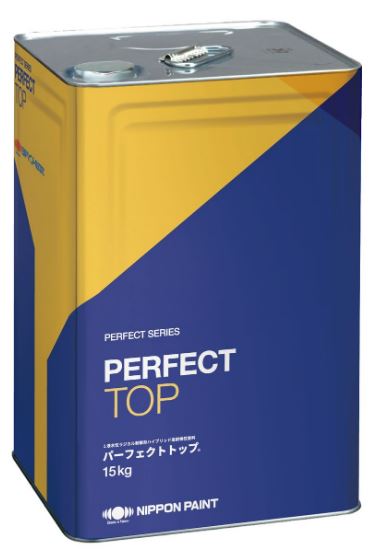
↑ “Nippon Paint / Perfect Top”
When painting direct-attach siding, using “Surf” or “Filler type” elastic primer for the undercoat is also NOT RECOMMENDED.
Be sure to use a “sealer” for the primer!!
We can also perform exterior wall painting like this, but when it comes to direct-attach siding, there is a risk that the paint may peel off quickly even after application, so we recommend discussing this risk in detail with your contractor before making a decision.
*Some contractors may not be able to perform painting.
How to Check Direct-Attach Method and Ventilated Method
While the disadvantages of the direct-attach method are clear, you probably want to know whether your home uses the direct-attach method or the ventilated method. Here’s a way to check right now!
Check the Drip Edge Flashing
First, let’s check the drip edge flashing (foundation drip edge). The drip edge flashing is the part that separates the siding exterior wall from the foundation!
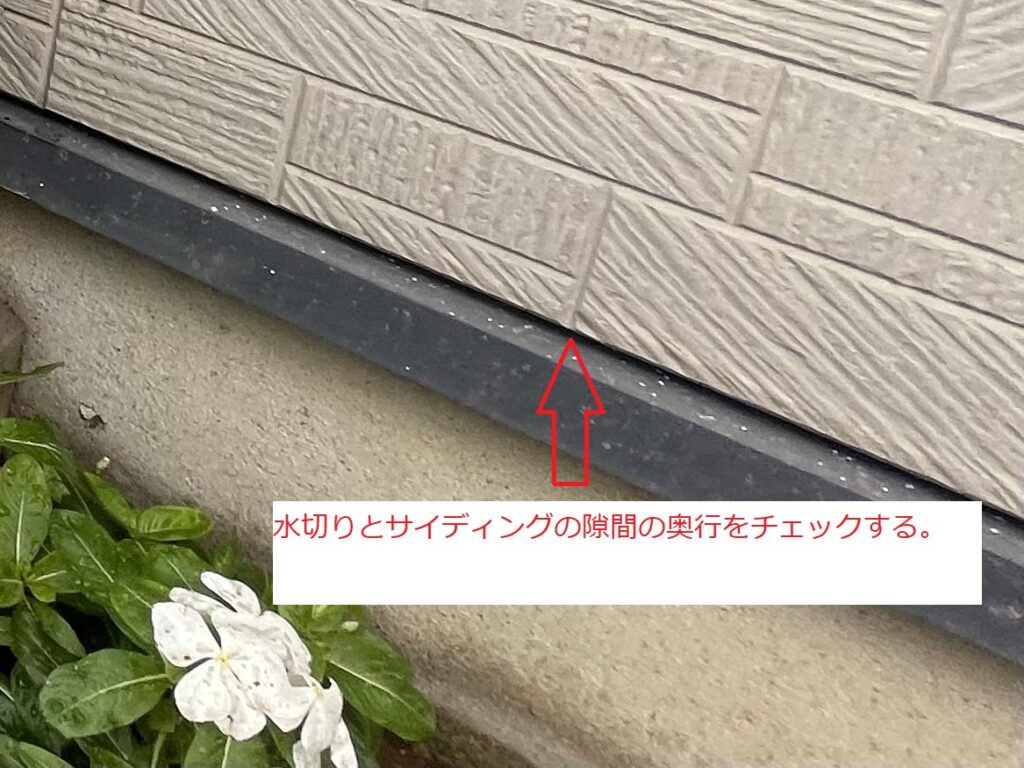
Once you have confirmed the drip edge flashing of your home, take a ruler (anything thin will do) and insert it into the gap between the drip edge flashing and the siding exterior wall to check the depth!
If the thickness of the siding board is 10-16mm, it is highly likely that the direct-attach method is used.
In the case of the ventilated method, there will be ventilated battens between the sidings, resulting in a thickness of 20mm or more.
Ventilated Method Siding
Deterioration Symptoms
The most common deterioration symptom of the ventilated method is the chalking phenomenon. The paint film deteriorates due to rainwater and ultraviolet rays, and when you touch the exterior wall, a white powdery substance sticks to your hand.
While there may occasionally be lifting or swelling of the siding in the ventilated method, most cases are chalking phenomena.
Maintenance Methods
For maintenance of the ventilated method, repainting is often sufficient. During this repainting, basic caulking replacement will also be performed.
If significant deterioration of the siding is observed, replacement can be done, but generally, considering cost factors, we recommend repainting!
Conclusion
Understanding whether your home uses the direct-attach method or the ventilated method will be helpful for future deterioration management!
If it is the direct-attach method, it is often the case that even after painting, peeling or lifting occurs quickly, so it may be better to consider replacement or the roof overlay method.
Estimates and inspections are, of course, free! If you have any concerns about roofs, rain gutters, exterior walls, or exterior structures, please consult Kakeru Koumuten Co., Ltd.!
We carry out everything from temporary scaffolding work to roof work and exterior wall painting completely in-house. We are confident that we will not be outdone by other companies in terms of cost, quality, and efficiency in exterior work!
We welcome competitive estimates!
You will think, “I’m glad I asked!” We take every request seriously to ensure your satisfaction.
We also have information on roofing costs and pricing plans for roof overlay methods, so please take a look if you’re interested!
We look forward to your inquiries. Thank you very much.
For more helpful information on other exterior renovations, click here!
・Summary of Popular Exterior Wall Painting Colors! Recommended Color Combinations!
・For those who want to try DIY exterior wall and roof painting! Scaffolding only! DIY Roof and Exterior Wall Painting Plan!
・Latest! Subsidies in Kanagawa Prefecture! Information on Grants and Reduction Systems!
・Is exterior wall painting necessary? Risks of neglecting it!
・How much does exterior wall painting cost? Are there tips to reduce costs?
・When is the best time for exterior wall painting? How to determine the best timing!
・What are the market prices for rain gutter repair and cleaning? Tips on timing and choosing contractors!
・What are the ventilation methods for siding exterior walls and the direct application method? Maintenance methods explained!
・About Joint and Sealing Work | Information on Cost Estimates and Construction Methods!
We welcome consultations via LINE as well◎

We are also updating our Instagram regularly◎ Please follow us◎

contact Kakeru Koumuten Co., Ltd.
Kakeru Koumuten is a young company whose team is, on average, in their late twenties, but our skills are second to none.
Our greatest strength is that we handle scaffolding, roofing and painting entirely in-house. In an industry where these tasks are usually divided among contractors, our complete service simplifies project management and helps keep costs down. Above all, if a problem arises, we respond promptly.
We proudly describe ourselves as the youngest and most helpful renovation company in Kanagawa!