What is a Roof Deck? Introducing Types and Lifespan!

Hello! This is Kakeru Koumuten Co., Ltd.!
This time, I would like to explain about the 【nail board】, which plays a role in supporting the roof!

‘What is a nail board?’
‘What is it needed for..?’
I will provide a focused explanation about nail boards to help alleviate any doubts or concerns!
What is a Nail Board?
A nail board is, simply put, the base material for roofing materials.
The nail board is laid (fixed) on top of the rafters that form the framework of the roof.
⇩
A waterproof sheet (roofing) is laid on top of that.
⇩
Roofing materials such as slate or tiles are then installed, completing the roof.
The nail board plays an essential role beneath the roof, but since residents rarely see it, many may not be aware of its importance, despite it being indispensable for the roof.
Because it is a part that is difficult to maintain and not visible, it is something you want to know about!
Types of Nail Boards
Cedar Board (Bara Board)
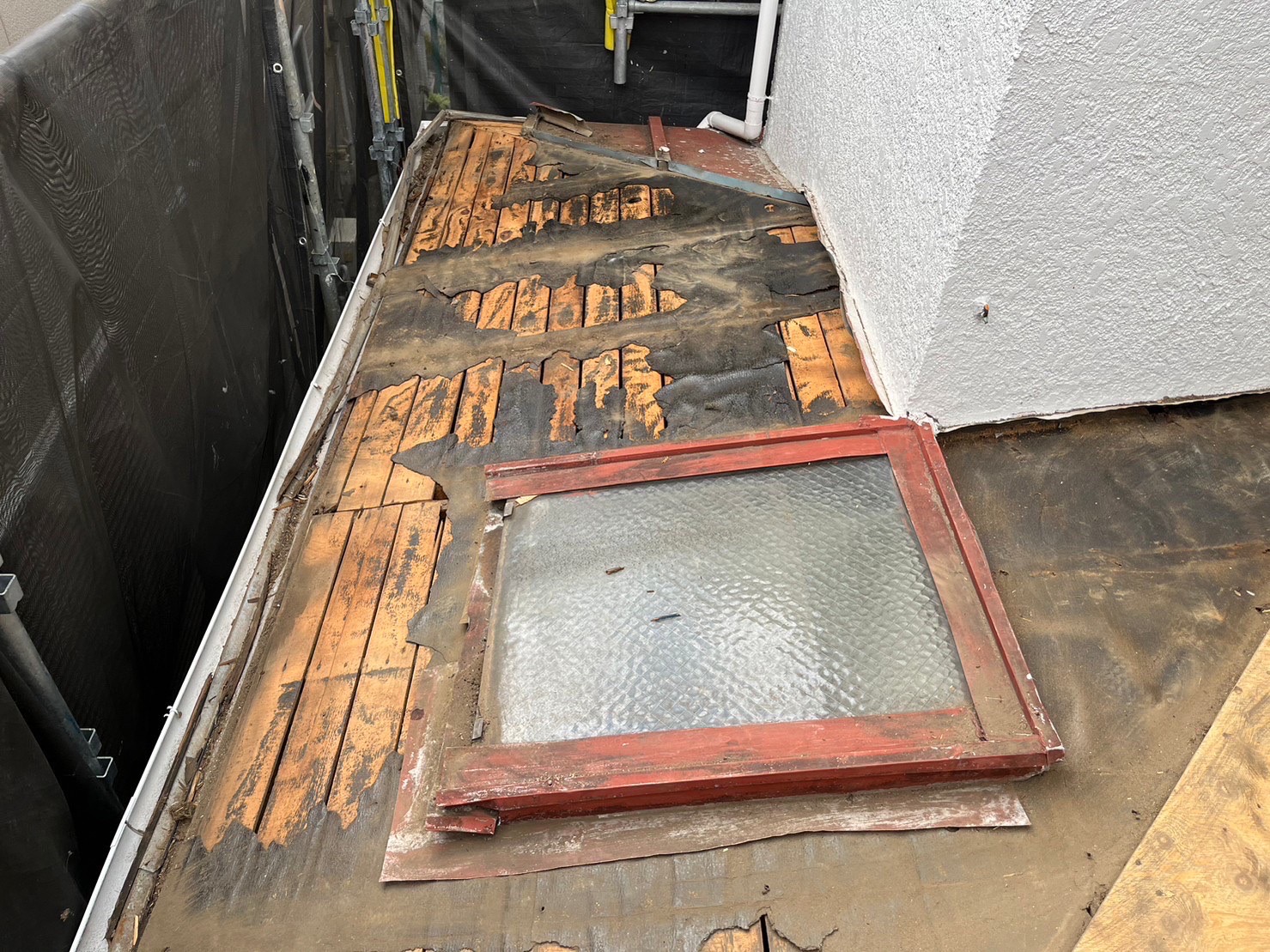
Cedar board (bara board) was the mainstream nail board used in roofing until about 30 years ago.
Cedar wood cut into board form is called cedar board (bara board).
Before the advent of waterproof sheets known as roofing, it was common for rainwater to penetrate to the nail board, so cedar boards, which dry easily, were used.
By leaving gaps between the bara boards, they could dry quickly even when wet, helping to control humidity.
In recent years, plywood has become more common, so bara boards are not used as much.
Additionally, bara boards may lack the strength needed to install solar panels, which may necessitate replacing the nail board.
Lifespan: Approximately 35 years
Structural Plywood

The most commonly used structural plywood is made from multiple thin wooden boards pressed and bonded together.
There are various sizes, thicknesses, and grades available.
The most frequently used type is 12mm thick, with the lowest emission of formaldehyde, classified as F☆☆☆☆ (Four-Star), which can cause sick building syndrome.
When adding plywood using the roof overlay (cover method), 9mm thick boards are often used.
Structural plywood is used in areas where the building’s earthquake resistance and wind resistance are required,
and thicker plywood provides greater strength.
Compared to individual boards, while it has lower breathability, the larger surface area of a single sheet offers increased efficiency in processing and installation for contractors, and reduced risk of leaks for residents, benefiting both parties.
Lifespan: Approximately 30 years
Fire-Resistant Plywood
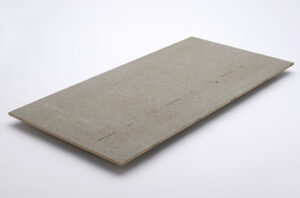
↑ Nichiha Century Fire-Resistant Plywood
Fire-resistant plywood that can withstand fire for more than 30 minutes meets fire safety regulations and is known as fire-resistant plywood.
The Nichiha Century Fire-Resistant Plywood shown above has excellent fire resistance, soundproofing, and insulation properties, made from rigid wood chip cement board, and maintains high strength with minimal degradation after installation.
If your area is designated as quasi-fireproof area, fireproof area, or non-combustible roof area, the installation of fire-resistant plywood is mandatory.
If you are unsure whether fire-resistant plywood is required in your area when considering renovations, you can inquire with your local municipal urban planning department by asking, “I would like to check the zoning regulations.”
There are generally two main types of fire-resistant plywood,
‘Wood Wool Cement Board’ and ‘Wood Chip Cement Board’.
Wood Wool Cement Board is a semi-non-combustible material made by mixing cement with wood shavings (wood wool) that have been shaved into ribbon-like strips and compressing them into board form.
Wood Chip Cement Board is a semi-non-combustible material made by kneading shorter wood chips than wood wool with cement and compressing them into board form.
Whether it is structural plywood or fire-resistant plywood, the lifespan is almost the same.
While it offers the best performance among plywood options, the cost per sheet is more than double that of structural plywood, so unless there are zoning restrictions, it may not be necessary to use fire-resistant plywood.
Lifespan: Approximately 30 years
Things to Know About Plywood
 If the sheathing has begun to rot due to aging or rainwater, it will lose its ability to secure the roof, making it more likely to peel off.
In such cases, it is necessary to replace the sheathing with new material, but the common method is to overlay the new sheathing on top of the existing one.
However, if the existing sheathing is severely deteriorated or rotted, it will need to be removed and disposed of, which means that additional time and costs will be incurred, so caution is required.
To keep costs down during construction, it is advisable to conduct regular inspections every few years and perform roof renovations while the existing sheathing is not severely deteriorated, which can help save on the significant expenses of renovations.
While some may feel that not having to renovate for a long time is a benefit, if a roof has been neglected for many years, it may require removal and disposal, leading to the regret of not having renovated sooner… so please consider the timing of your renovations carefully!
Summary
The sheathing is something that residents rarely see.
However, the sheathing plays an important role.
When signs of leaks appear from the roof, there is a good chance that there may be some trouble with the sheathing.
If there are obvious signs like leaks, we recommend consulting a reliable contractor promptly for an investigation.
Additionally, the only opportunity to change the sheathing is when you are replacing the roof, so if you are considering whether it might be time for a roof renovation… when you have roof work done, it would be a good idea to ask about the condition of your sheathing!
We hope this has been somewhat helpful. Thank you for reading!
Kakeru Koumuten Co., Ltd. offers free estimates and inspections! If you have any concerns regarding roofs, rain gutters, exterior walls, or exteriors, please consult Kakeru Koumuten Co., Ltd.!
We handle everything from temporary scaffolding to roofing and exterior painting completely in-house. We are confident that we won’t be outdone by other companies in terms of cost, quality, and efficiency in exterior work!
We welcome competitive estimates!
We want you to feel, “I’m glad I asked!” We take every request seriously.
We also have information on roofing costs and pricing plans for the roof overlay method, so please take a look if you’re interested!
We look forward to your inquiries. Thank you!
Helpful information about exterior renovations can be found here!
・The Necessity and Timing of Exterior Wall Painting…
・Kanagawa and Tokyo Only | For Those Who Want to Try DIY Exterior Wall Painting! Scaffold Installation Only! Roof and Wall Painting DIY Plan!
・Introducing Roof Materials That Cannot Be Painted or Recommended!
・What Are the Average Costs for Roof Remodeling? Types of Work and How to Choose a Contractor
・Introducing Current Roof Materials and Remodeling Methods!
・Roof Remodeling | What is Roofing? Introducing the important building material, roofing sheets!
・What are the market prices for rain gutter repair and cleaning? Tips on timing, fire insurance, and choosing a contractor!!
・Renovation store in Yokohama, Kanagawa Prefecture | What is roof overlay (roof cover method)?
LINE consultations are also very welcome◎

We are also updating our Instagram regularly◎ Please follow us◎

contact Kakeru Koumuten Co., Ltd.
Kakeru Koumuten is a young company whose team is, on average, in their late twenties, but our skills are second to none.
Our greatest strength is that we handle scaffolding, roofing and painting entirely in-house. In an industry where these tasks are usually divided among contractors, our complete service simplifies project management and helps keep costs down. Above all, if a problem arises, we respond promptly.
We proudly describe ourselves as the youngest and most helpful renovation company in Kanagawa!