What is Waterproofing Work in Large-Scale Renovations? A Comprehensive Explanation of Its Role, Signs of Deterioration, and Important Points to Note!

For buildings such as condominiums, apartments, and factories,
waterproofing measures are a crucial factor that affects asset value.
No matter how beautiful the exterior looks, if the waterproofing performance declines, it can lead to leaks and internal corrosion,
significantly shortening the lifespan of the building.
This is where waterproofing work in large-scale repairs becomes essential.
This time, we will provide a detailed explanation of the roles of waterproofing work, types of methods, cost averages, and points to note
.
What is waterproofing work in large-scale repairs?
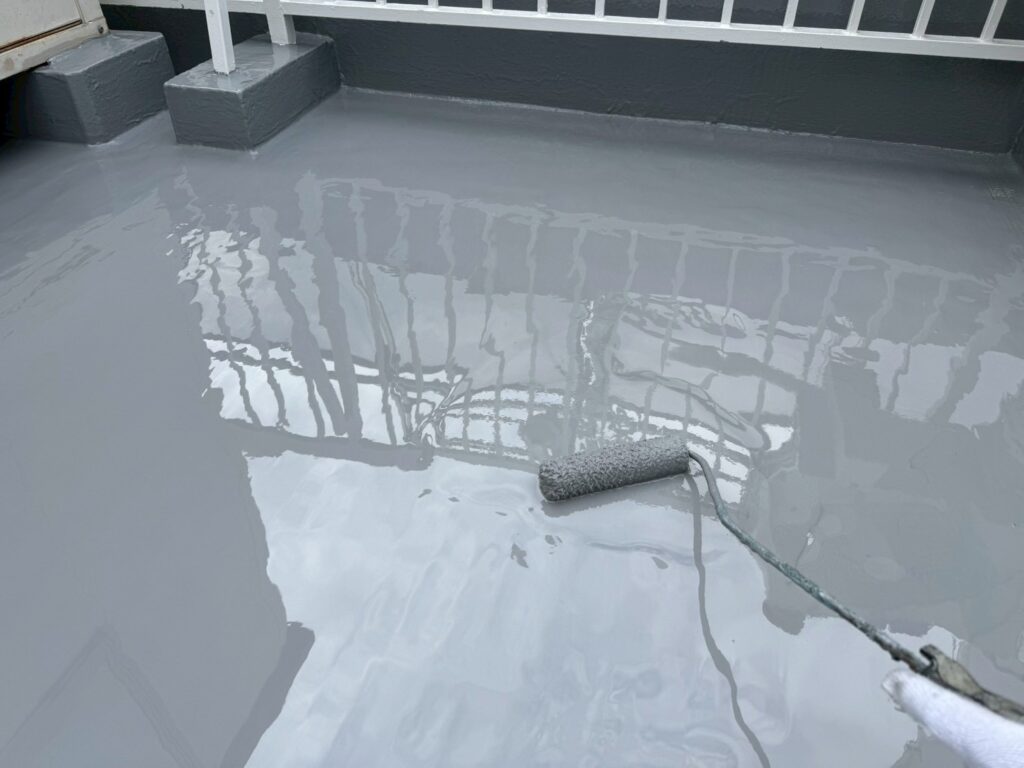
Waterproofing work in large-scale repairs is one of the core construction tasks carried out to protect buildings from rainwater and moisture.
Waterproof layers are formed in areas where water is likely to penetrate, such as rooftops, balconies, shared corridors, and junctions of exterior walls, preventing intrusion into the structural interior.
Although it tends to be overlooked due to minimal visible changes, a decline in waterproofing performance can lead to rebar corrosion and concrete deterioration, shortening the lifespan of the building. Therefore, like exterior wall painting and substrate repairs, it is a core construction task essential for maintaining asset value.
Here, we will explain the definition and specific roles of waterproofing work in detail.
Definition and Role
Waterproofing work is…
a construction process that applies specialized waterproof materials or sheets to the building’s surface to block water intrusion pathways.
Not only the floor surfaces of rooftops and balconies but also details such as rising parts, around sashes, and piping penetrations are treated to form a protective layer that envelops the entire building.
This can be likened to constructing a “second skin” for the building.
By performing waterproofing work, it becomes easier to prevent rainwater from seeping into the concrete while suppressing serious deterioration such as neutralization, rust, and spalling.
Importance
When a building’s waterproofing performance is lost, moisture that enters through even the smallest gaps can accumulate inside, leading to deterioration in unseen areas.
Specifically, not only leaks and mold but also a decrease in strength due to rebar corrosion, electrical leakage accidents, and damage to interior materials can easily spread chain reactions of adverse effects throughout the building.
These repairs are very extensive and consequently, the costs are inevitably high.
However, if waterproofing work is carried out regularly, performance can be restored with minor renovations, thus reducing long-term repair costs.
Waterproofing work is a representative preventive maintenance effort of “protecting to prevent damage” rather than “repairing after it breaks”, and it should be a top priority item to consider in large-scale repair plans.
The Benefits of Waterproofing Work for Buildings

Waterproofing work is not merely a temporary measure to stop leaks; it is the core construction for preventive maintenance that enhances the overall performance and value of the building.
By properly renovating the waterproof layer, the integrity of the structure is maintained, and damage to internal equipment and interior materials is minimized.
Here, we will introduce some of the typical benefits gained from performing waterproofing work during large-scale repairs.
1. Extension of Lifespan
Many of the causes of deterioration in buildings are due to the intrusion of moisture.
When water seeps into concrete, it accelerates carbonation, causing rebar to rust and expand, which can lead to cracking and spalling.
If these phenomena progress, the structural strength will decrease, and the scope of repairs will expand.
By blocking the pathways for water intrusion through waterproofing work, you can fundamentally suppress these deteriorations, thus preventing large-scale repairs or unexpected repair work.
2. Increased Tenant Satisfaction
Problems such as leaks, ceiling stains, and mold odors are significant stressors for tenants.
Especially when the floors of shared corridors or balconies are damaged, it worsens the visual impression and raises concerns about management conditions.
By keeping the floor surfaces and rooftops clean through waterproofing work, you can reduce not only the visual impact but also the risk of leaks, allowing you to provide a safe living environment.
Improving comfort directly correlates with tenant retention rates and vacancy measures, so we recommend performing waterproofing work at the appropriate timing.
3. Insurance Applicability and Risk Reduction
If the state of waterproofing performance is left unattended, significant leak damage can occur during typhoons or heavy rains, potentially spreading damage to interiors, equipment, and tenants’ belongings.
In such cases, major disputes with tenants are unavoidable.
On the other hand, if waterproofing work is carried out regularly, you can prevent such accident risks in advance.
Additionally, having a planned maintenance history can sometimes serve as supporting documentation for insurance claims, so be sure to implement it regularly.
4. Energy Savings and Functional Improvements
In recent years, there has been an increase in high-performance waterproofing materials that feature insulating and heat-shielding properties.
By reducing the heat exchange from the rooftop, you can mitigate the rise in indoor temperatures during summer and heat loss during winter, leading to improved heating and cooling efficiency and reduced energy consumption.
Moreover, the comfort of common areas and top-floor units improves, resulting in increased residential satisfaction.
Modern waterproofing work contributes not only to simple waterproofing but also to enhancing the building’s performance.
Signs of Deterioration Indicating the Need for Waterproofing Work Signs

Waterproofing work should not be done in a hurry after a leak has occurred.
To prevent serious damage to the building while keeping costs down, it is important to pay attention to small signs of deterioration.
Here, we will introduce some typical signs of deterioration that indicate you should consider waterproofing work.
✔️Clogged Drains on Rooftops and Balconies
The presence of leaves, sand, and debris around the drains and drainage outlets is a sign of initial decline in waterproofing function.
If drainage is obstructed, puddles will remain for long periods, putting constant water pressure on the waterproof layer.
As a result, blistering and peeling of the waterproof layer are more likely to occur.
Especially during heavy rain, overflow can occur, leading to leaks into the interior or lower floors.
Poor drainage may seem like a minor issue, but it is actually one of the factors that rapidly damages the waterproof layer, so if you find signs of deterioration, be sure to carry out maintenance promptly.
✔️Blistering, Cracks, and Peeling of the Waterproof Layer
If you see blisters, cracks, or peeling on the surface of the waterproof layer, there is a high likelihood that the waterproofing performance has already declined.
Blisters are evidence that moisture or air has entered, and if left unattended, they can rupture and create a leak path.
Cracks occur due to temperature changes and aging, causing a loss of continuity in the waterproof material.
Additionally, peeling directly leads to a decline in the function of the waterproof layer, so caution is necessary.
If you find such signs of deterioration in your properties or managed properties, do not leave them unattended, and carry out maintenance at an early stage!
✔️Rain Stains on Exterior Walls
If you see vertical streaks, dark spots, or stains on the exterior walls, there is a high possibility that water is infiltrating from the outside.
Deterioration of sealing or rupture of the waterproof layer can cause water to seep into the wall, leading to internal condensation, mold, and neutralization of the structure.
This is not only a visual issue but also a serious sign that affects structural durability.
Particularly around window frames and joints, these areas are prone to water infiltration and require focused inspections.
For this reason, it is advisable to consider simultaneous repairs of waterproofing and sealing as soon as rain stains are discovered.
✔️Deterioration of Coating in Common Areas and Hallways
If you notice wear, peeling, or powdering of the coating on the floors of common hallways or stairs, there is a high likelihood that the waterproof layer or topcoat has reached the end of its lifespan.
When the coating deteriorates, the waterproof performance declines, allowing rainwater to penetrate the substrate.
If that happens, the surface will become slippery, increasing the risk of falls.
Furthermore, due to the deterioration of appearance, it can lower the overall impression of the building, which can easily lead to a decrease in tenant satisfaction, so caution is necessary.
Main Waterproofing Works in Large-Scale Renovations
There are various waterproofing methods, each with significant differences in characteristics.
Additionally, the optimal method varies depending on the building’s use, shape, condition of the existing substrate, and service life, so it is important to correctly understand the characteristics of each method.
Here, we will provide a detailed explanation of the main waterproofing works conducted in large-scale renovations.
Vinyl Sheet Waterproofing
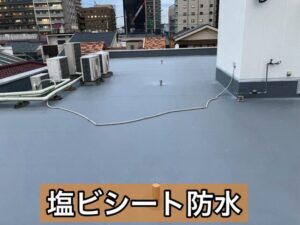
Vinyl sheet waterproofing is a method where vinyl chloride sheets are mechanically fixed or adhered to the substrate.
Since uniform sheets produced in factories are used, the quality tends to be stable, and it excels in durability and weather resistance.
Moreover, degradation due to ultraviolet rays and heat is relatively low, and the ability to keep maintenance costs down over the long term is a significant advantage.
It is suitable for large rooftops and flat surfaces and is widely adopted in large apartment buildings and factories.
On the other hand, its adaptability to complex shapes is somewhat inferior, so careful consideration of the installation is important.
Urethane Waterproofing
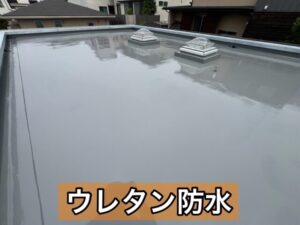
Urethane waterproofing is a representative method of coating waterproofing that forms a waterproof layer by applying liquid urethane resin in layers.
It features a seamless structure, making it difficult for water to penetrate.
It is also easy to apply in complex shapes and areas with many steps, and is widely used in balconies and common corridors.
Additionally, it is often possible to apply it over existing waterproof layers, making it suitable for renovation works, including large-scale repairs.
However, since the quality of construction can be easily affected by the skill of the craftsmen, it is important to carefully search for experienced contractors.
FRP Waterproofing
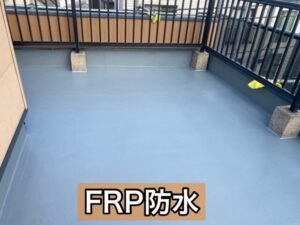
FRP waterproofing is a method that combines fiberglass mats and polyester resin to form a rigid waterproof layer.
It has high strength and excellent abrasion and impact resistance, making it suitable for areas with high foot traffic.
Additionally, its lightweight nature puts less burden on the building, and it can be constructed in a short period, which is also a benefit.
In particular, it is adopted in balconies and stairwells, as well as small rooftops.
On the other hand, due to its low elasticity, cracks may occur over large areas, so it is important to differentiate usage according to application.
Asphalt Waterproofing
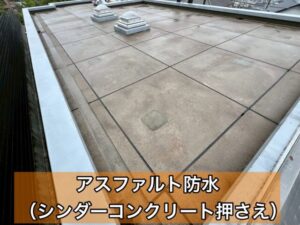
Asphalt waterproofing is a highly reliable method that has been used for a long time, involving the installation of multiple layers of sheets impregnated with asphalt.
Since the waterproof layer becomes thick, it has very high durability and is ideal for buildings that require long-lasting and heavy waterproofing.
In particular, it can be said to be suitable for large buildings, factories, and wide rooftops.
Due to its weight, it is necessary to confirm the load on the building, but it can be considered an effective option if strong waterproof performance is required.
Cost Estimates for Waterproofing Work

The cost of waterproofing work is generally calculated as “unit price per square meter × construction area,” but in reality, it can vary significantly depending on factors such as the presence of scaffolding, the extent of existing waterproof layer removal, the amount of substrate repair, and the method used.
Therefore, if you judge solely based on simple unit price comparisons, there is a possibility of unexpected additional costs arising.
To create an accurate budget plan, it is important to organize the breakdown of costs, building size, and characteristics of each method, and to make a judgment based on the total amount.
Here, we will explain the market price of waterproofing work from three perspectives.
Cost Breakdown
Estimates for waterproofing work are not composed solely of material costs, and often include the following items.
・Scaffolding construction costs
・High-pressure washing and substrate treatment costs
・Waterproofing construction costs
・Top coat finishing costs
・Miscellaneous expenses
Especially in condominiums and mid-rise buildings, the proportion of scaffolding costs is high, often accounting for 20-30% of the total.
Furthermore, in sites with extensive substrate repairs, crack repairs and spalling repairs may be added.
Cost Estimates by Building Type
The total cost of waterproofing work can vary significantly depending on the purpose and scale of the building.
In the case of condominiums, the construction area is broad, including rooftops, balconies, and common corridors, and the total often exceeds 1 million yen.
On the other hand, apartments tend to have a more compact area compared to condominiums, so there are cases where costs stay within 1 million yen.
For factories and warehouses, the usage is significantly different from that of condominiums and apartments, and since the roof area is very large, it is not uncommon for costs to reach several million yen.
As such, the cost of waterproofing work varies by building type, so it is advisable to obtain estimates in advance and consider them carefully.
Cost Estimates by Method
The estimated unit price per square meter for each method is as follows.
・Urethane waterproofing → Approximately 4,000–7,000 yen
・PVC sheet waterproofing → Approximately 5,000–8,000 yen
・FRP waterproofing → Approximately 6,000–9,000 yen
・Asphalt waterproofing → Approximately 6,000–10,000 yen
Generally, methods with higher durability tend to have higher initial costs, but since the renovation cycle extends, it may lead to cost savings in the long term.
Considering not only short-term prices but also factors such as lifespan and maintenance frequency is key to successfully executing waterproofing work in large-scale renovations.
For large-scale renovations of condominiums, apartments, and factories, trust “Kakeru Koumuten”!

Large-scale renovations involve comprehensive work that includes not only waterproofing but also exterior wall painting, sealing repairs, substrate repairs, and tile repairs, all intertwined simultaneously.
If project management and quality control are insufficient, it can lead directly to delays, additional costs, and rework.
Therefore, it is important to choose a contractor that can oversee the entire building, from planning and construction to after-support, rather than just a simple construction contractor.
At Kakeru Koumuten, we propose the optimal method starting from on-site surveys and deterioration diagnosis, and we proceed with careful work based on a clear estimate.
On-site surveys, deterioration diagnosis, and estimates are free!!
We can also provide optimal proposals tailored to the characteristics of each condominium, apartment, and factory, so if you are considering large-scale renovations including waterproofing work, please feel free to consult us!
Conclusion
Waterproofing work in large-scale renovations is not only crucial for preventing leaks but also directly contributes to extending the lifespan of the building, improving tenant satisfaction, and maintaining asset value.
Noticing signs of deterioration, selecting methods at the appropriate timing, and understanding cost breakdowns and market prices are key to success.
Moreover, collaborating with a reliable contractor and implementing steady measures based on a long-term repair plan is also important.
By doing so, you can utilize the building safely and for a longer period.
If you are considering large-scale renovations including waterproofing work, please consult “Kakeru Koumuten Co., Ltd.”!
・Aftercare by Kakeru Koumuten Co., Ltd.
・Construction Menu and Price List by Kakeru Koumuten Co., Ltd.
・Staff Blog and Announcements by Kakeru Koumuten Co., Ltd.
・Explaining the Importance of Comparing Estimates!
・What is the Cost Range for Large-Scale Renovations? A Thorough Explanation of Breakdown and Tips to Reduce Costs!
・When Should Large-Scale Renovations Be Conducted? An Explanation of the Optimal Timing and Risks of Delaying!
・Estimates are Essential for Large-Scale Renovations! Introducing Comparison Points and Precautions!
・5 Common Troubles in Large-Scale Renovations for Condominiums! A Thorough Explanation of Causes and Preventive Measures!
・Not Enough Funds for Large-Scale Renovations… An Explanation of How to Address Funding Shortages and Preparations You Can Make Right Now!
・What is Important Surface Repair in Large-Scale Renovations? A Thorough Explanation of Necessary Reasons, Signs of Deterioration, and Types of Work!
・What is Sealing Work in Large-Scale Renovations? Introducing Roles, Methods, and Tips to Avoid Failures!
・What is Important Tile Repair in Large-Scale Renovations? An Explanation of Signs of Deterioration, Types of Work, and Cost Ranges!
・What is the important exterior wall painting in large-scale repairs? A thorough explanation of necessity, signs of deterioration, and cost trends!
We welcome consultations via LINE as well◎

We are also updating our Instagram regularly◎ Please follow us!

contact Kakeru Koumuten Co., Ltd.
Kakeru Koumuten is a young company whose team is, on average, in their late twenties, but our skills are second to none.
Our greatest strength is that we handle scaffolding, roofing and painting entirely in-house. In an industry where these tasks are usually divided among contractors, our complete service simplifies project management and helps keep costs down. Above all, if a problem arises, we respond promptly.
We proudly describe ourselves as the youngest and most helpful renovation company in Kanagawa!