Leave Your Solar Panel Installation Work in Kanagawa, Yokohama City to Kakeru Koumuten Co., Ltd.!
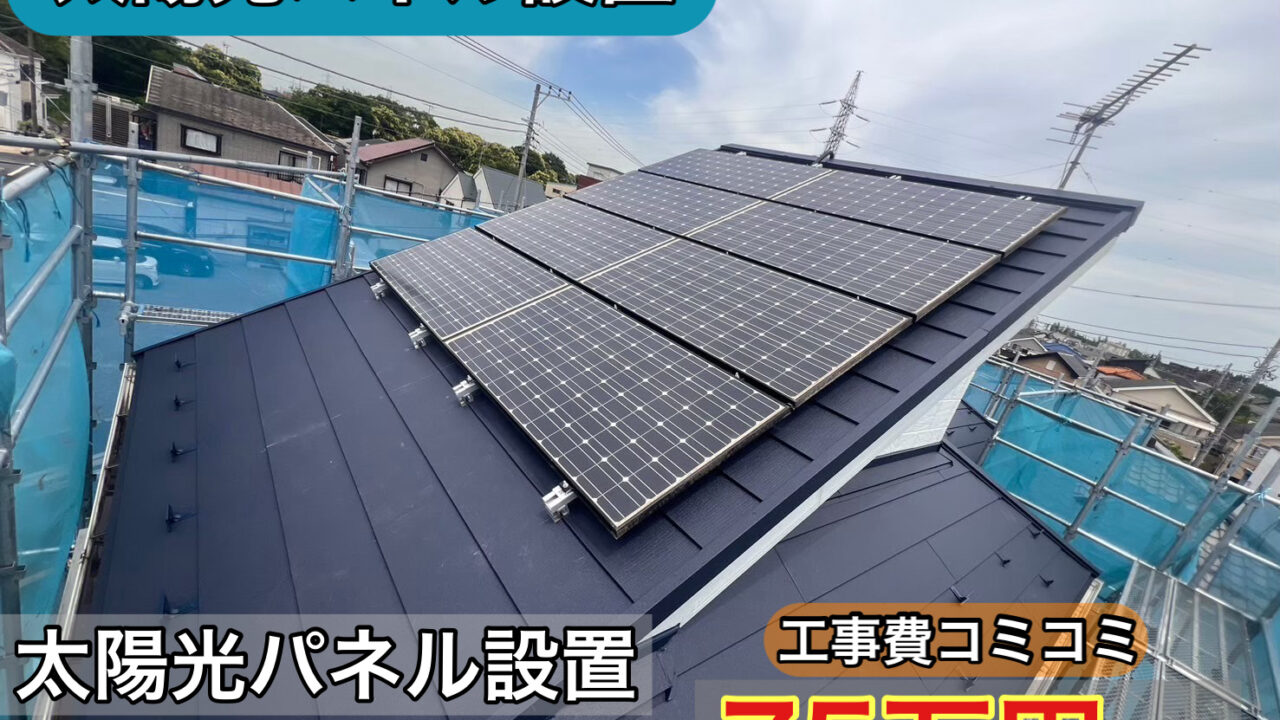
For
Solar Panel and Storage Battery Installation in Kanagawa Ward, Yokohama
Kakeru Koumuten is your trusted choice!
Kakeru Koumuten is a specialized exterior renovation company headquartered in Aoba Ward, Yokohama.
As a company strong in roofing work, we are entrusted withsolar panel and storage battery installation considering roofing and waterproofing!
“How to Choose a Solar Panel Contractor in Kanagawa Ward”
“Costs for Solar Panel and Storage Battery Installation”
“Subsidies Available for Solar System Installation in Kanagawa Ward”
We will also explain the above three points!
Installing solar panels carries risks such as“the occurrence of leaks” and other troubles.
To ensure a satisfactory solar panel installation, we recommend obtainingestimates from about three companies!
Table of Contents (Tap to Open/Close)
- Reasons Why Kakeru Koumuten is Chosen for Solar Panel Installation in Kanagawa Ward, Yokohama City
- Roof Inspection Before Installing Solar Panels
- Possible Subsidies and Grants Available in Kanagawa Ward
- Price List for Solar Panel and Storage Battery Installation
- Breakdown of Installation Capacity, Equipment, and Construction Costs
- Self-Estimate and Profit Simulation for Solar Power Generation
- Customer Testimonials
- Case Studies of Solar Panel Installations
- How to Choose a Solar Panel Installation Contractor in Kanagawa Ward, Yokohama City
- Benefits of Introducing Solar Equipment
- Points to Note When Introducing Solar Power Generation
- How to Choose Solar Panels
- Frequently Asked Questions About Solar and Storage Battery Installation in Kanagawa Ward
- If You Are Looking for a Solar Panel Installation Contractor in Kanagawa Ward, Contact Kakeru Koumuten
- Characteristics of Kanagawa Ward, Yokohama City and Points for Solar Construction
- Service Area in Kanagawa Ward, Yokohama City
Reasons Why Kakeru Koumuten is Chosen for Solar Panel Installation in Kanagawa Ward, Yokohama City
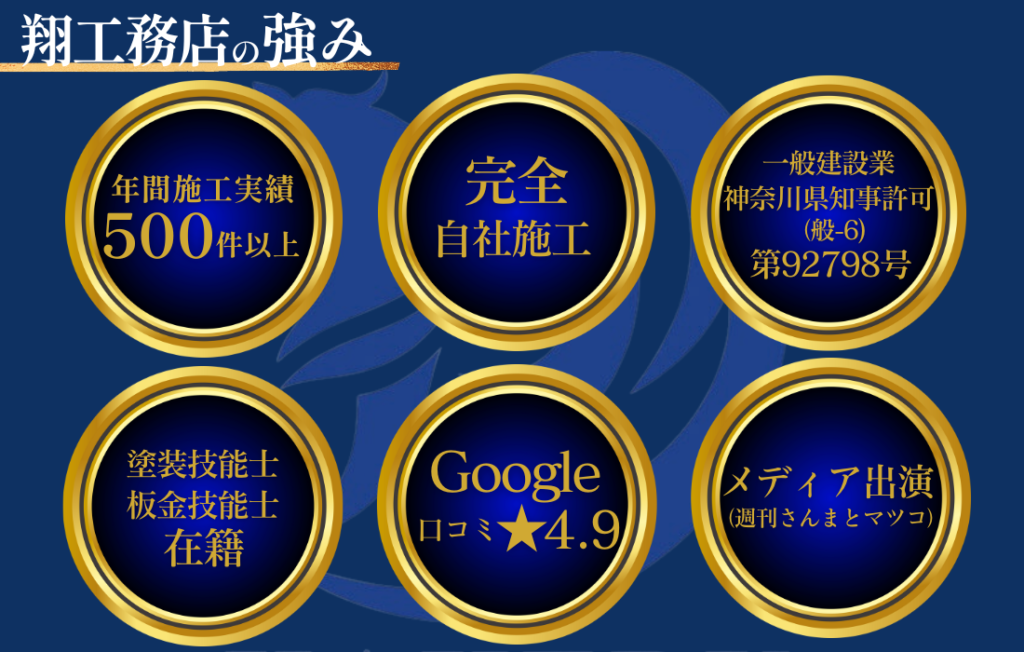
The reasons why our company is entrusted with solar panel installation by customers in Kanagawa Ward, Yokohama City include
“Kakeru Koumuten has a base located in the same Yokohama City”,
and we have unique strengths in solar panel installation that cannot be imitated by other companies,
which have received high praise from many customers.
We would appreciate it if you could compare our estimates with those of other companies.
Because we are confident, we welcome multiple estimates!
1. We Can Also Handle Exterior Renovations Other Than Solar Panel Installation!
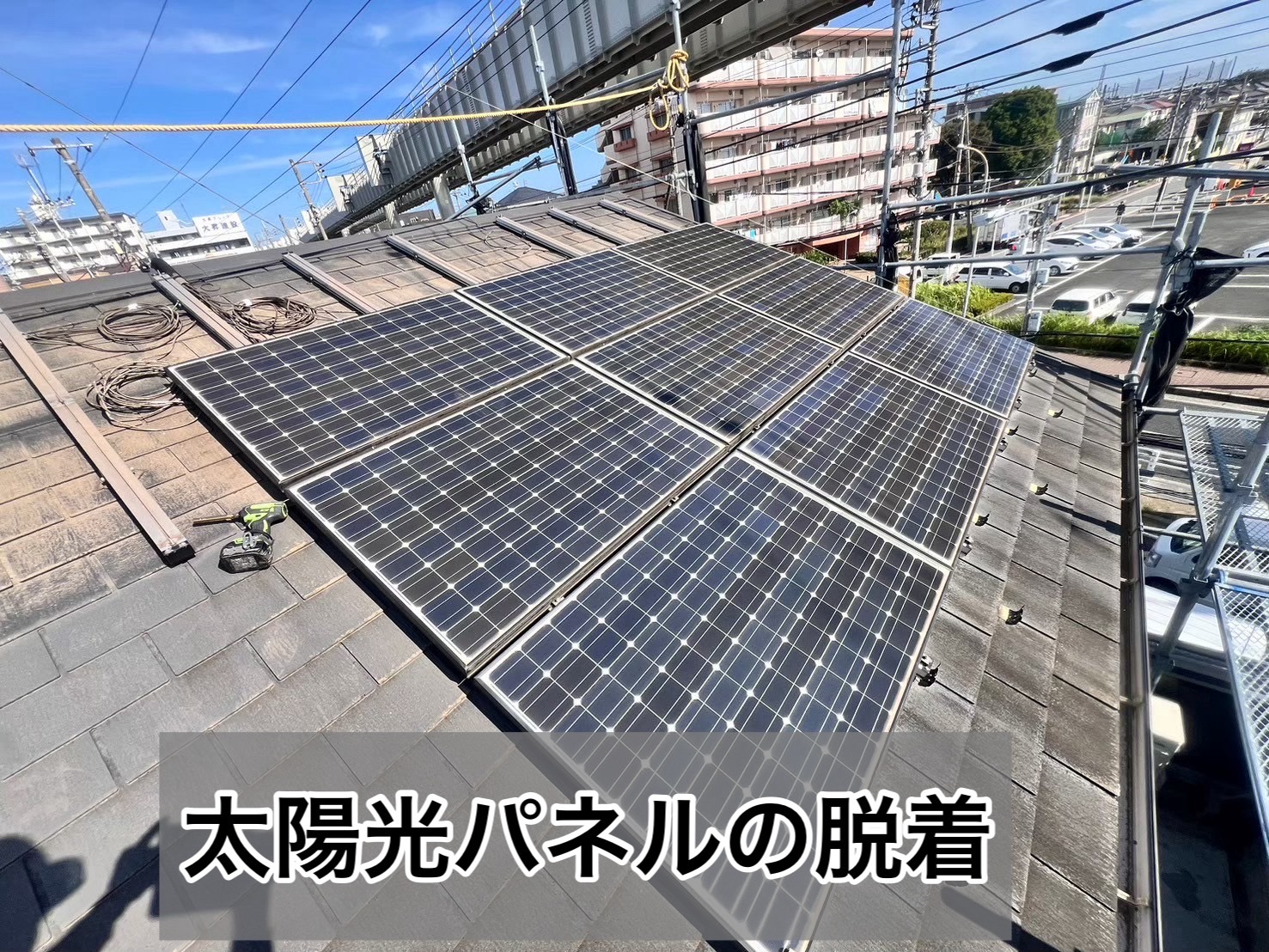
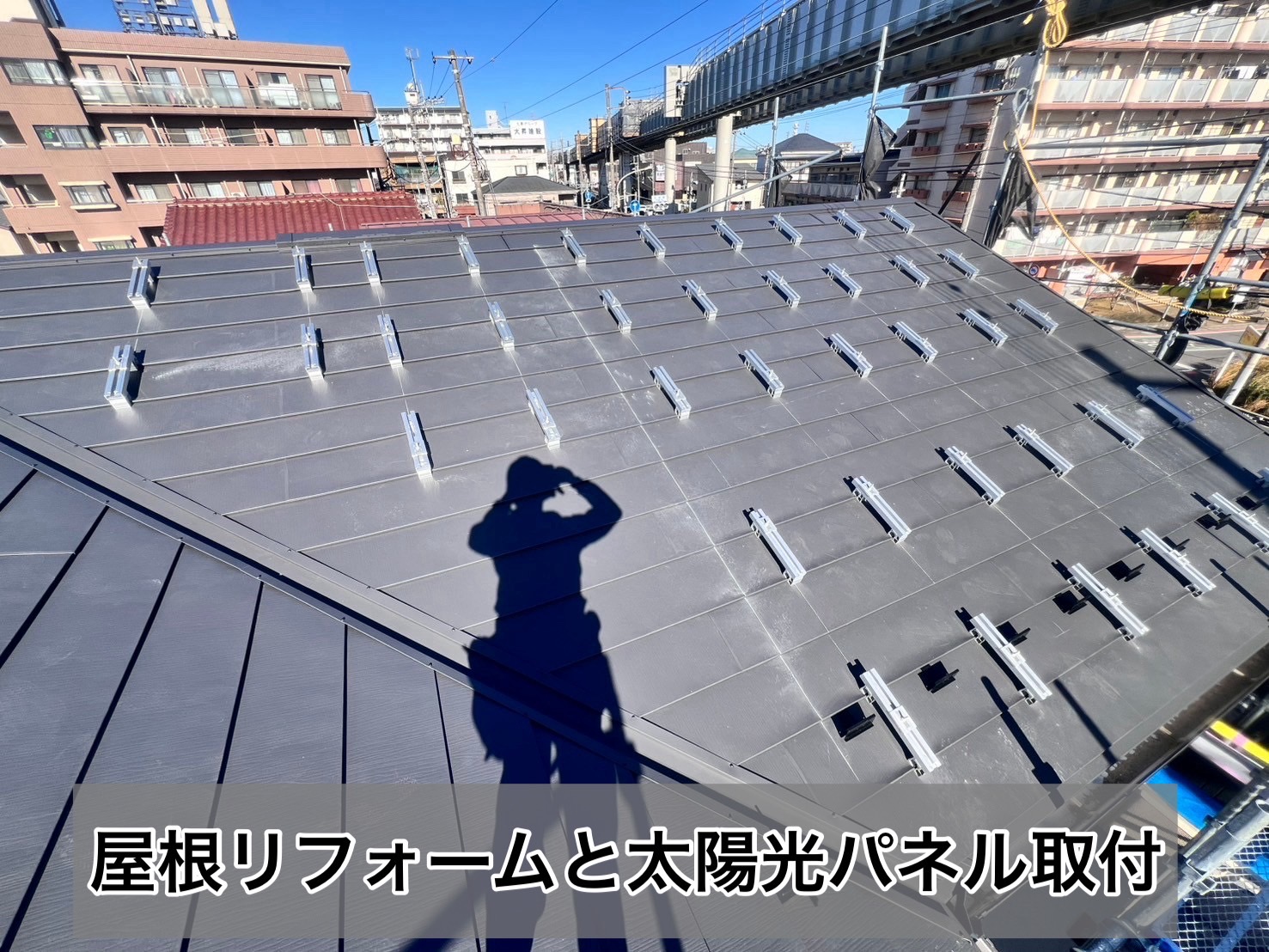
Issues such as leaks that occur during solar panel installation may be caused by insufficient checks on the roof and waterproofing at the installation site.
Even if you are knowledgeable about solar panels, there may be cases where the roof and waterproofing at the installation site are outside your expertise, so caution is necessary.
It is reassuring to have someone knowledgeable about the roof to avoid maintenance and troubles after installation!
Kakeru Koumuten Co., Ltd. is strong in roofing work and can also detach and attach solar panels in-house, allowing for quick responses to maintenance and urgent issues after solar panel installation!
2.Facilities Specialized in Exterior Renovation
Kakeru Koumuten Co., Ltd. has organized the following warehouses and material storage areas to provide low-cost, high-quality solar work and exterior renovations.
We have established five bases centered around Yokohama City, Kanagawa Prefecture for material storage and showrooms.
In-house Scaffolding Materials
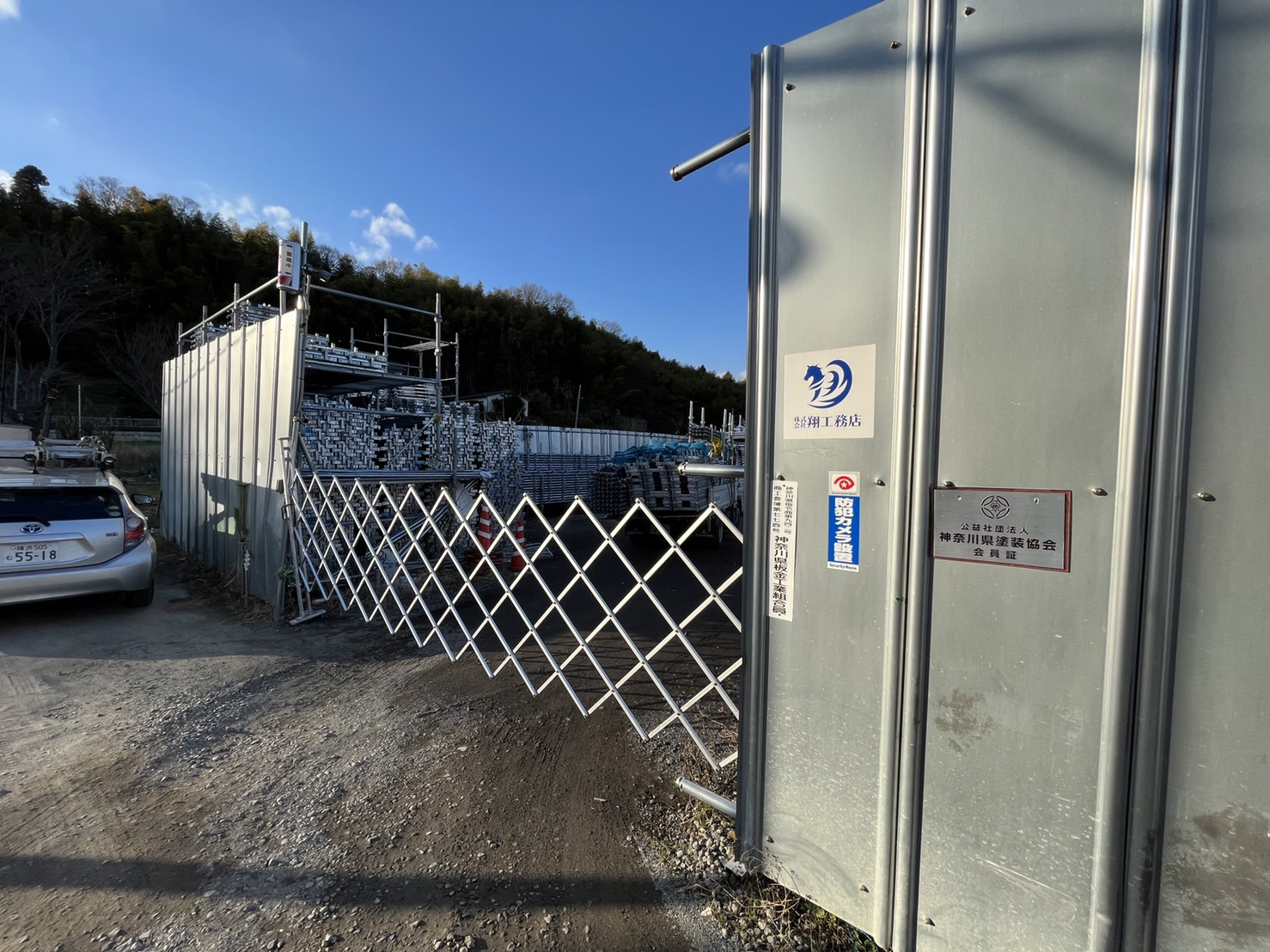
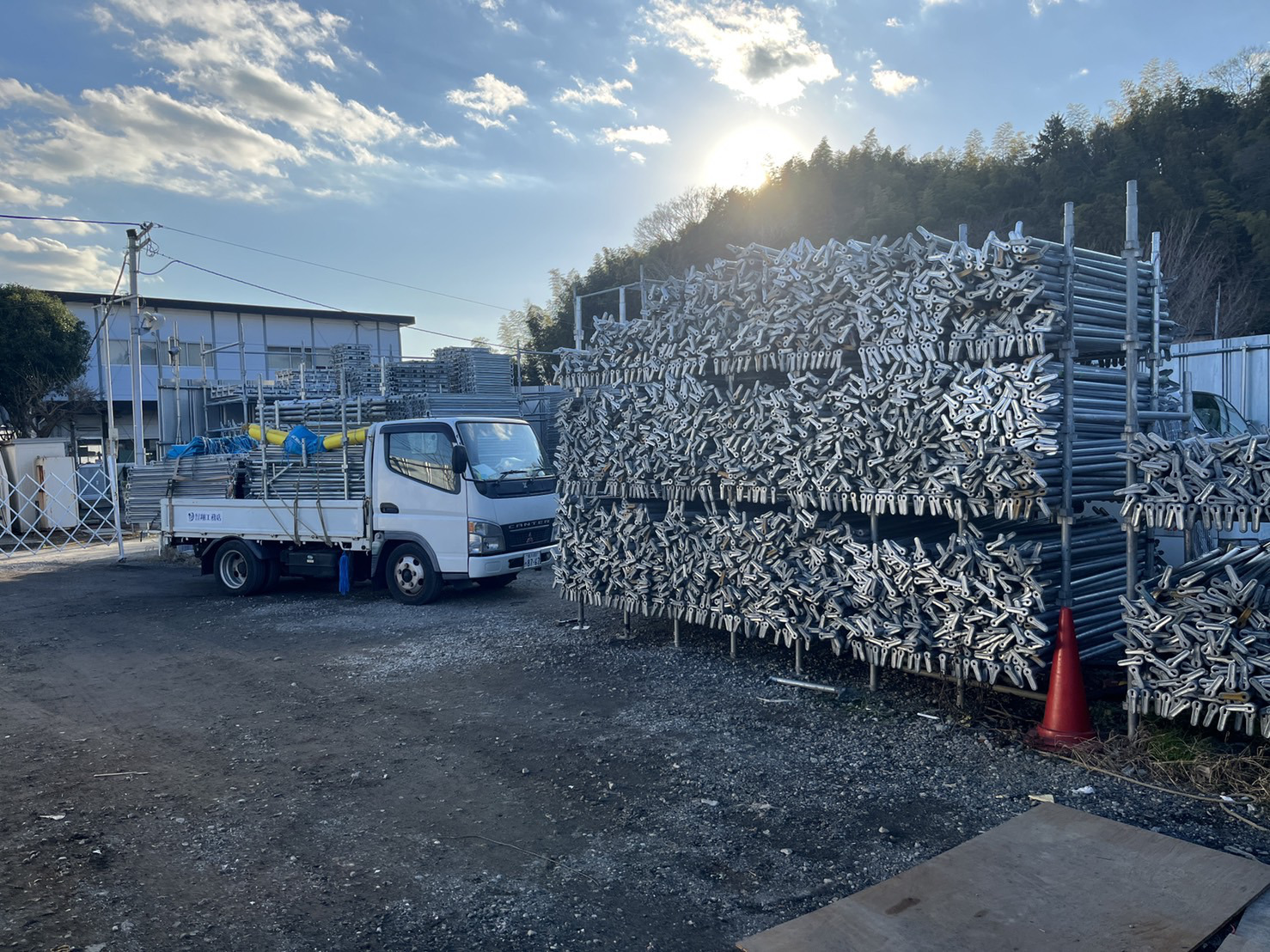
To ensure safety during work on the roof, we own the scaffolding materials necessary for temporary scaffolding based on construction conditions and can assemble scaffolding in-house.
By not outsourcing scaffolding work and using our own scaffolding team, we can also cut costs for scaffolding work.
We have scaffolding materials for approximately 50 houses!
Even in the residential areas of Kanagawa Ward, which have varied terrain from reclaimed land to hilly areas, our in-house scaffolding team will plan the scaffolding according to the local conditions.
Storage of Materials in Our Large Warehouse
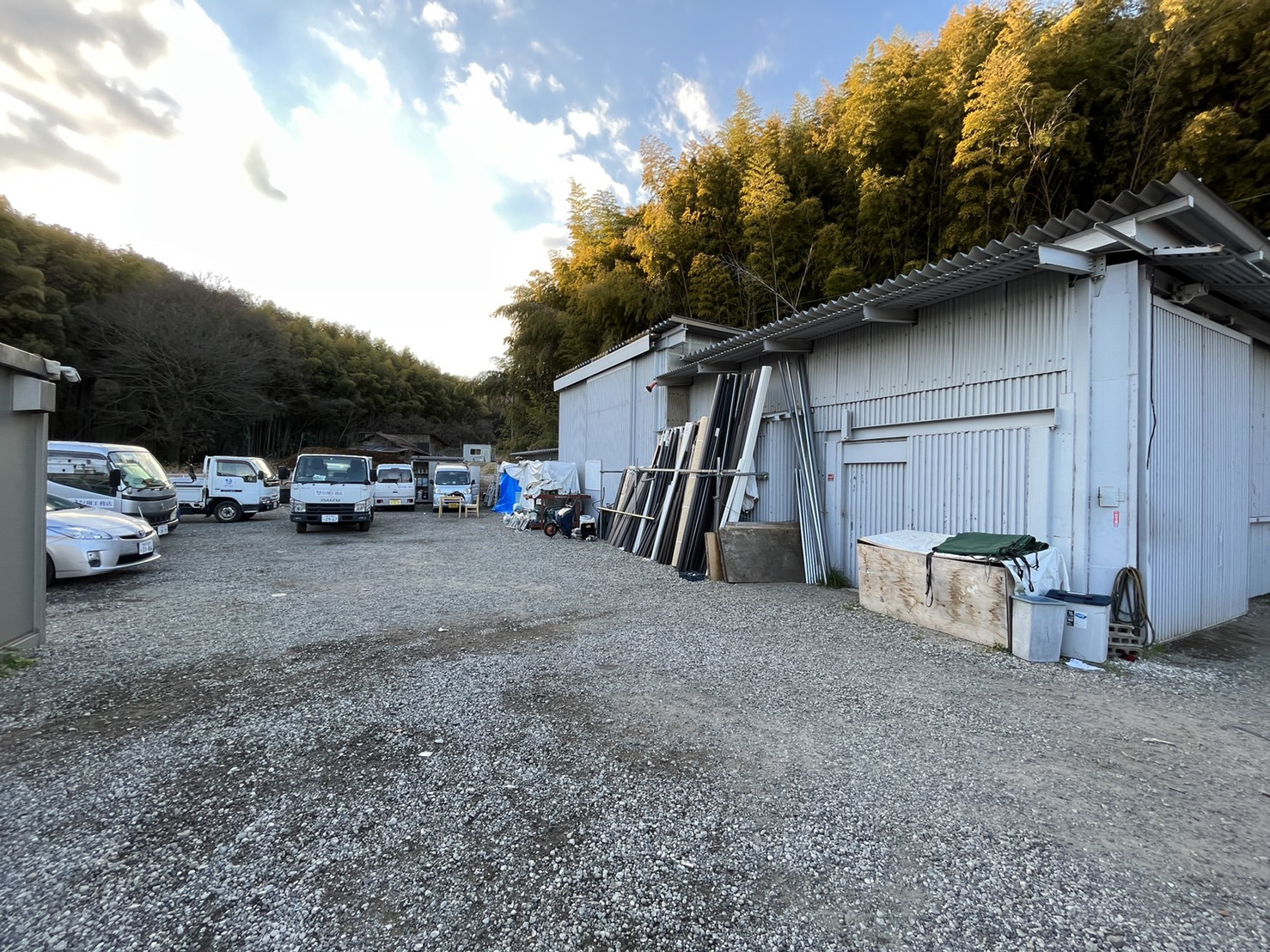
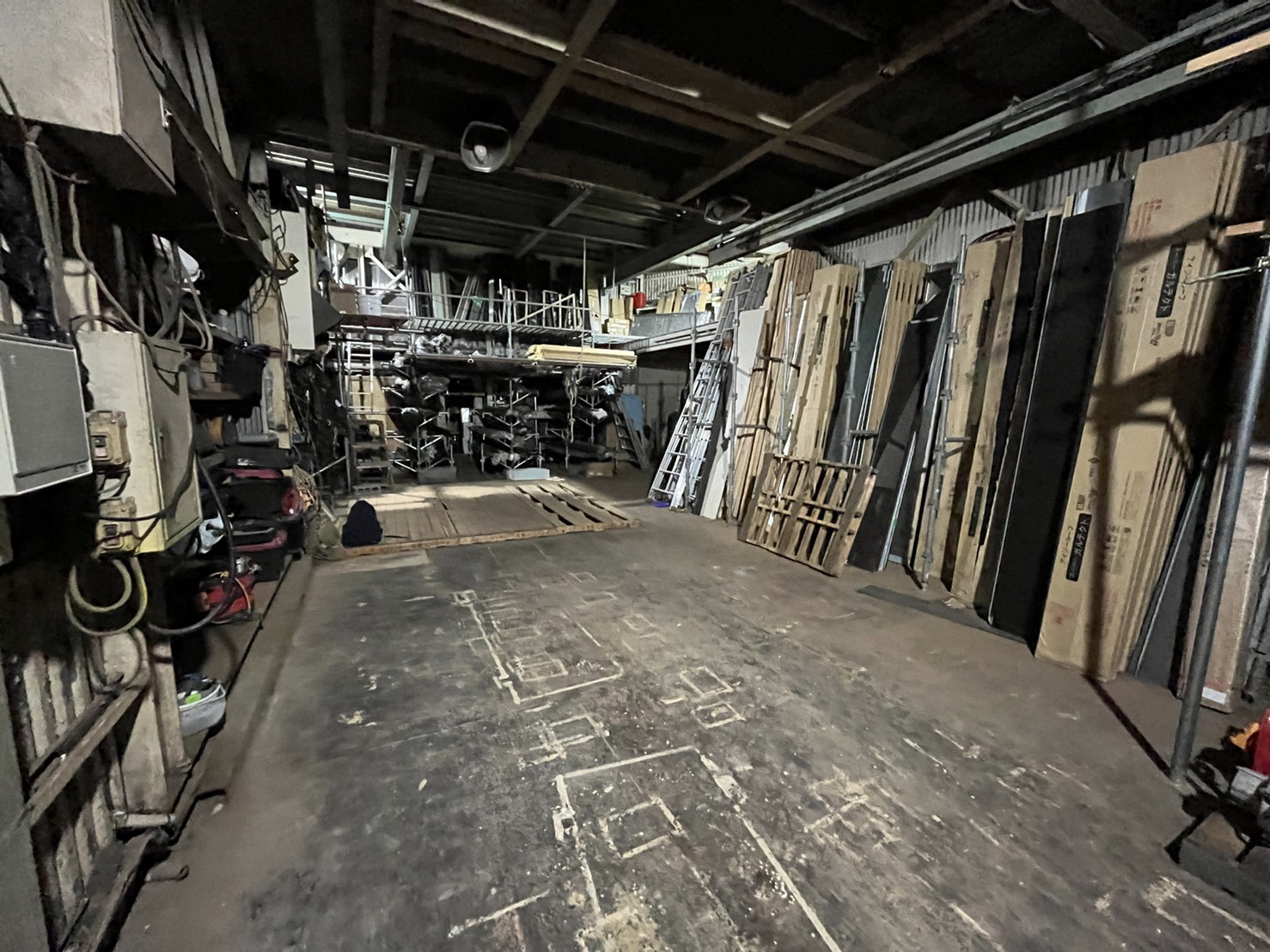
We store roofing materials and paints, and we can also store removed solar panels.
By ordering a large quantity of materials at once, you can purchase materials at a lower cost!
Additionally, we always have a stock of roofing materials, so we can respond quickly in emergencies!
In-house sorting and transportation of waste materials
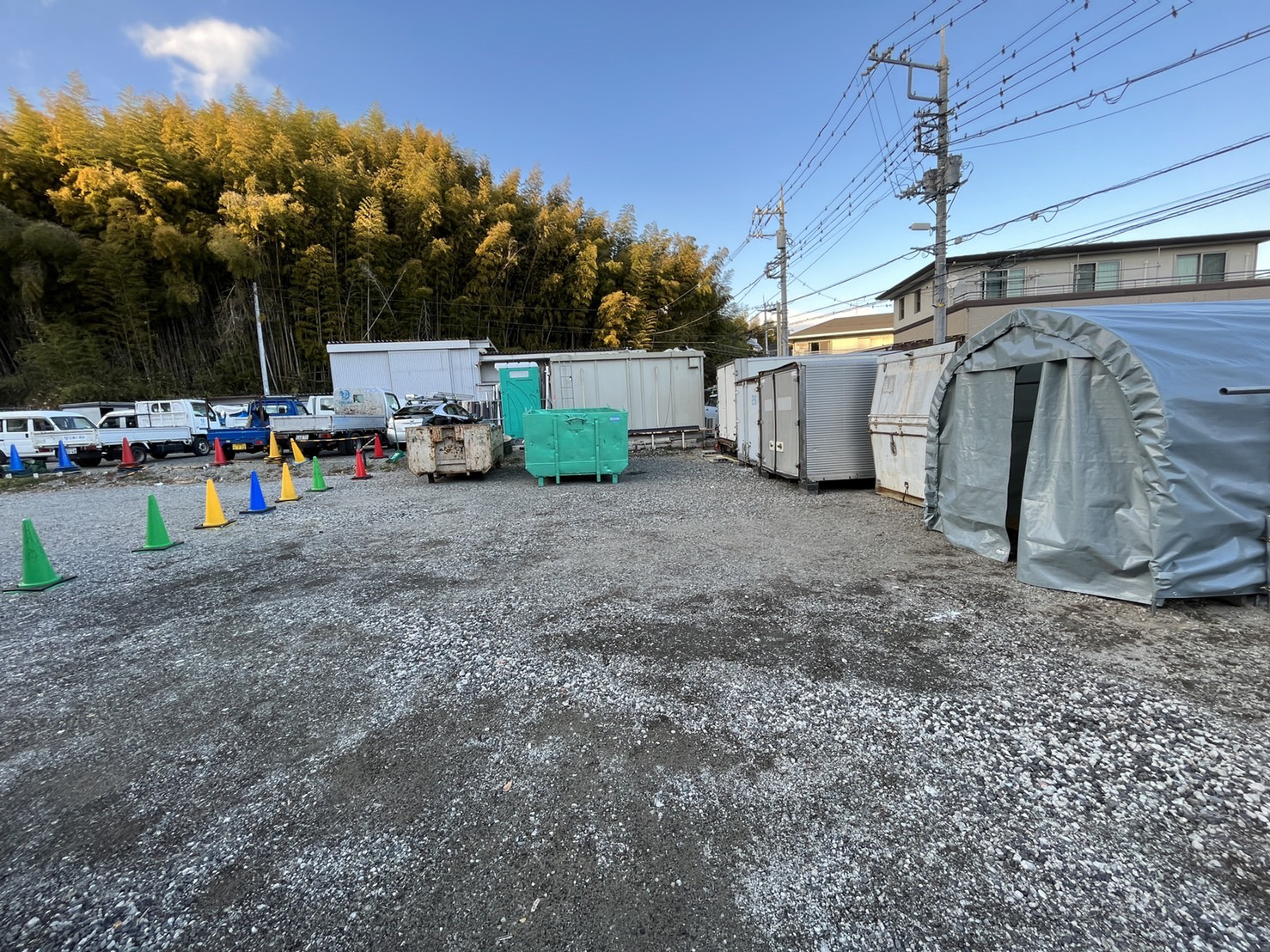 The installation of solar panels often involves roofing work, generating various waste materials such as paint, wood, and metal.
By sorting and recycling waste materials, we can significantly reduce waste disposal costs.
Exterior renovation dedicated showroom
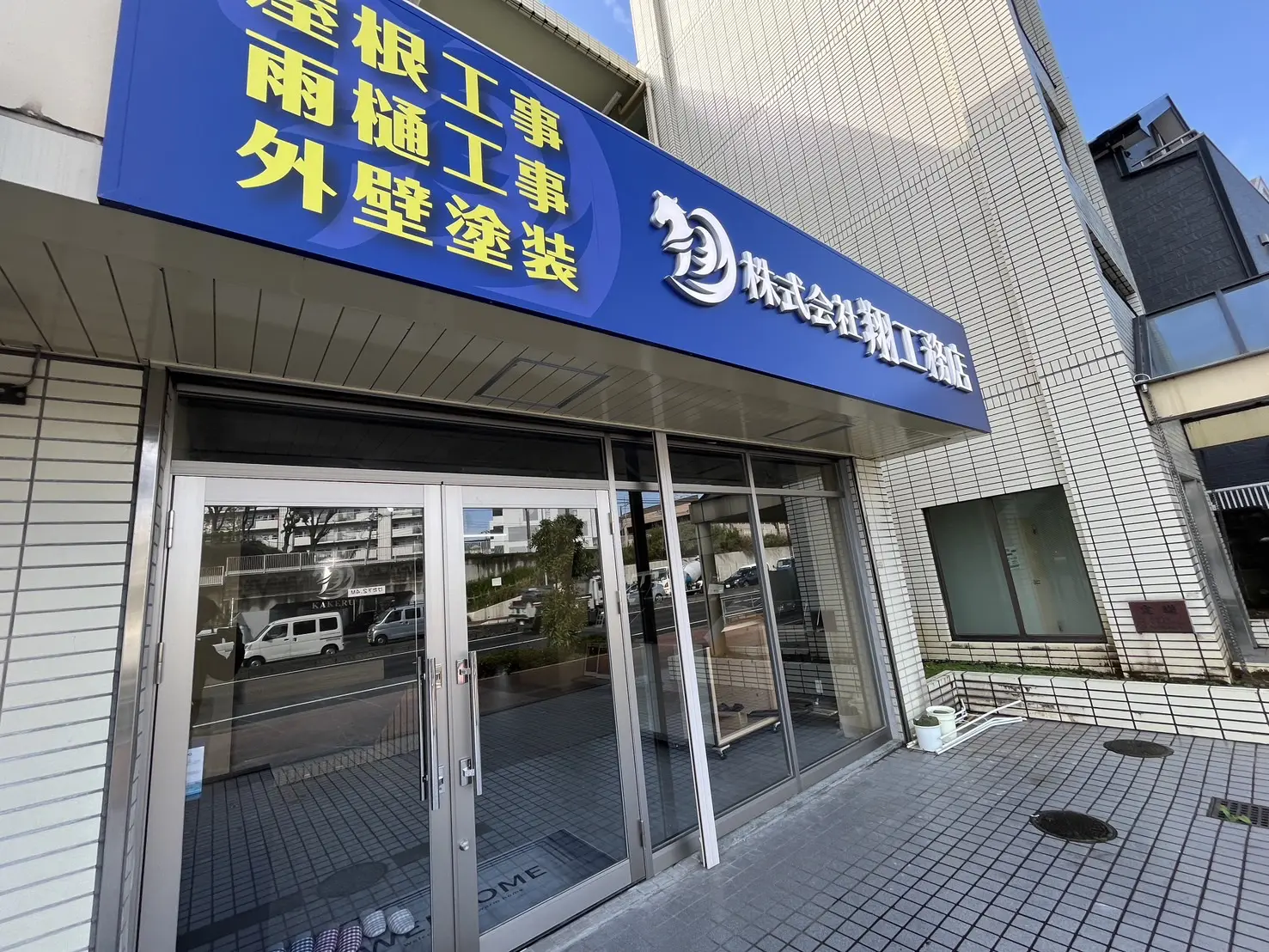

In the showroom, not only can you have meetings, but you can also
check the actual foundation brackets for solar panels and see how they are installed on the roofing materials!
You can also simulate the potential earnings and costs associated with installing solar panels!
Since roofing and exterior wall work often accompany each other, we also provide samples of roofing materials and models that explain the structure in detail!
3.All work performed by our own team

One of Kakeru Koumuten’s major strengths is its complete in-house construction.
By having Kakeru Koumuten handle everything from inquiries to project completion in a consistent manner, we can keep costs down and provide high-quality roof renovations.
Additionally, one representative will assist you from the estimate to the completion of the work.
Since the same person will handle sales and construction management, smooth communication is possible.
We can provide consistent in-house construction from temporary scaffolding setup to exterior wall painting and roof renovations!
4. Various Permits and Skilled Workers

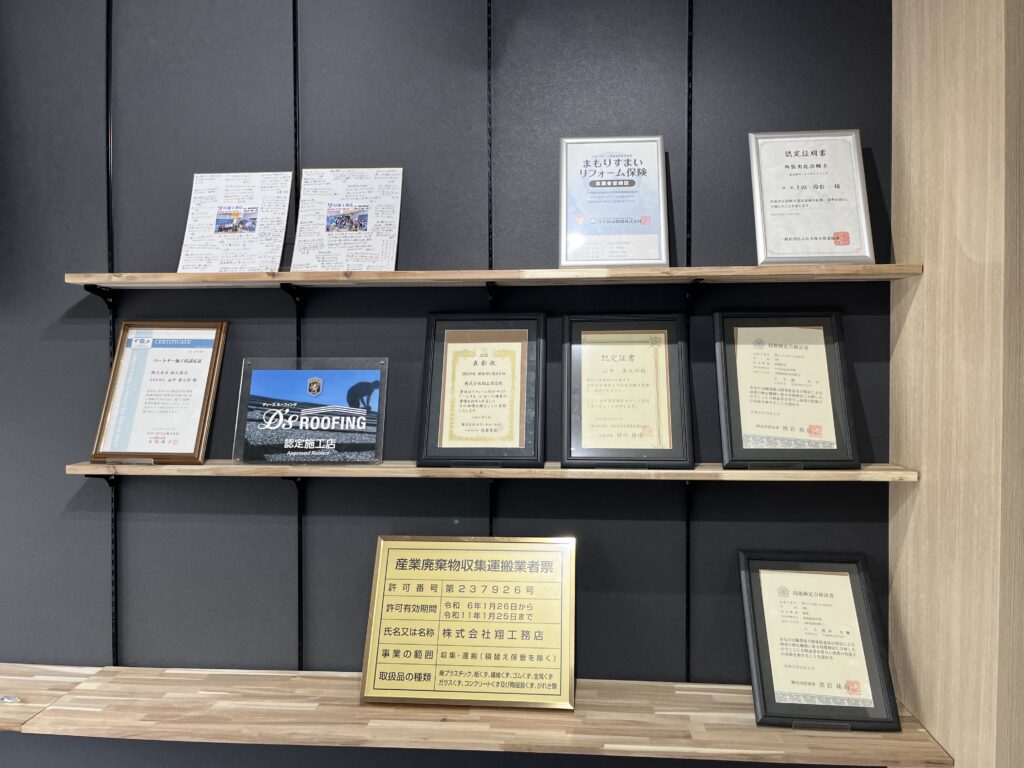
We have obtained construction industry licenses and permits for industrial waste collection and transportation!
We also have nationally certified sheet metal and painting specialists on staff, and we are confident in our construction techniques.
We are capable of handling large-scale roof projects such as factories!
5. Warranty and Aftercare
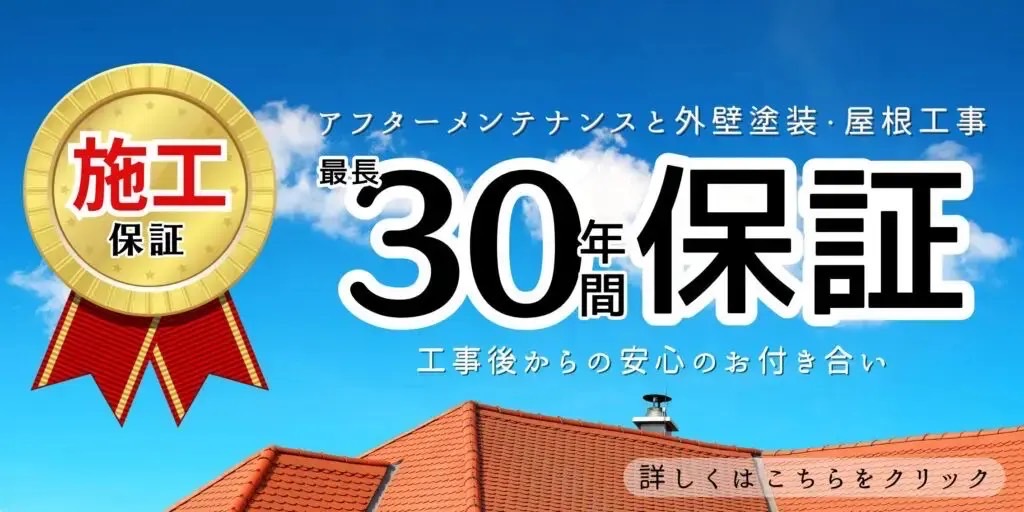
In addition to the manufacturer’s warranty for solar panel installation work, we also provide our own construction warranty (leakage warranty)!
(The construction warranty for solar panel installation is 10 years. Depending on the condition of the roof before installation, we may not be able to provide a warranty unless roof renovations are performed. The construction warranty is separate from the manufacturer’s product warranty, and the scope and conditions vary based on the warranty content.)
Aftercare is available annually, and we send out notification DM each year.
If you have questions about the warranty, please click on the image above!

6. Flexible and Prompt Response
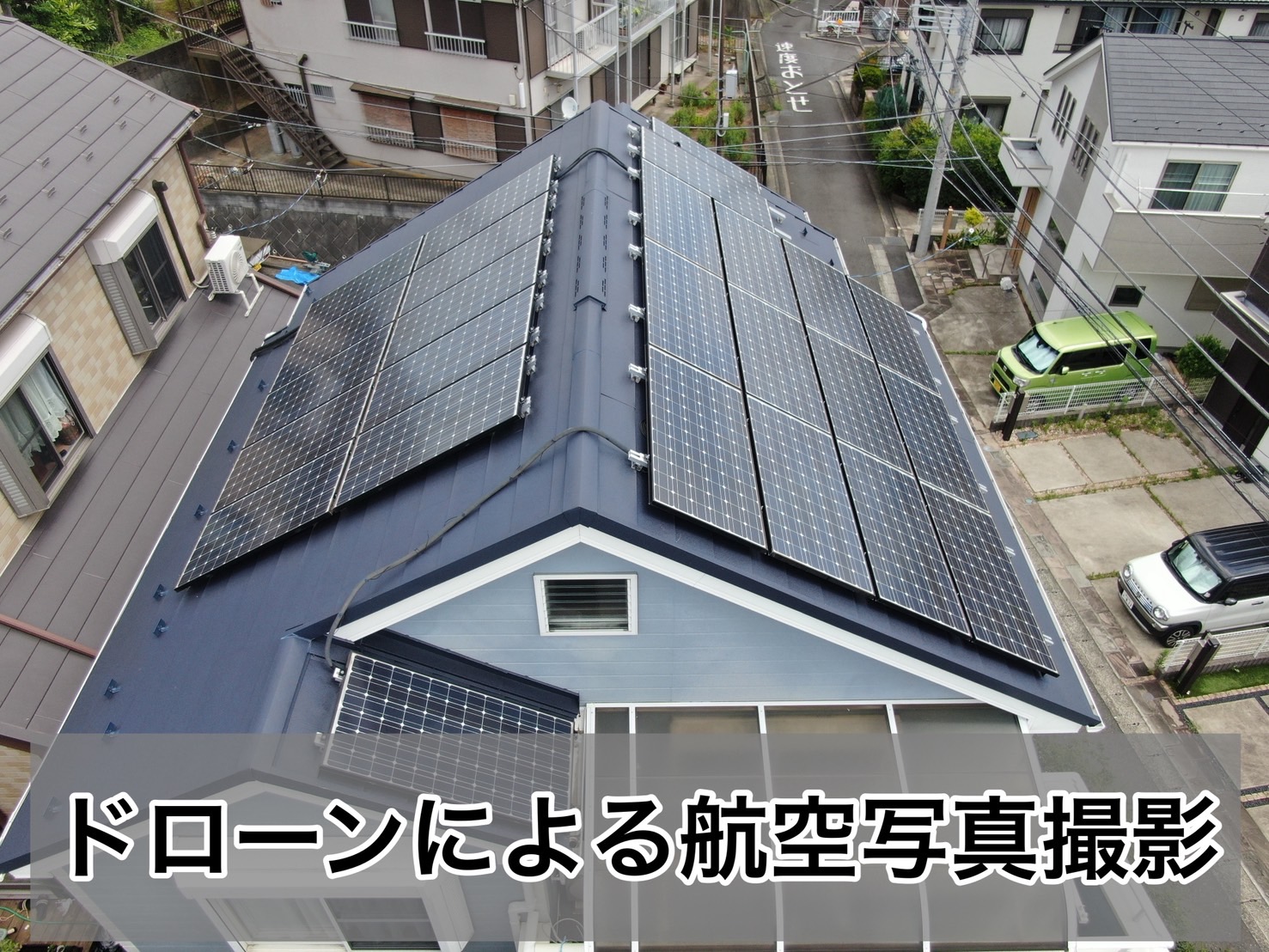
Our company is equipped to handle various roofing troubles and situations.
If you cannot access the roof due to height, we can utilize drones to assist!
During leak investigations, we can also conduct inspections using a thermal imaging camera.
If the power generation of the solar panels decreases due to dirt or other factors, we can also provide cleaning with a specialized brush.
We will respond according to your preferences.
7. Human Resource Development
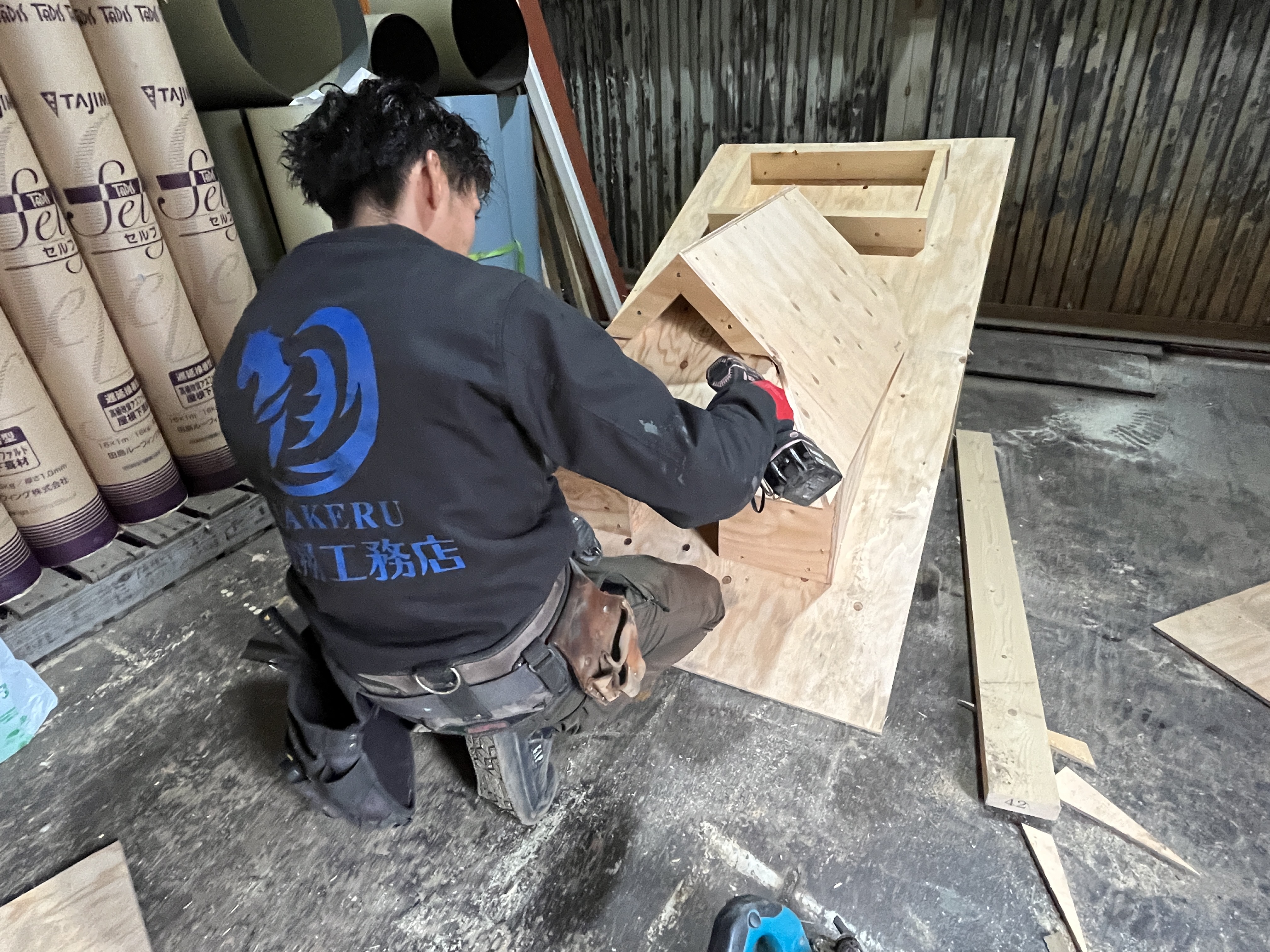
To improve skills, we create various roof models and conduct practical training.
Since the construction methods change depending on the shape and slope of the roof, we regularly provide technical training so that each staff member can handle various cases.
8. Creation of Easy-to-Understand Materials and Simulations
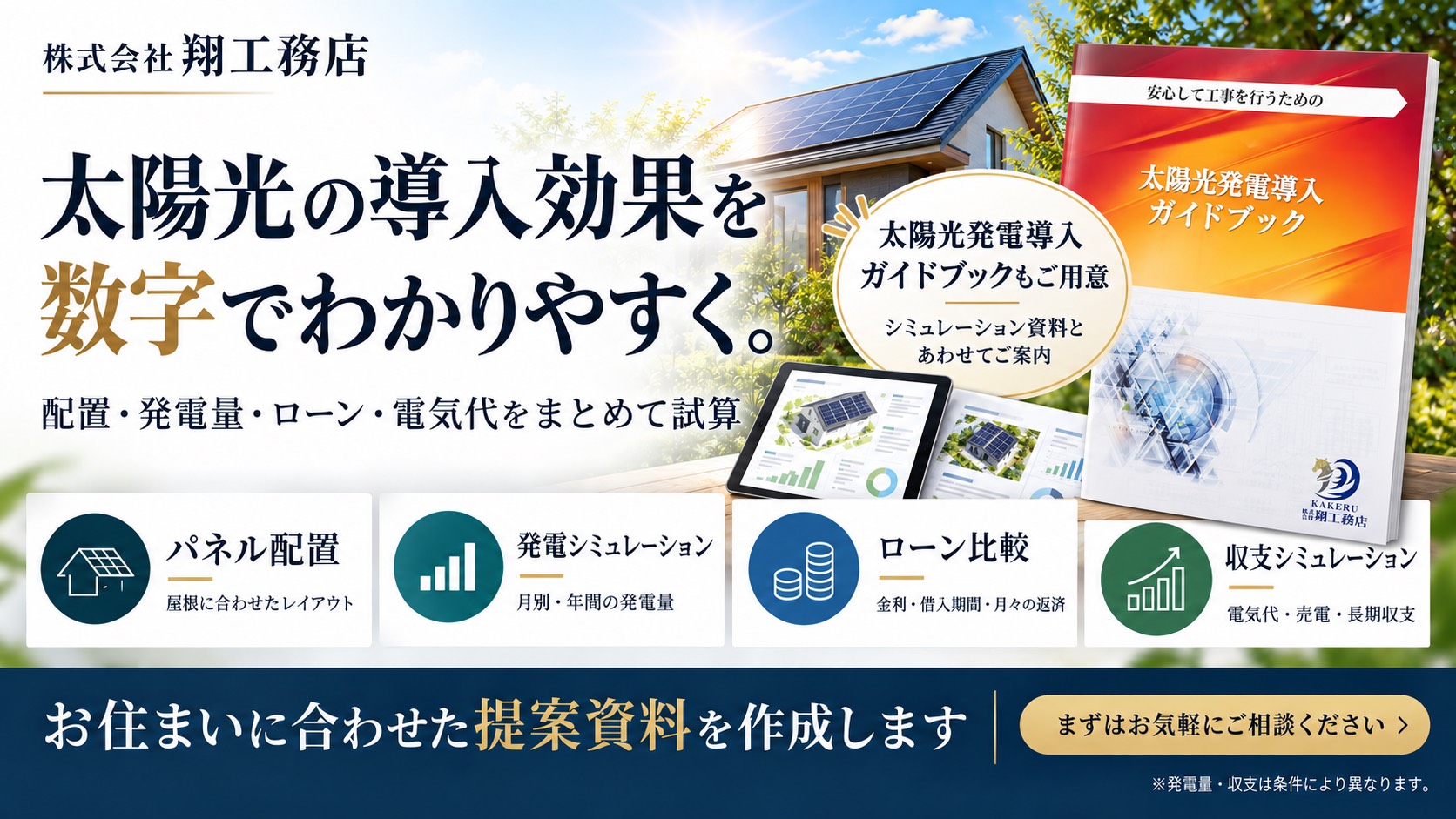
Kakeru Koumuten provides not only “estimates,” “layout diagrams,” and “power generation simulations” but also a “solar panel installation guidebook” and a “profit and loss simulation” that considers loan interest rates and electricity costs.
The profit and loss simulation can be created for projected cumulative profits and losses over 20 to 30 years.
Even customers who are not familiar with solar panel installations will receive easy-to-understand materials that include points to note and disadvantages!
We encourage you to obtain comparative estimates and compare them with other companies’ plans!
Roof Inspection Before Installing Solar Panels
Once solar panels are installed, they will remain on the roof for 20 to 30 years.
Confirming “Is it okay to install them directly on the current roof?” before installation is the key point to prevent leaks and unnecessary expenses!
Kakeru Koumuten, which specializes in roofing work, has summarized the items to check before installation.
| 1. Types of Roofing Materials and Age | The fixing method varies depending on the roofing materials, such as slate, tiles, metal roofs, and flat roofs (roof waterproofing). If the remaining lifespan of the roofing material is short, we may suggest roof renovation first. |
| 2. Condition of Substrate and Waterproof Sheet | If the sheathing or roofing (waterproof sheet) under the roofing material is damaged, it will affect the fixing strength of the fittings and waterproofing. We will also check for any signs of leaks. |
| 3. Orientation, Slope, and Shadows of the Roof | The orientation and slope of the roof surface, as well as shadows from neighboring houses, trees, and utility poles, will affect the power generation. We will create a layout diagram from the drawings and the site, and you can check it with a power generation simulation. |
| 4. Shape of the Roof and Usable Area | The number of panels that can be installed (installation capacity) is determined by the shape and size of the roof. Since the number of panels that can be installed varies depending on the size of the panels, we will compare based on the total output of the roof. |
| 5. Fixing Method and Waterproofing Details | We will confirm whether the method involves drilling holes in the roofing material for fixing or using fittings to secure the roofing material. The fixing method varies by construction method, so please check the waterproofing treatment of the fixed parts during the estimate. |
| 6. Weight of the Roof | The roof will become heavier due to the panels. After investigating the existing roof, substrate, and load-bearing capacity, switching to lighter roofing materials may be an option if necessary. |
| 7. Installation Location of Equipment and Wiring | We will check the installation location of the power conditioner and storage battery, as well as the wiring route to the distribution board. The length of the wiring will also affect the cost. |
Fixing Methods and Checkpoints by Roofing Material
| Roof Material | Main Fixing Method | Pre-Installation Check Points |
|---|---|---|
| Slate Roof | Varies by method (e.g., fixing brackets to the roof material and substrate with screws) | Waterproof treatment of fixing parts, cracks or deterioration of slate, condition of the substrate. If deterioration is advanced, consider roof overlay (cover method) or replacement first. |
| Tile Roof | Fixed with brackets and methods suited to the type of tile (even methods that do not drill holes in the tiles will fix to the substrate) | Type and condition of tiles, substrate, load-bearing capacity. Depending on the investigation results, there may be methods to replace with lightweight roofing materials before installation. |
| Metal Roof (Horizontal and Vertical) | Fixed with catch-type brackets that grip the roof material (depends on the combination of roof material and brackets) | Whether the roof material and brackets are compatible, installation conditions from the roof material manufacturer. If compatible, methods that do not drill holes may be available. |
| Flat Roof / Rooftop | Fixed by installing a frame | Type and deterioration status of the waterproof layer, waterproofing around the frame. Consider in conjunction with the timing of waterproofing work. |
If you perform roof renovations 10 to 20 years after installation, there will be additional costs for the removal and reinstallation of solar panels. If the roof is deteriorating, renovating to a highly durable roofing material before installation may help reduce costs in the long run.
Kakeru Koumuten Co., Ltd. specializes in roofing work and can also handle the removal and reinstallation of solar panels in-house, so please consult us according to the condition of your roof!
▶ Click here for roof renovations in Kanagawa Ward, Yokohama City
PotentialSubsidies and Grants
If you are introducing solar panels or storage batteries in Kanagawa Ward, there may be programs from the “National Government,” “Kanagawa Prefecture,” and “Yokohama City” that apply.
The following information is based on the official pages of each program as of October 6, 2026. The application status may change depending on the budget, so please check the latest information before contracting or starting work.
Eligibility Conditions and Application Timing for Subsidy Programs
| Program | Main Eligibility Conditions | Subsidy Amount | Application Period & Status |
|---|---|---|---|
| Yokohama City “Yokohama Green Energy Partnership Project (YGrEP)” Reiwa 8 Fiscal Year | Yokohama citizens installing eligible equipment at their homes within Yokohama City. Solar power must be newly installed, and either a storage battery, eco-cute, or electric vehicle must be installed simultaneously or already in place. | Solar power: 15,000 JPY/kW (up to 4 kW) Storage battery: 120,000 JPY per case (Refund via cashless points, etc.) |
Participation & Installation Support Application: June 15, 2026 – December 25, 2026 (Application must be made before installation) Completion Application: By January 22, 2027 Ends when budget limit is reached |
| Kanagawa Prefecture “Reiwa 8 Fiscal Year Kanagawa Prefecture Residential Solar Power Generation & Storage Battery Installation Subsidy” | Installation of both solar power generation and storage battery in residential properties within the prefecture. Applications must be made by the individual, and construction can begin after the grant decision. | Solar power: 70,000 JPY/kW Storage battery: 150,000 JPY per unit |
Phase 1: May 11, 2026 – June 30, 2026 Phase 2: September 7, 2026 – September 30, 2026 (first-come, first-served) Phase 2 is currently accepting applications until the deadline. Please check the prefecture’s official page for future recruitment. |
| National “DR Household Storage Battery Project” (Reiwa 7 Fiscal Year Supplement) | New installation of household storage systems that can be utilized for DR (demand response) with registered products. | Calculated based on an initial effective capacity of 1 kWh at 34,500 JPY (subsidy rate within 3/10; maximum 600,000 JPY per application) | As of May 29, 2026, the budget has been reached, and applications are now closed (currently not accepting applications) |
| National “Mirai Eco Housing 2026 Project” (Renovation) | Storage batteries are one of the eligible facilities, but they must be combined with essential works such as insulation renovation of windows (openings) and the structure; applications cannot be made for just the installation of storage batteries. Solar panels are not included as eligible facilities. | Storage battery: 96,000 JPY per household | Ends when the budget limit is reached. Please check the official site for application status. |
| Yokohama City “Solar Power Generation Installation Support Subsidy” | Small and medium-sized enterprises and individual business owners within Yokohama City (residential use is not eligible). There are conditions for eligible persons and equipment, such as being self-consumption type equipment. | Solar power + storage system: 100,000 JPY/kW (up to 5,000,000 JPY) Solar power only: 80,000 JPY/kW (up to 4,000,000 JPY) |
May 1, 2026 – October 30, 2026, 5 PM (first-come, first-served until budget limit is reached) |
| Kanagawa Prefecture “Reiwa 8 Fiscal Year Kanagawa Prefecture Self-Consumption Type Renewable Energy Installation Subsidy” | Corporations and individual business owners filing blue returns(Personal residences are excluded)。Solar power systems must have a generation capacity of 10kW or more, and facilities for business use, equipment not certified under FIT/FIP, etc. | Solar Power: 80,000 yen/kW, etc. Storage Systems: 50,000 yen/kWh (maximum 5,000,000 yen) |
Application period ends on September 3, 2026 (when the application amount reaches the budget amount) |
YGrEP requires “participation and installation support application” before installation, while Kanagawa Prefecture’s residential subsidies require not only application acceptance but also construction to begin after receiving “grant approval”. If installation or construction begins beforehand, it will be excluded from eligibility. The prefectural residential subsidies are granted after completion of the work and submission of performance reports and reviews. The order of procedures varies by system, and applying does not guarantee a grant, so please confirm before contracting or starting construction.
Kakeru Koumuten will provide guidance on eligibility conditions and business requirements for each system.
National Subsidy “DR Home Battery Project (Support for the Introduction of Home Storage Systems for DR Resources)”
The national government has been implementing the “DR Home Battery Project” to support the installation of home storage batteries.
This program targets individuals who are introducing newly registered storage systems that can be used for demand response (DR). For the fiscal year 2025 supplementary budget, the subsidy amount is determined based on a standard amount of 34,500 yen per initial effective capacity of 1kWh, with a subsidy rate of up to 30% and a maximum of 600,000 yen per application. There are conditions such as excluding items contracted or ordered before grant approval.
However, the fiscal year 2025 supplementary budget reached its application amount on May 29, 2026, and the public recruitment has ended (the previous fiscal year’s supplementary budget also ended on July 2, 2025). Applications are currently not possible, so please check the official website for future public recruitment.
Currently, there are no subsidies confirmed for the installation of solar panels on existing homes.
👉 Click here for the official site of the DR Home Battery Project
Kanagawa Prefecture “Fiscal Year 2026 Kanagawa Prefecture Residential Solar Power Generation and Storage Battery Installation Subsidy”
Kanagawa Prefecture provides subsidies for those who install both “solar panels” and “storage batteries” in their homes.
The subsidy details are 70,000 yen per 1kW of solar power generation, and 150,000 yen per storage system.
For example, if you install a 4kW solar panel and one storage battery, the subsidy amount would be calculated as 4kW × 70,000 yen + 150,000 yen = 430,000 yen.
Conditions include that the storage system must be a registered product, if construction begins before grant approval, it will be excluded, and the application must be made by the individual (proxy applications by contractors are not allowed). It is also possible to combine this with YGrEP in Yokohama City.
For the fiscal year Reiwa 8, the first application period (May 11 – June 30) and the second application period (September 7 – September 30, first-come-first-served) have been conducted, and the second period has reached its application deadline. For future recruitment, please check the official Kanagawa Prefecture page.
👉 Click here for the official Kanagawa Prefecture page
Kanagawa Prefecture “Reiwa 8 Fiscal Year Kanagawa Prefecture Self-Consumption Type Renewable Energy Introduction Subsidy” (for businesses)
Kanagawa Prefecture is also implementing subsidies for businesses introducing “self-consumption type” facilities that use electricity generated by solar panels.
Eligible applicants are corporations or individual business owners filing blue returns, and installations for individual residences are not eligible.
Conditions include solar power generation with an output of 10kW or more, supplying electricity to business facilities within the prefecture, and not being facilities certified under FIT or FIP.
The subsidy amount is 80,000 yen per kW for solar power generation and 50,000 yen per kWh for the accompanying storage system (with a maximum of 5 million yen).
As the application amount reached the budget amount for the fiscal year Reiwa 8, applications were closed on September 3, 2026.
Businesses considering the installation of solar panels on commercial buildings in Kanagawa Ward should check the official Kanagawa Prefecture page for the next recruitment.
👉 Click here for details
Yokohama City “Solar Power Generation Introduction Support Subsidy” (for businesses)
Yokohama City is implementing a system to subsidize part of the introduction costs for small and medium-sized enterprises and individual business owners within the city for solar power generation facilities and other installations.
Residential solar power generation is not eligible, and for households, the YGrEP below will be the contact point. Businesses installing solar panels on stores, offices, factories, etc., in Kanagawa Ward may have the opportunity to utilize this, but simply running a business from home does not guarantee eligibility. It is necessary to confirm the requirements for small and medium-sized enterprises and individual business owners, as well as the condition of being self-consumption type facilities (facilities aimed at selling electricity are not eligible).
The subsidy amount is 100,000 yen per kW when introducing solar power generation and storage systems simultaneously (maximum of 5 million yen), and 80,000 yen per kW when only solar power generation is involved (maximum of 4 million yen).
The application period for the fiscal year Reiwa 8 is from May 1, 2026, to October 30, 2026, at 5 PM, on a first-come-first-served basis until the budget limit is reached. Installation of equipment and commencement of construction must occur after the grant decision date.
For detailed conditions and application methods, please check the official website of Yokohama City.
👉 Click here for the Yokohama City official page
Yokohama City “Reiwa 8 Year Yokohama Green Energy Partnership Project (YGrEP)”
Yokohama Green Energy Partnership (YGrEP) is a project aimed at realizing a decarbonized society.
In Yokohama City, households that participate in YGrEP and introduce eligible equipment (refer to the eligible equipment below) will receive cashless point rewards, etc.. Residents of Kanagawa Ward are also eligible.
◎Eligible Equipment and Reward Amounts◎
● Solar power generation equipment (new installation): 15,000 yen/kW (up to 4kW)
* It is a condition that either a storage battery, eco-cute, or electric vehicle is installed simultaneously or already installed.
● Storage battery: 120,000 yen per case
● Eco-cute: 20,000 yen per case
● Electric vehicle / plug-in hybrid vehicle (set with solar power generation equipment): 100,000 yen per case
* It is a condition that the storage battery, eco-cute, and electric vehicle (set) are installed simultaneously with the solar power generation equipment or already installed.
● Electric vehicle alone (without solar power generation equipment): 50,000 yen per case
● Fuel cell (Enefarm): 30,000 yen per case
● Solar thermal utilization system: 50,000 yen per case
● V2H charging and discharging equipment: 100,000 yen per case
For example, if you install a 4kW solar panel and a storage battery simultaneously, the calculation for the reward amount will be 60,000 yen for solar power + 120,000 yen for storage battery = total of 180,000 yen.
The application process is “Participation and Introduction Support Application (before installation) → Equipment Installation → Completion Application”, and equipment installed before the introduction support application is not eligible. The participation and introduction support application for Reiwa 8 Year is from June 15, 2026, to December 25, 2026, and the completion application is until January 22, 2027, and will end once the budget limit is reached.
If selling electricity, only the surplus that cannot be used at home is eligible, and submission of monitoring data such as power generation amounts approximately once a year is also a condition. Additionally, only V2H charging and discharging equipment is eligible for point rewards for businesses.
For information on application methods, combining with national and Kanagawa Prefecture subsidy projects, point rewards, and more, please check the special site here or contact us.
Solar Panel Installation & Battery Installation Price List
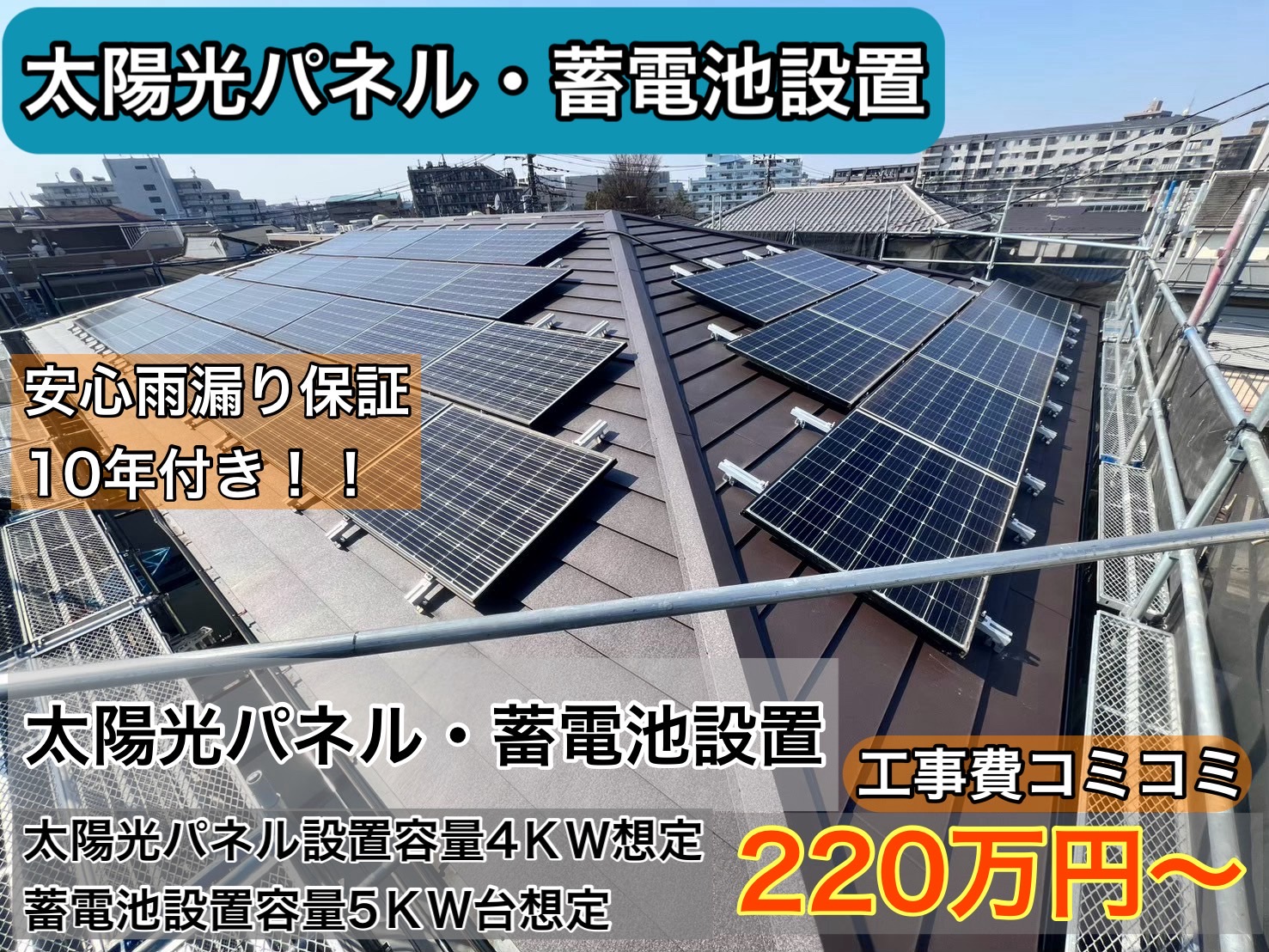
⇧Service Menu | For Costs of Solar Panel Installation & Battery Installation, Click Here
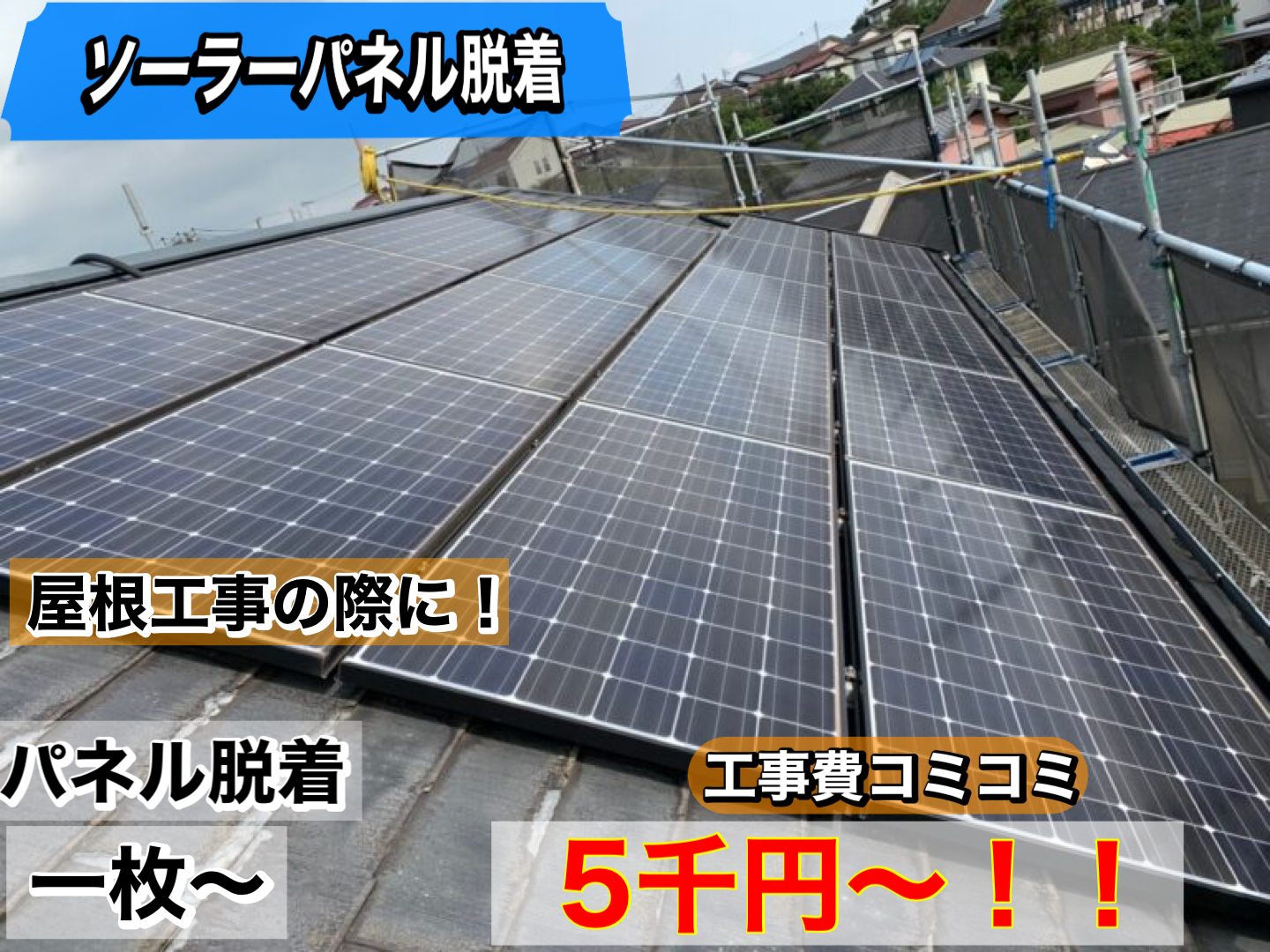
⇧Service Menu | For Costs of Solar Panel Removal & Water Heater Dismantling, Click Here
Breakdown of Installation Capacity, Equipment, and Construction Costs
The costs for solar panels and batteries should be confirmed by separating them into “Equipment Costs (Equipment Price)” and “Construction Costs”.
Even for the same “Complete Solar Panel Installation,” the amount can vary significantly depending on the installation capacity, equipment grade, and roof condition.
Understanding Installation Capacity (kW) and Battery Capacity (kWh)
The installation capacity of solar panels is determined by “Output of One Panel (W) × Number of Panels”, with the unit being kW (kilowatt). Batteries are compared based on the amount of electricity they can store, represented in kWh (kilowatt-hour).
The amount of kW that can be placed on the roof varies for each house depending on the shape, orientation, and size of the roof. At Kakeru Koumuten, we create layout diagrams from blueprints and on-site surveys to present the installation capacity.
On our pricing page, we list solar panels as approximately 800,000 JPY to 1,200,000 JPY for 3-5 kW, and 1,200,000 JPY to 1,900,000 JPY for 6-10 kW. (These are just estimated amounts and may vary based on factors such as wiring length, scaffold range, existing roofing materials, and panel layout.)
▶ Installation Menu | Costs for Solar Panel Installation and Battery Installation
Items to Check in the Estimate (Cost Confirmation)
When comparing estimates, it is common to compare different capacities and equipment. Please check if the following items are clearly stated in each company’s estimate!
| 1. Solar Panels | Manufacturer, model number, output per panel (W), number of panels, total installation capacity (kW) are specified. |
| 2. Power Conditioner | Manufacturer, model number, capacity, number of units, installation location (indoor/outdoor). Also confirm if it is a type that controls in conjunction with the battery. |
| 3. Battery | Manufacturer, model number, capacity (kWh), range usable during a power outage (entire house or specific circuits), installation location. |
| 4. Mounting Frame and Hardware | Name of the hardware suitable for the roofing material and method of securing it (whether it involves drilling holes or clamping). |
| 5. Wiring and Electrical Work | Wiring route and length, work around the distribution board, and whether there is a monitor to check power generation. |
| 6. Roof Reinforcement and Waterproofing | Details of waterproofing treatment at the fixed points, whether necessary roof repairs and substrate reinforcements are included. |
| 7. Applications | How much support is included for applications to the power company, certification for selling electricity (FIT), and subsidy applications. |
| 8. Scaffolding | Scope and quantity of scaffolding. If roofing work and exterior painting are done simultaneously, check that the same scope and quantity are not double-counted. |
| 9. Removal and Disposal | Whether the removal of existing solar thermal water heaters and old panels, as well as disposal costs for waste materials, are included. |
| 10. Tax Classification and Warranty | Whether the price is tax-inclusive or exclusive, conditions under which additional costs may arise, and details and duration of manufacturer and workmanship warranties. |
If the capacities differ, both the price and power generation will change. Kakeru Koumuten Co., Ltd. welcome price comparisons, so if you bring estimates from other companies, we can explain the differences item by item!
Self-Estimate and Profit Simulation for Solar Power Generation
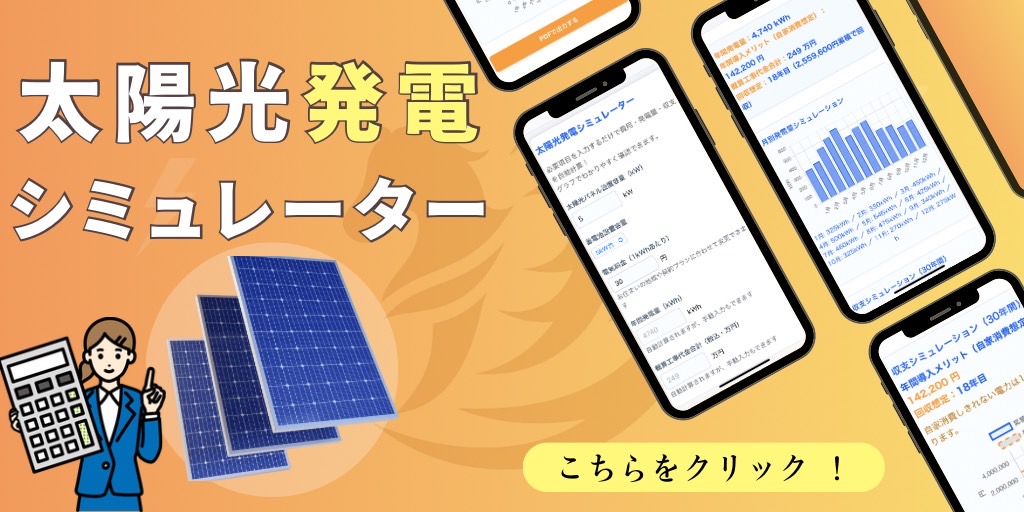
With the simulator above,
you can obtain an estimated quote and a financial simulation for up to 30 years!
If you know the total installation capacity of solar panels on the roof and the capacity of the storage battery, you can get an estimated quote and financial simulation!
*The simulation results are estimates. Actual financial results may vary based on assumptions such as electricity rates, self-consumption ratios, feed-in tariffs, and costs for equipment inspection and replacement.
Customer Feedback
-
customer reviews
Asao-ku, Kawasaki City | We received reviews about the ridge cap and rain gutter replacement work!
-
customer reviews
Kohoku-ku, Yokohama | We received reviews about the roof overlay (cover method)!
-
customer reviews
Kohoku-ku, Yokohama | We Received Reviews About Exterior Painting!
-
customer reviews
Hodogaya-ku, Yokohama | We received reviews about our exterior fence construction!
-
customer reviews
Tsurumi-ku, Yokohama | We received reviews about roof and exterior wall painting, as well as metalwork and rain gutter replacement work!
-
customer reviews
Higashiyamato City, Tokyo | We received reviews about exterior painting and roof overlay (cover method)!
Case Studies of Solar Panel Installations
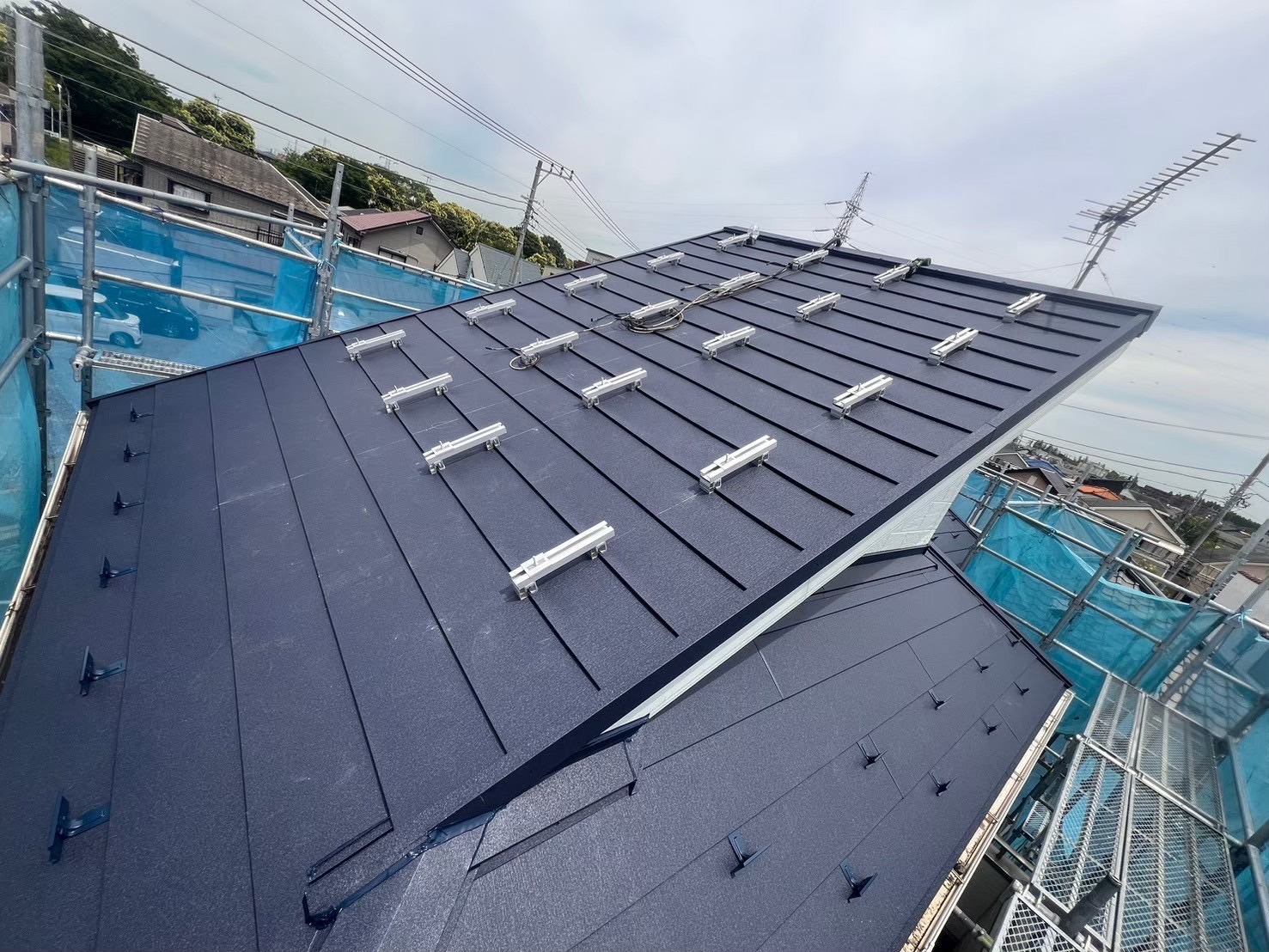
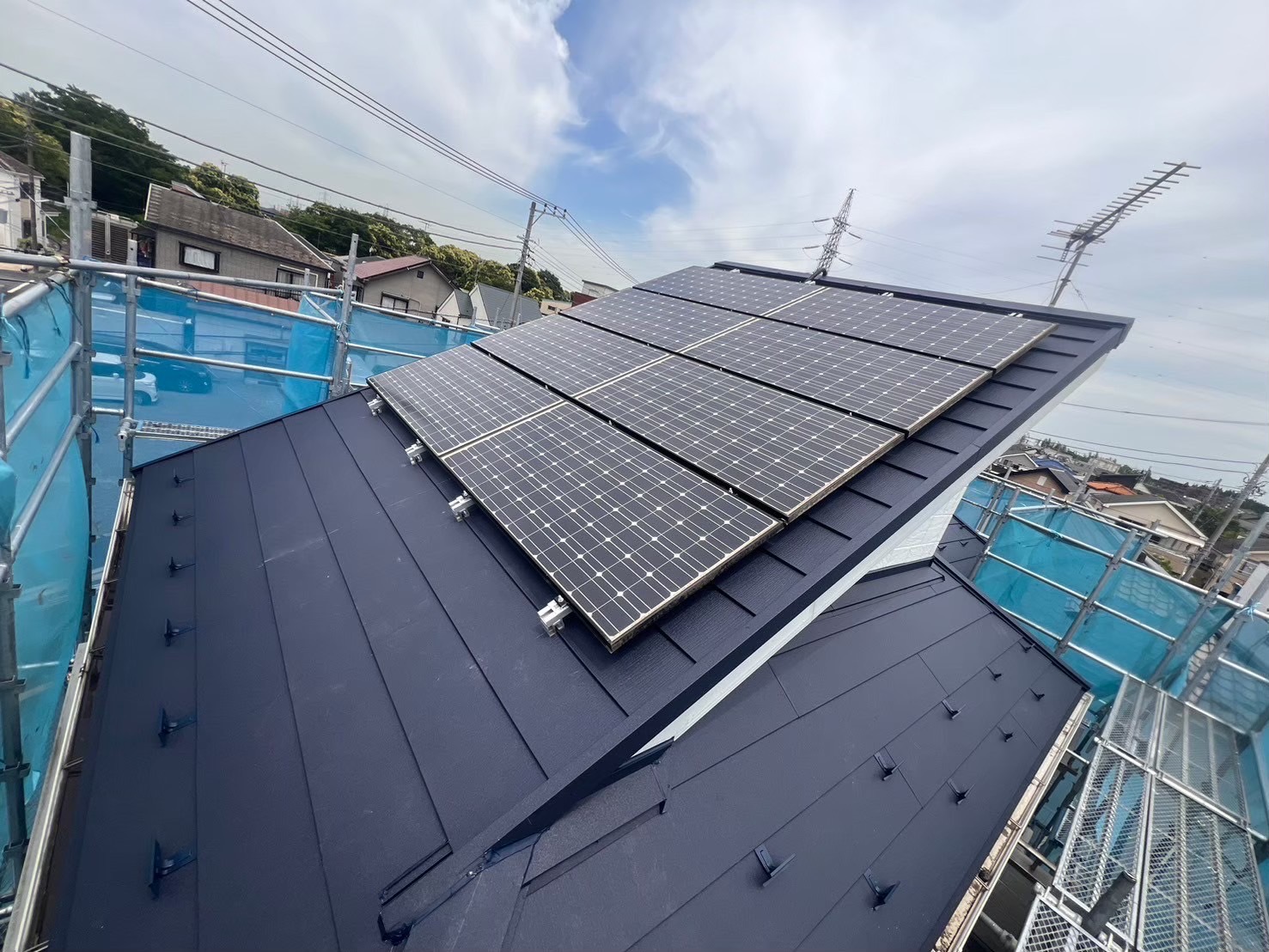
| Construction Details |
| Solar Panel Installation Battery Installation |
| Existing Roofing Material |
| Horizontal Metal Roof (Super Galtect) |
| Installation Capacity |
| Solar Panel: 4.3kW Battery: 5kWh |
| Base Mounting Hardware Used |
| Niigata Manufacturing / Aluminum Catch Type Hardware |
| Fixing Method & Waterproofing Details |
| Fixed by catching the horizontal metal roof with catch type hardware (Catch Method) |
| Price Range |
| 2,200,000 JPY~2,300,000 JPY *Due to the grant being provided, the actual burden amount is approximately 1,000,000 JPY Estimated recovery period for construction costs: about 8 to 9 years (self-consumption) *The grant amount and recovery estimates are based on the system and calculations at the time of construction and may differ under the current system. |
| Construction Period |
| About 3 days |
| Completion Month |
| April 2025 |
| Inquiry Details |
| I am considering the introduction of solar panels and storage batteries. I heard that grants are available, and I would like to know how much will be provided. |
Our Proposal
We visited to provide an estimate and created a layout diagram for the solar panels from the drawings!
The layout diagram shows the arrangement of solar panels when placed on the roof.
It also indicates the installation capacity, allowing for power generation simulations and financial simulations.
We have determined the expected grant amount, so we explained this to the customer along with the estimate!
How to Choose a Solar Panel Installation Contractor in Kanagawa Ward, Yokohama City
There are many solar panel installation contractors that serve Kanagawa Ward, Yokohama City, and you may be unsure which contractor to choose.
Therefore, when requesting solar panel installation and battery storage installation work, let’s check the following four points.
● Have extensive knowledge not only about solar panels but also about roofs
● Confirm the existence of warranties and aftercare maintenance
● Obtain estimates from multiple contractors (three companies is a guideline)
● Check if they provide support for subsidy applications
By confirming the above four points, you will be able to choose a reliable contractor.

Knowledge about roofs as well as solar panels
Defective installation of solar panels can sometimes be caused by a lack of knowledge and verification regarding roofs and waterproofing.
While knowledge about solar panels is certainly important, understanding the roof and waterproofing at the installation site of the solar panels is also crucial.
⚠︎Examples of troubles due to insufficient verification of roofs and waterproofing
・Solar panels were installed on a severely deteriorated roof, leading to leaks
・Solar panels were installed on a roof with a short lifespan, necessitating a renovation for removal and reinstallation within a few years
・Misjudging the type of waterproofing led to incorrect processing and subsequent leaks
and more
When installing solar panels, understanding the condition and type of the existing roof allows you to avoid unnecessary expenses and unexpected troubles.
▶ Go to “Roof Verification Before Installing Solar Panels” in this article
Confirm the existence of warranties and aftercare maintenance
When choosing a solar installation contractor, confirm the existence of warranties. It is important to check not only the duration of the warranty but also the scope of coverage, disclaimers, and cost conditions.
Solar panels and battery storage units come with manufacturer warranties, but also check for the existence of installation warranties in case leaks occur after installation!
For contractors that provide installation warranties, if leaks occur after installation, they may be able to respond under warranty, provided it is within the warranty period and conditions.
Additionally, some contractors offer after-sales service separate from warranties, so be sure to check if the contractor you are considering has after-sales service.
Changes or damage on the roof may occur in areas that are not visible, so there is a possibility that customers may not notice them.
By conducting inspections during after-sales maintenance, you can more easily detect abnormalities early, preventing major repairs or breakdowns!
Kakeru Koumuten Co., Ltd. provides a leak warranty as part of the workmanship warranty for solar panel installations. (The warranty for solar panel installations is 10 years, and depending on the condition of the roof before installation, we may not be able to provide a warranty unless a roof renovation is performed.)
We also conduct after-sales maintenance and send out annual direct mail!
Please check the DM, and if you wish, we will visit you for after-sales maintenance!

Obtain estimates from multiple contractors (3 companies as a guideline)
When requesting solar panel installation, be sure to obtain estimates from multiple contractors.
Even for the same manufacturer and the same construction content, costs may vary, and warranties and after-sales services may differ.
Additionally, obtaining multiple estimates makes it easier to negotiate prices.
To request services from your preferred contractor at a lower price, we recommend obtaining estimates from multiple contractors.
When comparing estimates,
“Check the estimate items”
“Type of solar panel”
“Warranties and after-sales services”
be sure to compare these details carefully! If the rank of auxiliary materials is low or if steps are skipped, costs can be reduced, so avoid making judgments based solely on price!
▶ Go to “Breakdown of Installation Capacity and Equipment/Construction Costs” in this article
Check if they provide support for subsidy applications
Subsidies may be available for solar panel installations and battery installations, but if the order of procedures is incorrect or if there are deficiencies in the documents, the subsidy may not be granted.
For systems like the Kanagawa Prefecture housing subsidy, where applications cannot be submitted by the contractor and must be done by the individual, it is reassuring to have a contractor that supports the preparation of necessary documents and the flow of procedures.
Be sure to complete the procedures specified for each system (for the prefectural housing subsidy, this includes the grant decision) before proceeding with the construction!
In the case of the prefectural housing subsidy, after the construction is completed, a performance report must be submitted, and the flow will go through a review before the grant is provided! (The flow of procedures varies by system)
▶ To “Subsidies and Grants That May Be Applicable in Kanagawa Ward” in this Article
Benefits of Introducing Solar Power Equipment
The benefits of introducing solar panels are summarized in the following 5 points!
Benefit 1: Economic Benefits

The biggest benefit of introducing solar panels is the economic advantage!
Although the selling price of electricity has decreased compared to 10 years ago, you can benefit by reducing the electricity you purchase from power companies by consuming the electricity you generate!
As electricity prices rise, the ability to cover your consumption with solar power becomes attractive!
If you plan to use the generated electricity at night, installing a storage battery is essential!
For residential use (less than 10kW), the selling price (FIT) from certifications after October 2025 is set at “24 yen/kWh for the first 4 years, and 8.3 yen/kWh from the 5th to the 10th year.” The same price will apply for the 2026 fiscal year. After the 5th year, it is generally more advantageous to use it in your home (self-consumption), making the combination with storage batteries a viable option.
👉 Ministry of the Environment | For purchase prices, periods, etc., click here
Benefit 2 : You Can Utilize Subsidies!

The conditions and amounts of subsidies vary by prefecture and municipality, but if you meet the conditions, you may be able to utilize subsidies!
Reducing the actual burden amount through subsidies is a significant advantage!
In the case of Kanagawa Ward, you may be eligible for subsidies from Yokohama City’s YGrEP or Kanagawa Prefecture.
Benefit 3: Environmentally Friendly!
Solar power generation has low carbon dioxide emissions and reduces dependence on fossil fuels, contributing to the mitigation of global warming.
Solar panels themselves do not produce noise or exhaust gases during the generation process, making them an environmentally friendly method of power generation. (However, devices like power conditioners do have operational noise.)
Benefit 4: Expect Heat Insulation Effects!!
By installing them on the roof or rooftop, the panels block direct sunlight from hitting the roof.
Especially in summer, it can help reduce the temperature rise of the roof, providing expected heat insulation effects!
(Note that this does not improve the building’s insulation performance itself.)
Benefit 5 Electricity can be used even during power outages!!
If a storage battery is installed, it becomes possible to use electricity even during emergencies such as power outages!
Even without a storage battery, if you have a power conditioner with autonomous operation capabilities, you may be able to use electricity from a dedicated outlet during daytime generation.
(The devices, output, and duration that can be used during a power outage vary depending on the model and wiring method.)

What points should be noted when introducing solar power generation?
Next, we will explain the “three points to note” when installing solar panels!

Point 1 Maintenance costs can be incurred
A particularly overlooked maintenance cost is for the roof where solar panels are installed.
If you perform roof renovations 10 to 20 years later, there will be costs for removing and reinstalling the solar panels.
If the existing roof is deteriorating, it is reassuring to renovate it with durable roofing materials before installing solar panels!
Additionally, there will be costs for regular inspections of the equipment, repairs or replacements of the power conditioner, and updates due to the deterioration of the storage battery.
It would be reassuring to consider maintenance costs in the simulation before introducing solar panels!
Point 2 The risk of leaks increases depending on the roofing material
The fixing methods for slate roofs and tile roofs vary by construction method, but when using screws or other fasteners to secure the roofing material and substrate, waterproofing of the fixed parts becomes crucial.
If the method involves making holes in the roof, there will inevitably be a risk of leaks.
Of course, we will ensure proper waterproofing, but if you are concerned about making holes, replacing the roofing material with a metal roof and securing the solar panels using the catch method is also an option. (The catch method has compatibility conditions between the roofing material and fasteners, and it cannot be used with all metal roofs.)
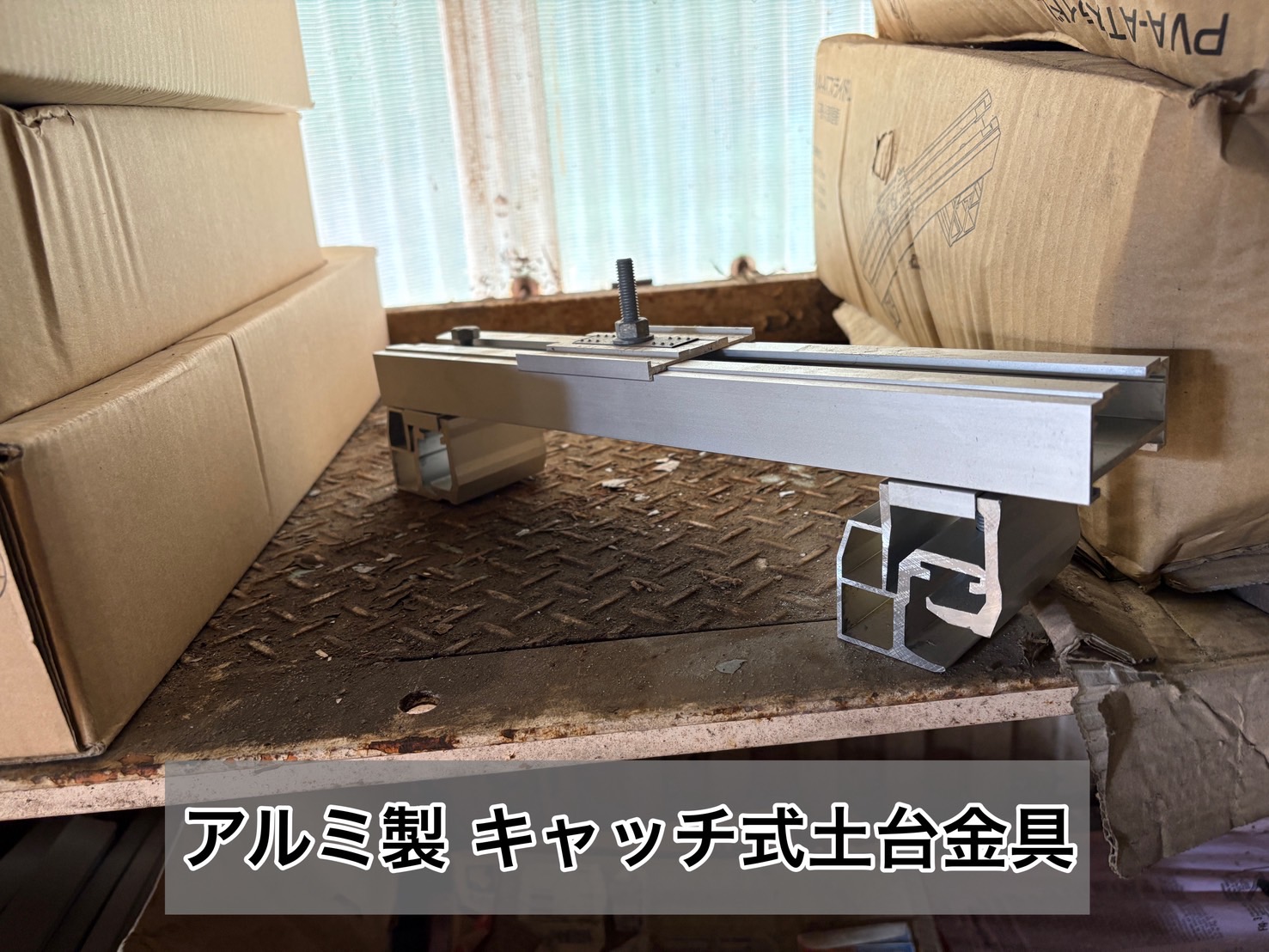 Catch-type base metal fittings for horizontal metal roofs
Note 3: The roof will become heavier
Since solar panels will be installed, the roof will become heavier. After investigating the existing roof, substrate, and load capacity, switching to a lightweight roof may also be an option if necessary.

How to Choose Solar Panels?
There are many manufacturers of solar panels, and their output and costs vary.
It is not simply a matter of “this manufacturer has the best solar panels”; it is important to choose solar panels that are suitable for your life plan and building!
Here are some points to consider when comparing solar panels!
How to Choose 1: Compare by Total Output of the Roof
When installing solar panels on the roof, it is important to know how much power can be generated in a limited area, and the more power generated, the better!
Solar panels come in various sizes and outputs depending on the manufacturer.
A 350W output panel and a 400W output panel may seem that the higher output panel is better at first glance.
However, if the size of the panels does not fit well with the roof, there may be cases where “20 panels of 350W can be installed” and “15 panels of 400W can be installed,” leading to different installation capacities on the same roof due to the size difference.
400W × 15 panels = 6kW (total output of the roof)
350W × 20 panels = 7kW (total output of the roof)
As shown above, even if the output of one panel is lower, the total output of the roof may be higher!
It is important to consider the total output of the roof rather than the output of a single panel!
*The above is a calculation of total output (kW). The actual power generation amount (kWh) will vary depending on conditions such as the roof’s orientation, slope, and shading.
How to Choose 2: Compare by Degradation Rate of Solar Panels
Solar panels have a degradation rate, and their output gradually decreases after 10 years and 20 years.
The degree of output reduction after long-term use varies by product. The manufacturer’s output guarantee value is a standard figure for warranty purposes and does not indicate the actual degradation rate or power generation amount.
By considering the degradation rate along with the initial output, you can choose solar panels without regrets!
How to Choose 3: Compare by Warranty Period
There are several types of warranties for solar panels, including “output warranty,” “natural disaster warranty,” and “system warranty,” and the warranty periods vary by manufacturer.
For output warranties, some manufacturers offer a 30-year warranty, while others offer a 10-year warranty, so it varies!
Longer warranties are better, so be sure to check the warranty periods and conditions of the manufacturers you are considering!

Frequently Asked Questions about Solar Power and Storage Battery Installation in Kanagawa Ward
We have compiled frequently asked questions from customers considering the installation of solar panels and storage batteries in Kanagawa Ward. (Tap to open the answers)
How much does it cost to install solar panels and storage batteries in Yokohama City, Kanagawa Ward?
The cost varies depending on the installation capacity, equipment, and roof condition. In the above case study (solar panel 4.3kW + storage battery, completed in April 2025), it was 2.2 million yen to 2.3 million yen.
Guidelines for different capacities are published on the solar panel and storage battery installation pricing page. We will create a layout diagram from the drawings and site survey and provide a free estimate!
Are there any subsidies available for solar power and storage battery installation in Kanagawa Ward?
As of October 6, 2026, the application period for Yokohama City’s YGrEP (15,000 yen/kW for solar power, up to 4kW; 120,000 yen per storage battery) is ongoing (it will end once the budget limit is reached). Kanagawa Prefecture’s subsidy (70,000 yen/kW for solar power, 150,000 yen per storage battery) is approaching the application deadline for the second phase of fiscal year 2026, and the national DR home storage battery program has ended its public recruitment.
Since the application status may change, please refer to the subsidy and grant section and consult with us before signing a contract.
Can I apply for subsidies after the construction is completed?
In many programs, procedures must be completed before construction. Yokohama City’s YGrEP requires a “participation and introduction support application” before installation, and Kanagawa Prefecture’s subsidy requires “commencement of construction after grant decision.” If you install first, you will be ineligible.
The order of procedures varies by program, so please confirm before signing a contract or starting construction.
Can solar panels be installed on a slate roof? I’m worried about leaks.
Installation on a slate roof is possible, but it requires checking the condition of the roofing material and substrate. The method of securing the panels varies by installation method, and when securing brackets to the roofing material or substrate, waterproofing treatment at the fixed points is essential.
Kakeru Koumuten is a specialized exterior renovation company strong in roofing work, so we will check the condition of the roof before installation and suggest methods such as roof overlay or replacement if deterioration is advanced.
The roof is old. Should I do a roof renovation first?
It depends on the condition of the roof. If a roof renovation is needed within 10 to 20 years after installation, the cost of removing and reinstalling the solar panels will be incurred separately. If the remaining lifespan of the roof is short, renovating with durable roofing materials before installation may help reduce total costs.
After confirming the condition of the roof during the on-site survey, please consult us on how to proceed with the installation!
Is it better to install a storage battery together with solar panels?
If you want to use the generated electricity at night or prepare for power outages, simultaneous installation is recommended. The selling price for electricity will be 8.3 yen/kWh after the fifth year, making it more advantageous to use it in your home rather than selling it.
Additionally, the subsidy in Kanagawa Prefecture requires the simultaneous introduction of solar panels and storage batteries, and Yokohama City’s YGrEP also has conditions for combinations with storage batteries. You can compare “solar panels only” and “solar panels + storage batteries” through a financial simulation.
How many kW can be installed on my roof? Is it okay for north-facing roofs or roofs with shadows?
The capacity that can be installed varies depending on the shape, orientation, and size of the roof. At Kakeru Koumuten, we create a layout diagram from the drawings and on-site survey, and we will provide you with the installation capacity and power generation simulation.
In Kanagawa Ward, the terrain varies from reclaimed land in the coastal area to inland residential areas and hilly areas in the west, and the shading from neighboring houses, trees, and elevation differences differs from one house to another. You can check the expected power generation through the power generation simulation.
How long will the construction period be?
In the above construction example (4.3 kW solar panels + storage battery), it took about 3 days. The duration may vary if roof work is done simultaneously or depending on the shape of the roof and installation capacity.
Please note that additional time is required for applications for subsidies and power companies, so please consult us as soon as possible.
What is the current selling price (FIT)?
For residential use (less than 10 kW), from the certification after October 2025, the first 4 years will be 24 yen/kWh, and from the 5th to the 10th year it will be 8.3 yen/kWh, and the same price will apply for the 2026 fiscal year.
The idea is to recover the initial costs quickly in the first 4 years and then focus on self-consumption. Kakeru Koumuten provides a financial simulation that takes into account loan interest rates and electricity prices.
Can you handle maintenance and inspections after installation?
Yes, we can. Kakeru Koumuten sends out annual after-maintenance DM notifications and visits for inspections upon request from customers. We can also clean solar panels with a special brush if the power generation decreases due to dirt.
Since it is difficult to check areas on the roof by yourself, please feel free to consult us if you have any concerns.
Can you also handle renovations of roofs that already have solar panels installed?
Yes, we can. Kakeru Koumuten can detach and reattach solar panels in-house, allowing us to remove the panels, perform roof overlay (cover method) or re-roofing, and then reinstall them all in one go. The removed panels can be stored in our warehouse.
For costs, please refer to the solar panel removal and water heater removal pricing page.
If you are looking for a solar panel installation contractor in Kanagawa Ward, please consult Kakeru Koumuten
Our company handles a wide range of exterior renovations, including solar panels, roofing work, and exterior wall work in Yokohama City, Kanagawa Ward.
We have received requests from many customers, including renovation companies and real estate agencies!
Kakeru Koumuten promises “high-quality renovations at low cost”, and we have received great feedback from numerous customers.
We continue to update our construction performance records every year and will strive to improve quality to satisfy even more customers in the future.
Our company can perform all exterior renovations, not only roof overlay work and re-roofing but also partial roof repairs, exterior painting, and exterior cover methods.
We are also happy to handle small jobs such as partial repairs and rain gutter cleaning!
In urgent cases such as leak repairs, we may be able to provide temporary measures without setting up scaffolding, as long as safety can be ensured, so please consult us!
“I want to know about recommended solar panels”, “I want to keep costs as low as possible”, “I just want an estimate for now”, we will provide the best solutions for your specific requests.
We will never propose unnecessary work that prioritizes profit!
We always stand in the customer’s position and will propose the best construction plan!
We are confident that we will not lose in terms of cost, quality, and planning compared to other companies in exterior construction!
We welcome competitive quotes because we are confident!
Estimates are completely free, and if our company is found to be inferior to others, you are free to decline!
Characteristics of Kanagawa Ward, Yokohama City and Points for Solar Construction
Kanagawa Ward, Yokohama City occupies a part of the urban coastal area and the new Yokohama urban center, served by JR lines, Keikyu lines, Sotetsu lines, Tokyu Toyoko line, and Yokohama City Subway Blue Line.
We have summarized the topography and housing situation in Kanagawa Ward, and points to consider when installing solar panels and storage batteries below. (Tap to open)
View the characteristics of Kanagawa Ward, Yokohama City and points for solar construction
■ Varied topography from reclaimed land to hilly areas
Yokohama City’s City Record describes Kanagawa Ward as having a varied topography with “reclaimed land in the east, hilly areas in the west, and hills and flatlands scattered in between.” It is divided into three regions: the coastal area where factories and businesses are located, the inland area that spreads residential neighborhoods, and the hilly area that retains many green spaces and farmland.
Since the appearance of the town varies greatly by region within the ward, even within the same Kanagawa Ward, the direction and height of roofs, as well as the shadows cast by neighboring houses, retaining walls, and trees, change from house to house. At Kakeru Koumuten, we create layout diagrams based on blueprints and the actual site conditions, and we confirm this through power generation simulations. For sites with slopes or elevation differences, our own scaffolding team plans the scaffolding to fit the site.
■ Roof checks before installation from low-rise residential areas to urban areas
Land Use Statistics of Kanagawa Ward (as of the end of Reiwa 6) show that the urbanized area of the ward is 19.3 km2 (81.8%), while the urbanization control area is 4.3 km2 (18.2%), with the total area of the ward being approximately 23.6 km2. In terms of land use zones, the first-class low-rise residential area accounts for 22.6%, the first-class residential area for 19.5%, and the second-class medium to high-rise residential area for 13.2%, indicating a mix from low-rise residential areas to medium and high-rise urban landscapes.
For homes that have been built for many years, it is important to check the condition of the roofing materials and substrate before installing solar panels. Depending on the condition of the roof, installing them simultaneously with roof renovations can help reduce future costs for removing and reinstalling solar panels.
■ Hilly areas have abundant greenery, requiring attention to fallen leaves and shadows
In the hilly areas, green spaces and farmland remain, and roofs close to trees are prone to collecting fallen leaves and dirt on the panels, which can lead to a decrease in power generation. If there are tall trees nearby, attention must also be paid to the shadows cast on the panels. Kakeru Koumuten can also provide solar panel cleaning with specialized brushes and rain gutter cleaning services.
■ Coastal businesses have different housing and subsidy eligibility
Coastal areas are home to factories and businesses. When installing in commercial facilities, the eligibility and conditions for subsidies differ from those for residential properties. Please check in advance the subsidy items introduced in the middle of this page, such as those for small and medium-sized enterprises and sole proprietors in Yokohama City.
■ Yokohama’s annual sunshine hours are approximately 2,018 hours
According to the Japan Meteorological Agency’s average values (1991-2020), Yokohama’s annual sunshine hours are approximately 2,018 hours. August has the most sunshine, while June, during the rainy season, has the least.
Power generation varies by season, so conducting annual power generation simulations and selecting battery capacity to match peak electricity usage times are key points.
■ Consideration for residential area rules
In Kanagawa Ward, there are Green Town Shin-Yokohama Building Agreement, Kandaiji 1-chome Residential District Building Agreement, and Rokakubashi 1-chome 31・32 Building Agreement established (not all areas in the ward have the same rules). In areas with agreements related to roof installations, it is necessary to check the details in advance.
Our company is based in Yokohama City and handles many exterior construction and solar power projects in Kanagawa Ward, Yokohama City.
We are happy to assist with partial roof repairs such as roof overlay work, roof replacement, and leak repairs, as well as other repairs! Please feel free to consult us for any sudden troubles!
Service Area in Kanagawa Ward, Yokohama City
Kakeru Koumuten Co., Ltd. accepts requests throughout Kanagawa Prefecture and all of Tokyo.
List of Areas in Kanagawa Ward, Yokohama City
Aokimachi, Kanagawa Ward / Asahigaoka, Kanagawa Ward / Ideta-machi, Kanagawa Ward / Izumimachi, Kanagawa Ward / Irie, Kanagawa Ward / Urashimaoka, Kanagawa Ward / Urashimacho, Kanagawa Ward / Ebisu-cho, Kanagawa Ward / Oguchi-dori, Kanagawa Ward / Oguchi Nakacho, Kanagawa Ward / Ohno-machi, Kanagawa Ward / Katakura, Kanagawa Ward / Kanagawa Honmachi, Kanagawa Ward / Kanagawa, Kanagawa Ward / Kamihansamachi, Kanagawa Ward / Kaminokidai, Kanagawa Ward / Kaminokumachi, Kanagawa Ward / Kamezumi-cho, Kanagawa Ward / Kandaiji, Kanagawa Ward / Kirihata, Kanagawa Ward / Kinkou-machi, Kanagawa Ward / Kuritadani, Kanagawa Ward / Saiwai-gaya, Kanagawa Ward / Koyasudai, Kanagawa Ward / Koyasu-dori, Kanagawa Ward / Saito Buncho, Kanagawa Ward / Sakae-machi, Kanagawa Ward / Sawatari, Kanagawa Ward / Sanmaimachi, Kanagawa Ward / Shirahata Kamimachi, Kanagawa Ward / Shirahata-machi, Kanagawa Ward / Shirahata Nakacho, Kanagawa Ward / Shirahata Nishimachi, Kanagawa Ward / Shirahata Higashimachi, Kanagawa Ward / Shirahata Minamimachi, Kanagawa Ward / Shirahata Mukaimachi, Kanagawa Ward / Shin Urashimacho, Kanagawa Ward / Shin Koyasu, Kanagawa Ward / Shinmachi, Kanagawa Ward / Sugata-machi, Kanagawa Ward / Suzu Shige-machi, Kanagawa Ward / Takashimadai, Kanagawa Ward / Takaracho, Kanagawa Ward / Tachimach, Kanagawa Ward / Taramachi, Kanagawa Ward / Chiwaka-machi, Kanagawa Ward / Tsuruyamachi, Kanagawa Ward / Tomika-machi, Kanagawa Ward / Torigoe, Kanagawa Ward / Nakamaru, Kanagawa Ward / Nanajima-cho, Kanagawa Ward / Nishi Oguchi, Kanagawa Ward / Nishi Kanagawa, Kanagawa Ward / Nishi Terau, Kanagawa Ward / Nihon Enoki, Kanagawa Ward / Shirakudai, Kanagawa Ward / Hazawacho, Kanagawa Ward / Hazawa Minami, Kanagawa Ward / Hashimoto-cho, Kanagawa Ward / Higashi Kanagawa, Kanagawa Ward / Hirakawa-cho, Kanagawa Ward / Hirodai Ota-machi, Kanagawa Ward / Futatsutani-cho, Kanagawa Ward / Hoshino-cho, Kanagawa Ward / Matsugaoka, Kanagawa Ward / Matsumi-cho, Kanagawa Ward / Matsumoto-cho, Kanagawa Ward / Mizuho-cho, Kanagawa Ward / Mitsuzawa Kamimachi, Kanagawa Ward / Mitsuzawa Shimomachi, Kanagawa Ward / Mitsuzawa Nakamachi, Kanagawa Ward / Mitsuzawa Nishimachi, Kanagawa Ward / Mitsuzawa Higashimachi, Kanagawa Ward / Mitsuzawa Minamimachi, Kanagawa Ward / Moriya-cho, Kanagawa Ward / Yamauchi-cho, Kanagawa Ward / Rokkakubashi, Kanagawa Ward
・Trust Kakeru Koumuten for exterior wall painting in Kanagawa Ward, Yokohama!
・Trust Kakeru Koumuten for roof renovations in Kanagawa Ward, Yokohama!
・Trust Kakeru Koumuten for exterior renovations in Kanagawa Ward, Yokohama!
・Trust Kakeru Koumuten for rain gutter repairs and cleaning in Kanagawa Ward, Yokohama!
・Trust Kakeru Koumuten for waterproofing work in Kanagawa Ward, Yokohama!
・Kakeru Koumuten Co., Ltd. project achievements
・Kakeru Koumuten Co., Ltd. aftercare services
・Kakeru Koumuten Co., Ltd. service menu and price list
・Kakeru Koumuten Co., Ltd. staff blog and announcements
・Explaining the importance of comparative estimates and key points!
・12 major manufacturers of solar power generation! Features and selection tips included!
・What are the installation costs for solar power generation? Comprehensive tips to reduce costs!
・What are the best locations for installing solar power generation? Key points for selecting installation sites included!
・Here is the introduction for solar power generation estimates!
Consultations via LINE are also very welcome◎

We are also updating our Instagram regularly◎ Please follow us◎
contact Kakeru Koumuten Co., Ltd.
Kakeru Koumuten is a young company whose team is, on average, in their late twenties, but our skills are second to none.
Our greatest strength is that we handle scaffolding, roofing and painting entirely in-house. In an industry where these tasks are usually divided among contractors, our complete service simplifies project management and helps keep costs down. Above all, if a problem arises, we respond promptly.
We proudly describe ourselves as the youngest and most helpful renovation company in Kanagawa!