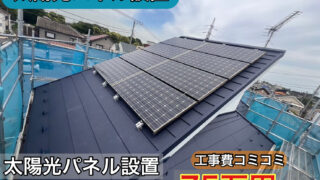
Leave the installation of solar panels in Fussa City, Tokyo to Kakeru Koumuten Co., Ltd.!
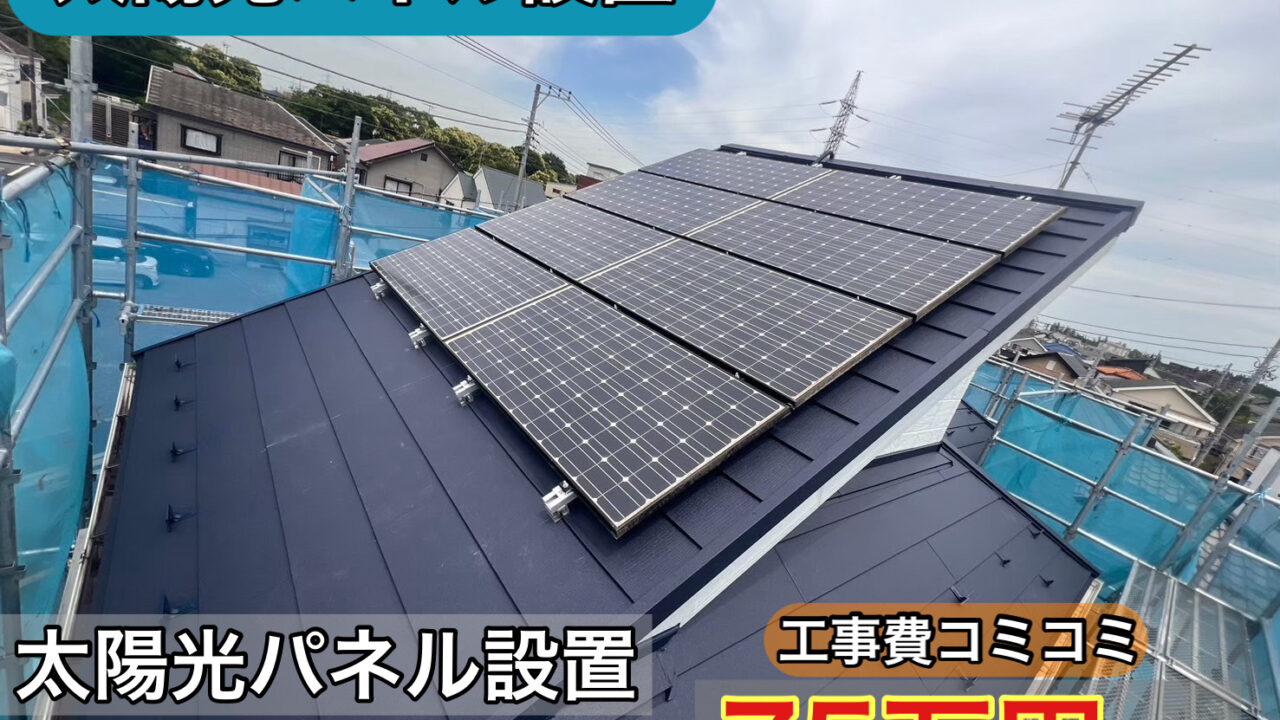
For solar panel and storage battery installation in
Fussa City, Tokyo,
Kakeru Koumuten is your trusted choice!
Kakeru Koumuten is a specialized exterior renovation company based in Aoba Ward, Yokohama City.
As a company strong in roofing work, we are entrusted withsolar panel installation and storage battery installation considering roofing and waterproofing!
“How to Choose a Solar Panel Contractor in Fussa City”
“Costs for Solar Panel and Storage Battery Installation”
“Subsidies Available for Solar System Installation in Fussa City”
We will also explain the above three points!
Installing solar panels carries risks such as“the occurrence of leaks” and other troubles.
To ensure a satisfactory solar panel installation, we recommend obtainingthree estimates!
Table of Contents (tap to open/close)
- Reasons Why Kakeru Koumuten is Chosen for Solar Panel Installation in Fussa City, Tokyo
- Roof Inspection Before Installing Solar Panels
- Subsidies and Grants That May Apply in Fussa City
- Price List for Solar Panel and Storage Battery Installation
- Breakdown of Installation Capacity, Equipment, and Construction Costs
- Self-Estimate and Profit Simulation for Solar Power Generation
- Customer Testimonials
- Case Studies of Solar Panel Installations
- How to Choose a Solar Panel Installer in Fussa City, Tokyo
- Benefits of Introducing Solar Equipment
- Points to Note When Introducing Solar Power Generation
- How to Choose Solar Panels
- Frequently Asked Questions About Solar and Storage Battery Installation in Fussa City
- If You Are Looking for a Solar Panel Installer in Fussa City, Contact Kakeru Koumuten
- Characteristics of Fussa City, Tokyo and Points for Solar Construction
- Service Area in Fussa City, Tokyo
Reasons Why Kakeru Koumuten is Chosen for Solar Panel Installation in Fussa City, Tokyo
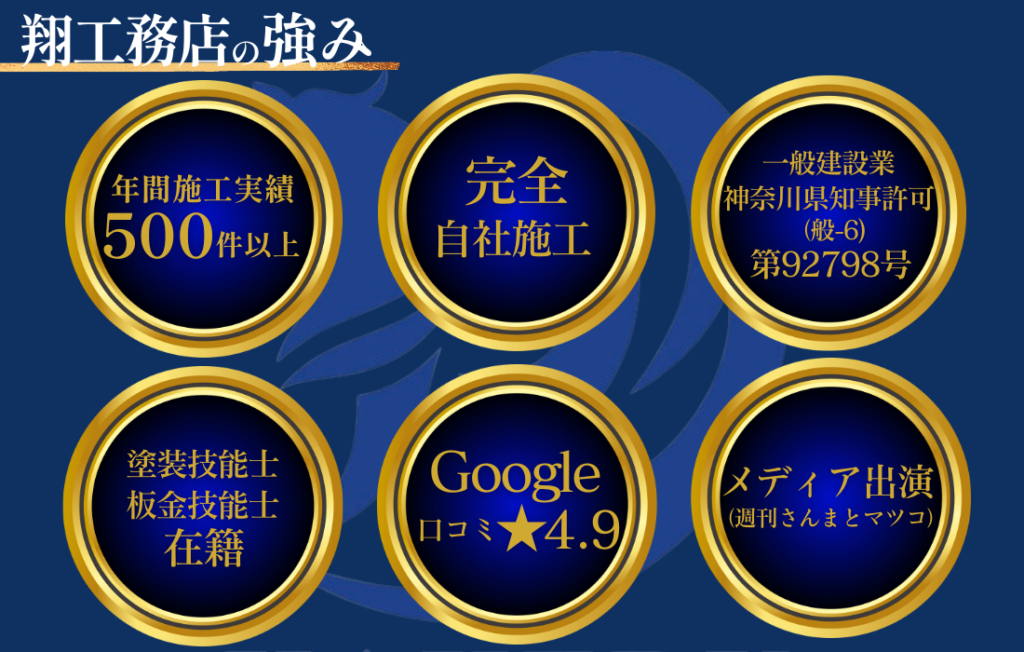
Regarding why our company is entrusted with solar panel installation by customers in Fussa City, Tokyo,
One reason is that “Kakeru Koumuten serves Kanagawa and Tokyo as its service areas.” Additionally,
“We have unique strengths in solar panel installation that cannot be imitated by other companies,” which has received high praise from many customers.
We would be grateful if you could compare our estimates with those of other companies.
Because we are confident, we welcome multiple estimates!
1. We Also Handle Exterior Renovations Aside from Solar Panel Installation!
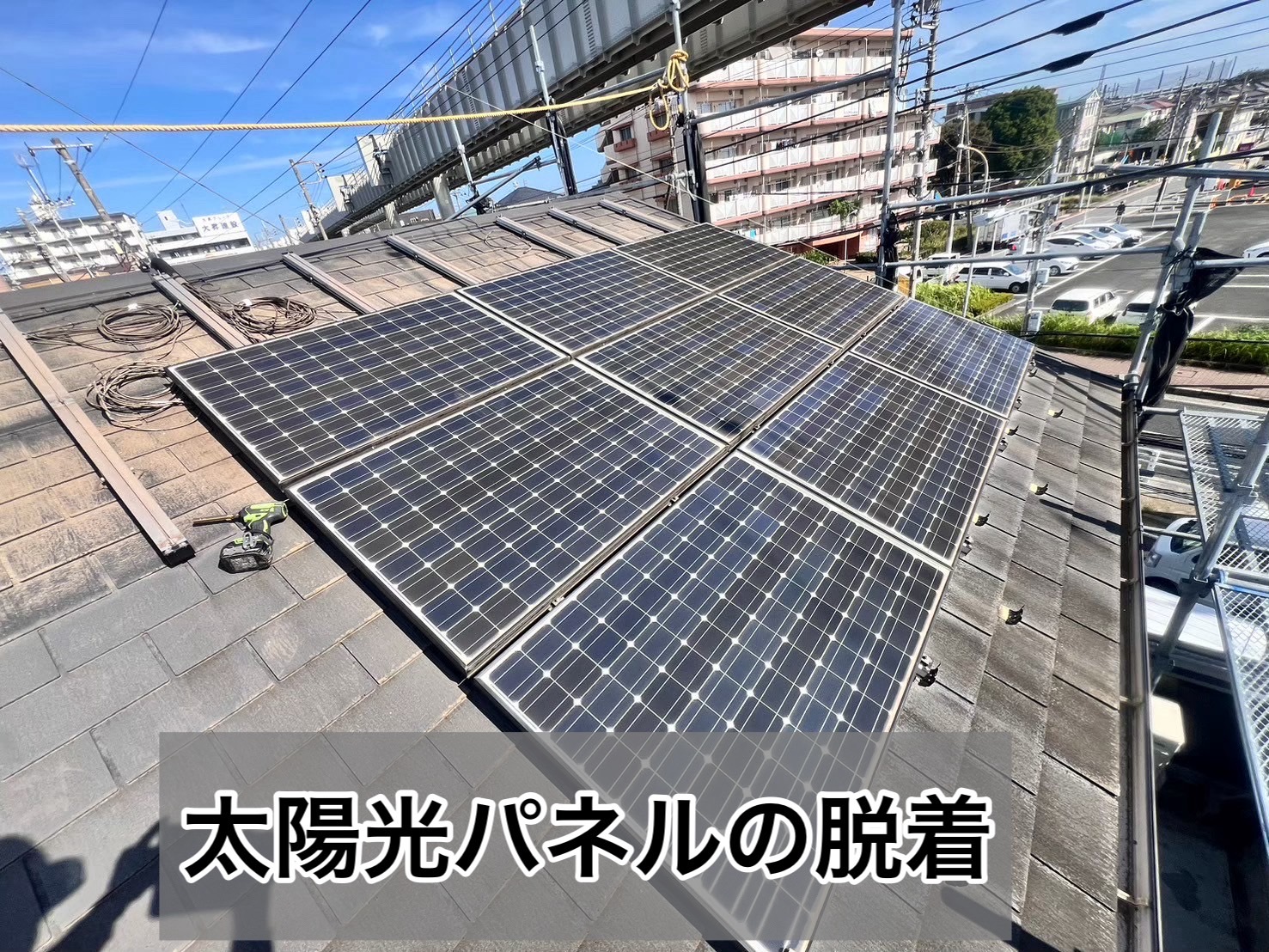
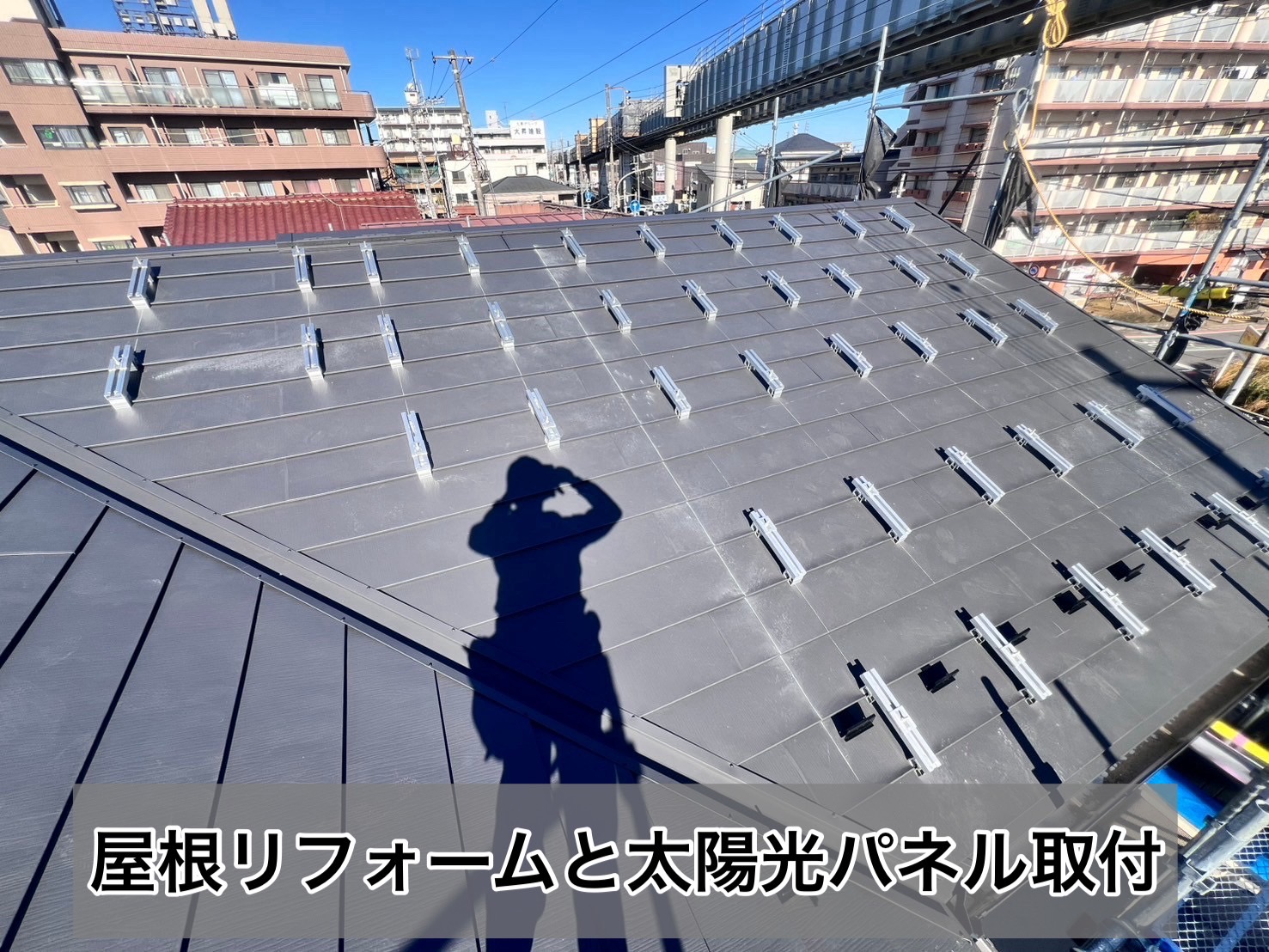
Troubles such as leaks that occur during solar panel installation may be caused by insufficient checks on the roof and waterproofing at the installation site.
Even if you are knowledgeable about solar panels, there are cases where the roof and waterproofing at the installation site are outside your expertise, so caution is necessary.
It is reassuring to have knowledge about the roof to avoid maintenance and troubles after installation!
Kakeru Koumuten Co., Ltd. is strong in roof work and can also detach and attach solar panels in-house, allowing for quick responses to maintenance and urgent troubles after solar panel installation!
2.Facilities Specialized in Exterior Renovation
Kakeru Koumuten Co., Ltd. has organized the following warehouses and material storage areas to provide solar work and exterior renovations at low cost and high quality.
We have established five bases centered in Yokohama City, Kanagawa Prefecture for material storage and showrooms.
In-house Ownership of Scaffolding Materials
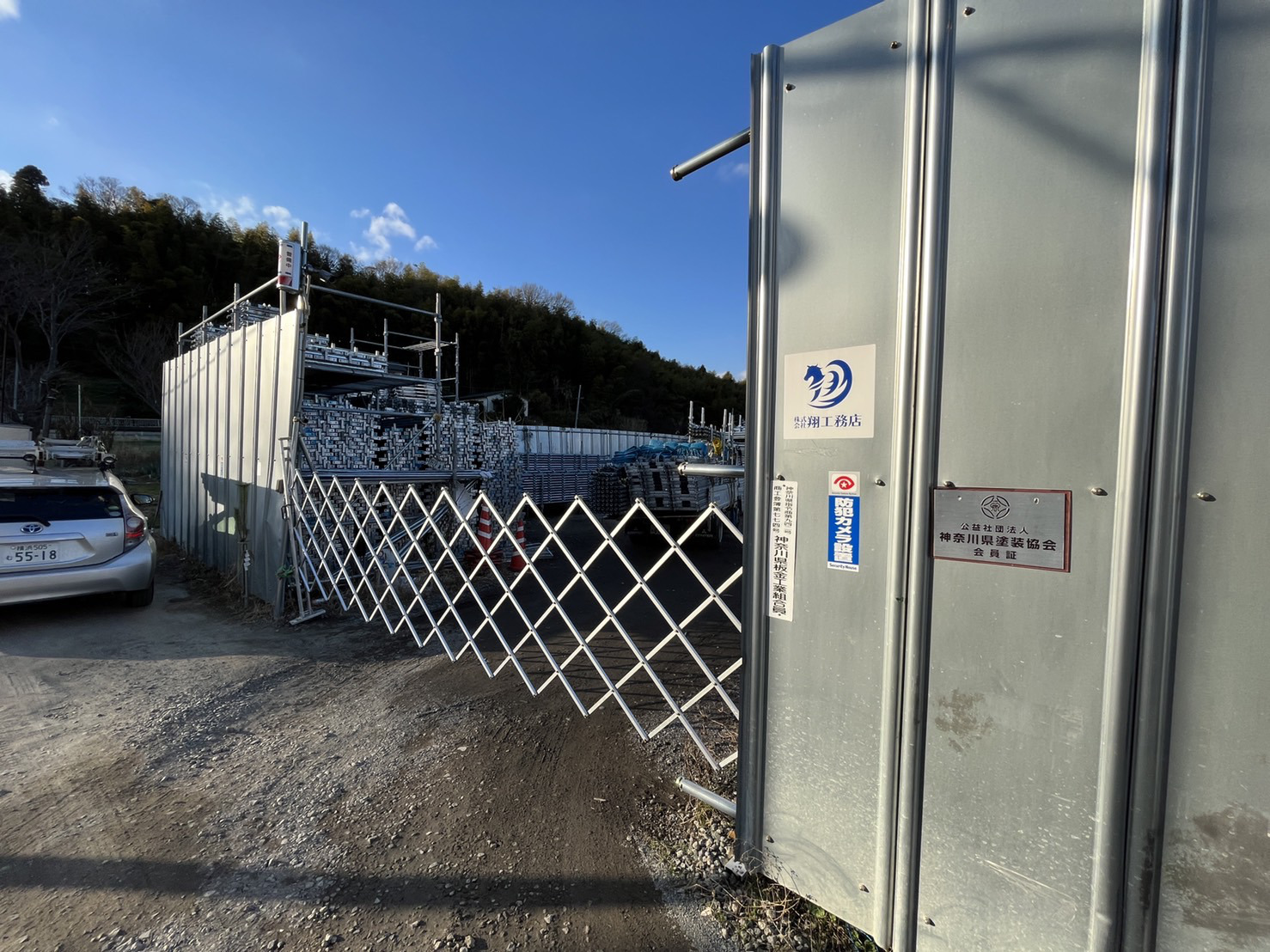
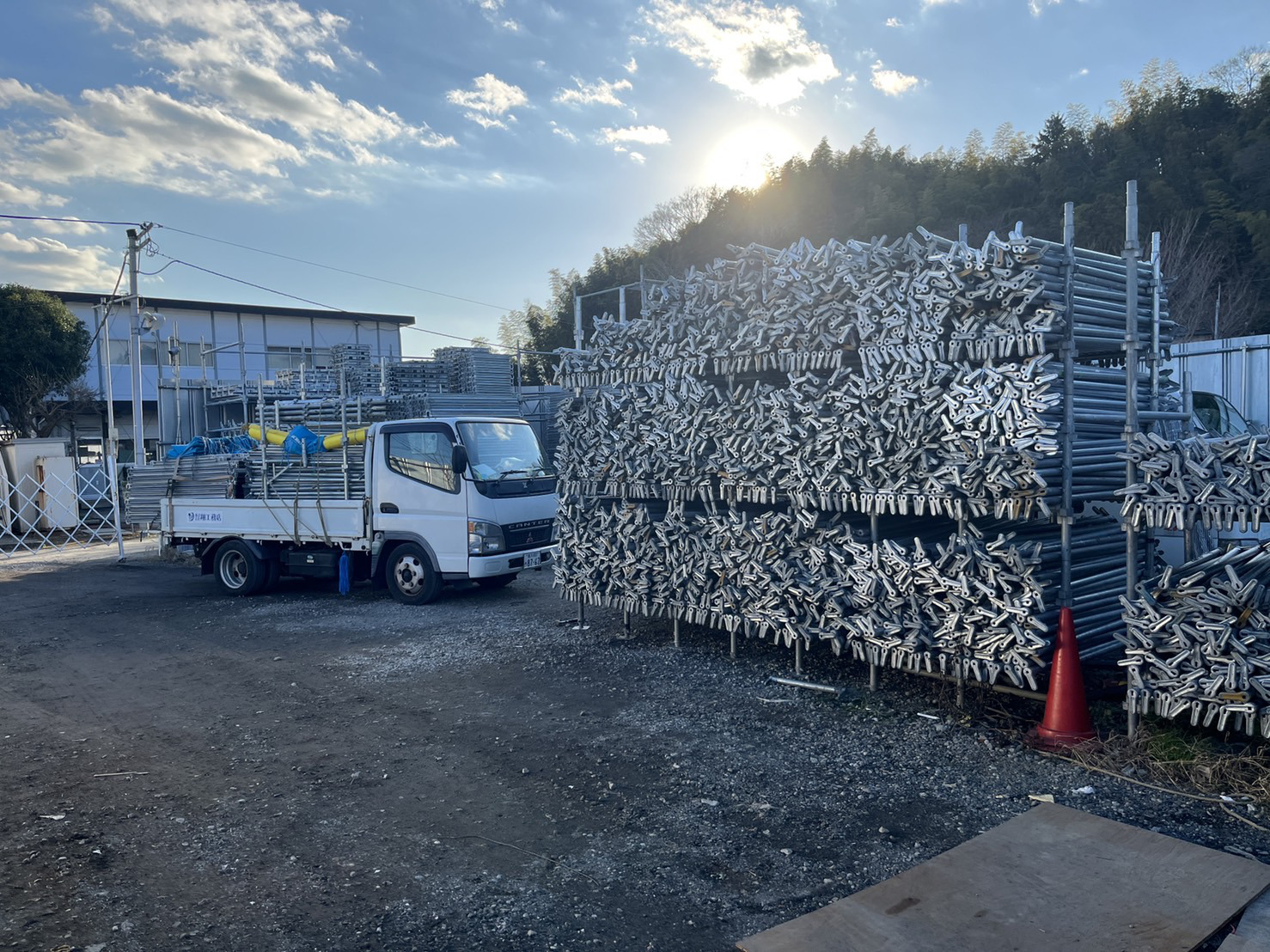
To ensure safety during work on the roof, we own the necessary scaffolding materials for temporary scaffolding based on construction conditions and can assemble scaffolding ourselves.
By performing scaffolding work with our own scaffolding team instead of outsourcing, we can also cut costs related to scaffolding work.
We have scaffolding materials for approximately 50 single-family homes!
In Fussa City, our own scaffolding team will plan the scaffolding according to the site conditions.
Storage of materials in our large warehouse
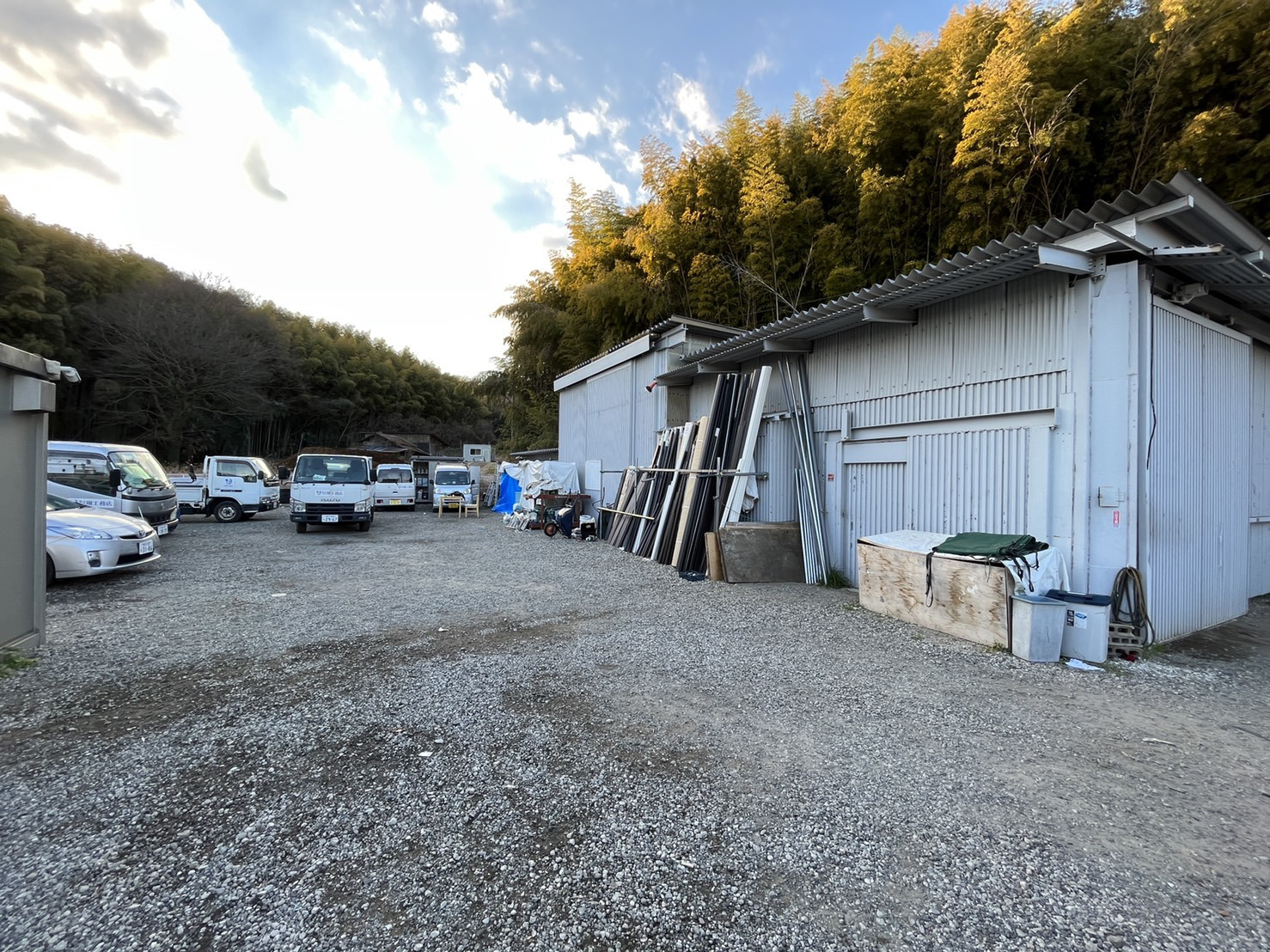
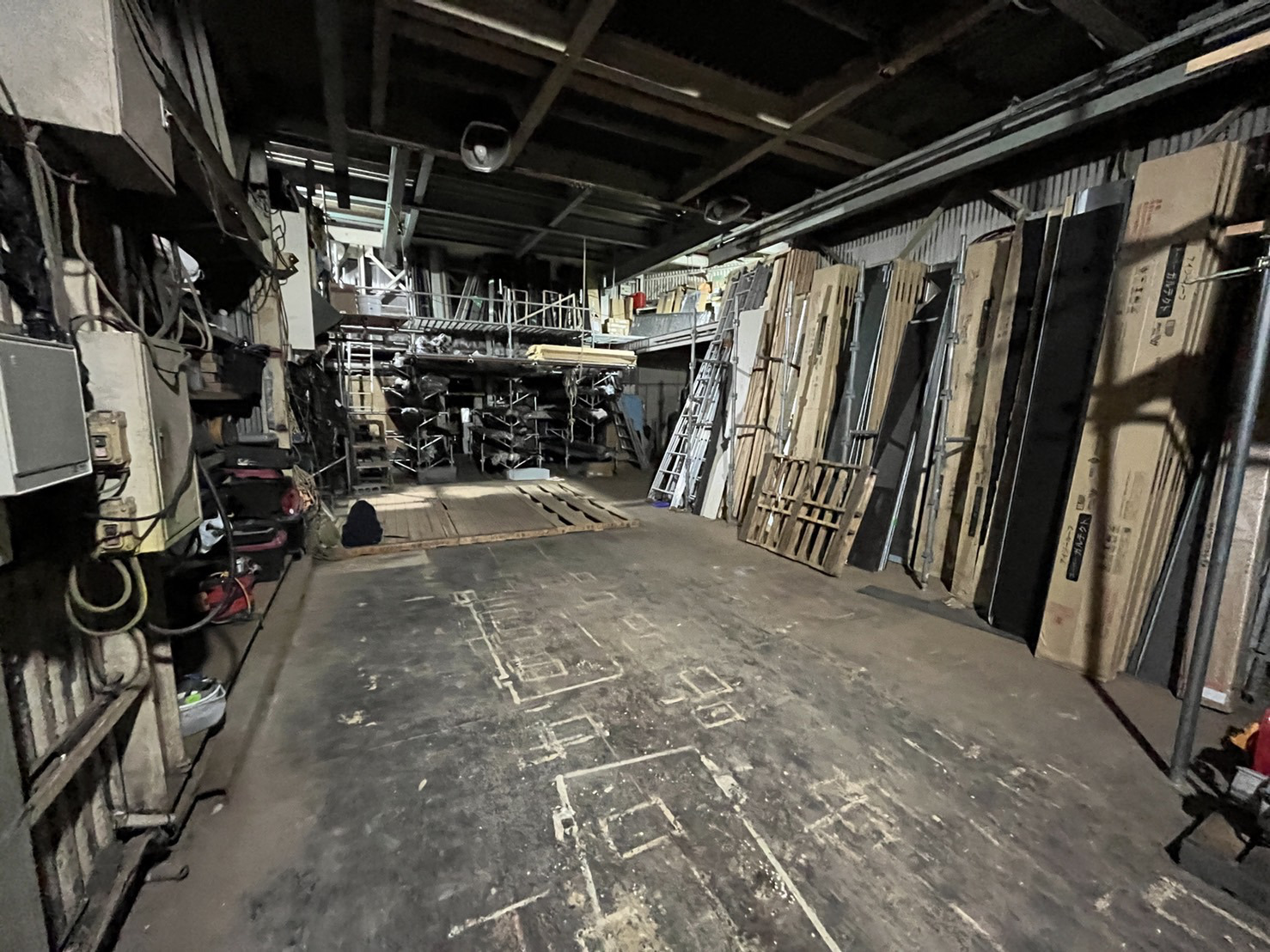
We store roofing materials and paints, and we can also store removed solar panels.
By ordering a large quantity of materials at once, we canpurchase materials at a lower cost!
Additionally, we always have a stock of roofing materials, so we can ensure aswift response in emergencies!
Sorting and transporting waste materials in-house
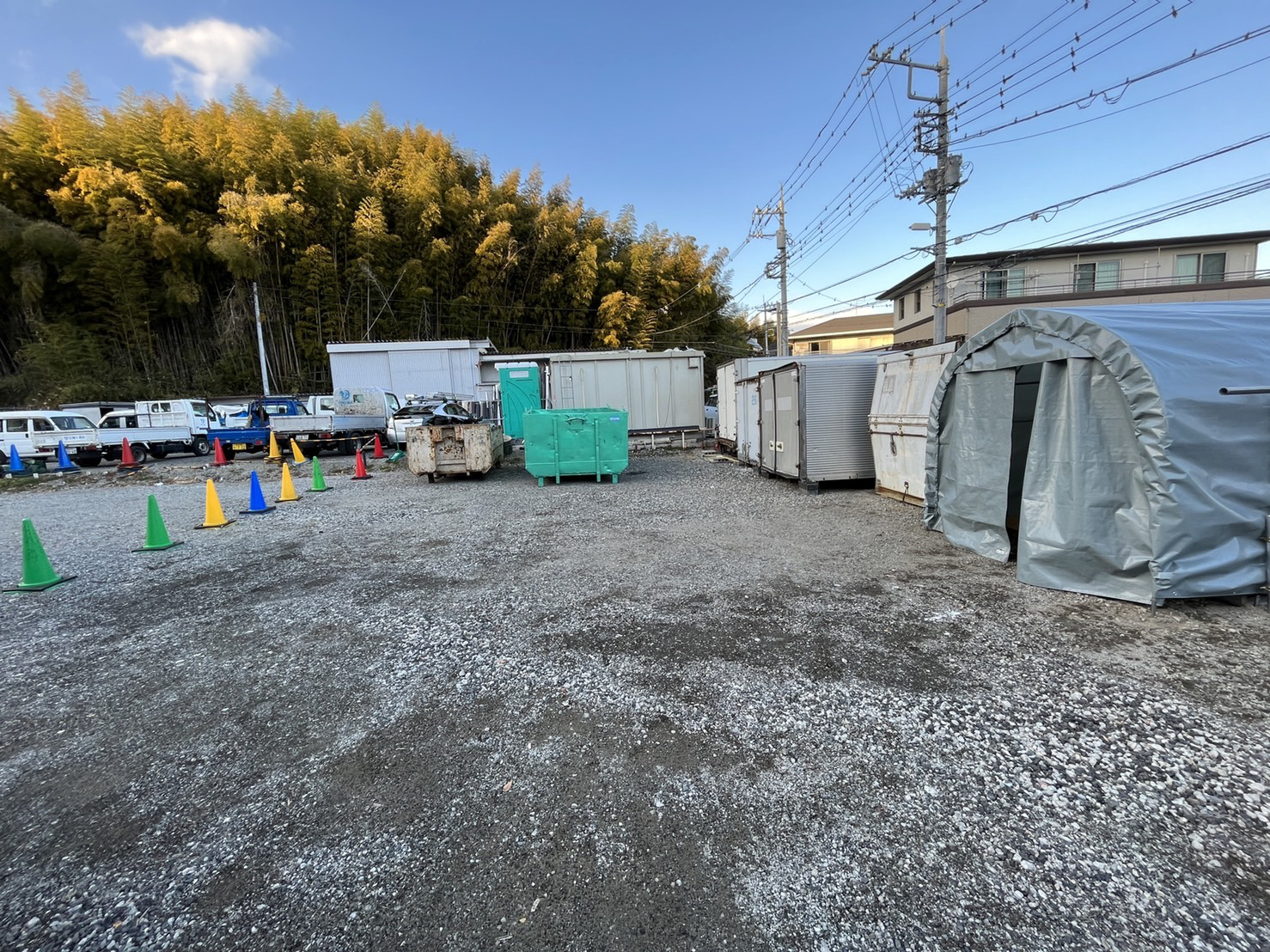 The installation of solar panels often involves roofing work, generating various waste materials such as paint, wood, and metal.
By sorting and recycling waste materials, we can significantly cut waste disposal costs.
Exterior renovation dedicated showroom
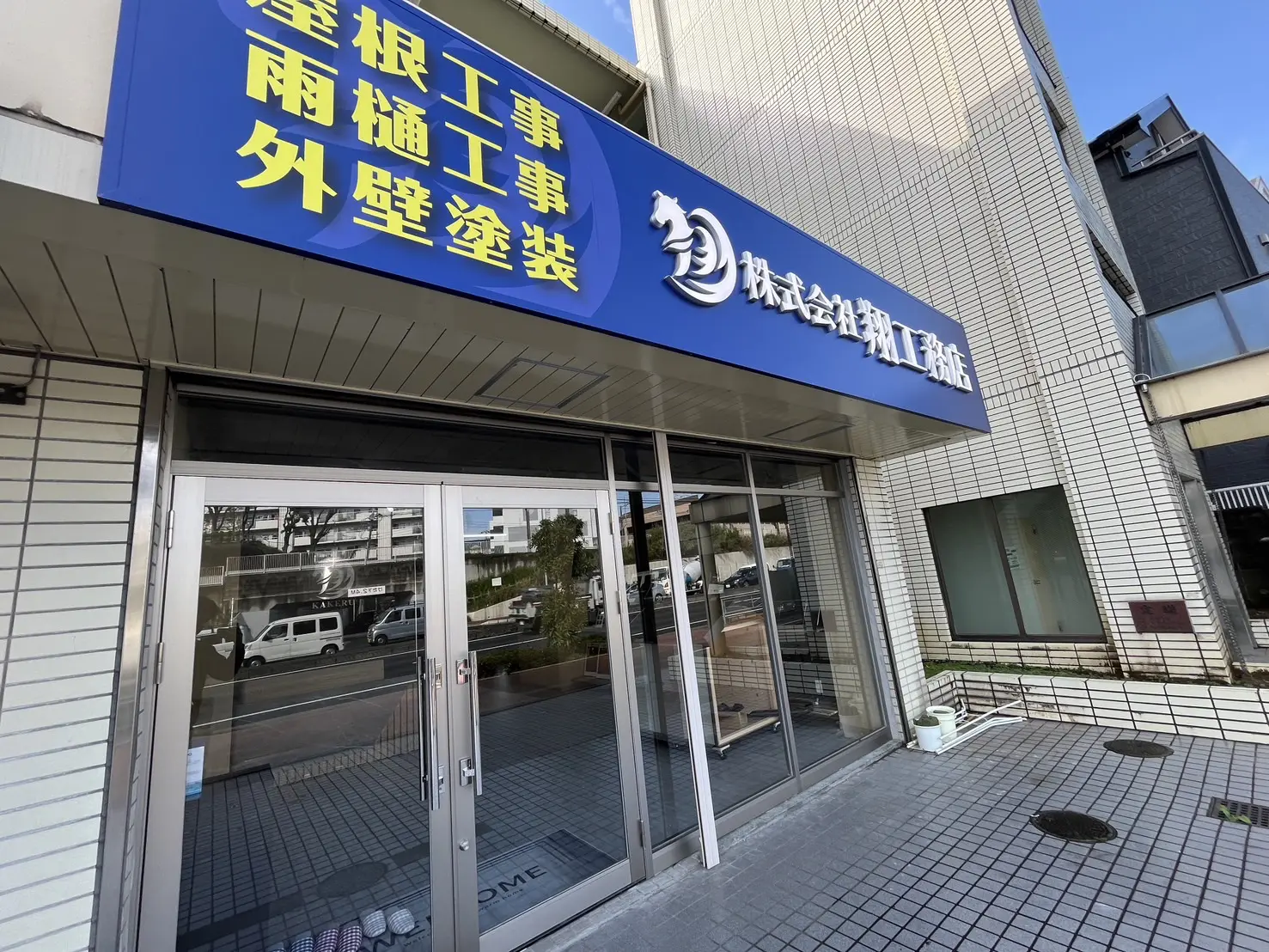

In the showroom, you can not only have meetings, but also
check the actual foundation brackets for solar panels and see how they are installed on the roofing materials!
It is also possible to simulate the revenue and installation costs when introducing solar panels!
Since roofing and exterior wall work often accompany each other, we also provide samples of roofing materials and models that show the structure, allowing for detailed explanations!
3.All Work Performed by Our Own Team

One of Kakeru Koumuten’s major strengths is all work performed by our own team.
By having a consistent system from inquiry to completion, Kakeru Koumuten can provide high-quality roof renovations at reduced costs.
Additionally, one representative will handle everything from the estimate to the completion of the work.
Since the responsible person does not change, whether it’s the sales representative or the construction management representative, smooth communication is possible.
We can perform consistent in-house work from temporary scaffolding installation to exterior wall painting and roof renovation!
4. Various Permits and Skilled Workers

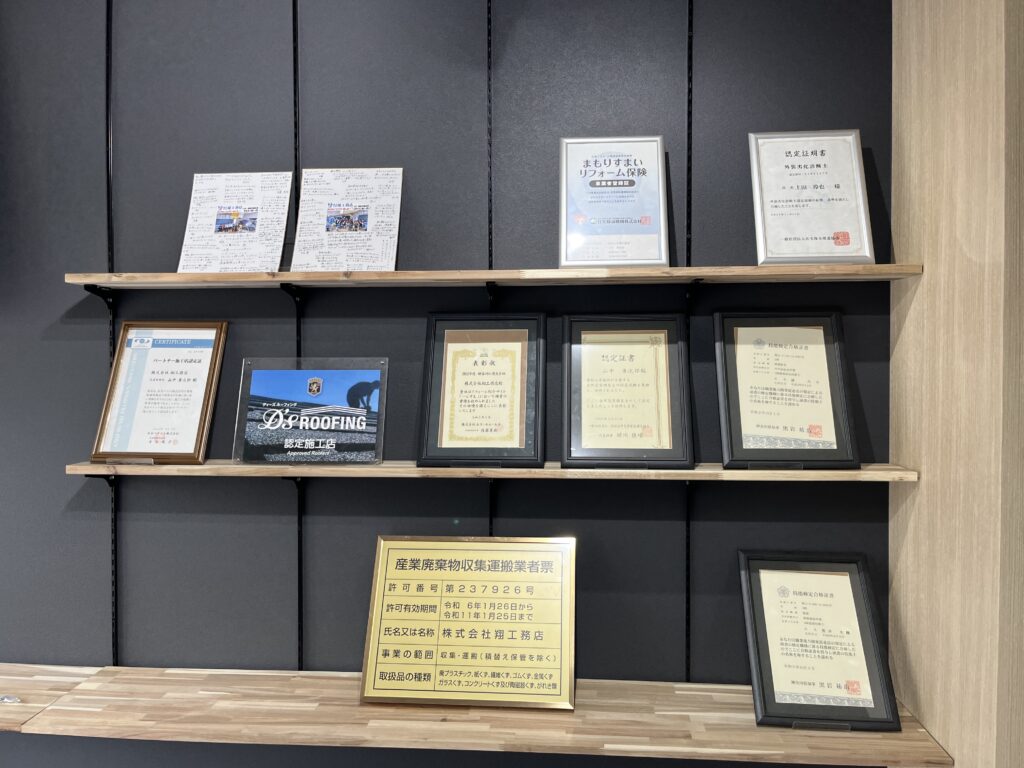
We have obtained construction industry permits and permits for industrial waste collection and transportation!
We also have nationally certified sheet metal and painting technicians, and we are confident in our construction skills.
We are capable of handling large-scale roofing work for factories and other facilities!
5. Warranty and Aftercare
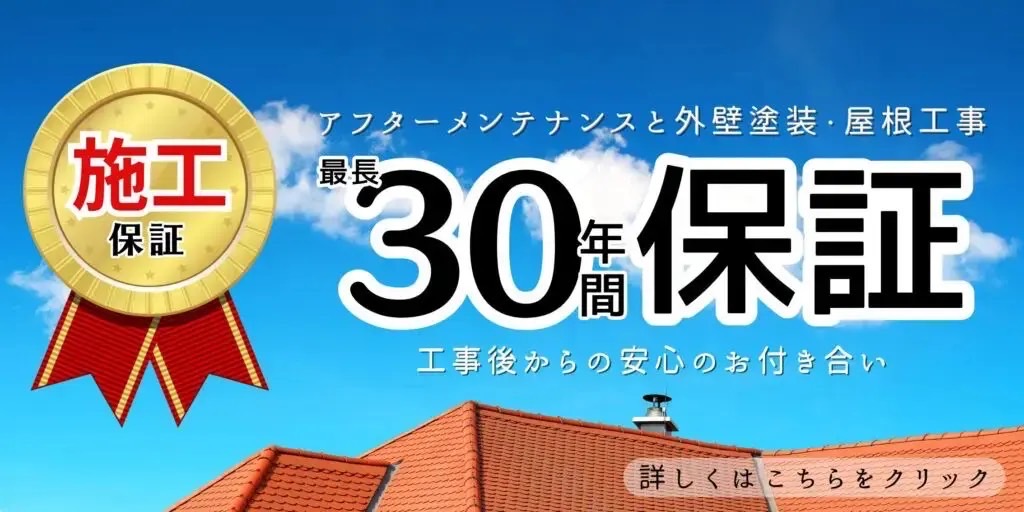
In addition to the manufacturer’s warranty, our solar panel installation work comes with our own workmanship warranty (leakage warranty)!
(The workmanship warranty for solar panel installation is 10 years. Depending on the condition of the roof before installation, we may not be able to provide a warranty unless roof renovation is performed. The workmanship warranty is separate from the manufacturer’s product warranty, and the scope and conditions vary depending on the warranty details.)
Aftercare maintenance is available annually, and we send out notification DM every year.
If you have any questions about the warranty, please click on the image above!

6. Flexible and Prompt Response
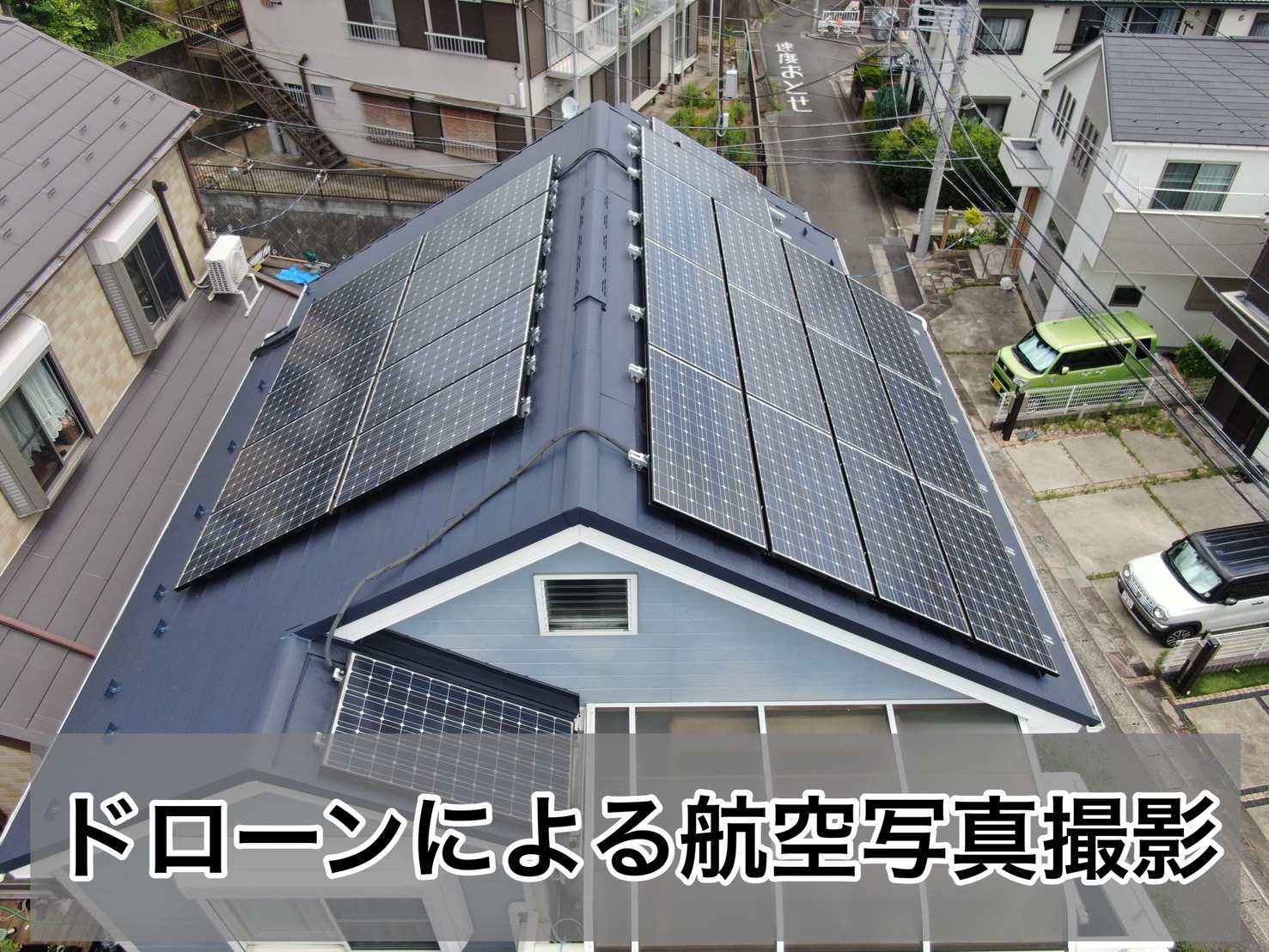
We are equipped to handle various roof troubles and situations.
If you cannot access the roof from a height, we can respond using a drone!
During leakage investigations, we can also conduct inspections using a thermal imaging camera.
If the power generation of the solar panels decreases due to dirt, we can also provide cleaning with a specialized brush.
We will respond according to your preferences.
7. Human Resource Development
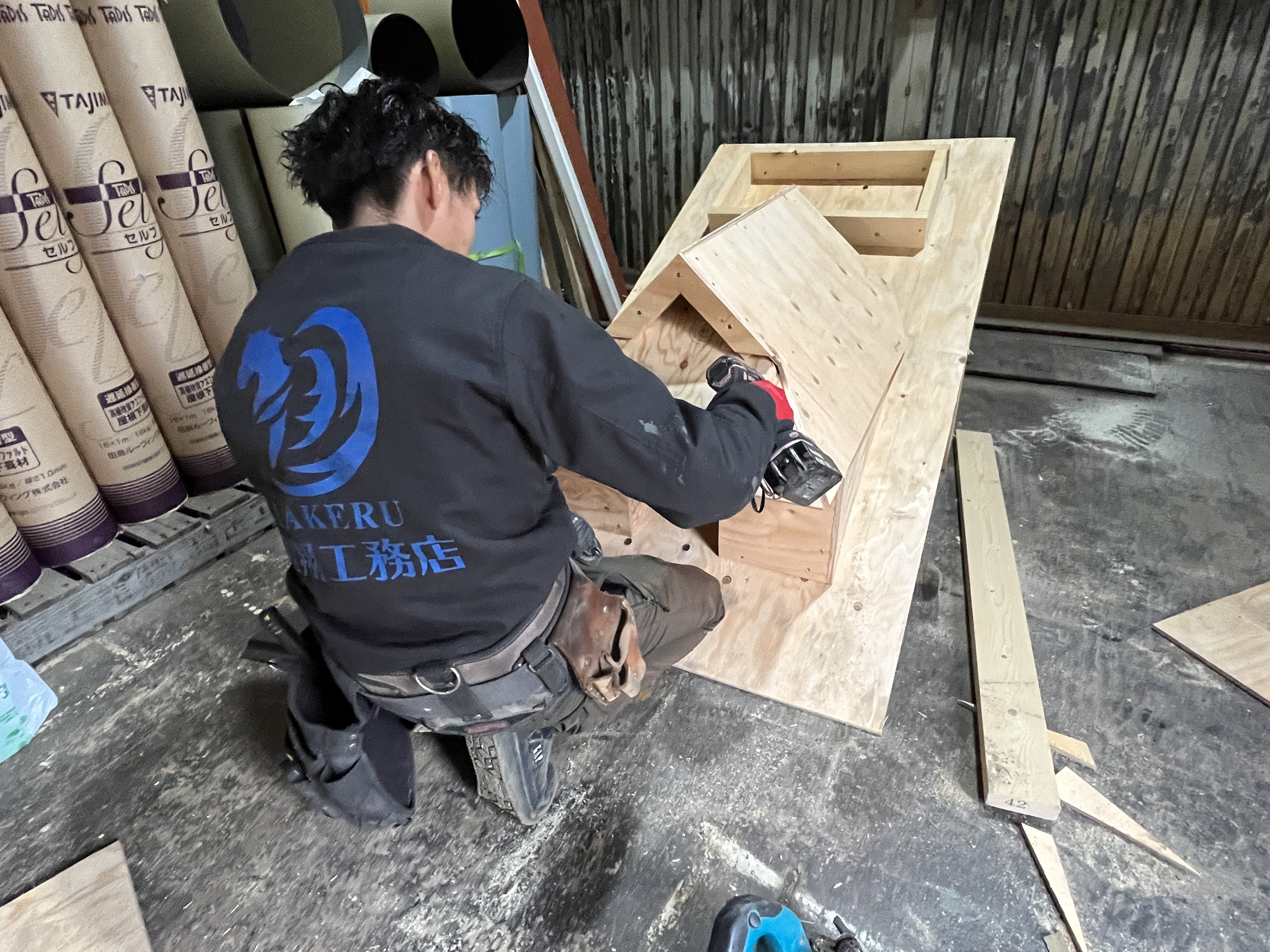
We create various roof models to conduct practical training for skill enhancement.
Since the construction methods vary depending on the shape and slope of the roof, we regularly conduct technical training to ensure that each staff member can handle various scenarios.
8. Creation of Clear Materials and Simulations
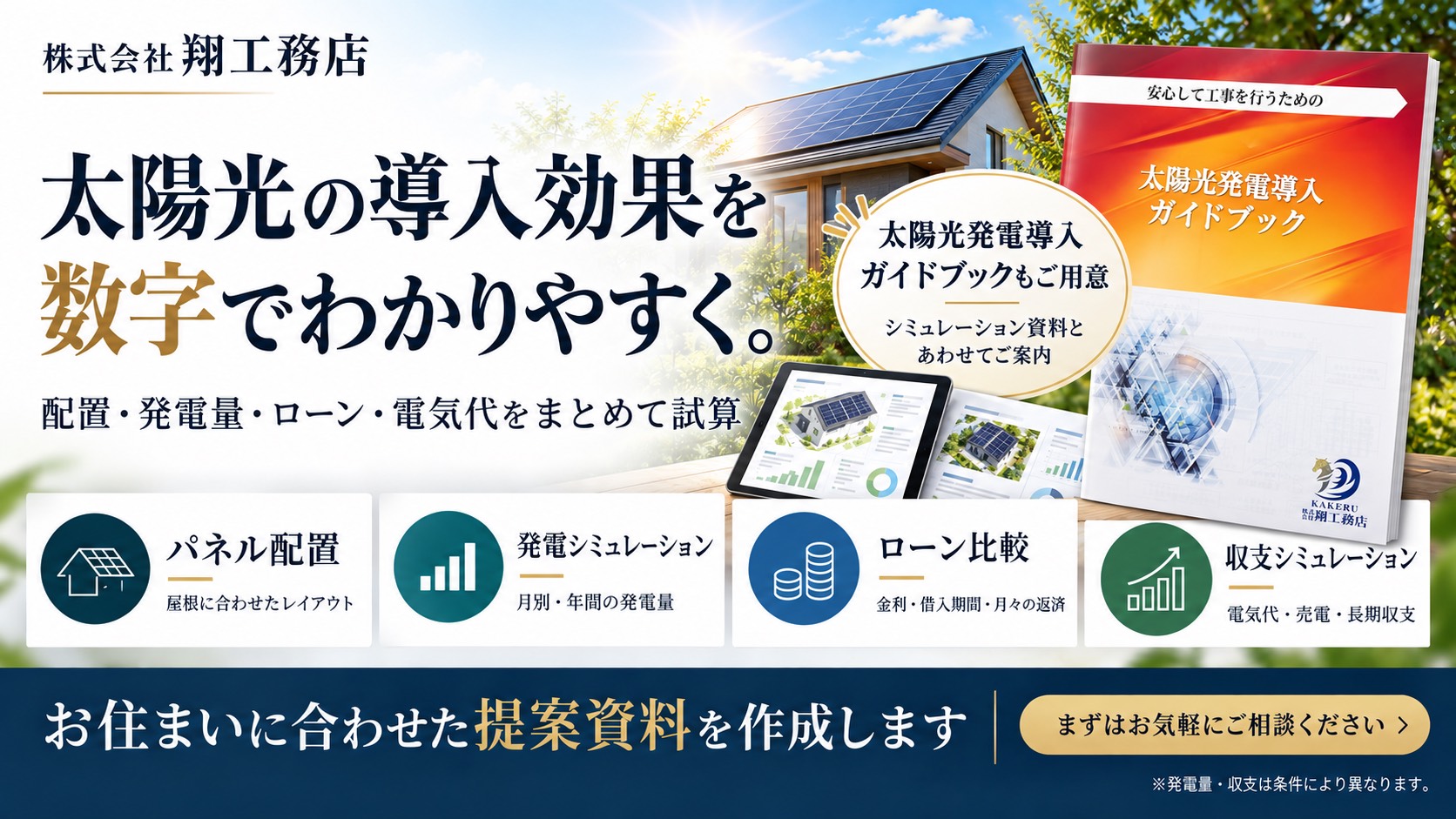
At Kakeru Koumuten Co., Ltd., in addition to “estimates”, “layout diagrams”, and “power generation simulations”, we also provide a “solar installation guidebook” and a “financial simulation” that takes into account loan interest rates and electricity costs.
The financial simulation can project cumulative income and expenses over 20 to 30 years.
For customers who are not familiar with solar installations, we compile easy-to-understand materials that include important points and potential drawbacks!
We encourage you to obtain comparative estimates and review plans from other companies!
Roof Inspection Before Installing Solar Panels
Once solar panels are installed, they will remain on the roof for 20 to 30 years.
Confirming “whether it is okay to install them directly on the current roof” before installation is the key point to prevent leaks and unnecessary expenses!
Kakeru Koumuten, specializing in roofing, has summarized the items to check before installation.
| 1. Type of roofing material and age | The method of securing varies depending on the roofing material, such as slate, tiles, metal roofs, or flat roofs (roof waterproofing). If the remaining lifespan of the roofing material is short, we may suggest a roof renovation first. |
| 2. Condition of the substrate and waterproof sheet | If the sheathing or roofing (waterproof sheet) beneath the roofing material is damaged, it can affect the fastening strength and waterproofing. We will also check for signs of leaks. |
| 3. Orientation, slope, and shadows of the roof | The orientation and slope of the roof surface, as well as shadows from neighboring houses, trees, and utility poles, can affect power generation. We will create a layout diagram from the drawings and the site, and you can confirm it with the power generation simulation. |
| 4. Shape of the roof and installable area | The number of panels (installation capacity) that can be placed depends on the shape and size of the roof. The number of panels that can be installed varies by panel size, so we will compare based on the total output of the roof. |
| 5. Fixing method and waterproofing details | We will confirm whether the method involves drilling holes in the roofing material or securing it with brackets. The fixing method varies by technique, so please check the waterproofing treatment of the fixed parts during the estimate. |
| 6. Weight of the roof | The roof will become heavier due to the panels. After investigating the existing roof, substrate, and load-bearing capacity, replacing with lighter roofing materials may also be an option if necessary. |
| 7. Location of equipment installation and wiring | We will check the installation locations for the power conditioner and storage batteries, as well as the wiring route to the distribution board. The length of the wiring will also affect costs. |
Fixing Methods and Checkpoints by Roofing Material
| Roof Material | Main Fixing Method | Pre-Installation Check Points |
|---|---|---|
| Slate Roof | Varies by method (e.g., fixing brackets to roof material and substrate with screws) | Waterproof treatment of fixing parts, cracks or deterioration of slate, condition of the substrate. If deterioration is advanced, consider roof overlay (cover method) or replacement first. |
| Tile Roof | Fixed with brackets and methods suited to the type of tile (even methods that do not drill holes in the tiles will fix to the substrate) | Type and condition of tiles, substrate, load-bearing capacity. Depending on the investigation results, there may be methods to replace with lightweight roofing materials before installation. |
| Metal Roof (Horizontal/Vertical) | Fixed with catch-type brackets that grip the roof material (depends on the combination of roof material and brackets) | Whether the roof material and brackets are compatible, installation conditions from the roof material manufacturer. If compatible, methods that do not drill holes may be available. |
| Flat Roof/ Rooftop | Fixed by installing a frame | Type and deterioration status of the waterproof layer, waterproofing around the frame. Consider in conjunction with the timing of waterproofing work. |
If you renovate your roof 10 to 20 years after installation, there will be additional costs for removing and reinstalling solar panels. If the roof is deteriorating, renovating to high-durability roofing materials before installation may help reduce costs in the long run.
Kakeru Koumuten Co., Ltd. specializes in roofing work and can also handle the removal and reinstallation of solar panels in-house, so please consult us according to the condition of your roof!
▶ Click here for roof renovations in Fussa City, Tokyo
PossibleSubsidies and Grants in Fussa City, Tokyo
If you are introducing solar panels or storage batteries in Fussa City, Tokyo, there is a possibility that “national” and “Tokyo” programs may apply.
The following information is based on the official pages of each program as of October 7, 2026. The application status may change based on budget and recruitment periods, so please check the latest information before contracting or starting work.
Eligibility Conditions and Application Timing for Subsidy Programs
| Program | Main Eligibility Conditions | Subsidy Amount | Application Period & Status |
|---|---|---|---|
| Tokyo “Reiwa 8 Year Household Solar Power Generation Promotion Project” (Cool Net Tokyo) | New installation of certified solar modules on residential properties or their premises in Tokyo, with systems under 50kW. Pre-application before installation is required. | Existing homes: 150,000 JPY/kW for up to 3.75kW (maximum 450,000 JPY), 120,000 JPY/kW for over 3.75kW New homes: 120,000 JPY/kW for up to 3.6kW (maximum 360,000 JPY), 100,000 JPY/kW for over 3.6kW (Additional costs for mounting frames, waterproofing work, and renovation defect insurance, etc.) |
Pre-application: From May 29, 2026 Grant application and performance report: From June 30, 2026 to March 30, 2029 |
| Tokyo “Reiwa 8 Year Household Storage Battery Promotion Project” (Cool Net Tokyo) | New installation of storage batteries in residential properties in Tokyo, with SII registered devices. This project is intended for simultaneous installation with solar power, but applications can be made for storage batteries alone. Pre-applications after October 1, 2026 will only be eligible for SII registered products for Reiwa 8. | Storage battery package: 100,000 JPY/kWh (maximum 1,200,000 JPY per household) Additional storage battery unit installation: 60,000 JPY/kWh (maximum 720,000 JPY per household) (Additional incentives for participating in DR demonstrations, etc.) |
Pre-application: From May 29, 2026 Grant application and performance report: From June 30, 2026 |
| Fussa City “Housing Energy Saving and Barrier-Free Housing Renovation Subsidy Project” (Fussa City Chamber of Commerce) | Renovation work for energy saving and barrier-free improvements in residential properties where Fussa City residents live is eligible. Requests must be made to registered contractors who are members of the Fussa City Chamber of Commerce, and applications are required before and after the completion of the work. It is not specified whether solar power generation or storage batteries are eligible. | Energy-saving and barrier-free work: 20% of construction costs (maximum 200,000 JPY) Residential renovation work: 10% of construction costs (maximum 100,000 JPY) |
Applications for the first, second, and third rounds of Reiwa 8 are all indicated as “Applications have closed.” (Currently, applications cannot be made.) |
| National “DR Household Storage Battery Project” (Reiwa 7 Year Supplement) | New installation of household storage systems that can be utilized for DR (demand response) with registered products. | Calculated based on an initial effective capacity of 34,500 JPY per kWh (subsidy rate within 3/10; maximum 600,000 JPY per application) | The budget was reached on May 29, 2026, and the public recruitment has ended. (Currently, applications cannot be made.) |
| National “Mirai Eco Housing 2026 Project” (Renovation) | Storage batteries are one of the eligible facilities, but they must be combined with essential works such as insulation renovation of windows (openings) and the building structure; applications cannot be made for the installation of storage batteries alone. Solar panels are not included as eligible facilities. | Storage battery: 96,000 JPY per household | Ends when the budget limit is reached. Please check the official website for the application status. |
In Tokyo, a pre-application before installation is required for subsidies, and starting construction beforehand may result in ineligibility. You must meet the necessary conditions and requirements for the eligible equipment, and applying does not guarantee approval. The housing renovation subsidy program in Fussa City (City Chamber of Commerce) has completed all applications for the fiscal year Reiwa 8. Procedures differ by program, so please confirm before contracting or starting construction.
Kakeru Koumuten Co., Ltd. will guide you on eligibility after confirming the conditions for each program.
Tokyo “Reiwa 8 Fiscal Year Household Solar Power Generation Promotion Project”
Tokyo is providing subsidies for those installing solar power generation systems in residential homes through Cool Net Tokyo. The eligible systems are those using certified solar modules installed newly in residential homes or on their premises, with a capacity of less than 50kW. A pre-application before installation is required.
For existing homes, the subsidy amount is 150,000 JPY/kW for systems up to 3.75kW (maximum 450,000 JPY), and 120,000 JPY/kW for systems exceeding 3.75kW. Additionally, there are supplementary items for installation frames, waterproofing work, and renovation defect insurance. The pre-application period is from May 29, 2026, and the application for grants and performance reports is from June 30, 2026, to March 30, 2029. Please check the official page for details on eligible equipment, conditions, and budget status.
👉 Cool Net Tokyo | Official page for solar power generation is here
Tokyo “Reiwa 8 Fiscal Year Household Storage Battery Promotion Project”
Tokyo is also providing subsidies for newly installed storage batteries in residential homes. The subsidy amount is 100,000 JPY per kWh for storage battery packages (maximum 1,200,000 JPY per household), and 60,000 JPY per kWh for additional storage battery units (maximum 720,000 JPY per household), with additional amounts for participation in DR demonstrations.
The eligible equipment must be registered with SII (Environmental Collaboration Initiative). If applying after October 1, 2026, only equipment listed in the Reiwa 8 fiscal year SII registered products will be eligible. This program is intended for simultaneous installation with solar power, but applications can be made for storage batteries alone. The application for grants and performance reports has been open since June 30, 2026.
👉 Cool Net Tokyo | Official page for storage batteries is here
Fussa City “Housing Energy Conservation & Barrier-Free Renovation Subsidy Project”
On the Fussa City climate change countermeasures page, it is announced that the previous housing energy conservation and new energy equipment subsidy has transitioned to the “Housing Energy Conservation & Barrier-Free Renovation Subsidy Project” by the Fussa City Chamber of Commerce since the fiscal year Heisei 26. The subsidy amount is 20% of the construction cost (maximum 200,000 JPY) for energy conservation and barrier-free construction, and 10% of the construction cost (maximum 100,000 JPY) for housing renovation work. For the fiscal year Reiwa 8, all first, second, and third rounds of applications are announced as “applications have ended” (as of October 7, 2026).
The target is construction work carried out on residences where Fussa City residents live, and it is necessary to request a registered contractor who is a member of the Fussa City Chamber of Commerce. The process involves submitting application documents both before and after the construction is completed. The information page does not specify whether solar panels and storage batteries are included in the eligible construction work. Please check the official page and window of the Fussa City Chamber of Commerce for the availability of the program and eligible construction work in the following years.
👉 Fussa City Chamber of Commerce | For information on housing renovation subsidy projects, click here
Solar Panel Installation & Storage Battery Installation Price List
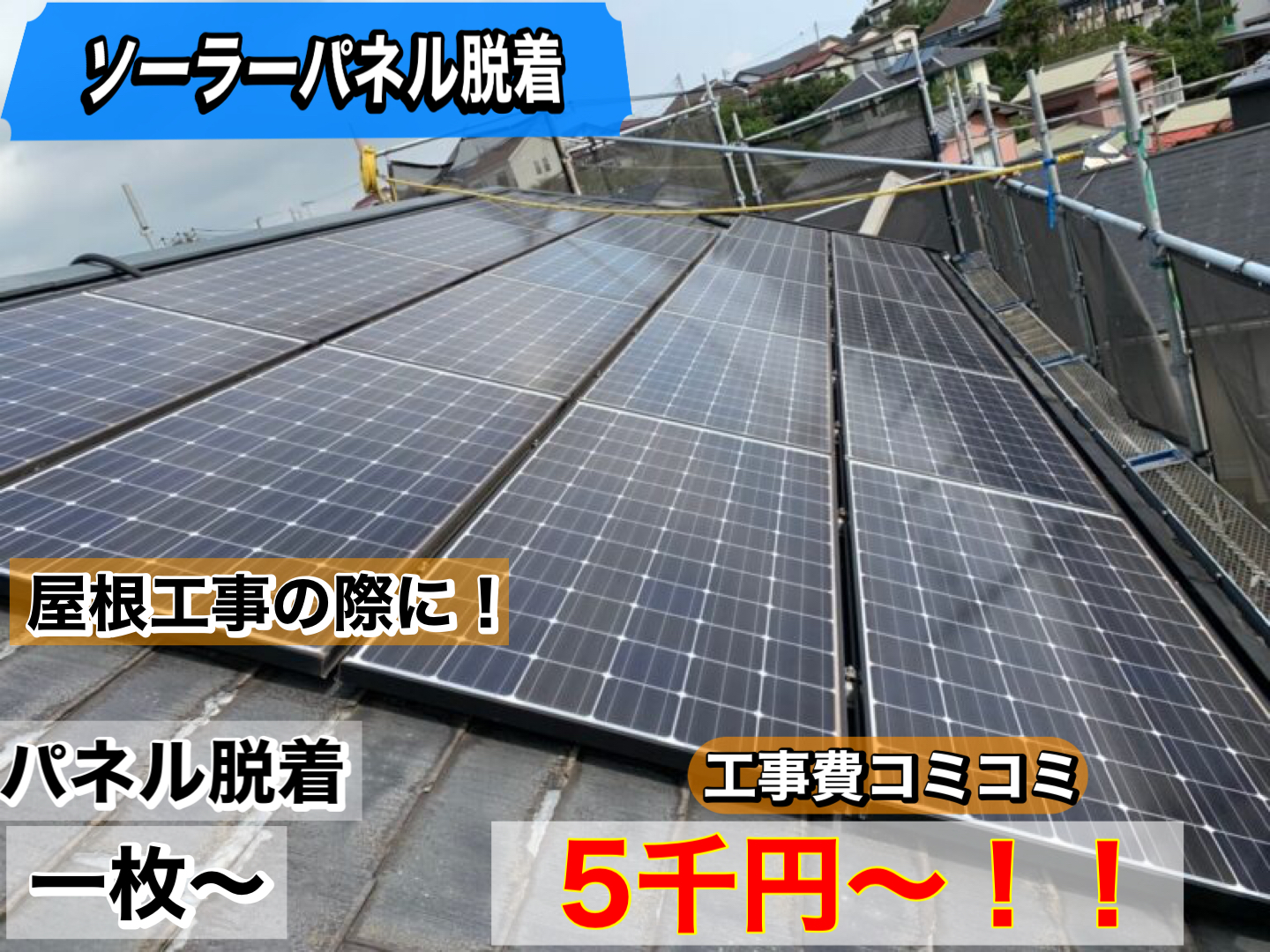
⇧Service Menu | For costs related to solar panel removal and water heater removal, click here
Installation Capacity and Breakdown of Equipment & Construction Costs
The costs for solar panels and storage batteries should be confirmed by separating them into “Equipment Costs (Device Costs)” and “Construction Costs.”
Even for the same “Complete Solar Panel Installation,” the amount can vary significantly depending on the installation capacity, equipment grade, and roof condition.
Considerations for Installation Capacity (kW) and Battery Capacity (kWh)
The installation capacity of solar panels is determined by “Output of one panel (W) × Number of panels”, with the unit being kW (kilowatts). The battery is compared in terms of the amount of electricity it can store, represented in kWh (kilowatt-hours).
The amount of kW that can be installed on a roof varies for each house depending on the shape, orientation, and size of the roof. At Kakeru Koumuten, we create a layout diagram based on the blueprints and on-site inspection to present the installation capacity.
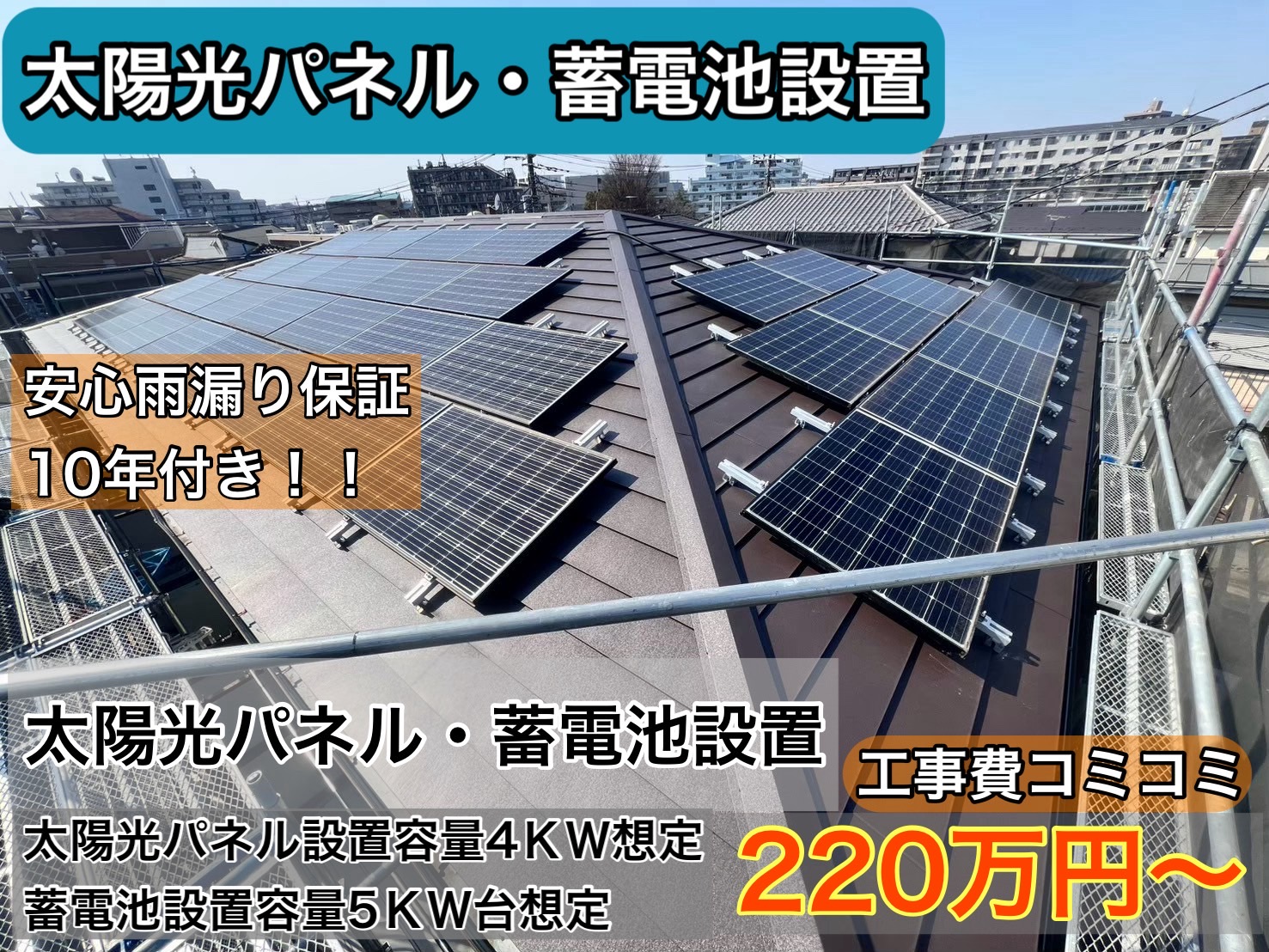
On our pricing page, we list solar panels as approximately 800,000 JPY to 1,200,000 JPY for 3 to 5 kW, and 1,200,000 JPY to 1,900,000 JPY for 6 to 10 kW. (These are just rough estimates and may vary based on wiring length, scaffolding area, existing roofing materials, panel layout, etc.)
▶ Installation Menu | Costs for Solar Panel Installation and Battery Installation
Items to Check in the Quotation (Cost Confirmation)
When comparing prices in competitive quotes, it is common to compare different capacities and equipment. Please check if the following items are clearly stated in each company’s quotation!
| 1. Solar Panels | Manufacturer, model number, output of one panel (W), number of panels, total installation capacity (kW) are listed. |
| 2. Power Conditioner | Manufacturer, model number, capacity, number of units, installation location (indoor/outdoor). Also confirm if it is a type that controls the battery as a unit. |
| 3. Battery | Manufacturer, model number, capacity (kWh), range of use during power outages (whole house or specific circuits), installation location. |
| 4. Mounting Frame and Hardware | Name of the hardware suitable for the roofing material and the method of securing it (whether it involves drilling holes or clamping). |
| 5. Wiring and Electrical Work | Wiring route and length, work around the distribution board, presence of a monitor to check power generation. |
| 6. Roof Reinforcement and Waterproofing | Details of waterproofing treatment for fixed parts, whether necessary roof repairs and substrate reinforcements are included. |
| 7. Applications | Extent of support for applications to the power company, certification applications for selling electricity (FIT), and subsidy applications. |
| 8. Scaffolding | Scope and quantity of scaffolding. If roof work and exterior painting are done simultaneously, confirm that the same scope and quantity are not double-counted. |
| 9. Removal and Disposal | Whether the removal of existing solar thermal water heaters or old panels and disposal costs for waste materials are included. |
| 10. Tax Classification and Warranty | Whether prices are tax-inclusive or exclusive, conditions under which additional costs may arise, details and duration of manufacturer and workmanship warranties. |
If the capacity differs, both the price and the power generation will change. Kakeru Koumuten Co., Ltd. welcome comparisons, so if you bring estimates from other companies, we will explain the differences item by item!
Self-Estimate and Profit Simulation for Solar Power Generation
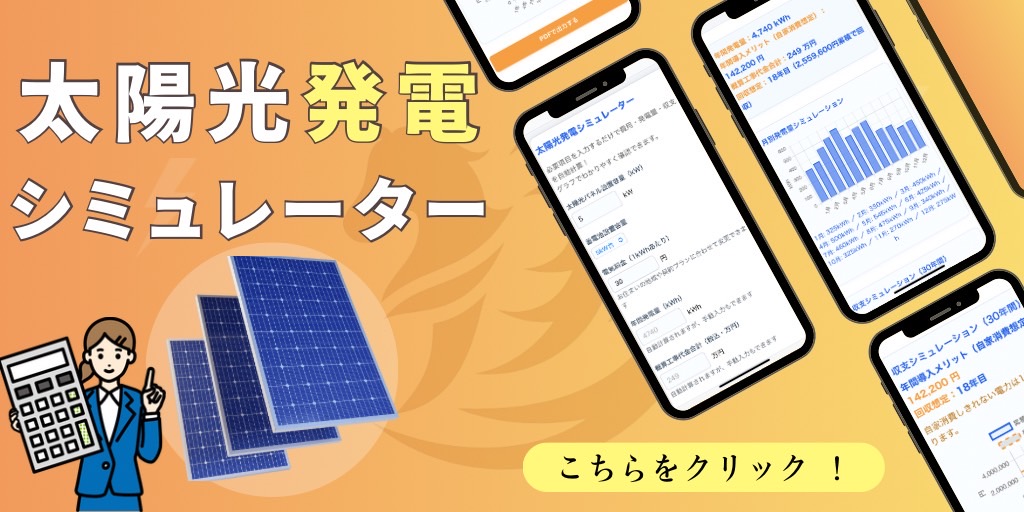
With the simulator above,
you can obtain an approximate estimate and a profit simulation for up to 30 years!
If you know the total installation capacity of the solar panels on the roof and the capacity of the storage battery, you can get an approximate estimate and profit simulation!
*The simulation results are approximate. Actual profits may vary based on assumptions such as electricity rates, self-consumption ratios, selling prices, and costs for equipment inspection or replacement.
Customer Voices
-
customer reviews
Asao-ku, Kawasaki City | We received reviews about the ridge cap and rain gutter replacement work!
-
customer reviews
Kohoku-ku, Yokohama | We received reviews about the roof overlay (cover method)!
-
customer reviews
Kohoku-ku, Yokohama | We Received Reviews About Exterior Painting!
-
customer reviews
Hodogaya-ku, Yokohama | We received reviews about our exterior fence construction!
-
customer reviews
Tsurumi-ku, Yokohama | We received reviews about roof and exterior wall painting, as well as metalwork and rain gutter replacement work!
-
customer reviews
Higashiyamato City, Tokyo | We received reviews about exterior painting and roof overlay (cover method)!
Case Studies of Solar Panel Installations
| Construction Details |
| Solar Panel Installation Battery Installation |
| Existing Roofing Material |
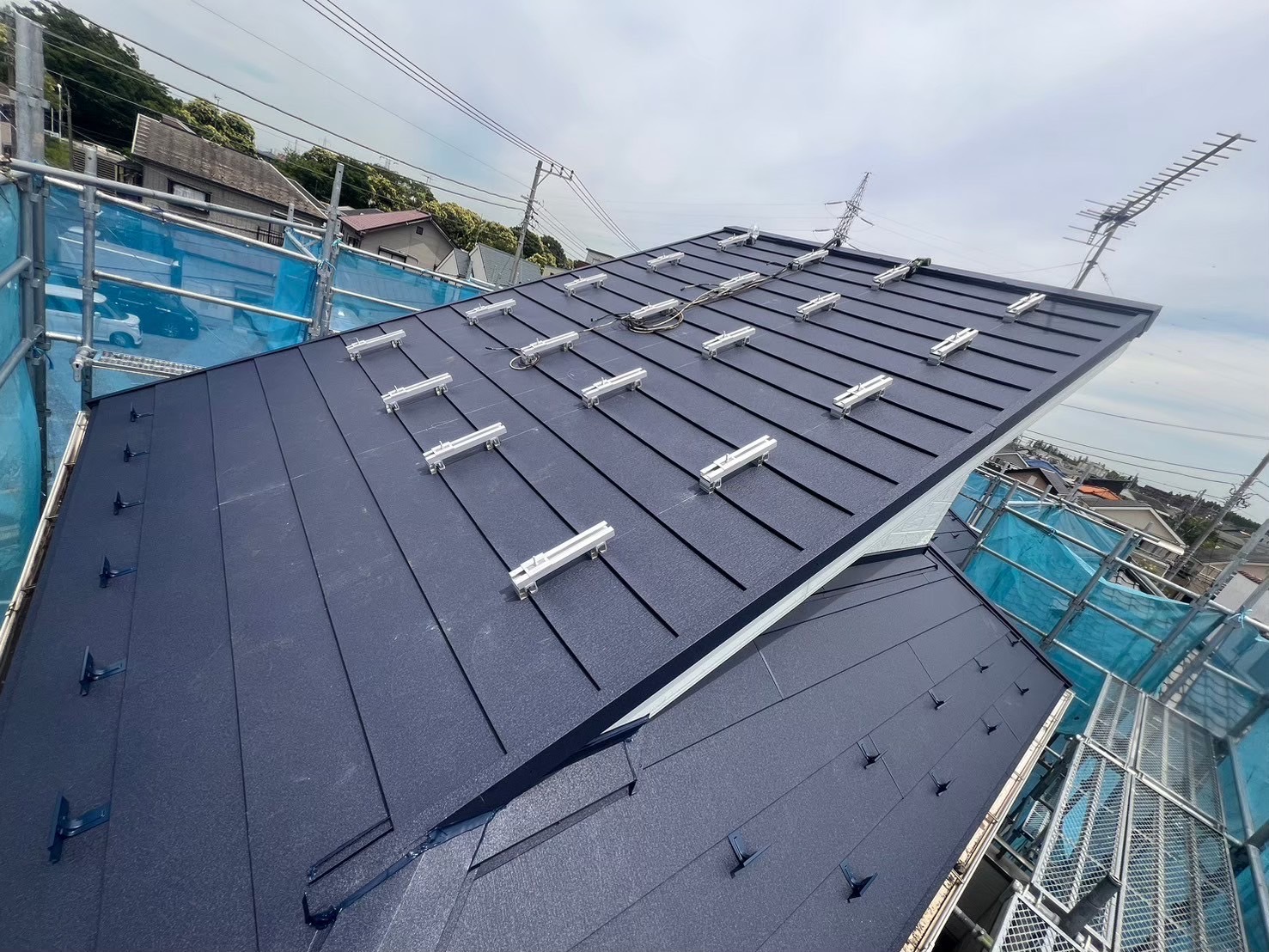
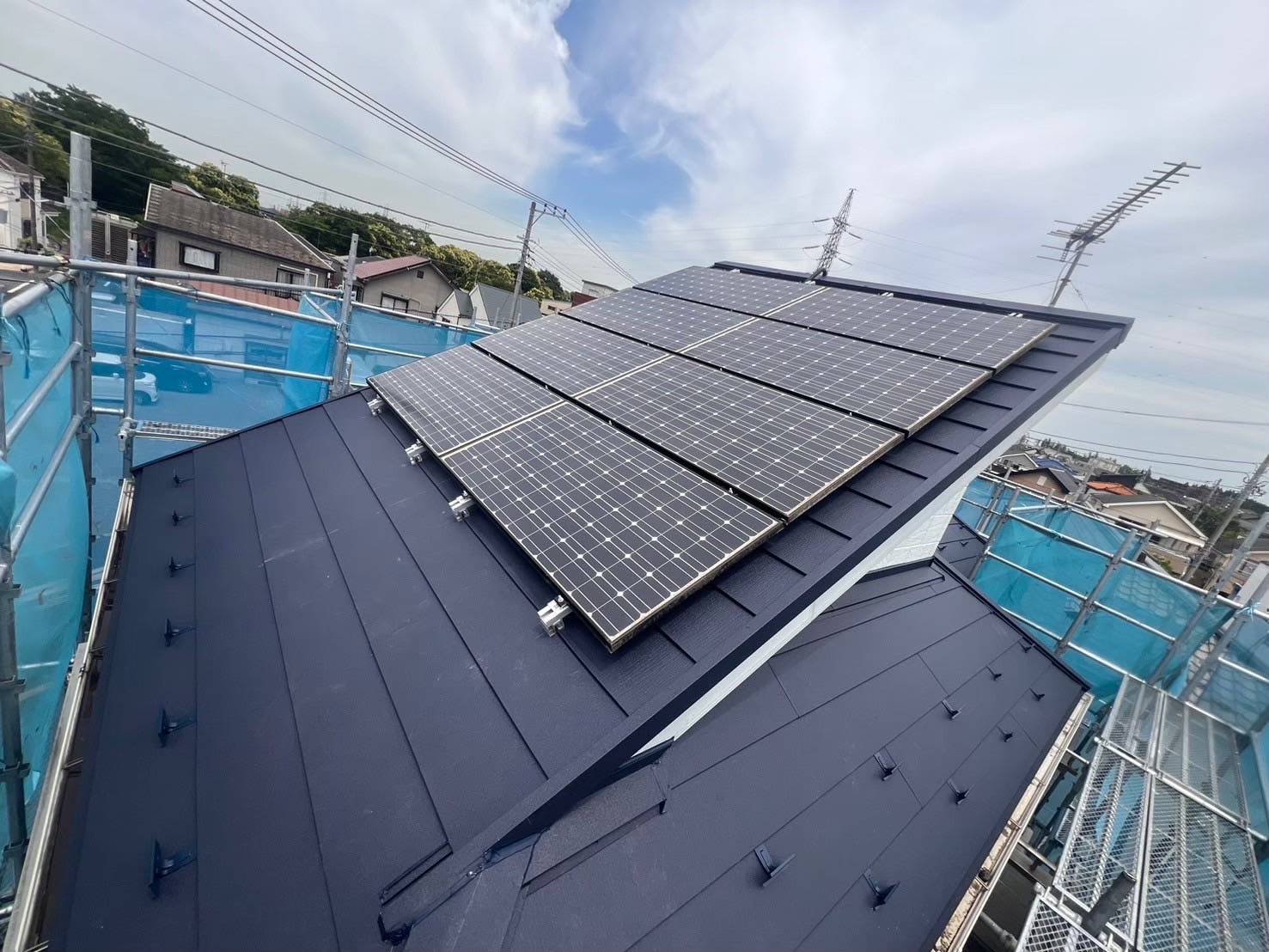
| Horizontal Metal Roof (Super Galtect) |
| Installation Capacity |
| Solar Panel: 4.3kW Battery: 5kWh range |
| Base Mounting Hardware Used |
| Niigata Manufactured / Aluminum Catch Type Hardware |
| Fixing Method & Waterproofing Details |
| Fixed using catch type hardware gripping the horizontal metal roof (Catch Method) |
| Price Range |
| 2,200,000 JPY~2,300,000 JPY *Due to the grant being provided, the actual burden amount is approximately 1,000,000 JPY Estimated recovery period for construction costs: about 8 to 9 years (self-consumption) *The grant amount and recovery estimate are based on the system and calculations at the time of construction, and may differ under the current system. |
| Construction Period |
| Approximately 3 days |
| Completion Month |
| April 2025 |
| Inquiry Details |
| I am considering the installation of solar panels and storage batteries. I heard that grants are available, and I would like to know how much can be provided. |
Our Proposal
We visited to provide an estimate and created a layout diagram for the solar panels from the drawings!
The layout diagram shows the arrangement of solar panels when placed on the roof.
Since we can also determine the installation capacity, it allows for power generation simulations and financial simulations.
We have also understood the expected amount of grants that will be provided, and we explained this to the customer along with the estimate!
How to Choose a Solar Panel Installation Contractor in Fussa City, Tokyo
There are many solar panel installation contractors available in Fussa City, Tokyo, and you may be unsure which contractor to choose.
Therefore, when requesting solar panel installation and battery storage installation work, let’s check the following 4 points.
● Have extensive knowledge not only about solar panels but also about roofs
● Confirm the existence of warranties and aftercare maintenance
● Obtain estimates from multiple contractors (3 companies as a guideline)
● Check if they provide support for subsidy applications
By confirming the above 4 points, you will be able to choose a reliable contractor.

Knowledge about roofs as well as solar panels
Defective installation of solar panels may be caused by a lack of knowledge and confirmation regarding roofs and waterproofing.
While knowledge about solar panels is certainly important, understanding the roof and waterproofing at the installation site of the solar panels is also crucial.
⚠︎Examples of troubles caused by insufficient checks on roofs and waterproofing
・Solar panels were installed on a severely deteriorated roof, leading to leaks
・Solar panels were installed on a roof with a short lifespan, necessitating a renovation to detach and reattach the solar panels within a few years
・Misjudging the type of waterproofing led to incorrect treatment and subsequent leaks
and more
When installing solar panels, understanding the condition and type of the existing roof allows you to avoid unnecessary expenses and unforeseen troubles.
▶ Go to “Roof Check Before Installing Solar Panels” in this article
Confirm the existence of warranties and aftercare maintenance
When choosing a solar installation contractor, confirm the existence of warranties. It is important to check not only the duration of the warranty but also the coverage, exclusions, and cost conditions.
While solar panels and battery storage units come with manufacturer warranties, also confirm whether there is a workmanship warranty in case leaks occur after installation!
For contractors that offer a workmanship warranty, if leaks occur after installation, they may provide coverage as long as it falls within the warranty period and conditions.
Additionally, some contractors offer after-service separate from warranties, so be sure to check if the contractor you are considering has after-service.
Changes or damage on the roof can occur in areas that are not visible, so there is a possibility that customers may not notice them.
By conducting inspections during after-maintenance, we can easily prevent major repairs or breakdowns by discovering any issues early!
Kakeru Koumuten Co., Ltd. provides a rain leak warranty as part of the workmanship warranty for solar panel installations. (The warranty for solar panel installation is 10 years, and depending on the condition of the roof before installation, we may not be able to provide a warranty unless roof renovation is performed.)
We also conduct after-maintenance and send out DM every year!
After checking the DM, if you wish, we will visit for after-maintenance!

Obtain estimates from multiple contractors (3 companies as a guideline)
When requesting solar panel installation, be sure to obtain estimates from multiple contractors.
Even with the same manufacturer and the same construction content, costs may vary, and warranties and after-services may differ.
Additionally, obtaining multiple estimates makes it easier to negotiate prices.
To request from your desired contractor at a lower price, we recommend obtaining estimates from multiple contractors.
When comparing estimates,
“Check the items in the estimate”
“Type of solar panel”
“Warranties and after-services”
and make detailed comparisons to make your judgment! If the rank of auxiliary materials is low or if processes are skipped, costs can be reduced, so avoid making decisions based solely on price!
▶ Go to “Breakdown of Installation Capacity and Equipment/Construction Costs” in this article
Check if they provide support for subsidy applications
Subsidies may be available for solar panel installations and battery installations, but if the order of procedures is incorrect or if there are deficiencies in the documents, the subsidy may not be granted.
There are systems that require personal applications and cannot be applied for by the contractor, as well as systems that require pre-application before installation, so it is reassuring to have a contractor who can support the preparation of necessary documents and the flow of procedures.
Complete the procedures specified for each system (for Tokyo’s subsidy, a pre-application before installation is required) before proceeding with the construction!
In the case of subsidies in Tokyo, the process involves submitting a grant application and performance report after the completion of the work, which will then be reviewed before the grant is awarded! (The procedure may vary depending on the system.)
▶ Go to “Subsidies and Grants that May Be Applicable in Fussa City” within this article
Benefits of Introducing Solar Power Equipment
The benefits of introducing solar panels are as follows!
Benefit 1: Economic Advantage

The biggest advantage of introducing solar panels is the economic benefit!
While the selling price of electricity has decreased compared to ten years ago, you can gain benefits by reducing the electricity purchased from power companies through self-consumption of generated electricity!
As electricity costs rise, the ability to cover your consumption with solar power becomes increasingly attractive!
If you plan to use the generated electricity at night, the installation of a storage battery is essential!
Furthermore, the selling price (FIT) for residential use (under 10kW) will be set at “24 yen/kWh for the first four years, and 8.3 yen/kWh from the fifth to the tenth year” for certifications after October 2025, and the same price will apply for the 2026 fiscal year. After the fifth year, it is generally more advantageous to use it at home (self-consumption), making the combination with storage batteries a viable option.
👉 For purchase prices and periods, click here
Benefit 2: You Can Utilize Subsidies!

The conditions and amounts of subsidies vary by prefecture and municipality, but if you meet the requirements, you may be able to utilize subsidies!
The reduction of the actual burden amount through subsidies is a significant advantage!
In the case of Fussa City, there may be applicable programs from the national and Tokyo metropolitan government (the housing renovation subsidy project in Fussa City has completed all applications for the 2026 fiscal year).
Benefit 3: Environmentally Friendly!
Solar power generation has low carbon dioxide emissions and can reduce dependence on fossil fuels, contributing to the mitigation of global warming.
Solar panels themselves do not produce noise or exhaust gases during the generation process, making them an environmentally friendly method of power generation. (However, devices such as power conditioners do have operational noise.)
Benefit 4 Expect Heat Shielding Effect!!
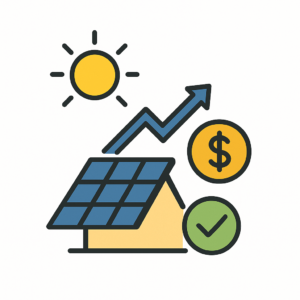
By installing the panels on the roof or rooftop, they block direct sunlight from hitting the roof.
Especially in summer, it can help suppress the rise in roof temperature, thus expecting a heat shielding effect!
(Note that this does not improve the building’s insulation performance itself.)
Benefit 5 Electricity can be used even during power outages!!
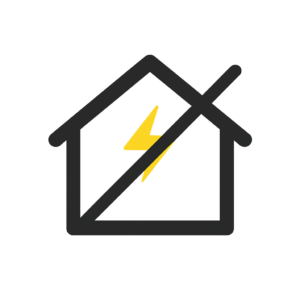
If a storage battery is installed, it becomes possible to use electricity even during emergencies such as power outages!
Even without a storage battery, if you have a power conditioner with autonomous operation capability, you may be able to use electricity from a dedicated outlet during the daytime when generating power.
(Note that the devices, output, and duration that can be used during a power outage vary depending on the model and wiring method.)

What Points Should Be Noted When Introducing Solar Power Generation?
Next, we will explain the “three points to note” when installing solar panels!

Point 1 Maintenance Costs are Incurred
A particularly easy-to-overlook maintenance cost is for the roof where solar panels are installed.
If you perform roof renovations 10 to 20 years later, there will be costs for removing and reinstalling the solar panels.
If the existing roof is deteriorating, it is reassuring to renovate it with durable roofing materials before installing solar panels!
Additionally, there will be costs for regular inspections of the equipment, repairs or replacements of the power conditioner, and updates due to the deterioration of the storage battery.
It would be reassuring to ask for a simulation that considers maintenance costs before introducing solar panels!
Point 2 The Risk of Leaks Increases Depending on Roofing Materials
The installation methods for slate roofs and tile roofs vary depending on the construction method, but when securing materials and substrates with screws or other fasteners, waterproofing at the fixed points becomes crucial.
In methods that involve making holes in the roof, there is inevitably a risk of leaks.
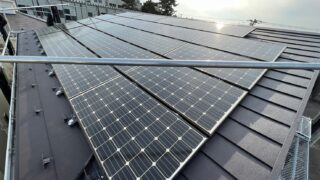
Of course, we will ensure proper waterproofing, but if you are concerned about making holes, one option is to replace the roofing material with a metal roof and secure solar panels using the catch method. (The catch method has compatibility conditions between the roofing material and the fasteners, and it cannot be used with all metal roofs.)
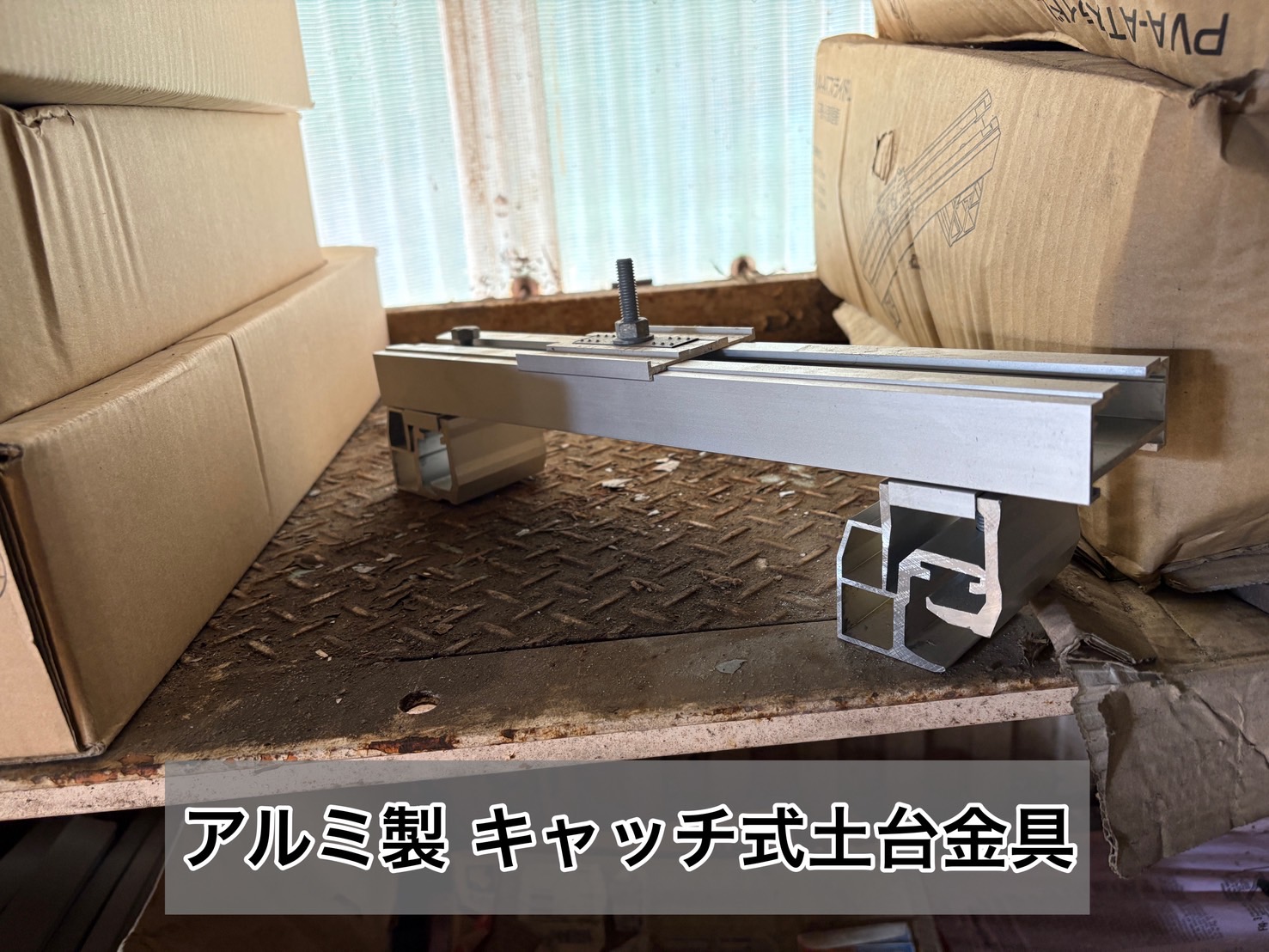 Catch-type base fastener for horizontal metal roofs
Note 3: The roof will become heavier
Since solar panels will be installed, the roof will become heavier. After investigating the existing roof, substrate, and load-bearing capacity, replacing it with a lighter roof may also be an option if necessary.

How to Choose Solar Panels?
There are many manufacturers of solar panels, and their output and costs vary widely.
It is not simply a matter of “this manufacturer has the best solar panels”; it is important to choose solar panels that are suitable for your life plan and building!
Here are some points to consider when comparing solar panels!
How to Choose 1: Compare by Total Output of the Roof
When installing solar panels on the roof, it is important to consider how much electricity can be generated in the limited area, and the more electricity generated, the better!
Solar panels come in various sizes and outputs depending on the manufacturer.
For example, a 350W output panel and a 400W output panel may seem that the higher output panel is better at first glance.
However, if the size of the panel does not fit well with the roof, “20 panels of 350W can be installed, while only 15 panels of 400W can be installed,” which means the number of panels that can be installed may differ even on the same roof due to the size difference.
400W×15 panels = 6kW (total output of the roof)
350W×20 panels = 7kW (total output of the roof)
As shown above, even if the output of one panel is lower, the total output of the roof may be higher!
It is important to consider the total output of the roof rather than the output of a single panel!
*The above calculations are for total output (kW). The actual electricity generation (kWh) will vary depending on conditions such as the orientation, slope, and shading of the roof.
How to Choose 2: Compare by Degradation Rate of Solar Panels
Solar panels have a degradation rate, and their output gradually decreases over 10 years and 20 years.
The degree of output reduction after long-term use varies by product. The manufacturer’s output warranty values are benchmark figures for guarantees and do not indicate the actual degradation rate or power generation amount.
Choosing solar panels while considering both initial output and degradation rates will lead to a decision without regrets!
How to Choose 3: Compare by Warranty Period
There are several types of warranties for solar panels, including “output warranty,” “natural disaster warranty,” and “system warranty,” and the warranty periods vary by manufacturer.
Some manufacturers offer a 30-year warranty for output, while others provide a 10-year warranty, so it varies widely!
A longer warranty is always better, so be sure to check the warranty period and conditions of the manufacturers you are considering!

Frequently Asked Questions about Solar Power and Storage Battery Installation in Fussa City
We have compiled frequently asked questions from customers considering the installation of solar panels and storage batteries in Fussa City. (Tap to open the answers)
How much does it cost to install solar panels and storage batteries in Fussa City, Tokyo?
The cost varies depending on the installation capacity, equipment, and roof condition. In the above construction example (solar panel 4.3kW + storage battery, completed in April 2025), it was 2.2 million yen to 2.3 million yen.
Guidelines for different capacities are published on the solar panel installation and storage battery installation pricing page. We will create a layout diagram from the drawings and site survey and provide a free estimate!
Are there any subsidies available for solar power and storage battery installation in Fussa City?
As of October 7, 2026, Tokyo’s subsidies for solar power generation and storage batteries (Cool Net Tokyo) are accepting pre-applications. For storage batteries, only SII registered devices (registered products for Reiwa 8) will be eligible from pre-applications made after October 1, 2026. The housing renovation subsidy project in Fussa City (Reiwa 8, City Chamber of Commerce) has closed all applications. The national DR home storage battery project has ended its public recruitment.
Since the application status may change, please refer to the subsidy and grant section and consult with us before signing a contract.
Can I apply for subsidies after the construction is completed?
For many programs, procedures are required before construction. Tokyo’s subsidies require pre-application before installation, and if you install first, you will be ineligible. The procedures differ by program.
Since the order of procedures varies by program, please confirm before signing a contract or starting construction.
Can solar panels be installed on a slate roof? I’m worried about leaks.
It is possible to install on a slate roof, but it is necessary to check the condition of the roofing material and substrate. The fixing method varies by construction method, and when fixing brackets to the roofing material or substrate, waterproofing treatment of the fixed parts is essential.
Kakeru Koumuten Co., Ltd. is a specialized exterior renovation company strong in roofing work, so we will check the condition of the roof before installation. If deterioration is progressing, we can also suggest methods such as roof overlay (cover method) or complete replacement before installation.
My roof is old. Should I do a roof renovation first?
It depends on the condition of the roof. If a roof renovation is needed 10 to 20 years after installation, there will be additional costs for removing and reinstalling solar panels. If the remaining lifespan of the roof is short, it may be more cost-effective to renovate with durable roofing materials before installation.
Please consult us about the installation process after checking the condition of the roof during the on-site survey!
Should I install a storage battery together with the solar panels?
If you want to use the generated electricity at night or prepare for power outages, simultaneous installation is recommended. The selling price for electricity will be 8.3 yen/kWh after the fifth year, making it more advantageous to use it in your home rather than selling it.
Additionally, the Tokyo Metropolitan Government’s subsidy for storage batteries is designed for simultaneous installation with solar panels, but you can also apply for the subsidy for storage batteries alone. You can compare “solar panels only” and “solar panels + storage battery” through a financial simulation.
How many kW can be installed on my roof? Is it okay for north-facing roofs or roofs with shadows?
The capacity that can be installed varies depending on the shape, orientation, and size of the roof. At Kakeru Koumuten, we create a layout diagram from the drawings and on-site survey, and provide you with the installation capacity and power generation simulation.
In Fussa City, the way shadows are cast by surrounding buildings and trees varies from house to house. You can check the expected power generation through the power generation simulation.
How long will the construction period be?
For the above construction example (4.3 kW solar panels + storage battery), it took about 3 days. The duration may vary if roofing work is done simultaneously or depending on the shape of the roof and installation capacity.
Please note that additional time is required for applications for subsidies and power companies, so please consult us as soon as possible.
What is the current selling price (FIT)?
For residential use (less than 10 kW), from the certification after October 2025, the first 4 years will be 24 yen/kWh, and from the 5th to the 10th year it will be 8.3 yen/kWh, with the same price applied in the 2026 fiscal year.
The idea is to recover initial costs quickly in the first 4 years and then focus on self-consumption. Kakeru Koumuten provides a financial simulation that takes into account loan interest rates and electricity costs.
Can you handle maintenance and inspections after installation?
Yes, we can. Kakeru Koumuten sends out annual after-maintenance DM notifications and visits customers who wish to have inspections. We can also clean solar panels with a special brush if the power generation decreases due to dirt.
It is difficult to check areas on the roof by yourself, so please feel free to consult us if you have any concerns.
Can you also renovate roofs that already have solar panels installed?
It is possible. Kakeru Koumuten Co., Ltd. can detach and reattach solar panels in-house, allowing us to perform roof overlay (cover method) or re-roofing after removing the panels, and we will handle everything consistently until reinstallation. The removed panels can be stored in our own warehouse.
For costs, please refer to the solar panel detachment and water heater removal pricing page.
If you are looking for a solar panel installation contractor in Fussa City, please consult Kakeru Koumuten
Our company handles many exterior renovations, including solar panels, roof work, and exterior wall work in Fussa City, Tokyo.
We have received requests from many customers, including renovation companies and real estate agencies!
Kakeru Koumuten promises “high-quality renovations at low costs”, and we have received positive feedback from numerous customers.
We continue to update our construction achievements every year, and we will strive to improve quality to satisfy even more customers in the future.
Our company can perform all exterior renovations, not only roof overlay (cover method) and re-roofing but also partial roof repairs, exterior painting, and exterior wall cover methods.
We are also happy to handle small jobs like partial repairs and rain gutter cleaning!
In urgent cases like water leakage, we may be able to provide emergency measures without setting up scaffolding, as long as safety can be ensured, so please consult with us!
“I want to know about recommended solar panels”, “I want to keep costs down as much as possible”, “I just want an estimate for now”, we will provide the best solutions for your specific requests.
We will never propose unnecessary work focused on profit!
We always stand in the customer’s position and will propose the best construction plan!
We are confident that we will not be outdone in terms of cost, quality, and planning for exterior work compared to other companies!
We are confident, so we welcome competitive quotes!
Estimates are completely free, and if you find our company to be inferior to others, feel free to decline!
Characteristics of Fussa City, Tokyo, and Points for Solar Work
Fussa City is located in the western part of Tokyo, along the Tama River. The official page of Fussa City publishes the “Fussa City Disaster Prevention Map,” which includes the Tama River flood and internal water hazard map.
Below are summarized points to consider regarding the residential environment in Fussa City and when installing solar panels and storage batteries. (Tap to open)
View the characteristics of Fussa City, Tokyo, and points for solar work
■ Confirm the installation locations for storage batteries and power converters in accordance with the hazard map assumptions
The Fussa City Disaster Prevention Map – Tama River Flood and Internal Water Hazard Map shows the expected maximum scale of flooding due to heavy rain in the event of a Tama River flood, based on the flood inundation area map for the Tama River published by the Ministry of Land, Infrastructure, Transport and Tourism in May 2016. Internal flooding (flooding due to heavy rain exceeding the drainage capacity of sewer systems, etc.) can be checked on the Fussa City Internal Water Hazard Map, and locations with potential landslide risks can be confirmed on the sediment disaster hazard map. According to the city’s disaster prevention guidelines, sediment disaster warning areas are designated along the Haijima Cliff Line. When deciding on the installation location for storage batteries and power conditioners, it is advisable to check the assumptions for your location on the hazard map and consider the height and position of the installation for peace of mind.
■ Tokyo’s annual sunshine hours are approximately 1,927 hours
According to the Japan Meteorological Agency’s average values (1991–2020), Tokyo’s annual sunshine hours are approximately 1,927 hours.
Power generation varies by season, so it is important to conduct annual power generation simulations and select the capacity of storage batteries to match the times of high electricity usage.
■ Check for shadows from surrounding buildings and trees
In areas where buildings or trees are close by, the way shadows fall varies for each house depending on the roof’s orientation and height. Since solar panels generate less power when shaded, Kakeru Koumuten creates layout diagrams based on blueprints and the actual site conditions, allowing you to confirm through power generation simulations. Additionally, in areas close to trees, branches and fallen leaves may accumulate around the panels and rain gutters, so please consult us about inspections and cleaning after installation.
■ City grants for fiscal year Reiwa 8 have ended; Tokyo’s subsidies require prior application
The Fussa City housing renovation subsidy program (fiscal year Reiwa 8, City Chamber of Commerce) has completed all applications. Tokyo’s subsidies (Cool Net Tokyo) require prior application before installation, so it is important to confirm the order of procedures before contracting and starting work.
■ In narrow front road areas, plan scaffolding and equipment delivery carefully
In areas with narrow front roads or where surrounding buildings are close together, careful planning for scaffolding and equipment delivery may be necessary. Kakeru Koumuten will respond to site conditions with our own scaffolding team and scaffolding materials.
■ Check the roof condition according to the building’s age
For buildings that have been around for many years, it is important to check the condition of the roofing materials and substrate before installing solar panels. Depending on the roof’s condition, installing them simultaneously with roof renovations can help reduce future costs for removing and reinstalling solar panels.
Our company serves Kanagawa Prefecture and Tokyo, and we handle many exterior and solar construction projects in Fussa City, Tokyo.
We are happy to assist with partial roof repairs such as roof overlay work, roof replacement, and leak repairs, as well as other repairs! Please feel free to consult us about any sudden troubles!
Service Area in Fussa City, Tokyo
Kakeru Koumuten accepts requests throughout Kanagawa Prefecture and all of Tokyo.
List of Areas in Fussa City, Tokyo
Fussa City Ushihama / Fussa City Kabihira / Fussa City Kitadenen / Fussa City Kumakawa / Fussa City Kumakawa Ninomiyama / Fussa City Shimo / Fussa City Higashimachi / Fussa City Fussa / Fussa City Fussa Ninomiyama / Fussa City Honmachi / Fussa City Minamisenen / Fussa City Musashino-dai / Fussa City Yokota Base
・Trust Kakeru Koumuten for exterior wall painting in Fussa, Tokyo!
・Trust Kakeru Koumuten for roof renovations in Fussa, Tokyo!
・Trust Kakeru Koumuten for exterior renovations in Fussa, Tokyo!
・Kakeru Koumuten Co., Ltd. project achievements
・Kakeru Koumuten Co., Ltd. aftercare services
・Kakeru Koumuten Co., Ltd. service menu and price list
・Kakeru Koumuten Co., Ltd. staff blog and announcements
・Explaining the importance of getting multiple estimates and comparison points!
・Top 12 solar power generation manufacturers! Features and selection tips included!
・What are the installation costs for solar power generation? Comprehensive tips to reduce costs!
・What are the best locations for installing solar power generation? Points for selecting installation sites included!
・Check out our solar power generation estimates here!
We welcome inquiries via LINE as well◎

We are also updating our Instagram regularly◎Please follow us◎
contact Kakeru Koumuten Co., Ltd.
Kakeru Koumuten is a young company whose team is, on average, in their late twenties, but our skills are second to none.
Our greatest strength is that we handle scaffolding, roofing and painting entirely in-house. In an industry where these tasks are usually divided among contractors, our complete service simplifies project management and helps keep costs down. Above all, if a problem arises, we respond promptly.
We proudly describe ourselves as the youngest and most helpful renovation company in Kanagawa!