Leave Your Solar Panel Installation in Odawara City, Kanagawa Prefecture to Kakeru Koumuten Co., Ltd.!
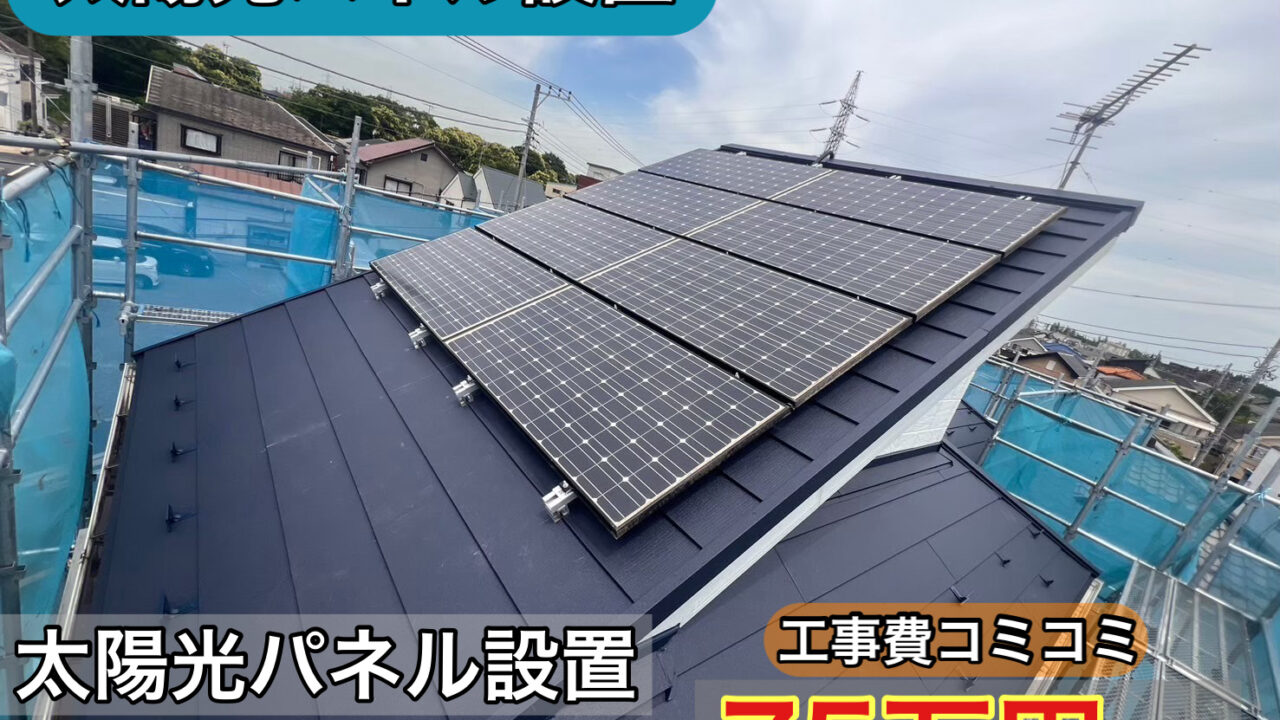
For Solar Panel and Storage Battery Installation in
Odawara City,
trust Kakeru Koumuten!
Kakeru Koumuten is a company specializing in exterior renovations based in Kanagawa Prefecture.
As a company strong in roofing work, we are entrusted withsolar panel installation and storage battery installation considering roofs and waterproofing!
“How to Choose a Solar Panel Contractor in Odawara City”
“Costs for Solar Panel and Storage Battery Installation”
“Subsidies Available for Solar System Installation in Odawara City”
We will also explain the above three points!
Installing solar panels carries risks such as“the occurrence of leaks” and other troubles.
To ensure a satisfactory solar panel installation, we recommend obtainingthree or so estimates!
Table of Contents (Tap to Open/Close)
- Reasons Kakeru Koumuten is Chosen for Solar Panel Installation in Odawara City
- Roof Inspection Before Installing Solar Panels
- Possible Subsidies and Grants Available in Odawara City
- Price List for Solar Panel and Storage Battery Installation
- Breakdown of Installation Capacity, Equipment, and Construction Costs
- Self-Estimate and Profit Simulation for Solar Power Generation
- Customer Testimonials
- Case Studies of Solar Panel Installations
- How to Choose a Solar Panel Installation Contractor in Odawara City
- Benefits of Introducing Solar Equipment
- Points to Note When Introducing Solar Power Generation
- How to Choose Solar Panels
- Frequently Asked Questions About Solar and Storage Battery Installation in Odawara City
- If You’re Looking for a Solar Panel Installation Contractor in Odawara City, Contact Kakeru Koumuten
- Characteristics of Odawara City and Points for Solar Work
- Service Area in Odawara City
Reasons Kakeru Koumuten is Chosen for Solar Panel Installation in Odawara City
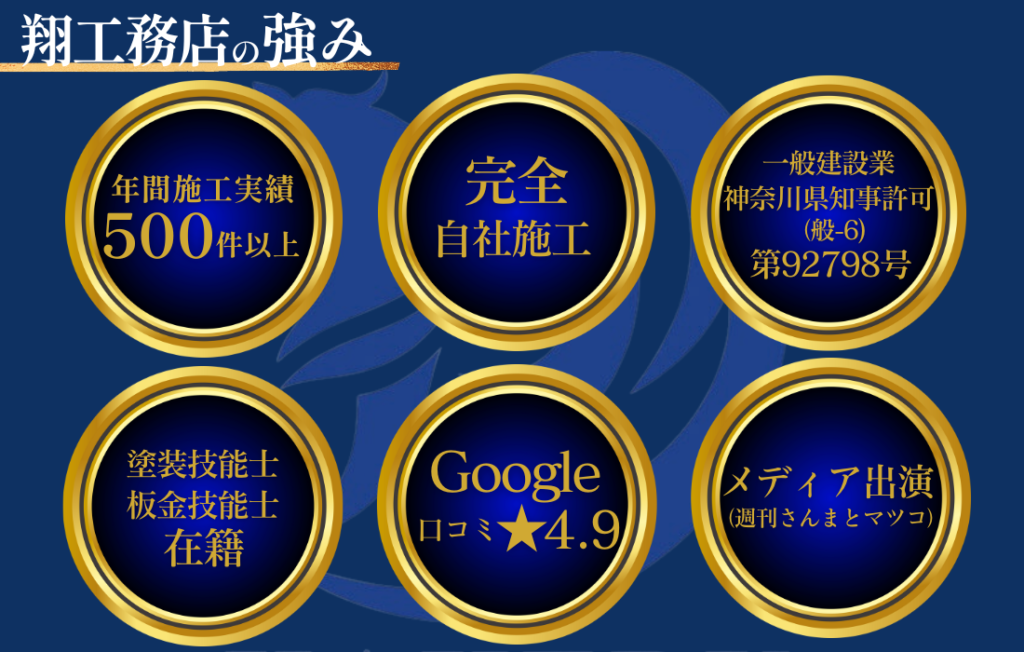
Regarding why we are entrusted with solar panel installation by customers in Odawara City,
“Our Unique Strengths in Solar Panel Installation That Cannot Be Imitated by Other Companies”
have received high praise from many customers.
so we would be grateful if you could compare our estimates with those of other companies.
Because we are confident, we welcome multiple comparative estimates!
1. We Can Also Handle Exterior Renovations Aside from Solar Panel Installation!
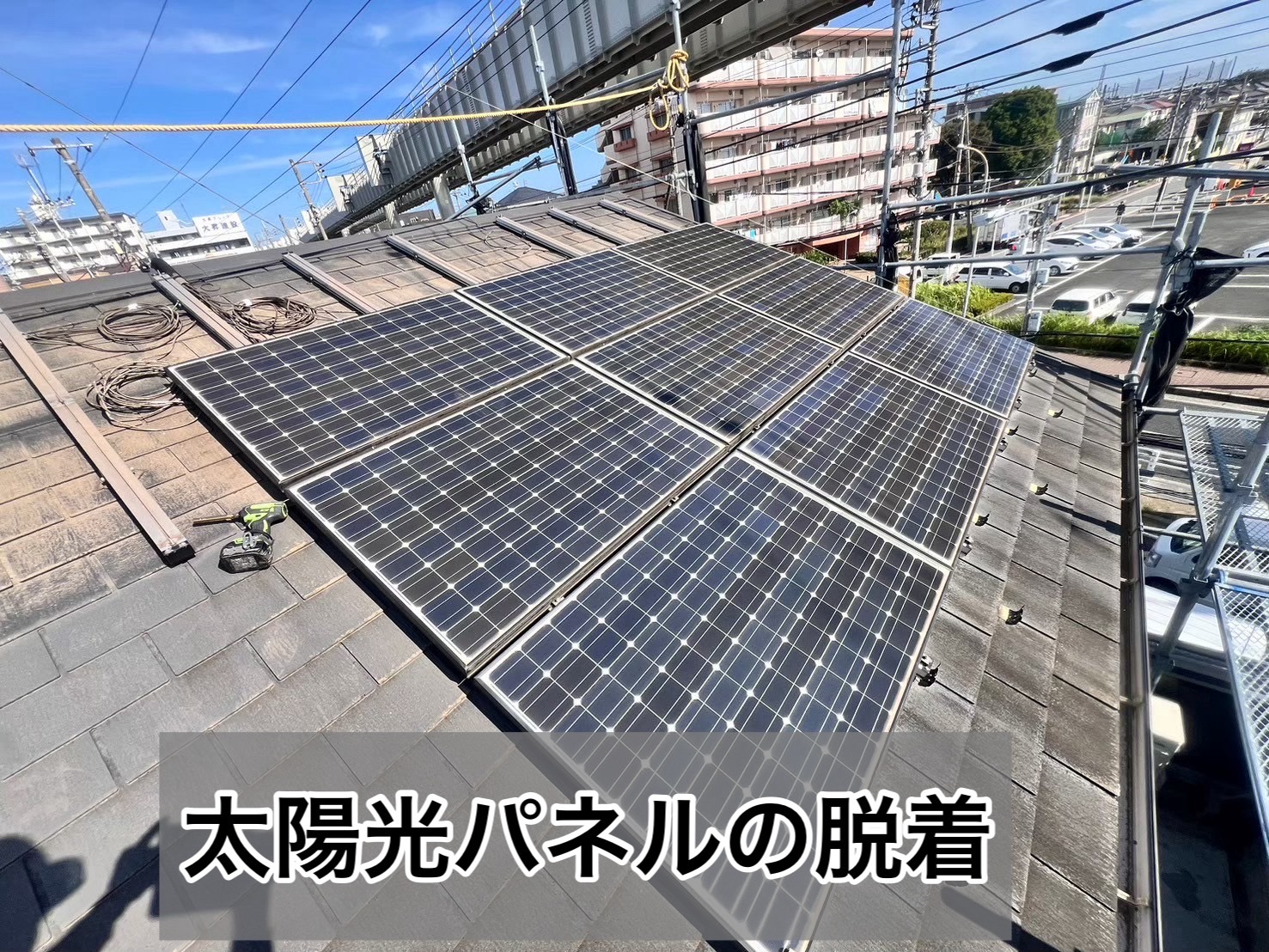
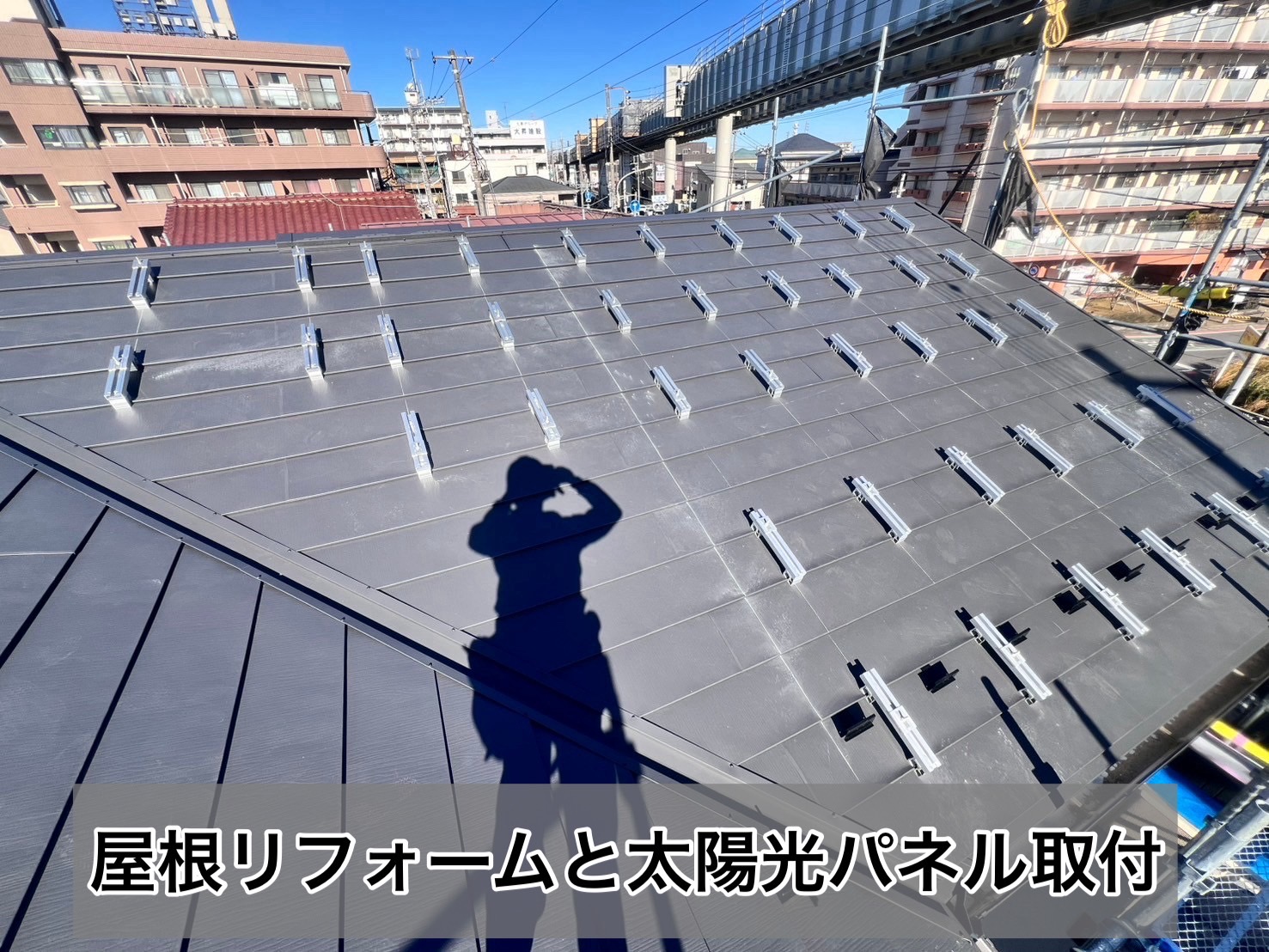
Problems such as leaks that occur during solar panel installation may be caused by insufficient checks on the roof and waterproofing at the installation site.
Even if you are knowledgeable about solar panels, there are cases where the roof and waterproofing at the installation site are outside your expertise, so caution is necessary.
It is reassuring to have expertise in roofing to avoid maintenance issues and troubles after installation!
Kakeru Koumuten Co., Ltd. is strong in roofing work and can also detach and attach solar panels in-house, allowing for quick responses to maintenance and urgent troubles after solar panel installation!
2.Facilities Specialized in Exterior Renovation
Kakeru Koumuten Co., Ltd. has organized the following warehouses and material storage areas to provide low-cost, high-quality solar work and exterior renovations.
We have established five bases centered around Yokohama City, Kanagawa Prefecture for material storage and showrooms.
In-house Scaffolding Materials
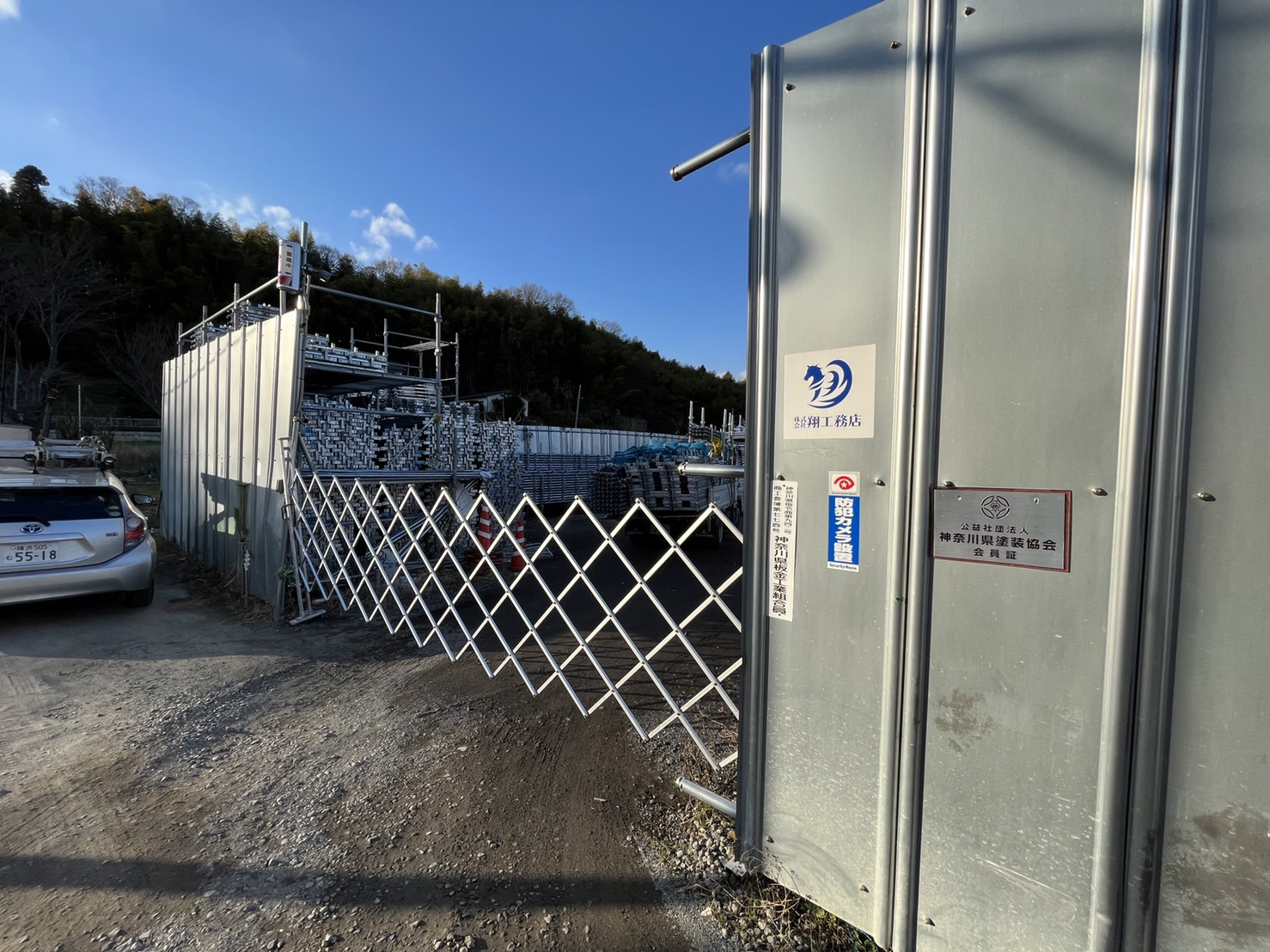
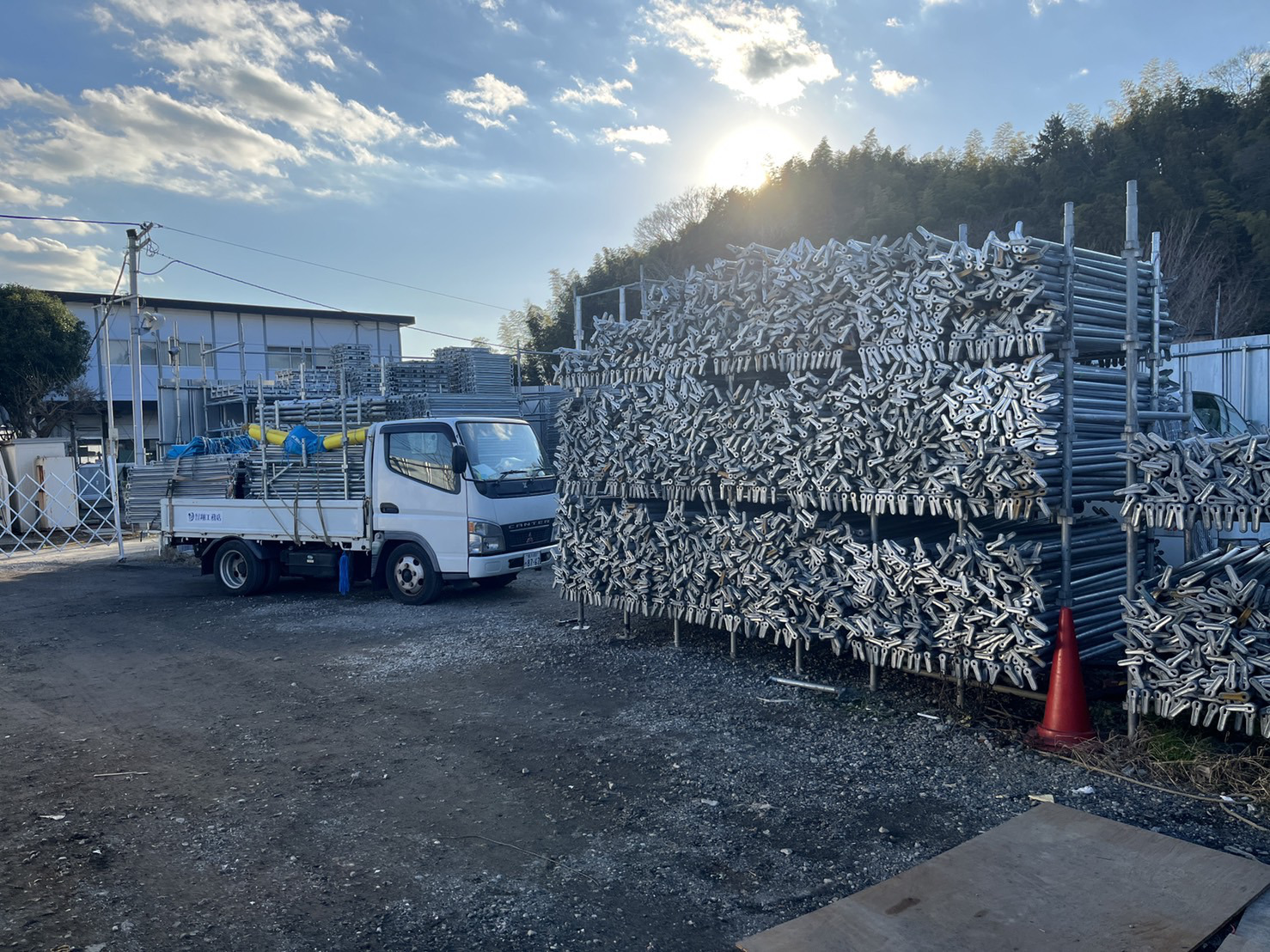
To ensure safety during work on the roof, we own the scaffolding materials necessary for temporary scaffolding according to the construction conditions, allowing us to assemble scaffolding in-house.
By not outsourcing scaffolding work and using our own scaffolding team, we can also cut costs for scaffolding work.
We own scaffolding materials for approximately 50 single-family homes!
Even if there are height differences on the site, our in-house scaffolding team will plan the scaffolding according to the local conditions.
Storage of Materials in Our Large Warehouse
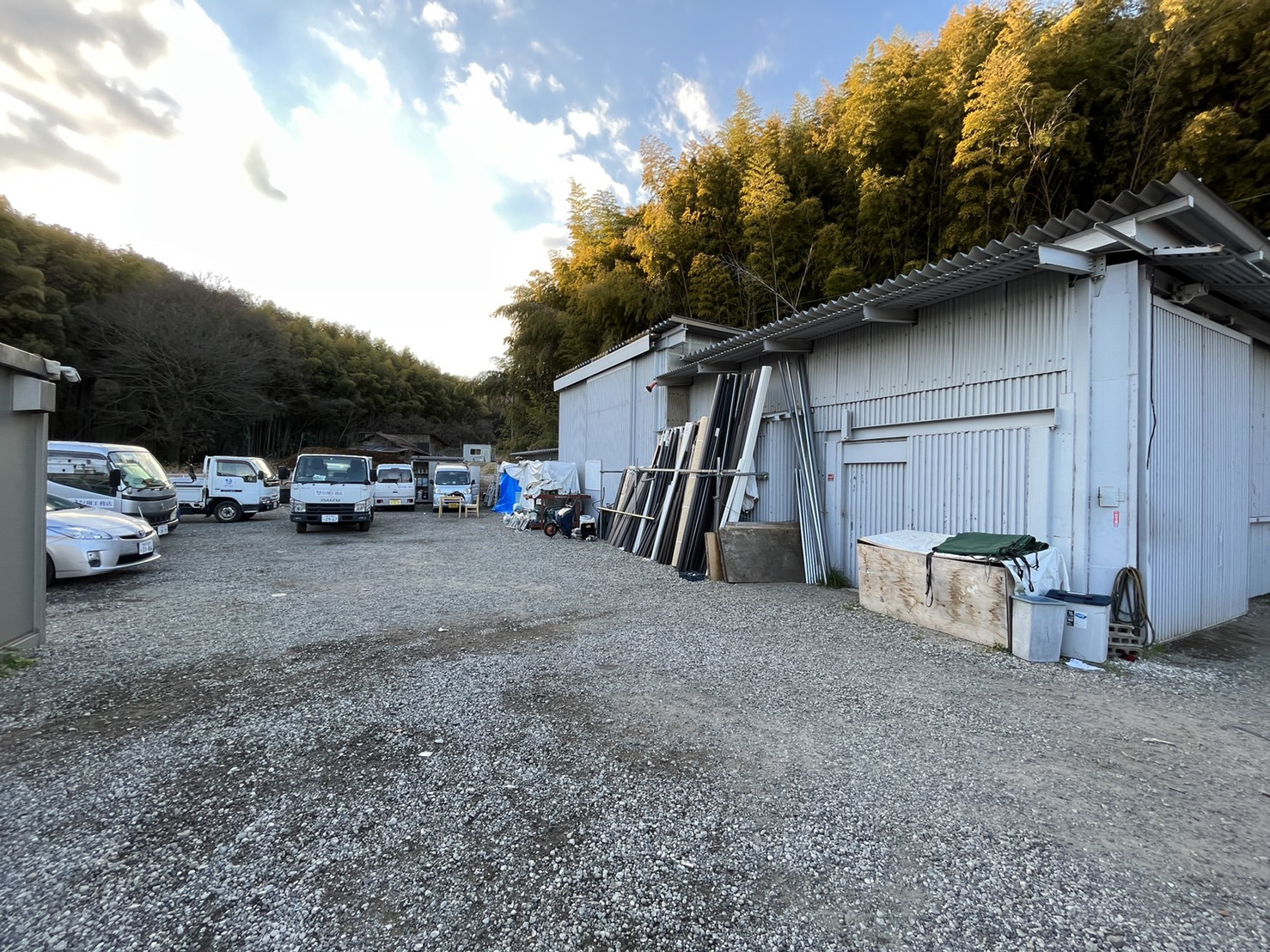
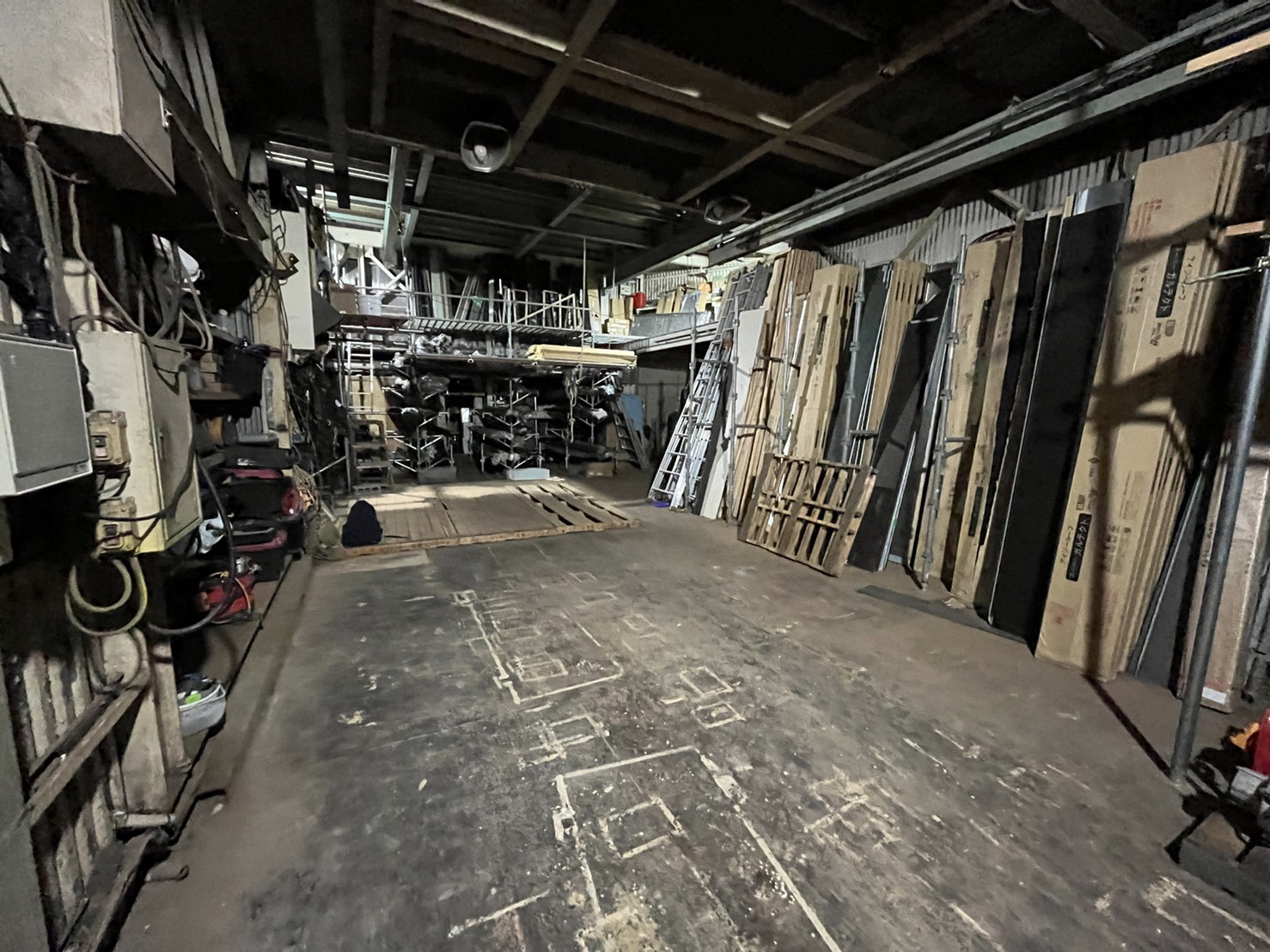
We store roofing materials and paints, and we can also store removed solar panels.
By ordering a large quantity of materials at once, you can purchase materials at a lower cost!
Additionally, we always have a stock of roofing materials, so we can respond quickly in emergencies!
Separation and transportation of waste materials by our own team
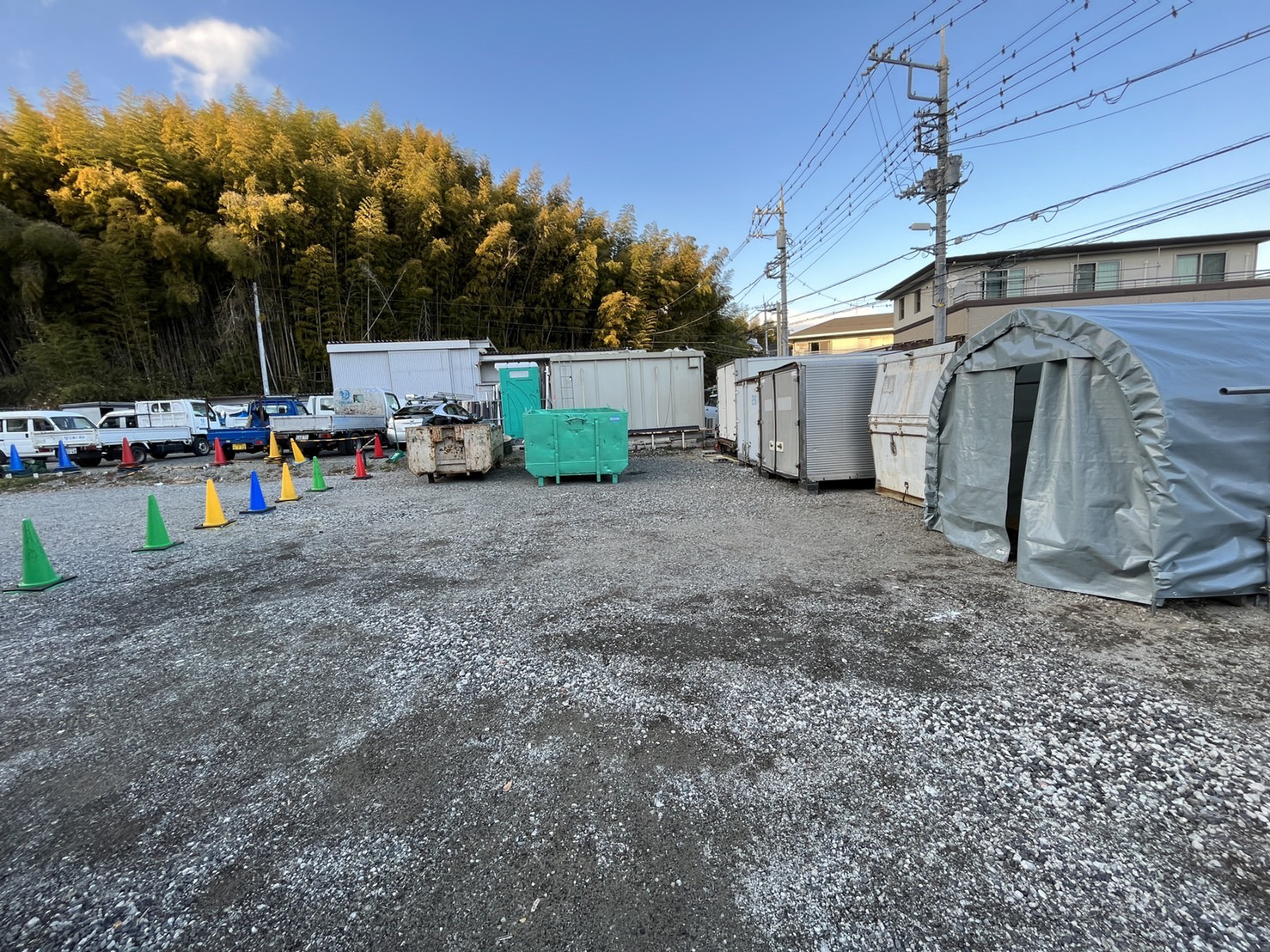 The installation of solar panels often involves roofing work, generating various waste materials such as paint, wood, and metal.
By separating and recycling waste materials, we can significantly cut waste disposal costs.
Exterior renovation dedicated showroom
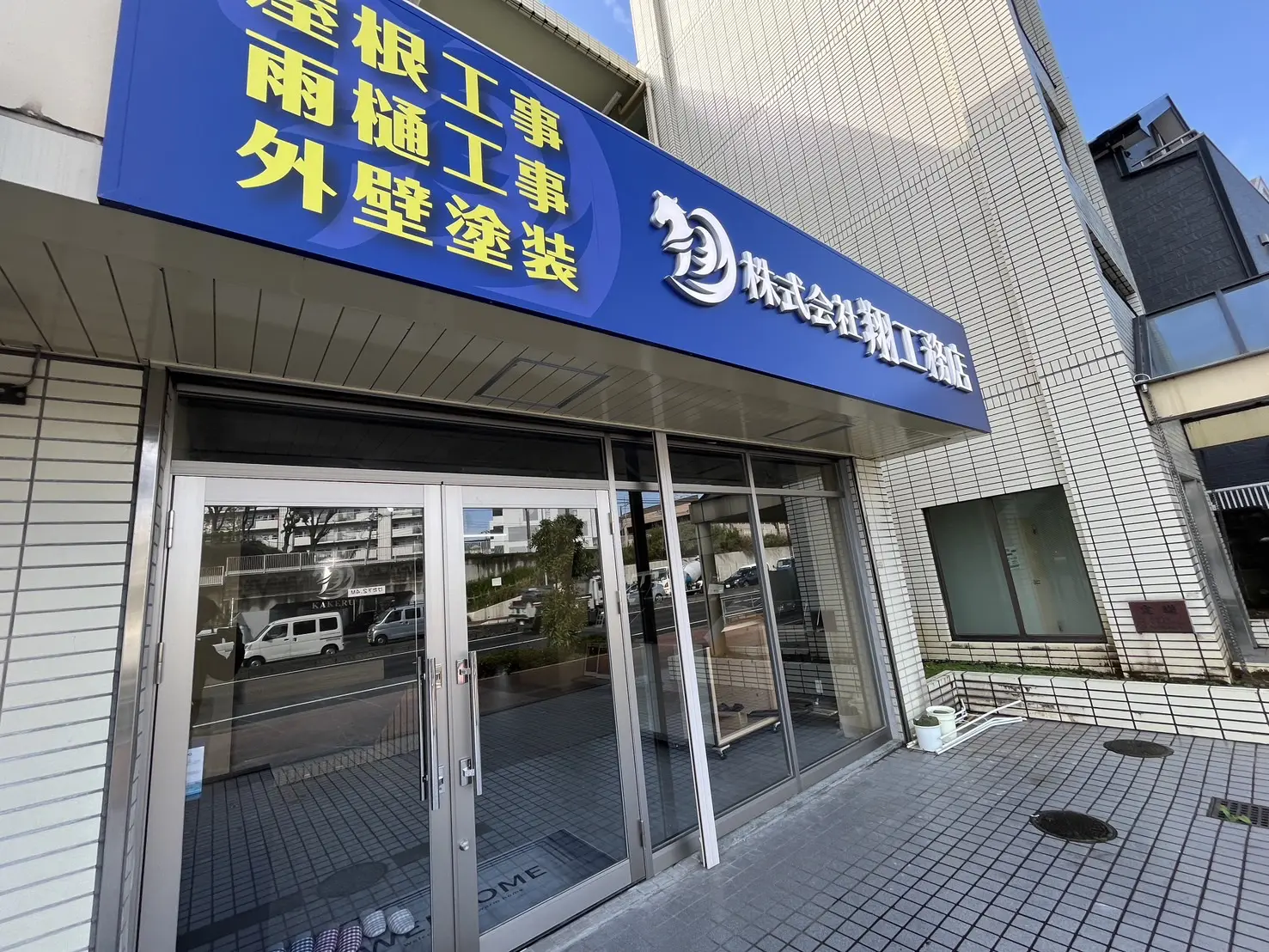

In the showroom, not only can you have meetings, but you can also
check the actual foundation brackets for solar panels and see how they are attached to the roofing materials!
We can also provide simulations of the revenue and installation costs when introducing solar panels!
Since roofing and exterior wall work often accompany each other, we also have samples of roofing materials and models that explain the structure, allowing for detailed explanations!
3.All work performed by our own team

One of Kakeru Koumuten’s major strengths is complete in-house construction.
By having Kakeru Koumuten manage everything from inquiries to project completion in a consistent system, we can keep costs down and provide high-quality roof renovations.
Additionally, one representative will assist you from the estimate to the completion of the work.
Since the same person handles everything, including sales and construction management, smooth communication is possible.
We can provide consistent in-house construction from temporary scaffolding installation to exterior wall painting and roof renovations!
4. Various Permits and Skilled Workers

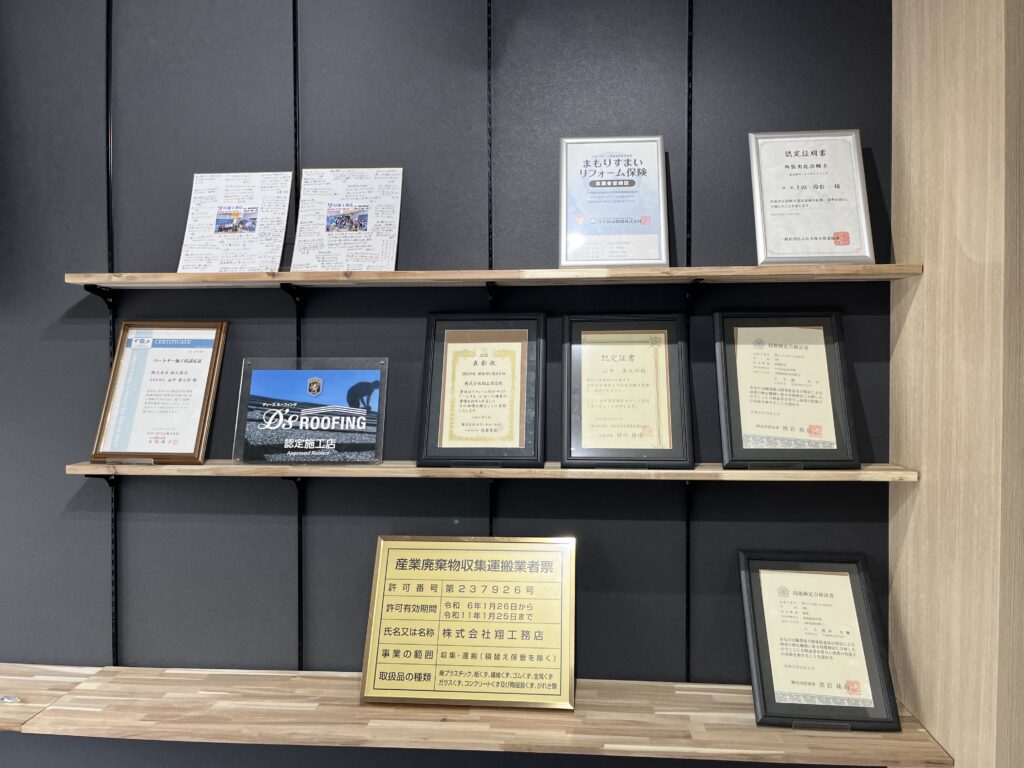
We have obtained construction industry licenses and permits for industrial waste collection and transportation!
We also have nationally certified sheet metal and painting technicians on staff, and we are confident in our construction techniques.
We are capable of handling large-scale roof projects such as factories!
5. Warranty and Aftercare
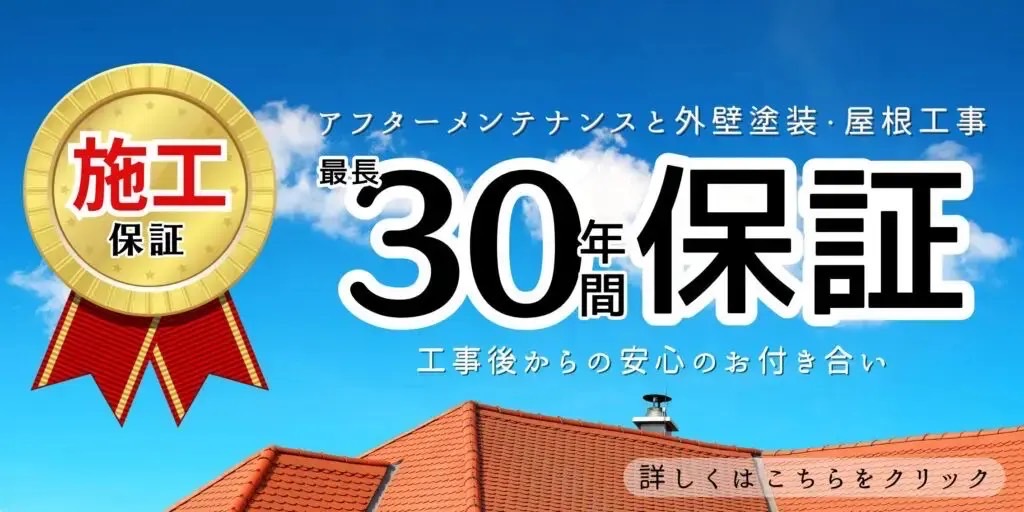
In addition to the manufacturer’s warranty, solar panel installation work comes with our own construction warranty (leakage warranty)!
(The construction warranty for solar panel installation is 10 years. Depending on the condition of the roof before installation, we may not be able to provide a warranty unless a roof renovation is performed. The construction warranty is separate from the manufacturer’s product warranty, and the scope and conditions vary based on the warranty details.)
Aftercare is available every year, and we send out notification DM each year.
If you have any questions about the warranty, please click on the image above!

6. Flexible and Prompt Response
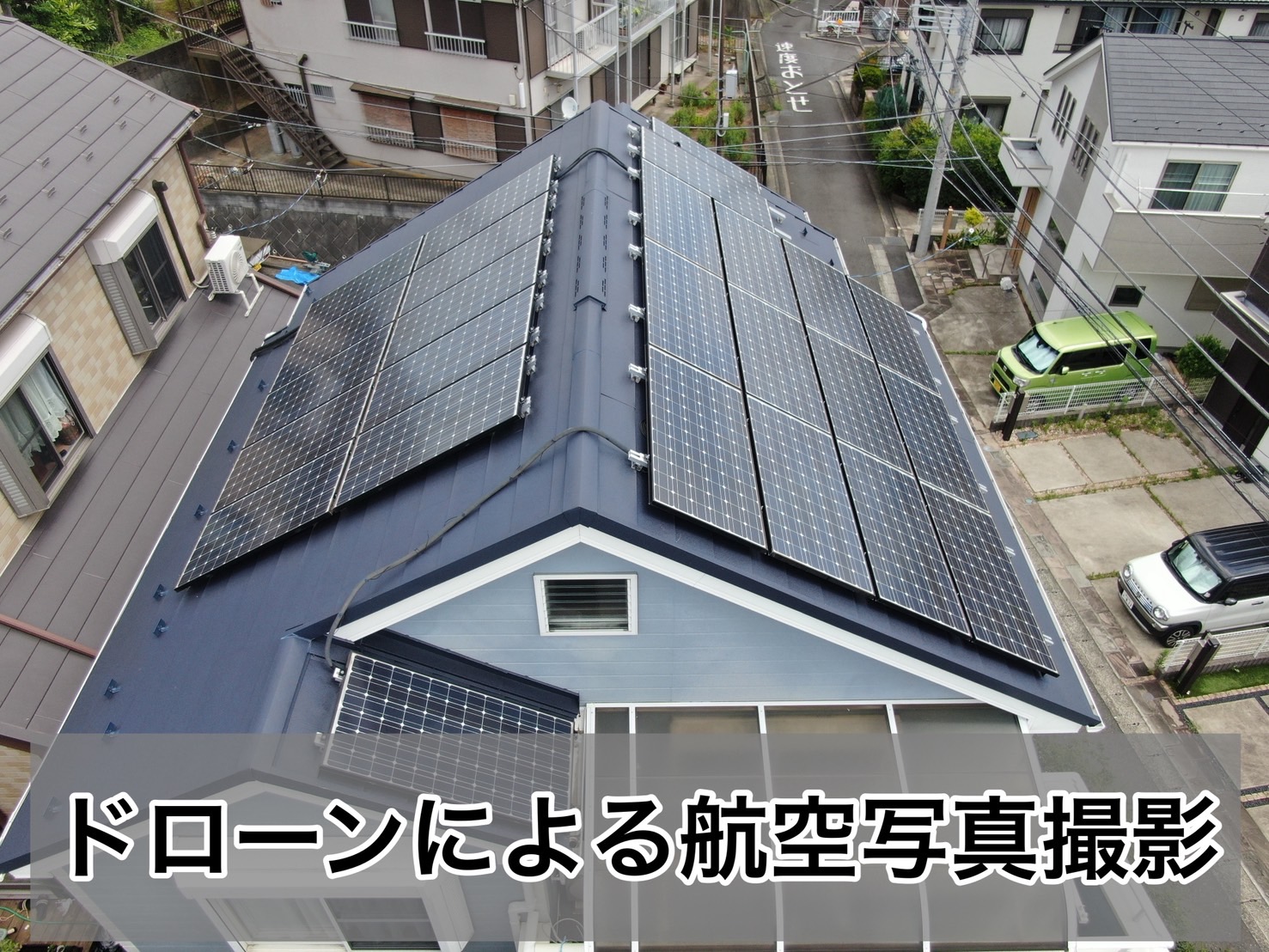
Our company is equipped to handle various roofing troubles and situations.
If you cannot access the roof due to height, we can utilize drones to assist!
During leak investigations, we can also conduct surveys using a thermal imaging camera.
If the power generation of solar panels decreases due to dirt or other factors, we can provide cleaning services with a specialized brush.
We will respond according to your wishes.
7. Human Resource Development
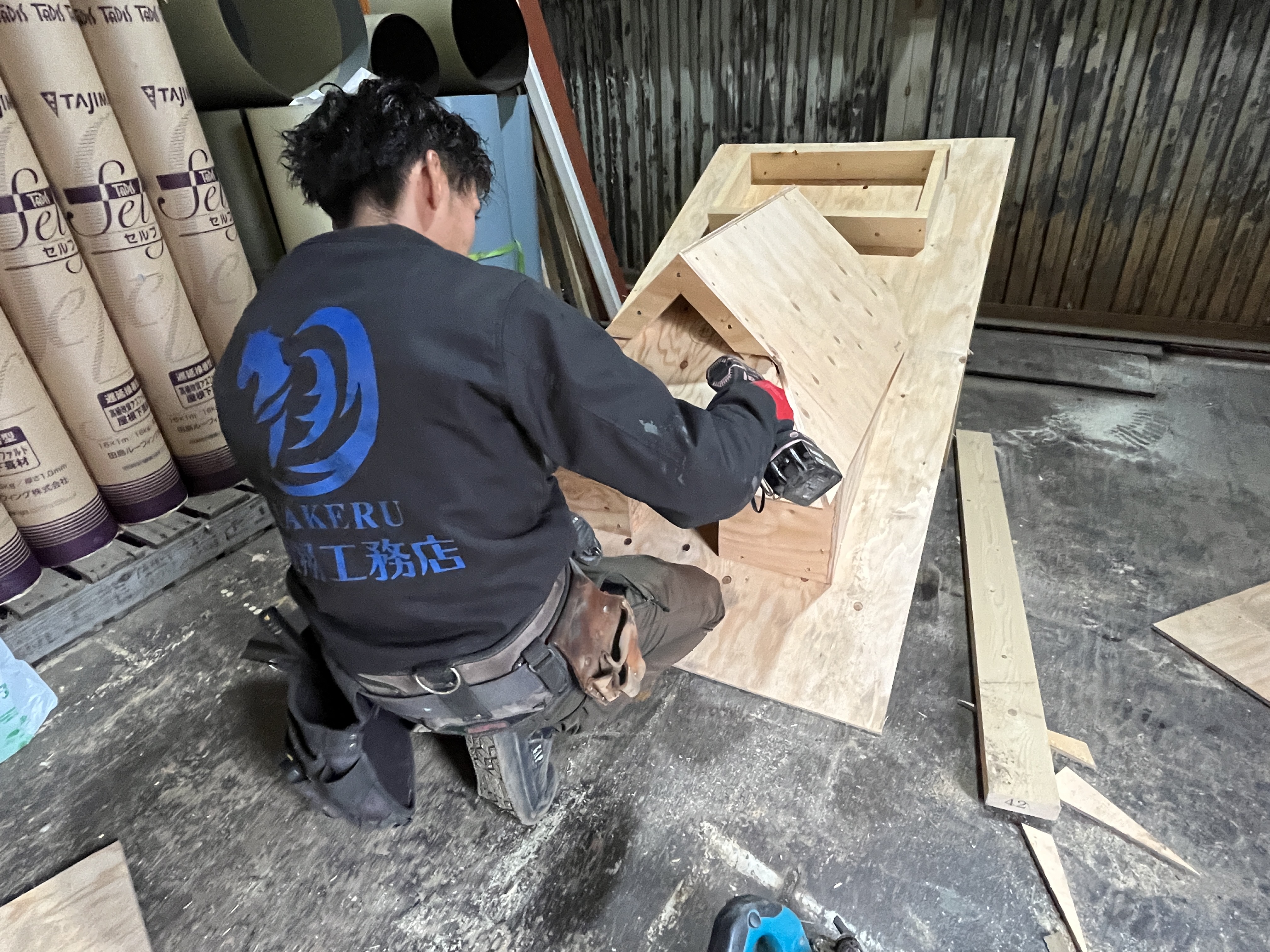
To improve skills, we create various roofing models and conduct practical training.
Since the construction methods vary depending on the shape and slope of the roof, we regularly provide technical training so that each staff member can handle various cases.
8. Creation of Easy-to-Understand Materials and Simulations
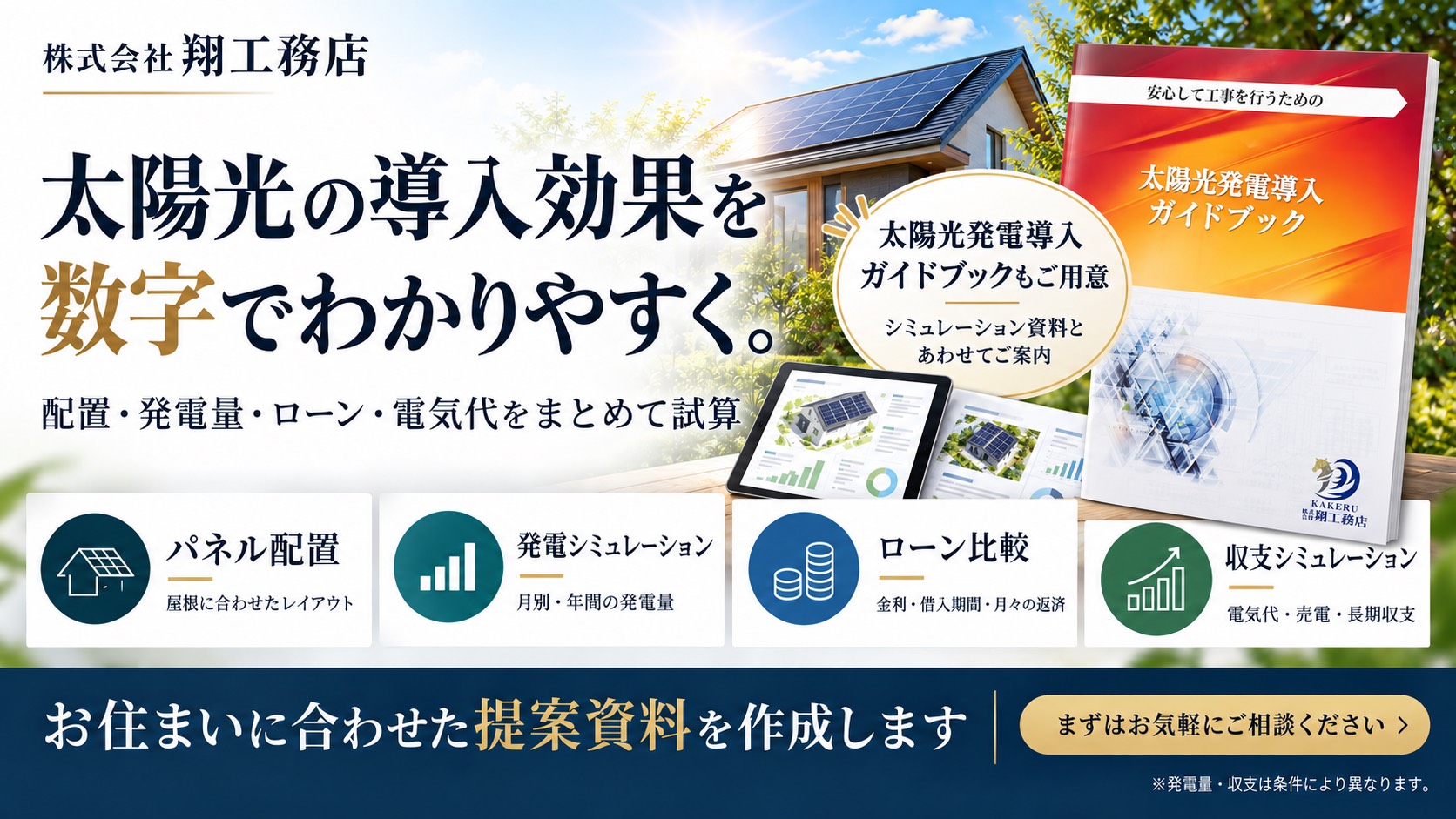
Kakeru Koumuten provides not only “estimates,” “layout diagrams,” and “power generation simulations” but also a “solar construction guidebook” and a “profit and loss simulation” that takes into account loan interest rates and electricity costs.
The profit and loss simulation can be created for projected cumulative profits and losses over 20 to 30 years.
Even customers who are not familiar with solar construction will receive easy-to-understand materials that include points to consider and disadvantages!
We encourage you to obtain comparative estimates and compare them with other companies’ plans!
Roof Inspection Before Installing Solar Panels
Once solar panels are installed, they will remain on the roof for 20 to 30 years.
Confirming “Is it okay to install them directly on the current roof?” before installation is the key point to prevent leaks and unnecessary expenses!
Kakeru Koumuten, which specializes in roofing work, has summarized the items to check before installation.
| 1. Types of Roofing Materials and Age | The fixing method varies depending on the roofing materials, such as slate, tiles, metal roofs, and flat roofs (rooftop waterproofing). If the remaining lifespan of the roofing material is short, we may suggest a roof renovation first. |
| 2. Condition of Substrate and Waterproof Sheet | If the sheathing boards or roofing (waterproof sheet) beneath the roofing material are damaged, it can affect the fastening strength and waterproofing. We will also check for any signs of water leakage. |
| 3. Roof Orientation, Slope, and Shadows | The orientation and slope of the roof, as well as shadows from neighboring houses, trees, and utility poles, can affect the amount of electricity generated. We will create a layout diagram from the drawings and the site, and you can check it with a power generation simulation. |
| 4. Roof Shape and Usable Area | The number of panels (installation capacity) that can be placed depends on the shape and size of the roof. Since the number of panels that can be installed varies depending on the panel size, we will compare based on the overall output of the roof. |
| 5. Fixing Method and Waterproofing Details | We will confirm whether the method involves drilling holes in the roofing material for fastening or using brackets to secure the roofing material. The fixing method varies by technique, so please check the waterproofing treatment method for the fixing parts during the estimate. |
| 6. Weight of the Roof | The roof will become heavier due to the panels being added. After investigating the existing roof, substrate, and load-bearing capacity, switching to lighter roofing materials may also be an option if necessary. |
| 7. Location of Equipment Installation and Wiring | We will check the installation locations for the power conditioner and storage battery, as well as the wiring route to the distribution board. The length of the wiring also affects the cost. |
| 8. Ease of Scaffolding Setup and Delivery Routes | If there are elevation differences on the site, careful planning for scaffolding and delivery routes for equipment and materials may be necessary. We will also check the width of the front road and any steps on the site during the on-site survey. |
Fixing Methods and Checkpoints by Roofing Material
| Roof Material | Main Fixing Method | Pre-Installation Check Points |
|---|---|---|
| Slate Roof | Varies by method (e.g., fixing brackets to roof material and substrate with screws) | Waterproofing treatment of fixed parts, cracks or deterioration of slate, condition of substrate. If deterioration is advanced, consider roof overlay (cover method) or replacement first. |
| Tile Roof | Fixed with brackets and methods suited to the type of tile (even methods that do not drill holes in the tiles will fix to the substrate) | Type and condition of tiles, substrate, load-bearing capacity. Depending on the investigation results, there may be methods to replace with lightweight roofing material before installation. |
| Metal Roof (Horizontal and Vertical) | Fixed with catch-type brackets that grip the roof material (depends on the combination of roof material and brackets) | Whether the roof material and brackets are compatible, installation conditions from the roof material manufacturer. If compatible, methods that do not drill holes may be available. |
| Flat Roof / Rooftop | Fixed by installing a frame | Type and deterioration status of the waterproof layer, waterproofing around the frame. Consider in conjunction with the timing of waterproofing work. |
If you plan to renovate the roof 10 to 20 years after installation, there will be additional costs for the removal and reinstallation of solar panels. If the roof is deteriorating, renovating to high-durability roofing material before installation may help reduce costs in the long run.
Kakeru Koumuten Co., Ltd. specializes in roofing work and can also handle the removal and reinstallation of solar panels in-house, so please consult us according to the condition of your roof!
▶ Click here for roof renovations in Odawara City
PotentialSubsidies and Grants in Odawara City, Kanagawa Prefecture
If you are introducing solar panels or storage batteries in Odawara City, you may be eligible for programs from the “National Government,” “Kanagawa Prefecture,” and “Odawara City”.
The following information is based on the official pages of each program as of October 6, 2026. The application status may change depending on the budget, so please check the latest information before contracting or starting work.
Eligibility Conditions and Application Timing for Subsidy Programs
| System | Main Eligibility Conditions | Subsidy Amount | Application Period & Status |
|---|---|---|---|
| Odawara City “Reiwa 8 Fiscal Year Key Measures Acceleration Project Subsidy (Residential Self-Consumption Solar Power Generation Equipment (Owned) & Storage Battery)” | Equipment owned and installed in residential properties within Odawara City is eligible. Self-consumption rate must exceed 30%. The storage battery must be installed simultaneously with solar power and have a capacity of 20kWh or less. No overdue municipal taxes. Orders, contracts, or construction before grant approval are not allowed. | Solar Power: 70,000 yen per kW of output (calculated based on the lower output of the panel or power conditioner) Storage Battery: One-third of the eligible expenses or the lower amount calculated at 51,600 yen per kWh. |
Applications are accepted from May 12, 2026, to December 18, 2026 (as of the update on September 25, 2026, there is no indication of closure on the city’s official page) Cannot be combined with national subsidies. Combining with prefectural subsidies requires individual confirmation. |
| Odawara City “Reiwa 8 Fiscal Year Global Warming Countermeasure Promotion Project Subsidy (Fixed Menu)” | Individuals introducing storage batteries, V2H, fuel cells, electric vehicles, ZEH, etc., in residential properties within the city. The storage battery must be installed with or simultaneously with solar power generation equipment. Application before construction is mandatory. | Storage Battery: 50,000 yen per case V2H: 50,000 yen per case ZEH: 100,000 yen per case, etc. |
The application deadline is January 31, 2027, but as of the update on September 25, 2026, the city’s official page states that applications for storage batteries and ZEH have reached the recruitment limit and are closed (1 case remains for V2H). |
| Kanagawa Prefecture “Reiwa 8 Fiscal Year Kanagawa Prefecture Residential Solar Power Generation & Storage Battery Installation Subsidy” | Must install both solar power generation and storage systems in residential properties within the prefecture (houses with ensured seismic performance). Applications must be made by the individual, and construction must start after grant approval. | Solar Power: 70,000 yen per kW Storage Battery: 150,000 yen per unit. |
Phase 1: May 11, 2026, to June 30, 2026 Phase 2: Starts September 7, 2026 (first-come, first-served) As of September 7, 2026, the application amount reached the budget limit, and acceptance has been closed. Please check the prefecture’s official page for future recruitment. |
| National “DR Home Storage Battery Project” (Reiwa 7 Fiscal Year Supplement) | Newly introduce registered home storage systems that can be utilized for DR (demand response). | Calculated based on an initial effective capacity of 34,500 yen per kWh (subsidy rate within 3/10; maximum of 600,000 yen per application). | As of May 29, 2026, the budget has been reached, and public recruitment has ended (the official site states there are no plans to reopen public recruitment, and applications are currently not possible). |
| National “Mirai Eco Housing 2026 Project” (Renovation) | Storage batteries are one of the eligible facilities, but they must be combined with essential works such as insulation renovation of windows (openings) and the structure; applications cannot be made for just the installation of storage batteries. Solar panels are not included in the eligible equipment | Storage battery: 96,000 JPY/unit | Ends as soon as the budget limit is reached. As of October 5, 2026, the application amount for renovations is displayed as 8% of the budget on the official website. Please check the application status on the official website. |
| Kanagawa Prefecture “Reiwa 8 Year Kanagawa Prefecture Self-Consumption Renewable Energy Introduction Subsidy” | Corporations and individual business owners filing blue returns (individual residences are not eligible). Solar power must have a generation output of 10kW or more, for business facilities, and equipment not certified under FIT/FIP, etc. | Solar power: 80,000 JPY/kW, etc. Storage system: 50,000 JPY/kWh (maximum 5 million JPY) |
Application closed on September 3, 2026 (when the application amount reached the budget amount) |
In Odawara City, you cannot place orders, contract, or commence construction before receiving the grant decision for any subsidies. The housing subsidies from Kanagawa Prefecture also require that construction begins only after receiving the “grant decision,” and starting work beforehand will make you ineligible. Additionally, the city’s priority measures acceleration project subsidies cannot be combined with national subsidies, and the eligibility for combination varies by system. It is not guaranteed that you will receive a grant just by applying, so please confirm before contracting or starting work.
Kakeru Koumuten will guide you on the eligibility conditions and application periods for each system after confirming them.
National Subsidy “DR Home Storage Battery Project (Support Project for Home Storage System Introduction for DR Resources)”
The national government has been implementing the “DR Home Storage Battery Project” to support the installation of home storage batteries.
This program targets those introducing new registered storage systems that can be used for demand response (DR), and in the Reiwa 7 fiscal year supplementary project, the subsidy amount was determined based on a standard amount of 34,500 JPY per initial effective capacity of 1kWh, with a subsidy rate of up to 30% and a maximum of 600,000 JPY per application. There are also conditions such as contracts and orders made before the grant decision being ineligible.
However, the Reiwa 7 fiscal year supplementary project reached the budget for grant applications on May 29, 2026, and the public recruitment has ended. The official website also states that there are no plans to reopen public recruitment, and applications are currently not possible. Please check the official website for future public recruitment.
Additionally, there are currently no subsidies confirmed for the installation of solar panels on existing homes.
👉 Click here for the official website of the DR Home Storage Battery Project
Kanagawa Prefecture “Reiwa 8 Year Kanagawa Prefecture Residential Solar Power Generation and Storage Battery Introduction Subsidy”
Kanagawa Prefecture provides subsidies for those who introduce both “solar panels” and “storage batteries” to their residences.
The subsidy details are as follows: 70,000 yen per 1kW of solar power generation output, and 150,000 yen per storage system.
For example, if you install a 4kW solar panel and one storage battery, the calculation for the subsidy amount would be 4kW × 70,000 yen + 150,000 yen = 430,000 yen.
The eligible properties are those that ensure seismic performance, and the storage system must be a registered product. Additionally, if construction begins before the grant decision, it will be ineligible, and the application must be submitted by the individual (applications by contractors on behalf of the individual are not allowed). It is noted on the official page of Odawara City that the priority measure acceleration project subsidy can sometimes be combined with Kanagawa Prefecture’s subsidies, so please confirm the conditions for combination before signing a contract.
For the fiscal year 2026, the first phase (May 11 – June 30) and the second phase (starting September 7, first-come-first-served) were accepted, and the second phase was closed on September 7, 2026, as the application amount reached the budget amount. For future recruitment, please check the official page of Kanagawa Prefecture.
👉 Click here for the official page of Kanagawa Prefecture
Kanagawa Prefecture “Fiscal Year 2026 Kanagawa Prefecture Subsidy for Introducing Self-Consumption Type Renewable Energy” (for businesses)
Kanagawa Prefecture is also implementing subsidies for businesses that introduce “self-consumption type” facilities that use electricity generated from solar panels.
Eligible applicants are corporations or individual business owners filing blue returns, and individual residential installations are not eligible.
Conditions include that solar power generation must have an output of 10kW or more, supply electricity to business facilities within the prefecture, and not be facilities certified under FIT or FIP.
The subsidy amount is 80,000 yen per 1kW of solar power generation, and 50,000 yen per 1kWh for the accompanying storage system (with a maximum of 5 million yen).
For fiscal year 2026, the application amount reached the budget amount, so recruitment was closed on September 3, 2026.
Businesses considering the installation of solar panels on commercial buildings in Odawara City should check the official page of Kanagawa Prefecture for the next recruitment.
👉 Click here for details
Odawara City “Fiscal Year 2026 Priority Measure Acceleration Project Subsidy (Household Self-Consumption Type Solar Power Generation Equipment (Owned) and Storage Battery)”
Odawara City is implementing the “Priority Measure Acceleration Project Subsidy” for those who introduce self-owned solar power generation equipment and storage batteries in residential properties within the city.
◎Subsidy Amount◎
● Solar power generation equipment: 70,000 yen per 1kW of generation output
●Storage Battery: One-third of the eligible expenses or the lower amount calculated at 51,600 JPY per kWh
For solar power generation equipment, the calculation is based on the lower output value between the panels and the power conditioner, multiplied by 70,000 JPY per kW. For example, if the lower value is 4 kW, the calculation for the solar subsidy amount would be 4 kW × 70,000 JPY = 280,000 JPY.
The target is self-owned equipment installed in residential properties within Odawara City, with the condition that the self-consumption rate of the generated electricity exceeds 30%. Storage batteries must have a capacity of 20 kWh or less and be introduced simultaneously with the solar power generation equipment. There are also conditions that there must be no delinquency in city taxes and that the applicant is not a member of organized crime. Orders, contracts, or construction cannot be carried out before receiving the subsidy grant decision.
The application period is from May 12, 2026, to December 18, 2026, and the city’s official page (updated September 25, 2026) indicates that applications are currently being accepted. It cannot be combined with national subsidies, and confirmation is required for combining with Kanagawa Prefecture subsidies.
For detailed requirements and application methods, please check the official page of Odawara City.
👉 Click here for the official page of Odawara City
Odawara City “Reiwa 8 Fiscal Year Global Warming Countermeasure Promotion Project Subsidy” (Fixed Amount Menu)
Odawara City also provides fixed subsidies for those introducing storage batteries, V2H, fuel cells (EneFarm), electric vehicles, ZEH, etc., in residential properties within the city. The subsidy is 50,000 JPY per case for storage batteries, 50,000 JPY per case for V2H, and 100,000 JPY per case for ZEH, with application before construction being mandatory. For storage batteries, it is a condition that solar power generation equipment is already installed or installed simultaneously.
The application deadline is January 31, 2027, but the city’s official page updated on September 25, 2026, indicates that applications for storage batteries and ZEH have reached the number of applications and are now closed, and there is only 1 case left for V2H. Please check the city’s official page for future application status.
👉 Click here for the official page of Odawara City
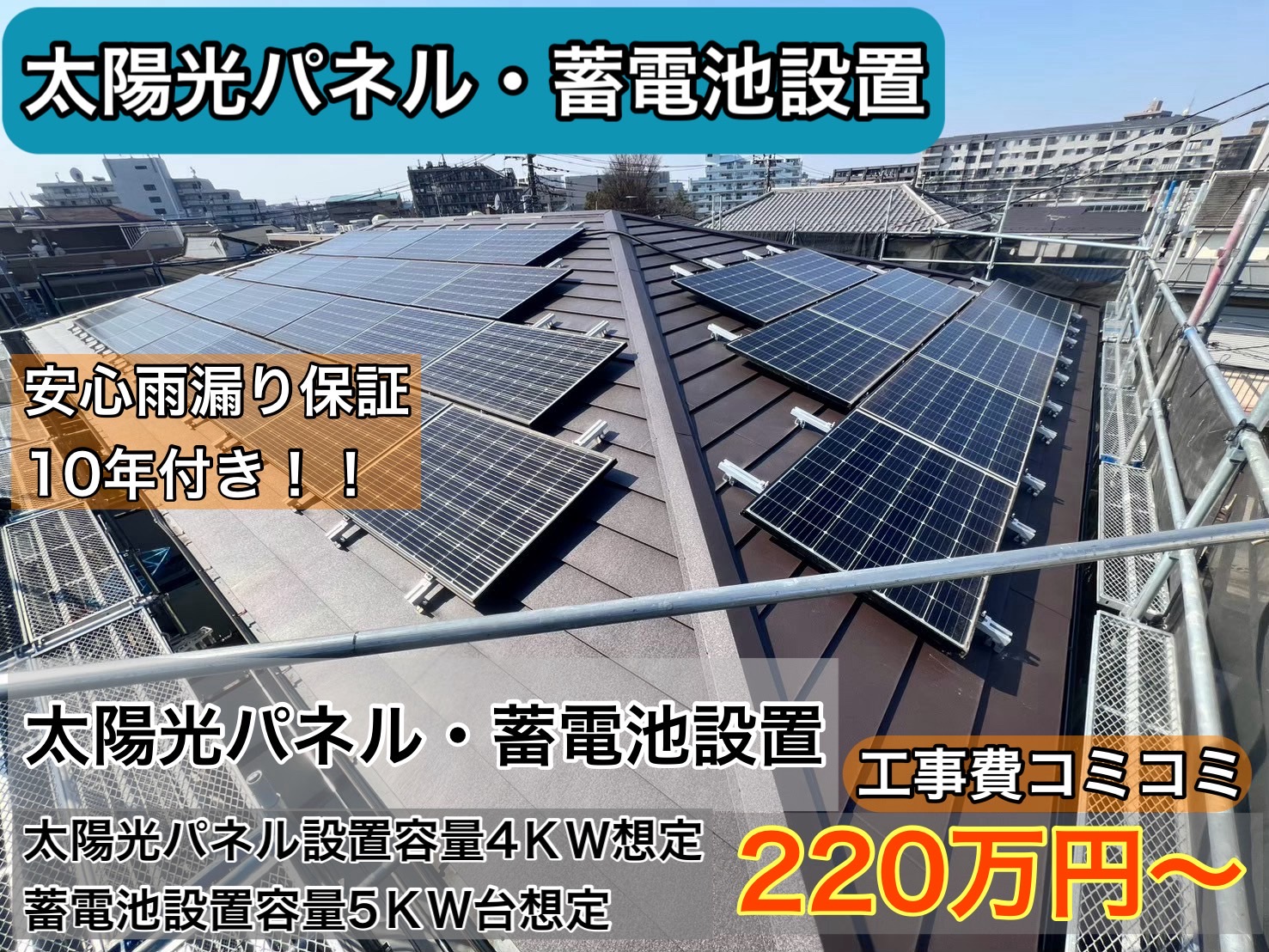
Solar Panel Installation & Storage Battery Installation Price List
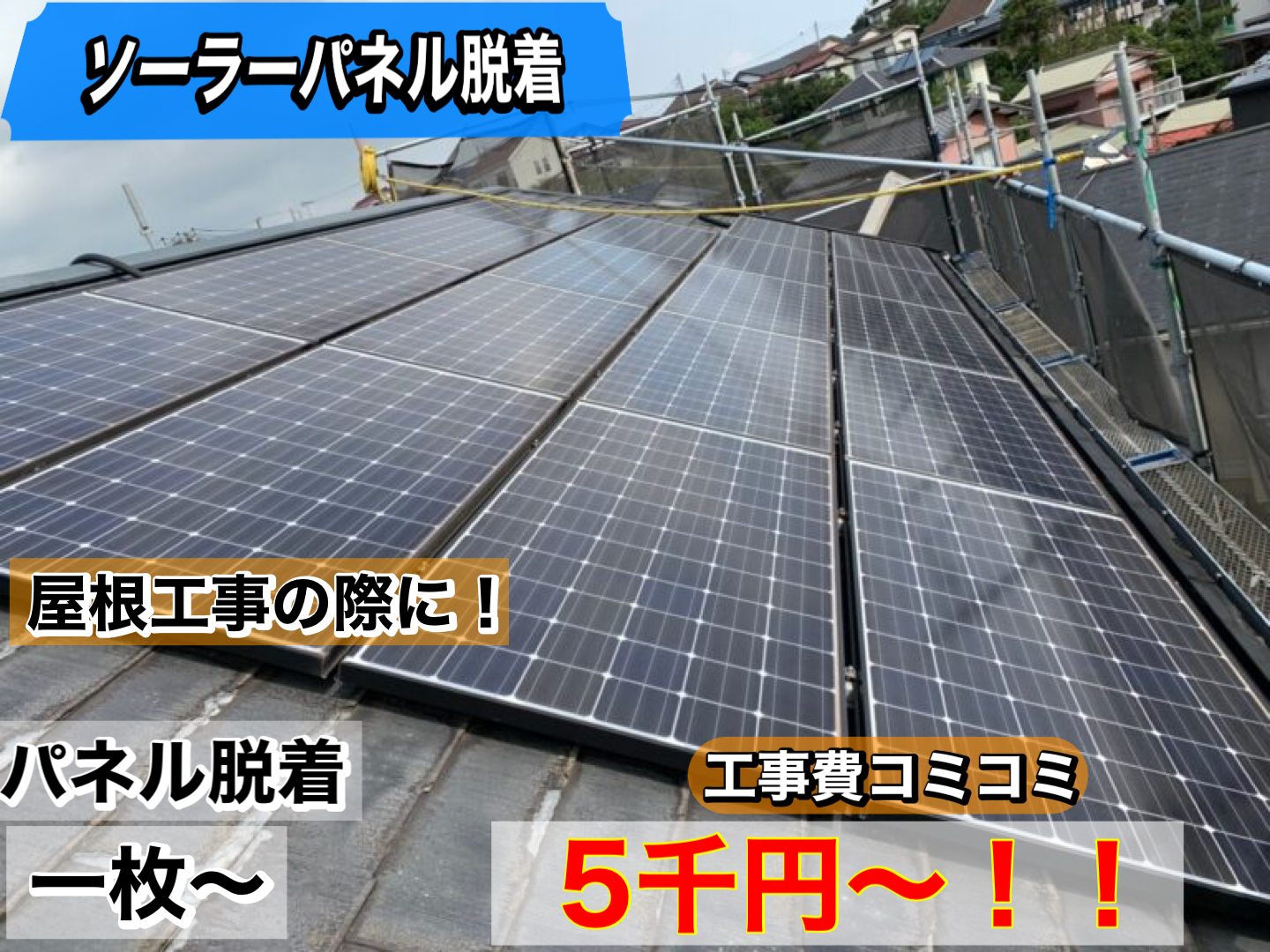
⇧Service Menu | For costs related to solar panel removal and water heater dismantling, click here
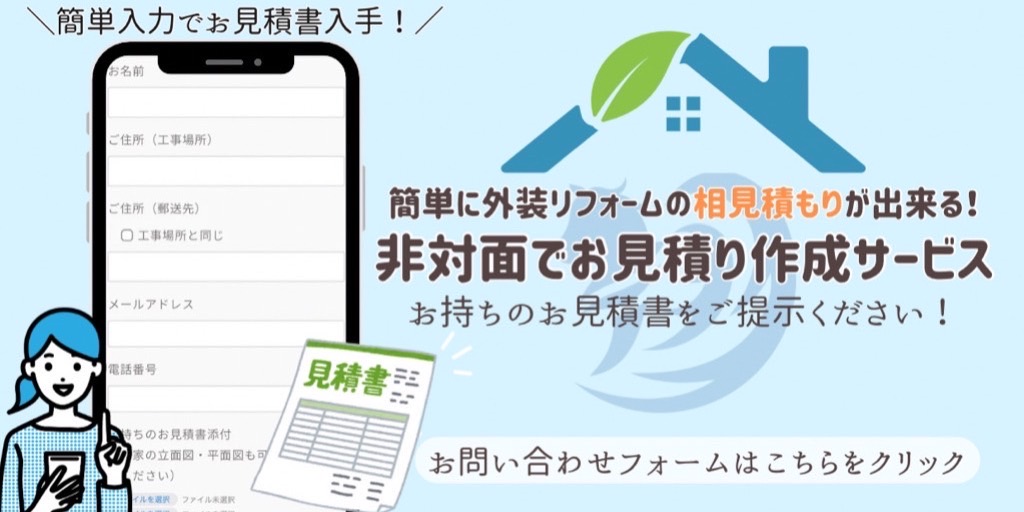
Breakdown of Installation Capacity, Equipment, and Construction Costs
The costs for solar panels and storage batteries should be confirmed by separating them into “Equipment Costs (Material Costs)” and “Construction Costs”.
Even for the same “Complete Solar Panel Installation,” the amount can vary greatly depending on the installation capacity, equipment grade, and roof condition.
Considerations for Installation Capacity (kW) and Storage Battery Capacity (kWh)
The installation capacity of solar panels is determined by “Output of One Panel (W) × Number of Panels”, with the unit being kW (kilowatt). Storage batteries are compared in terms of the amount of electricity they can store, represented in kWh (kilowatt-hour).
The amount of kW that can be installed on a roof varies for each house based on the roof’s shape, orientation, and size. At Kakeru Koumuten, we create layout diagrams from blueprints and on-site surveys to present the installation capacity.
On our pricing page, we list the costs for solar panels as approximately 800,000 yen to 1,200,000 yen for 3-5 kW and 1,200,000 yen to 1,900,000 yen for 6-10 kW. (These are just rough estimates and can vary based on wiring length, scaffolding range, existing roofing materials, panel layout, etc.)
▶ Service Menu | For costs related to solar panel installation and storage battery installation, click here
Items to Confirm in the Estimate (Cost Verification)
When comparing estimates, it is common to compare different capacities and equipment just by looking at the amounts. Please check whether the following items are clearly stated in each company’s estimate!
| 1. Solar Panels | Manufacturer, model number, output per panel (W), number of panels, total installation capacity (kW) are specified. |
| 2. Power Conditioner | Manufacturer, model number, capacity, number of units, installation location (indoor/outdoor). Also check if it is a type that controls the battery together. |
| 3. Storage Battery | Manufacturer, model number, capacity (kWh), range usable during a power outage (whole house or specific circuits), installation location. |
| 4. Mounting Frame and Fittings | Name of fittings suitable for roofing materials and method of securing them (whether it is a method that drills holes or a method that clamps and secures). |
| 5. Wiring and Electrical Work | Wiring route and length, work around the distribution board, presence of a monitor to check power generation. |
| 6. Roof Reinforcement and Waterproofing | Details of waterproofing treatment at fixed points, whether necessary roof repairs and substrate reinforcements are included. |
| 7. Application | How much support is included for applications to the power company, certification application for selling electricity (FIT), and subsidy applications. |
| 8. Scaffolding | Scope and quantity of scaffolding. If roof work and exterior painting are done simultaneously, check that the same scope and quantity are not counted twice. |
| 9. Removal and Disposal | Whether the removal of existing solar water heaters or old panels and disposal costs for waste materials are included. |
| 10. Tax Classification and Warranty | Whether it is tax-inclusive or tax-excluded, conditions under which additional costs may arise, details and duration of manufacturer warranty and workmanship warranty. |
If the capacity is different, the price and power generation will also change. Kakeru Koumuten Co., Ltd. welcome multiple estimates, so if you bring estimates from other companies, we will explain the differences by item!
Self-Estimate and Profit Simulation for Solar Power Generation
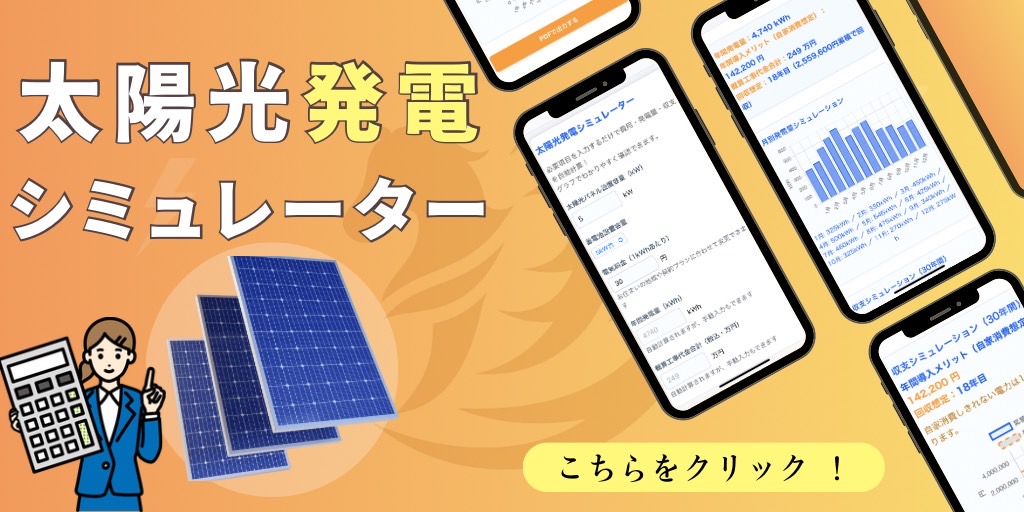
With the simulator above,
you can obtain an estimated quote and a profit simulation for up to 30 years!
If you know the total installation capacity of solar panels on the roof and the capacity of the storage battery, you can obtain an estimated quote and profit simulation!
*The simulation results are estimates. Actual profits may vary based on assumptions such as electricity rates, self-consumption ratios, selling prices, and costs for equipment inspection and replacement.
Customer Feedback
-
customer reviews
Asao-ku, Kawasaki City | We received reviews about the ridge cap and rain gutter replacement work!
-
customer reviews
Kohoku-ku, Yokohama | We received reviews about the roof overlay (cover method)!
-
customer reviews
Kohoku-ku, Yokohama | We Received Reviews About Exterior Painting!
-
customer reviews
Hodogaya-ku, Yokohama | We received reviews about our exterior fence construction!
-
customer reviews
Tsurumi-ku, Yokohama | We received reviews about roof and exterior wall painting, as well as metalwork and rain gutter replacement work!
-
customer reviews
Higashiyamato City, Tokyo | We received reviews about exterior painting and roof overlay (cover method)!
Case Studies of Solar Panel Installations
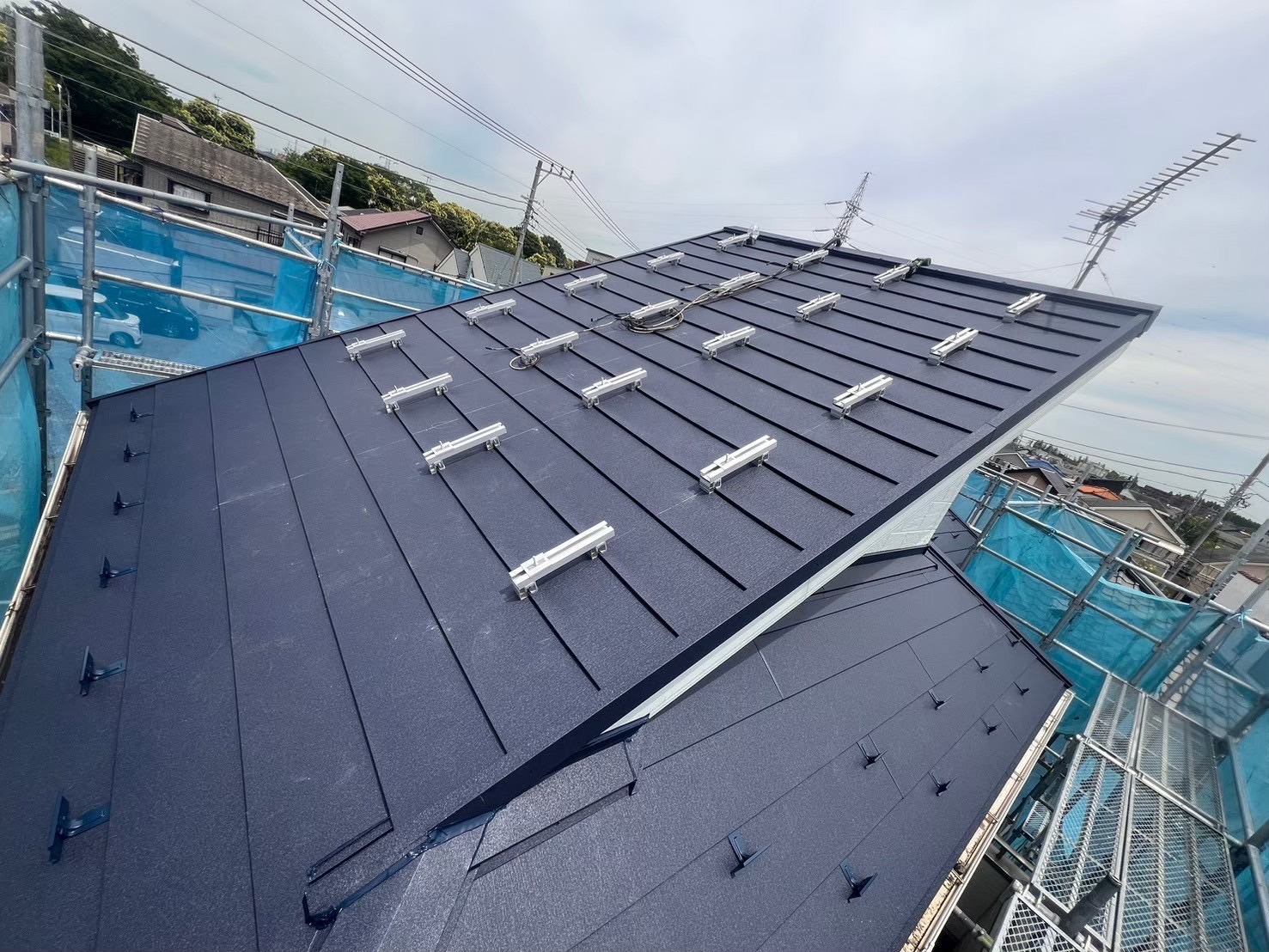
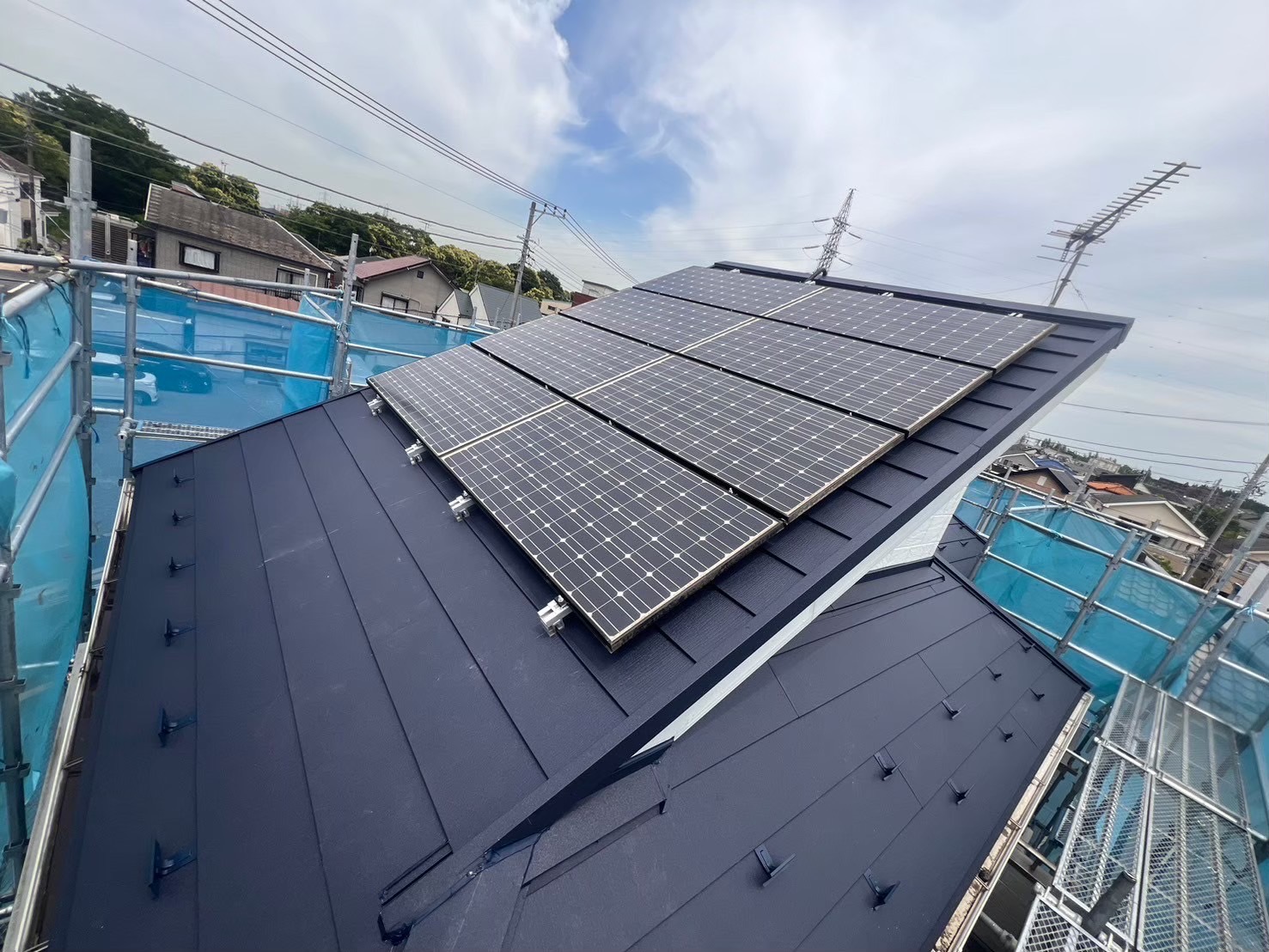
| Construction Details |
| Solar Panel Installation Battery Installation |
| Existing Roofing Material |
| Horizontal Metal Roof (Super Galtect) |
| Installation Capacity |
| Solar Panel: 4.3kW Battery: 5kWh range |
| Base Hardware Used |
| Niigata Manufactured / Aluminum Catch-Type Hardware |
| Fixing Method & Waterproofing Arrangement |
| Fixed by catching the horizontal metal roof with catch-type hardware (Catch Method) |
| Price Range |
| 2,200,000 JPY~2,300,000 JPY *Due to the subsidy being granted, the actual burden amount is approximately 1,000,000 JPY Estimated recovery period for construction costs: about 8 to 9 years (self-consumption) *The subsidy amount and recovery estimate are based on the system and calculations at the time of construction, and may differ under the current system. |
| Construction Period |
| Approximately 3 days |
| Completion Month |
| April 2025 |
| Inquiry Details |
| I am considering the installation of solar panels and storage batteries. I heard that subsidies are available, and I would like to know how much will be granted. |
Our Proposal
We visited to provide an estimate and created a layout diagram for the solar panels from the drawings!
The layout diagram shows the arrangement of the solar panels when placed on the roof.
Since we can also determine the installation capacity, it allows for power generation simulations and financial simulations.
We have also understood the expected amount of subsidies, so we explained this to the customer along with the estimate!
How to Choose a Solar Panel Installation Contractor in Odawara City
There are many solar panel installation contractors available in Odawara City, and you may be unsure which contractor to choose.
Therefore, when requesting solar panel installation and battery storage installation work, let’s confirm the following 4 points.
● Knowledge of roofs as well as solar panels
● Check for warranties and after-sales maintenance
● Obtain estimates from multiple contractors (3 companies as a guideline)
● Confirm if they provide support for subsidy applications
By confirming the above 4 points, you will be able to choose a reliable contractor.

Knowledge of roofs as well as solar panels
Defective installation of solar panels can sometimes be caused by a lack of knowledge and verification regarding roofs and waterproofing.
While knowledge of solar panels is certainly important, understanding the roof and waterproofing at the installation site of the solar panels is also crucial.
⚠︎Examples of troubles due to insufficient verification of roofs and waterproofing
・Solar panels installed on a severely deteriorated roof causing leaks
・Solar panels installed on a roof with a short lifespan, requiring remodeling for removal and reinstallation within a few years
・Misjudging the type of waterproofing and performing incorrect treatment, leading to leaks
and more
When installing solar panels, understanding the condition and type of the existing roof allows you to avoid unnecessary expenses and unexpected troubles.
▶ Go to “Roof Verification Before Installing Solar Panels” in this article
Check for warranties and after-sales maintenance
When choosing a solar installation contractor, let’s confirm the presence of warranties. It is important to check not only the duration of the warranty but also the coverage, disclaimers, and cost conditions.
While solar panels and battery storage come with manufacturer warranties, also check for the presence of a workmanship warranty in case leaks occur after installation!
For contractors that offer a workmanship warranty, if leaks occur after installation, they may cover it under warranty as long as it falls within the warranty period and conditions.
Additionally, some contractors provide after-sales services separate from warranties, so make sure to check if the contractor you are considering has after-sales service.
Since abnormalities and damages on the roof may be in unseen areas, you might not notice them yourself.
By conducting inspections of these unseen areas during after-sales maintenance, you can more easily detect abnormalities early and prevent major repairs or failures!
At Kakeru Koumuten Co., Ltd., the installation of solar panels comes with a leak warranty as part of our workmanship warranty. (The warranty for solar panel installation is 10 years, and depending on the condition of the roof before installation, we may not be able to provide a warranty unless roof renovation is performed.)
We also provide aftercare maintenance, sending out annual DM notifications!
Please check the DM, and if you wish, we will visit for aftercare maintenance!

Get estimates from multiple contractors (3 companies as a guideline)
When requesting solar panel installation, be sure to get estimates from multiple contractors.
Even for the same manufacturer and the same construction content, costs and warranties or after-sales services may differ.
Additionally, obtaining multiple estimates makes it easier to negotiate prices.
To request your preferred contractor at a lower price, we recommend getting estimates from multiple contractors.
When comparing estimates, please check:
“Verification of estimate items”
“Types of solar panels”
“Warranties and after-sales services”
and make a detailed comparison! If the rank of auxiliary materials is low or if processes are skipped, costs can be reduced, so avoid judging solely based on price!
▶ To “Breakdown of installation capacity, equipment, and construction costs” in this article
Check if they provide support for subsidy applications
There may be subsidies available for solar panel installation and battery installation, but if the order of procedures is incorrect or if there are deficiencies in the documents, the subsidy may not be granted.
For systems like Kanagawa Prefecture’s housing subsidies, where contractors cannot apply on behalf of clients, it is reassuring to have a contractor who can support the preparation of necessary documents and the flow of procedures.
Complete the procedures specified for each system (for the prefectural housing subsidy, this means obtaining a grant decision) before proceeding with the construction!
For the prefectural housing subsidy, after the construction is completed, a performance report must be submitted, and the flow will involve a review before the grant is issued! (The flow of procedures varies by system)
▶ To “Subsidies and grants that may be applicable in Odawara City” in this article
Benefits of Introducing Solar Equipment
The benefits of introducing solar panels are as follows!
Benefit 1: Economic Benefits

The biggest advantage of introducing solar panels is the economic benefit!
The selling price of electricity has decreased compared to ten years ago, but by consuming the electricity generated, you can reduce the amount of electricity purchased from the utility company and gain benefits!
As electricity prices rise, the ability to cover your consumption with solar power becomes attractive!
If you plan to use the generated electricity at night, the installation of a storage battery is essential!
Furthermore, the selling price (FIT) for residential use (under 10kW) will be set as “24 yen/kWh for the first four years, and 8.3 yen/kWh from the fifth to the tenth year” for certifications after October 2025, and the same price will apply for the 2026 fiscal year. After the fifth year, it tends to be more advantageous to use it at home (self-consumption) rather than selling it, so combining it with a storage battery is also an option.
👉 Ministry of Economy, Trade and Industry | For purchase prices and periods, click here
Advantage 2 You can utilize subsidies!

The conditions and amounts of subsidies vary by prefecture and municipality, but if you meet the conditions, you may be able to utilize subsidies!
Reducing the actual burden through subsidies is a significant advantage!
In the case of Odawara City, there is a possibility that subsidies from the city and Kanagawa Prefecture may apply.
Advantage 3 Environmentally friendly!
Solar power generation has low carbon dioxide emissions and can reduce dependence on fossil fuels, contributing to the mitigation of global warming.
Solar panels themselves do not produce noise or exhaust gases during the generation process, making them an environmentally friendly method of power generation. (However, devices like power conditioners do have operational noise.)
Advantage 4 Heat insulation effects can be expected!!
By installing on the roof or rooftop, the panels block direct sunlight to the roof.
Especially in summer, it can help suppress the rise in roof temperature, so heat insulation effects can be expected!
(Note that this does not improve the insulation performance of the building itself.)
Benefit 5 Electricity can be used even during power outages!
If you install a storage battery, you can use electricity even during emergencies like power outages!
Even without a storage battery, if you have a power conditioner with autonomous operation functionality, you may be able to use electricity from a dedicated outlet during daytime generation.
(The devices, output, and duration that can be used during a power outage vary depending on the model and wiring method.)

What points should be noted when introducing solar power generation?
Next, we will explain the “three points to note” when installing solar panels!

Point 1 Maintenance costs are incurred
A particularly overlooked maintenance cost is for the roof where the solar panels are installed.
If you perform roof renovations 10 to 20 years later, there will be costs for removing and reattaching the solar panels.
If the existing roof is deteriorating, it is reassuring to renovate it with durable roofing materials before installing the solar panels!
Additionally, there will be costs for regular inspections of the equipment, repairs or replacements of the power conditioner, and updates due to the deterioration of the storage battery.
It would be reassuring to consider maintenance costs in simulations before introducing solar panels!
Point 2 The risk of leaks increases depending on the roofing material
The fixing methods for slate roofs and tile roofs vary by construction method, but in methods that fix hardware to the roofing material and substrate with screws, waterproofing of the fixed parts is crucial.
In methods that create holes in the roof, the risk of leaks inevitably arises.
Of course, we will ensure proper waterproofing, but if you are concerned about making holes, replacing the roofing material with a metal roof and fixing the solar panels using the catch method is also an option. (The catch method has compatibility conditions between the roofing material and hardware, and it cannot be used with all metal roofs.)
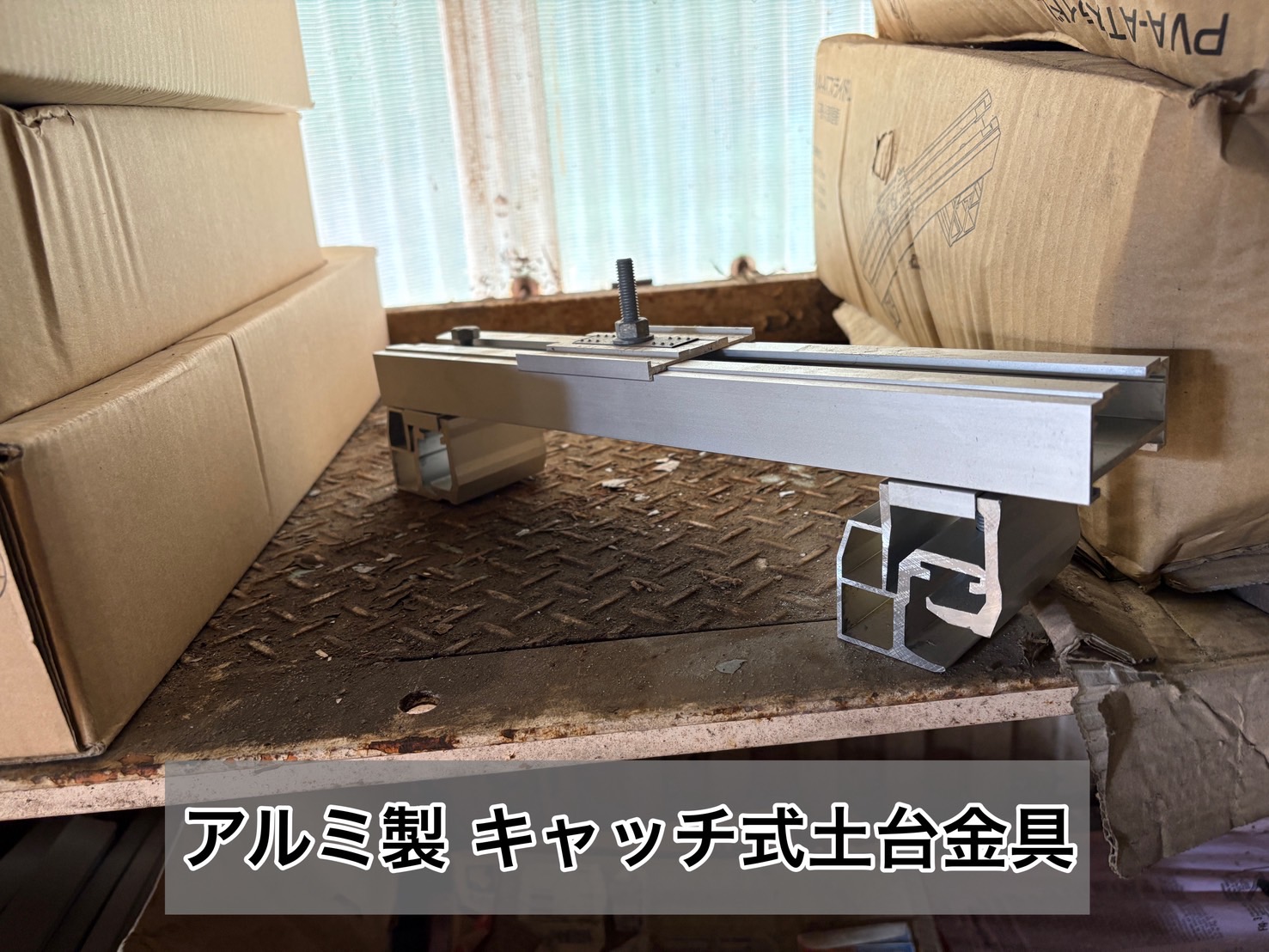 Catch-type base hardware specifically for horizontal metal roofs
Point 3 The roof becomes heavier
To accommodate the solar panels, the roof will become heavier. After investigating the existing roof, substrate, and load-bearing capacity, replacing it with a lighter roof may also be an option if necessary.

How to Choose Solar Panels?
There are many manufacturers of solar panels, and their output and costs vary.
It is not simply a matter of “this manufacturer has the best solar panels”; it is important to choose solar panels that are suitable for your life plan and building!
Here are some points to consider when selecting solar panels!
Choosing Method 1: Compare Based on Total Output of the Roof
When installing solar panels on the roof, it is important to consider how much electricity can be generated in a limited area, and the more electricity generated, the better!
The size and output of solar panels vary by manufacturer.
For example, a 350W output panel and a 400W output panel may seem that the higher output panel is better at first glance.
However, if the size of the panel does not fit well on the roof, there may be cases where “20 panels of 350W can be installed” and “15 panels of 400W can be installed,” leading to different numbers of panels that can be installed on the same roof due to size differences.
400W×15 panels = 6kW (total output of the roof)
350W×20 panels = 7kW (total output of the roof)
As shown above, even if the output of a single panel is lower, the total output of the roof may be higher!
It is important to consider the total output of the roof rather than the output of a single panel!
*The above calculations are for total output (kW). The actual electricity generation (kWh) will vary based on conditions such as the roof’s orientation, slope, and shading.
Choosing Method 2: Compare Based on Degradation Rate of Solar Panels
Solar panels have a degradation rate, and their output gradually decreases over 10 and 20 years.
The degree of output reduction after long-term use varies by product. The manufacturer’s output guarantee values are standard figures for warranty purposes and do not indicate the actual degradation rate or electricity generation itself.
By considering the degradation rate along with the initial output, you can choose solar panels without regrets!
Choosing Method 3: Compare Based on Warranty Period
There are several types of warranties for solar panels, including “output warranty,” “natural disaster warranty,” and “system warranty,” and the warranty periods vary by manufacturer.
For output warranties, some manufacturers offer a 30-year warranty, while others may only provide a 10-year warranty, so it varies!
Longer warranties are better, so be sure to check the warranty periods and conditions of the manufacturers you are considering!

Frequently Asked Questions about Solar Power and Storage Battery Installation in Odawara City
We have compiled frequently asked questions from customers considering the installation of solar panels and storage batteries in Odawara City. (Tap to open the answers)
How much does it cost to install solar panels and storage batteries in Odawara City?
The installation cost varies depending on the capacity, equipment, and condition of the roof. In the above construction example (solar panel 4.3kW + storage battery, completed in April 2025), it was 2,200,000 yen to 2,300,000 yen.
Guidelines for different capacities are published on our solar panel and storage battery installation pricing page. We will create a layout diagram from the drawings and site survey and provide a free estimate!
Are there any subsidies available for solar panel and storage battery installation in Odawara City?
As of October 6, 2026, the Odawara City Priority Measures Acceleration Project Subsidy (70,000 yen per kW for solar panels, one-third of the cost for storage batteries, etc.) is accepting applications until December 18, 2026, and cannot be combined with national subsidies. Kanagawa Prefecture’s subsidy (70,000 yen/kW for solar panels and 150,000 yen per unit for storage batteries) reached its budget limit on September 7 for the second phase of Reiwa 8 and is now closed, and the national DR home storage battery project has ended its public recruitment.
Since the application status may change, please refer to the subsidies and grants section and consult with us before signing a contract.
Can I apply for subsidies after the construction is completed?
Both the Odawara City subsidy and the Kanagawa Prefecture subsidy require procedures to be completed before construction. The city subsidy does not allow ordering, contracting, or construction before the grant decision, and the prefectural subsidy also requires “construction to begin after the grant decision,” so starting work beforehand will disqualify you.
The order of procedures varies by system, so please confirm before signing a contract or starting construction.
Can solar panels be installed on a slate roof? I’m worried about leaks.
It is possible to install on a slate roof, but it is necessary to check the condition of the roofing material and substrate. The fixing method varies by construction method, and for methods that fix brackets to the roofing material or substrate, waterproofing treatment of the fixed parts is essential.
Kakeru Koumuten is a specialized exterior renovation company strong in roofing work, so we will check the condition of the roof before installation and suggest methods such as roof overlay or replacement if deterioration is progressing.
My roof is old. Should I do a roof renovation first?
It depends on the condition of the roof. If a roof renovation is needed within 10 to 20 years after installation, the cost of removing and reinstalling the solar panels will be incurred separately. If the remaining lifespan of the roof is short, it may be more cost-effective to renovate to a highly durable roofing material before installation.
Please consult us on how to proceed with the installation after checking the condition of the roof during the site survey!
Is it better to install a storage battery together with solar panels?
If you want to use the generated electricity at night or prepare for power outages, simultaneous installation is recommended. The selling price for electricity will be 8.3 yen/kWh after the fifth year, making it more advantageous to use it in your home rather than selling it.
Additionally, the subsidies in Kanagawa Prefecture require the simultaneous installation of solar panels and storage batteries. The subsidy for the Key Measures Acceleration Project in Odawara City also applies to storage batteries with a capacity of 20kWh or less that are installed at the same time as solar power generation equipment. You can compare “solar only” and “solar + storage battery” in the profitability simulation.
How many kW can be installed on our roof? Is it okay for north-facing roofs or roofs with shadows?
The capacity that can be installed varies depending on the shape, orientation, and size of the roof. At Kakeru Koumuten, we create a layout diagram based on the blueprints and on-site survey, and we will provide you with the installation capacity and power generation simulation.
Odawara City has residential areas in flatlands, as well as locations near mountains and hills, and areas facing Sagami Bay. Therefore, the shading from surrounding buildings and trees and the installable capacity differ for each house. You can check the expected power generation through the power generation simulation.
How long will the construction period be?
In the above construction example (solar panel 4.3kW + storage battery), it took about 3 days. The duration may vary if roof work is performed simultaneously or depending on the roof shape and installation capacity.
Please note that additional time is required for applications for subsidies and power companies, so please consult us as soon as possible.
What is the current selling price (FIT)?
For residential use (under 10kW), from certifications after October 2025, the first four years will be 24 yen/kWh, and from the fifth to the tenth year, it will be 8.3 yen/kWh, and the same prices will apply for the 2026 fiscal year.
The idea is to recover initial costs more quickly in the first four years and then focus on self-consumption. Kakeru Koumuten provides profitability simulations that take into account loan interest rates and electricity prices.
Can you handle maintenance and inspections after installation?
Yes, we can. Kakeru Koumuten sends out annual after-maintenance DM notices and visits customers who wish to have inspections. We can also clean solar panels with a dedicated brush if the power generation decreases due to dirt.
Since the roof is a difficult area to check by yourself, please feel free to consult us if you have any concerns.
Can you also handle renovations for roofs that already have solar panels installed?
Yes, we can. Kakeru Koumuten can detach and reattach solar panels in-house, allowing us to remove the panels, perform roof overlay (cover method) or re-roofing, and then reinstall them consistently. The removed panels can be stored in our own warehouse.
For costs, please refer to the solar panel detachment and water heater removal pricing page.
If you are looking for a solar panel installation contractor in Odawara City, please consult Kakeru Koumuten
Our company handles a wide range of exterior renovations, including roofing work and exterior wall work, in Odawara City, including solar panel installations.
We receive requests from many customers, including renovation companies and real estate agencies, who have contacted us!
Kakeru Koumuten Co., Ltd. promises “high-quality renovations at low costs”, and we have received positive feedback from many customers.
We continue to update our annual construction performance records, and we will strive to improve quality to satisfy even more customers in the future.
Our company can perform all exterior renovations, not only roof overlay work and re-roofing but also partial roof repairs, exterior painting, and exterior wall cover methods.
We are also happy to assist with small jobs such as partial repairs and rain gutter cleaning!
In urgent cases such as leak repairs, we may be able to provide temporary measures without setting up scaffolding, as long as safety can be ensured, so please consult with us!
“I want to know about recommended solar panels”, “I want to keep costs down as much as possible”, “I just want an estimate for now”, we will provide optimal solutions for specific requests.
We will never propose unnecessary work that prioritizes profit!
We always stand in the customer’s position and will propose the best construction plan!
We are confident that we will not lose in terms of cost, quality, and planning compared to other companies in exterior construction!
We welcome competitive estimates with confidence!
Estimates are completely free, and if our company is found to be inferior to others, you are free to decline!
Characteristics of Odawara City and Points for Solar Panel Installation
Odawara City is described as having mountains connected to the Hakone mountain range in the west, hilly areas called Soga Hills in the east, the Ashigara Plain where the Sakawa River flows in the center, and facing Sagami Bay in the south, making it a city with a varied topography of mountains, hills, plains, and sea. We have summarized the characteristics of each area in Odawara City and points to consider when installing solar panels and storage batteries below. (Tap to open)
View the characteristics of Odawara City and points for solar panel installation
■ The Ashigara Plain along the Sakawa River requires checking the shadows of surrounding buildings and installation capacity for each house
In the center of the city, the Sakawa River flows north and south, and the Ashigara Plain spreads out. In residential areas of the plain, the shadows cast by adjacent buildings and the number of panels (installation capacity) that can be placed on the roof vary from house to house. At Kakeru Koumuten, we create layout diagrams based on the drawings and the actual site conditions, and you can confirm this with a power generation simulation.
■ Sites near the western mountains and eastern Soga Hills should pay attention to tree shadows, fallen leaves, and scaffolding or delivery routes
The city’s weather page mentions that citrus and plum trees are cultivated in the hilly areas. In sites close to mountains, hills, and trees, attention is needed for shadowing and the decrease in power generation due to fallen leaves and dirt. Additionally, in sloped areas or sites with elevation differences, careful planning for scaffolding and the transportation routes for equipment and materials may be necessary. Kakeru Koumuten Co., Ltd. responds on-site with its own scaffolding team and owned scaffolding materials, and can also handle solar panel cleaning with specialized brushes and rain gutter cleaning.
■ Coastal areas facing Sagami Bay require prior confirmation of installation locations and equipment specifications
The southern part faces Sagami Bay. When installing in locations close to the sea, it is important to confirm in advance whether the panels, power conditioners, and storage batteries meet the manufacturer’s installation conditions (such as whether they are in areas subject to salt damage specifications). Please also consult about the placement of equipment considering the surrounding environment and information about your residential area that can be checked on hazard maps. If you want to use electricity during power outages, consider installing a storage battery.
■ Because the city has varied terrain from mountains to the sea, we check roofs and sites individually through on-site surveys
In Odawara City, where the conditions of the land differ between mountains, hills, plains, and coastal areas, the types of roofs, their ages, and surrounding environments vary from house to house. Kakeru Koumuten Co., Ltd. will propose methods for fixing, waterproofing arrangements, and scaffolding plans after confirming the type and condition of the roof and the situation of the site before installation.
■ Odawara’s annual sunshine hours are about 1,945 hours, and annual precipitation is about 2,000mm
According to the Japan Meteorological Agency’s average values (1991-2020), Odawara’s annual sunshine hours are about 1,945 hours. Monthly, August (about 202 hours) has the most, while June (about 131 hours) and October (about 131 hours) have the least. Additionally, the city’s official page states that the average annual temperature is around 16 degrees, and the annual rainfall is around 2,000mm, with winters being warmer than Tokyo, and snow rarely falling.
Power generation varies with the seasons and weather, so conducting annual power generation simulations and selecting the capacity of storage batteries to match peak electricity usage times are key points. Since it is also a region with high rainfall, proper waterproofing of roofs and securing of fittings is important.
Our company is based in Kanagawa Prefecture and handles many exterior construction and solar projects in Odawara City.
We are happy to assist with partial roof repairs such as roof overlay work, roof replacement, and leak repairs, as well as other repairs! Please feel free to consult us about any sudden troubles!
Service Area in Odawara City
Kakeru Koumuten Co., Ltd. accepts requests throughout Kanagawa Prefecture and Tokyo.
List of Areas in Odawara City
Odawara City Anabe / Odawara City Anabe Shinden / Odawara City Araya / Odawara City Iizumi / Odawara City Iidaoka / Odawara City Ikegami / Odawara City Isozuda / Odawara City Ishibashi / Odawara City Itabashi / Odawara City Irieida / Odawara City Enoura / Odawara City Ogi-machi / Odawara City Ogikubo / Odawara City Kotake / Odawara City Oniyanagi / Odawara City Kobune / Odawara City Kazematsuri / Odawara City Kamimachi / Odawara City Kamishinden / Odawara City Kamosoga / Odawara City Kayama / Odawara City Kawai / Odawara City Kitano-kubo / Odawara City Kuno / Odawara City Kuwahara / Odawara City Kōzutsu / Odawara City Kodai / Odawara City Kotobuki-cho / Odawara City Yonegami / Odawara City Koyahata / Odawara City Sakae-cho / Odawara City Sakawa / Odawara City Shimizu Shinden / Odawara City Shimo-Oi / Odawara City Shimo-Shinden / Odawara City Shimo-Hori / Odawara City Juji / Odawara City Jonai / Odawara City Shiroyama / Odawara City Soga Osawa / Odawara City Soga Gishi / Odawara City Soga Kōkai / Odawara City Soga Bessho / Odawara City Soga Yatsu / Odawara City Soga Hara / Odawara City Sobu / Odawara City Takada / Odawara City Tako / Odawara City Tajima / Odawara City Chiyo / Odawara City Nakazato / Odawara City Nakashinden / Odawara City Nakazone / Odawara City Nakacho / Odawara City Nakamurahara / Odawara City Nagatsuka / Odawara City Narita / Odawara City Nishi Otomo / Odawara City Nishi Sakawa / Odawara City Numashiro / Odawara City Nebukawa / Odawara City Nobukiyo / Odawara City Haneo / Odawara City Hamamachi / Odawara City Hayakawa / Odawara City Higashi Otomo / Odawara City Higashigaoka / Odawara City Higashimachi / Odawara City Fukawa / Odawara City Bessho / Odawara City Horinouchi / Odawara City Honmachi / Odawara City Maekawa / Odawara City Mizuno-o / Odawara City Midori / Odawara City Minami Itabashi / Odawara City Minami Kamosuga / Odawara City Minamimachi / Odawara City Yatsu / Odawara City Yanagishinden / Odawara City Yahagi / Odawara City Yamanishi / Odawara City Hasenjo
・Leave your exterior wall painting in Odawara City to Kakeru Koumuten!
・Leave your roof renovation in Odawara City to Kakeru Koumuten!
・Leave your exterior renovation in Odawara City to Kakeru Koumuten!
・Kakeru Koumuten Co., Ltd. construction achievements
・Kakeru Koumuten Co., Ltd. aftercare services
・Kakeru Koumuten Co., Ltd. construction menu and price list
・Kakeru Koumuten Co., Ltd. staff blog and announcements
・Explaining the importance of comparison estimates and key points!
・12 major manufacturers of solar power generation! Features and selection tips included!
・What are the installation costs for solar power generation? Thorough explanation of tips to reduce costs!
・What are the best locations for installing solar power generation? Key points for selecting installation locations included!
・Here is the introduction to solar power generation estimates!
We welcome inquiries via LINE as well◎

We are also updating our Instagram regularly◎ Please follow us◎
contact Kakeru Koumuten Co., Ltd.
Kakeru Koumuten is a young company whose team is, on average, in their late twenties, but our skills are second to none.
Our greatest strength is that we handle scaffolding, roofing and painting entirely in-house. In an industry where these tasks are usually divided among contractors, our complete service simplifies project management and helps keep costs down. Above all, if a problem arises, we respond promptly.
We proudly describe ourselves as the youngest and most helpful renovation company in Kanagawa!