Where is Sheet Waterproofing Recommended? What Types of Sheets are Commonly Used? Kakeru Koumuten Co., Ltd. Explains!

Welcome to Kakeru Koumuten Co., Ltd., the exterior renovation specialist in Yokohama!
At Kakeru Koumuten, we handle a lot of sheet waterproofing projects as well.
In this article, we will explain sheet waterproofing in as much detail as possible!
“Suitable and Unsuitable Installation Locations for Sheet Waterproofing”
“Types of Sheets Commonly Used in Sheet Waterproofing”
You can find information on the three points above!
We hope this will be helpful for those considering maintenance or renovation of sheet waterproofing, so please take a look.
What is Sheet Waterproofing?

For those considering waterproofing work,
you may have the question,
“What is sheet waterproofing?”
Some of you might be wondering.
Sheet waterproofing refers to the method of laying materials such as
– rubber sheets
– polyvinyl chloride
over an existing waterproof layer.
There are two types of sheet waterproofing: adhesive method and mechanical fastening method.
In the adhesive method, sheets are attached using adhesive.
This method is very popular because it does not require special tools and can be completed in a short period.
The mechanical fastening method uses specialized machinery to adhere the sheets.
Since there is no need to remove existing waterproof materials, this method can also lead to reduced construction time and cost.
What are the Advantages of Sheet Waterproofing?
Next, let’s take a closer look at the advantages of sheet waterproofing.
No need to worry about the substrate
With sheet waterproofing, there is no need to worry about the substrate.
Previous waterproofing work, whether it was urethane waterproofing or asphalt waterproofing, can be covered with a sheet.
Additionally, by using the mechanical fastening method explained earlier, it can reduce the impact of moisture, making it easier to prevent issues caused by incompatibility between the substrate and the waterproofing material.
Excellent durability
Sheet waterproofing is known for its excellent durability.
In some cases, it can last up to about 15 years, so
it’s recommended for those who want to reduce maintenance frequency
and for those considering installation in difficult-to-access areas where scaffolding cannot be set up repeatedly.
It is also a good choice.
Short construction period
Depending on the type, some may take about a week, but with sheet waterproofing, the work can be completed in 2 to 4 days.
A quicker construction means reduced labor costs, making it easier to keep costs down.
What are the disadvantages of sheet waterproofing?
Next, let’s take a closer look at the disadvantages of sheet waterproofing.
Not suitable for uneven surfaces
Sheet waterproofing is a method that is suitable for flat surfaces.
It is not very suitable for areas with many uneven surfaces or places with many fixed items like outdoor units.
This is because, with sheet waterproofing, sheets are adhered, and if the shape is complex, it becomes difficult to apply them neatly.
If it cannot be applied neatly, water can enter through the gaps, rendering the waterproofing work ineffective.
If you are considering waterproofing work in areas with complex shapes, it would be better to choose a different method.
Vibration noise occurs
If the work is done using the mechanical fastening method, vibration noise will occur as the sheets are applied using machinery.
Depending on the situation, noise troubles may occur, so it’s best to greet your neighbors in advance.
Where is sheet waterproofing recommended?
Sheet waterproofing is suitable for:
・Flat rooftops with few obstacles
・Rooftops that have already undergone waterproofing work
and so on.
To perform sheet waterproofing, it is essential that the surface is “flat.” If there are irregularities, installation may become difficult, so caution is necessary.
Additionally, sheet waterproofing is recommended for rooftops that have already undergone waterproofing using other methods.
As explained earlier, it can be installed without worrying about the substrate, allowing for efficient maintenance while keeping costs down.
What types of sheets are commonly used in sheet waterproofing?
Finally, let’s take a closer look at the types of sheets commonly used in sheet waterproofing.
Synthetic Rubber Sheets
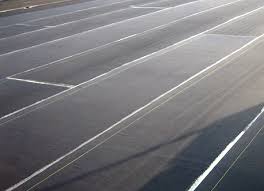
Synthetic rubber sheets are relatively flexible, making them resistant to earthquakes and other stresses.
Additionally, they are relatively inexpensive,
making them a good option for those who want to keep maintenance costs as low as possible.
Previously, they could only be installed using the adhesion method, but in recent years, rubber sheets suitable for mechanical fastening have become widespread, allowing waterproofing work to be done in a way that suits the building.
However, synthetic rubber sheets have a slightly lower waterproofing capability and a relatively shorter lifespan, which is a disadvantage, so caution is advised.
Vinyl Chloride Sheets
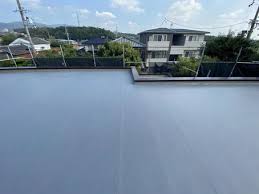
Vinyl chloride sheets are more durable compared to synthetic rubber sheets.
In recent years, the adoption rate has become higher than that of synthetic rubber sheets, so if you are unsure whether to choose synthetic rubber sheets or PVC sheets, opting for the latter is a safe choice.
Summary
Sheet waterproofing is a method that can be performed without worrying about the substrate.
Therefore, even if waterproofing work was done using a different method previously, you can carry out maintenance with peace of mind.
Additionally, since the construction period is relatively short, it is also recommended for those who want to finish as quickly as possible.
There are some disadvantages, such as being unable to perform installation in uneven areas and noise occurring with mechanical fastening methods, but from the perspective of cost performance and construction period, it can be considered quite excellent.
If you are considering sheet waterproofing, please feel free to consult with Kakeru Koumuten Co., Ltd.
For more helpful information on other exterior renovations, click here!
・Summary of Popular Exterior Wall Paint Colors! We will introduce recommended color combinations!
・For those who want to try DIY exterior wall painting! Scaffold installation only! Roof and exterior wall painting DIY plan!
・Latest! Subsidies in Kanagawa Prefecture! We will introduce subsidy and reduction systems!
・Is exterior wall painting necessary? We will introduce the risks of neglecting it!
・How much does exterior wall painting cost? Are there tips to reduce costs?
・When is the best time for exterior wall painting? How to determine the best timing!
・What are the ventilation methods for siding exterior walls and the direct application method? We will introduce maintenance methods!
・About joint and sealing work | We will introduce cost averages and construction methods!
LINE consultations are also very welcome◎

We are also updating our Instagram regularly◎Please follow us, thank you◎
contact Kakeru Koumuten Co., Ltd.
Kakeru Koumuten is a young company whose team is, on average, in their late twenties, but our skills are second to none.
Our greatest strength is that we handle scaffolding, roofing and painting entirely in-house. In an industry where these tasks are usually divided among contractors, our complete service simplifies project management and helps keep costs down. Above all, if a problem arises, we respond promptly.
We proudly describe ourselves as the youngest and most helpful renovation company in Kanagawa!