Exterior Painting in Major Renovations: Why It Matters, Warning Signs & Costs

The exterior walls of condominiums, apartments, factories, and other buildings are constantly exposed to wind, rain, and ultraviolet rays, and they inevitably deteriorate over time.
As a result, it is not uncommon for issues such as cracks, leaks, and corrosion of the structure to develop.
To prevent these risks, exterior wall painting during large-scale repairs is essential.
In this article, we will systematically explain the necessity of exterior wall painting, signs of deterioration,
construction details, and cost estimates involved in large-scale repairs.
What is exterior wall painting in large-scale repairs?
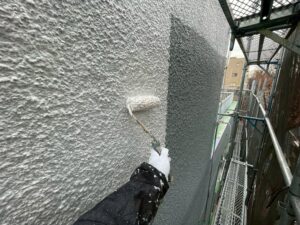
Exterior wall painting in large-scale repairs refers to
not just a cosmetic renewal, but a protective work to safeguard the building in the long term.
The paint film serves multiple functions such as “waterproofing,” “dirt resistance,” “weather resistance,” and “heat insulation”, essentially acting as a coating layer for the exterior walls.
If this layer deteriorates, rainwater can penetrate into the interior of the walls, leading to corrosion of concrete and rebar.
This can potentially result in structural damage.
For this reason, it is important to position exterior wall painting not only as an aesthetic improvement but also as a preventive maintenance work to extend the building’s lifespan.
Effects of exterior wall painting on buildings
Exterior wall painting is not merely a task of repainting.
In reality, it has multifaceted effects that directly relate to maintaining the building’s value and improving comfort.
Here, we will introduce the representative effects of exterior wall painting in large-scale repairs.
◎ Restoration of aesthetics and maintenance of asset value
Fading, dirt, and cracks in the exterior are significant factors that greatly diminish the building’s impression.
Even properties of the same age can be perceived as either “old buildings” or “well-maintained buildings” depending on the condition of the exterior.
By restoring cleanliness and uniformity through exterior wall painting, the first impression during viewings improves, which can positively influence occupancy rates and the speed of agreements.
As a result, this helps prevent rent declines and contributes to the long-term maintenance of asset value.
◎ Improvement of waterproofing and weather resistance
Exterior wall painting functions as a “protective membrane” that shields the structure from external stresses such as rainwater, ultraviolet rays, and snow.
When the paint film deteriorates, waterproofing decreases, making it easier for moisture to enter through minor cracks and joints. If this condition is left unattended, it can adversely affect structural durability.
By restoring waterproofing and weather resistance through repainting, it is possible to suppress the progression of such deterioration, thereby preventing the need for large-scale repair work.
◎ Improvement of comfort and energy efficiency
In recent years, there has been an increase in high-performance exterior wall paints that possess heat insulation and thermal insulation functions.
By utilizing these methods, you can suppress the rise in exterior wall surface temperature during the summer, leading to a stabilization of indoor temperatures.
This, in turn, reduces the cooling load, making it easier to save on electricity costs for common areas and individual units.
Additionally, in winter, heat will be less likely to escape, allowing for a comfortable indoor environment throughout the year.
◎Improving Resident Satisfaction and Competitiveness
Buildings with beautifully maintained exteriors create an impression of thorough management, fostering a sense of security.
This is a very important factor for residents when making decisions.
Conversely, properties that show noticeable deterioration are likely to raise concerns about equipment and safety, leading to increased vacancies and departures.
By maintaining cleanliness and reliability through regular exterior painting, you can expect long-term occupancy and improved word-of-mouth evaluations.
As a result, differentiation from surrounding properties progresses, making it easier to secure stable occupancy.
Signs of Exterior Wall Deterioration and When Painting is Necessary

To determine the optimal timing for exterior wall painting, it is essential to accurately read visual changes and subtle abnormalities.
If you overlook initial symptoms, additional repairs to the substrate or structural reinforcements may become necessary, significantly increasing the scale and cost of the work.
Here, we will introduce some typical signs of deterioration that indicate when it is time for repainting.
✔️Chalking
Chalking refers to the condition where white powder adheres to your hand when you touch the exterior wall.
This phenomenon occurs when pigments in the paint film break down due to ultraviolet rays and rain, appearing as a powder on the surface.
Chalking is evidence that the waterproofing function of the paint has deteriorated, and it is hardly fulfilling its role as a protective film.
Even if it looks clean, deterioration is often progressing internally, and if left unattended, it can lead to cracking and water intrusion. Therefore, if you notice chalking, it is advisable to repaint as soon as possible.
✔️Peeling, Blistering, and Cracking
Peeling and blistering of the paint film are evidence that adhesion to the substrate has been lost.
If this condition is left unattended, the exposed exterior wall will be directly exposed to wind and rain, leading to rapid deterioration.
Furthermore, if cracks occur, rainwater can infiltrate, causing damage to concrete and mortar.
If you address the issue while it is still at a stage that can be resolved with partial repairs, the burden will be lighter. However, if the symptoms have already progressed, large-scale repairs will be necessary, so be mindful of early intervention.
✔️Fading and Discoloration
Overall fading or mottled discoloration of the exterior wall is evidence that the paint’s weather resistance has decreased.
While it may seem like a mere aesthetic issue, in reality, the waterproofing and elasticity of the paint film are often simultaneously lost, reducing its ability to protect the building.
The deterioration of the exterior appearance directly affects occupancy rates and property evaluations, so to maintain both aesthetics and functionality, consider repainting if fading is observed.
✔️Darkening, Mold, and Algae Growth
If darkening, green algae, or mold is present on the exterior wall, there is a high likelihood that moisture is accumulating on the surface.
These are not just dirt; they are signs of deterioration indicating a decline in the coating’s functionality.
If left unattended, they not only damage the appearance but also accelerate the decomposition of the coating and promote the deterioration of the exterior wall materials.
Even if temporary improvements are made through regular cleaning, it does not lead to a fundamental solution, so it is recommended to consider measures including repainting.
✔️Occurrence of Cracks
Cracks refer to the fissures that occur on the exterior walls.
This phenomenon occurs due to temperature changes, earthquakes, and slight movements of the building, resulting in stress accumulation in the coating and substrate.
In particular, wide cracks and deep fissures can serve as entry points for rainwater, adversely affecting the internal concrete and rebar.
If addressed early with repair materials or repainting, it can be resolved with minor work, but if the symptoms progress, major substrate repairs will be necessary, so regular inspections should be conducted, and if abnormalities are observed, consider repainting as soon as possible.
Contents and Process of Exterior Wall Painting in Major Repairs
Exterior wall painting requires multiple processes to be carried out in order, from preliminary surveys to scaffolding installation, substrate treatment, painting, and finishing to ensure quality.
If any one of these steps is insufficient, it increases the likelihood of early peeling or water leaks, so caution is necessary.
Here, we will explain the typical flow of exterior wall painting and the roles of each process in detail.
1. On-site Survey and Deterioration Diagnosis
The quality of exterior wall painting work is greatly influenced by the accuracy of the on-site survey.
・Presence of Cracks
・Degree of Chalking
・Extent of Lifting or Peeling
・Condition of Waterproofing Layer and Sealing
It is important to carefully check these factors and thoroughly identify the areas that need repair.
If work begins without sufficient diagnosis, defects may be found after construction, leading to additional work.
To avoid such situations, it is essential to combine photographic records, tapping tests, and visual inspections to concretely grasp the degree of deterioration.
2. Scaffolding Installation and Debris Prevention Measures
To carry out safe and high-quality construction, stable scaffolding installation is essential.
This not only ensures the safety of the workers but also creates an environment for achieving uniform painting.
Additionally, the installation of mesh sheets and protective sheets to prevent paint and cleaning water from scattering around is also one of the important processes.
If these considerations are insufficient, it increases the likelihood of inconveniencing residents or developing neighborhood disputes.
Scaffolding is one of the higher cost items in temporary construction, but it is a crucial construction that supports construction quality and safety, so it is important to carry it out properly.
3. Cleaning the Substrate with High-Pressure Washing
The exterior walls before painting are covered with years of dirt, mold, algae, and powder from old coatings.
If painting is done without addressing this, the paint will not adhere properly, leading to early peeling.
Therefore, it is necessary to start by thoroughly removing dirt and deteriorated coatings using a high-pressure washer.
Cleaning the substrate is a more important process than it appears, and the thoroughness of the cleaning greatly affects durability.
4. Substrate Repair
Substrate repair is the process of correcting defects in the exterior wall before painting.
・Crack repair
・Repair of missing mortar
・Removal of lifting
・Reapplication of sealing
We will carry out these tasks to restore a healthy condition.
If painting is done while problems remain in the substrate, even the highest performance paint is likely to experience early peeling and re-deterioration.
For this reason, substrate repair can be considered the foundation for painting.
Accurately understanding the repair area and selecting appropriate materials and methods is the key point to achieving longevity.
5. Paint Selection and Painting
Choosing paint is a crucial process that determines the durability and functionality of exterior wall painting.
We will explain in detail later, but there are various types of paint, including acrylic, urethane, silicone, fluorine, and inorganic paints, each differing in service life, cost, and functionality.
When performing exterior wall painting, it is important to select the optimal paint according to the building’s purpose, location, and budget.
Additionally, the construction process is fundamentally based on three stages: primer, intermediate coat, and topcoat, ensuring a uniform finish while securing the film thickness.
Failure to adhere to the specified number of applications can lead to reduced durability, so it is essential to hire a contractor who will complete the work thoroughly without cutting corners.
Typical Types of Exterior Wall Paint
The quality and durability of exterior wall painting greatly depend on the type of paint chosen.
Here, we will provide a detailed explanation of the representative paints commonly used in exterior wall painting and how to choose them.
Acrylic Paint
Acrylic paint is characterized by being relatively inexpensive and easy to handle.
It has high workability and good color development, which is why it was widely used in many buildings in the past.
However, its weather resistance and durability are lower compared to other paints, with a service life of about 5 to 7 years, so it is now often limited to temporary buildings and short-term use cases where cost is a priority.
For this reason, it is somewhat unsuitable for repairs aimed at long-term use, such as large-scale renovations.
Urethane Paint
Urethane paint is a paint that is excellent in flexibility and adhesion, making it easy to apply to fine irregularities and complex shapes.
It offers a good balance between price and durability, with a service life of about 8 to 10 years.
It is suitable for auxiliary parts, metal parts, and wooden parts, making it effective for partial repairs and medium-scale renovations.
On the other hand, its resistance to ultraviolet rays is lower than that of silicone and fluorine, leading to a decrease in its use for extensive exterior wall painting.
Silicone Paint
Silicone paint is the most widely used standard paint in current exterior wall painting.
It excels in weather resistance, waterproofing, and dirt resistance, with a relatively long service life of 10 to 15 years.
Regarding price, it maintains a good balance with functionality and service life, which is why silicone paint is increasingly chosen for recent large-scale renovations.
Fluorine Paint
Fluorine paint is a high-performance paint with extremely high weather resistance and durability.
It is resistant to degradation even under harsh conditions such as ultraviolet rays, acid rain, and exhaust gases, with a service life estimated at around 15 to 20 years.
If you want to reduce the frequency of repainting while maintaining aesthetics and waterproofing over a long period, this is recommended.
Although the cost is relatively high, it can be economical when considering the life cycle cost.
Heat-Reflective and Insulating Paint
Heat-reflective and insulating paint is a functional paint that suppresses the temperature rise of buildings and enhances indoor comfort.
By reflecting infrared rays from sunlight and suppressing heat transfer, it reduces the rise in indoor temperature during the summer.
Using this paint can decrease the cooling load, leading to savings on electricity bills and energy efficiency.
Additionally, applying it to rooftops and exterior walls can improve the perceived temperature, contributing to higher tenant satisfaction.
Inorganic and Hybrid Paint
Inorganic and hybrid paints are high-durability paints that combine inorganic and organic components.
They are resistant to decomposition from ultraviolet rays, boasting a lifespan of over 20 years with very high performance.
Moreover, they have low pollution properties that make it difficult for dirt to adhere, and they excel in mold and algae resistance, making them ideal for maintaining aesthetics over a long period.
While the price is relatively high, they are optimal for large-scale repairs of condominiums and large facilities, as they significantly reduce the number of repainting required.
Cost Estimates for Exterior Wall Painting in Large-Scale Repairs

The cost of exterior wall painting varies significantly based on the size of the building, the degree of deterioration, and the type of paint used.
To create an accurate budget plan, it is essential to understand the breakdown of costs and market prices, and to grasp where and how much cost is incurred.
Here, we will explain the basic cost structure of exterior wall painting and provide price estimates by paint type.
Cost Breakdown
The cost of exterior wall painting can be broadly divided into “material costs,” “construction costs,” “scaffolding costs,” and “substrate repair costs”.
Material costs refer to the expenses for paint and protective materials, while construction costs pertain to labor and painting work expenses.
Scaffolding costs are necessary for ensuring safety and improving work efficiency, and they can account for 20-30% of the total cost.
Additionally, substrate repair costs for crack repairs and sealing replacements are added to this.
Cost Estimates by Paint Type
The cost estimates by paint type are as follows:
・Acrylic paint → Approximately ¥1,400–¥1,700/㎡
・Urethane paint → Approximately ¥1,600–¥1,900/㎡
・Silicone paint → Approximately ¥1,900–¥2,300/㎡
・Fluorine paint → Approximately ¥2,400–¥2,900/㎡
・Inorganic paint (Hybrid paint) → Approximately ¥3,000 and up/㎡
Higher performance paints tend to have higher initial costs, but their long lifespan allows for fewer repainting instances.
Therefore, it is important to consider not only short-term prices but also long-term life cycle costs.
For Large-Scale Repairs of Condominiums, Apartments, and Factories, Trust “Kakeru Koumuten Co., Ltd.”!

Large-scale repairs are crucial work that affects the asset value, profitability, and tenant satisfaction of a building.
To effectively restore the functionality and aesthetics of condominiums and apartments, it is necessary to comprehensively manage various processes, including exterior painting, waterproofing work, and substrate repairs.
That is why it is essential to engage a construction company with specialized knowledge and extensive experience.
Kakeru Koumuten Co., Ltd. handles many types of work required for large-scale repairs, starting with exterior painting.
We have a wealth of experience and can carry out work regardless of the type of building, including apartments, condominiums, and factories.
We provide consistent support from on-site surveys and planning to construction and aftercare, so if you are looking for a reliable contractor, please feel free to consult with us!
On-site surveys, estimates, and consultations are free!
Summary
Exterior painting in large-scale repairs is not just about restoring aesthetics; it is an important maintenance task that enhances waterproofing and durability, protecting the entire building.
By not overlooking signs of deterioration and carrying out painting and repairs at the appropriate time, you can maintain asset value while keeping future repair costs down.
However, the finish and durability can vary significantly depending on the type of paint, method, and choice of construction company.
That is why it is important to proceed with a trustworthy specialist contractor.
Kakeru Koumuten Co., Ltd. is equipped to handle many types of work carried out in large-scale repairs, so if you are in need, please feel free to consult with us.
・Aftercare by Kakeru Koumuten Co., Ltd.
・Construction Menu and Price List by Kakeru Koumuten Co., Ltd.
・Staff Blog and Announcements by Kakeru Koumuten Co., Ltd.
・Explaining the Importance of Comparing Estimates!
・What is the Cost Range for Large-Scale Renovations? A Thorough Explanation of Breakdown and Tips to Reduce Costs!
・When Should Large-Scale Renovations Be Conducted? An Explanation of the Optimal Timing and Risks of Delaying!
・Estimates are Essential for Large-Scale Renovations! Introducing Comparison Points and Precautions!
・5 Common Troubles in Large-Scale Renovations for Condominiums! A Thorough Explanation of Causes and Preventive Measures!
・What is Waterproofing Work in Large-Scale Renovations? A Thorough Explanation of Its Role, Signs of Deterioration, and Precautions!
・Insufficient Funds for Large-Scale Renovations… Explaining How to Address Funding Shortages and Preparations You Can Do Right Now!
・What is the Importance of Substrate Repair in Large-Scale Renovations? A Thorough Explanation of Its Necessity, Signs of Deterioration, and Types of Work!
・What is Sealing Work in Large-Scale Renovations? Introducing Its Role, Methods, and Tips to Avoid Failures!
・What is the important tile repair in large-scale renovations? Explanation of signs of deterioration, types of construction, and cost estimates!
We welcome consultations via LINE◎

We are also updating our Instagram regularly◎ Please follow us!

contact Kakeru Koumuten Co., Ltd.
Kakeru Koumuten is a young company whose team is, on average, in their late twenties, but our skills are second to none.
Our greatest strength is that we handle scaffolding, roofing and painting entirely in-house. In an industry where these tasks are usually divided among contractors, our complete service simplifies project management and helps keep costs down. Above all, if a problem arises, we respond promptly.
We proudly describe ourselves as the youngest and most helpful renovation company in Kanagawa!