[Kanagawa-ku, Yokohama] Vacant & Used Homes: Renovation Costs, Grants & Projects
For those considering renovations of used properties and vacant houses in Kanagawa Ward
I bought a used property, but I’m not sure if the renovation estimate I received is reasonable.
This is my first full renovation, and I’m worried about making mistakes.
I want to make the most of subsidies and grants.
For such concerns, Kakeru Koumuten Co., Ltd., which has numerous achievements and serves the Kanagawa Ward, will clearly explain the key points for a successful renovation.
Obtain estimates from at least 3 companies!
01Reasons for the Increase in Renovations of Used Properties and Vacant Houses in Kanagawa Ward
Kanagawa Ward in Yokohama is located north of Yokohama Station, featuring residential areas close to the city center such as Higashi-Kanagawa, Hakuraku, and Rokkakubashi, as well as the coastal areas of Koyasu and Shin-Koyasu. It is well-connected by JR, Keikyu, Tokyu Toyoko Line, and Yokohama Municipal Subway, providing good access to both Yokohama and the city center.
In residential areas on hills like Taimachi and Saito-buncho, you can find older wooden houses, and the generational transition of aging homes is progressing. This is why the option of “buying a used house and renovating (renovation) it to fit your lifestyle” is expanding in Kanagawa Ward.
Convenient Residential Areas Close to Yokohama Station
Popular areas such as Higashi-Kanagawa, Hakuraku, and Rokkakubashi, which are close to both Yokohama and the city center. The movement to live on through used properties and renovations is active.
Residential Areas on Hills like Taimachi and Saito-buncho
In hilly residential areas, there are older wooden houses, making it important to review seismic and insulation standards. Consideration for transportation and scaffolding is necessary in sloped locations.
Konan and Shinkoyasu Coastal Area
It is important to inspect the exterior walls and roofs, considering the dirt and damage caused by sea breezes and traffic, as it is close to the coastal industrial area.
Be Aware of the “Boundary” of New Seismic Standards
The seismic resistance of used houses varies greatly depending on the construction period. It is crucial to determine whether it was built before the standard revisions in 1981 and 2000.
This article summarizes the reasons, precautions, cost averages, the latest subsidies for 2026, and how to choose a contractor from the perspective of Kakeru Koumuten, aimed at helping those considering renovating used properties or vacant houses in Kanagawa Ward to avoid “failures.”
The Most Important Thing is “Comparative Estimates”
To avoid failures in renovations, the most important factor is comparative estimates. First, obtain estimates from at least three companies that operate in Kanagawa Ward. Our company, Kakeru Koumuten Co., Ltd., also receives numerous consultations and requests for renovations of vacant houses and used properties.
02Reasons for Renovating Vacant Houses and Used Properties

In recent years, the Japanese housing market has expanded options not only for new constructions but also for renovating used properties. There is a growing interest in living in renovated used houses. Here, we explain the typical reasons for renovating vacant houses and used properties.
Reason 1 To Live Comfortably as Your Own Home
One of the main reasons for purchasing and renovating a used property is “to live comfortably.” Older houses often have issues with roofs, exterior walls, and plumbing, making them difficult to live in as they are. By renovating and upgrading the facilities and interiors, you can create a comfortable living environment. Additionally, with changes to the layout and refreshing the interiors, depending on the renovation work, you can achieve a home that suits your family’s lifestyle while keeping costs lower than a new build.
Reason 2 To Increase Asset Value for Sale
More people are purchasing and renovating used properties with the intention of selling them. Used houses are often valued low as they are, but renovations can enhance their appearance and performance, increasing their value as properties.
Reason 3 To Utilize as Investment or Business
For purchases made for investment or business purposes, renovations are essential. By transforming them into stylish rentals or share houses, you can differentiate them from other properties, and depending on the location and planning, you can also expect improved profitability. Initial costs can be lower than new constructions, and depending on the usage and conditions, they may also qualify for subsidies or tax incentives, leading to an increase in the number of people utilizing vacant houses for business.
03Points to Consider When Renovating Vacant Houses and Used Properties

Point 1 Choose a Reliable Construction Company
First and foremost, it is essential to select a contractor you can trust to handle your renovation. Since used properties have had previous occupants, the internal structure and condition are often not clear until you actually see them. Choose a contractor who can carry out the work thoroughly according to your wishes, the structure of the house, and the surrounding environment, and who also provides aftercare following the construction.
Point 2 Always Check the Deterioration of the Building
For used properties and vacant houses, it is crucial to check which parts have deteriorated and to what extent beforehand. Since the property has been lived in by someone else, many internal damages may go unnoticed without investigation. Conduct a current condition survey before starting work to understand any hidden deterioration.
Point 3 Review Earthquake Resistance and Insulation Performance
Particularly important in the renovation of used and vacant houses is the review of earthquake resistance and insulation. The earthquake resistance standards were significantly revised in 1981, and houses built before that may not meet current standards. Furthermore, in 2000, regulations regarding joints and foundations were strengthened, making older buildings more likely to lack earthquake resistance. Check the condition of the building before starting work and be sure to check earthquake resistance and insulation.
Point 4 Check Subsidy Programs and Renovation Tax Deductions
To keep construction costs down, it is important to check for subsidies and renovation tax deductions. Subsidies are provided by the national and local governments, supporting part of the costs for earthquake retrofitting, energy-saving construction, and barrier-free renovations. Tax deductions include the “housing loan tax deduction” when using a housing loan, and there are systems that allow for deductions on certain costs even with personal funds. These can sometimes be combined, so it is essential to check in advance and use them strategically as a key to successful renovation (for the latest information, see this subsidy section).
04Cost Estimates for Renovating Vacant Houses and Used Properties

The renovation costs for used properties and vacant houses vary significantly depending on the extent of damage and the scope of work. First, please understand the approximate costs by area to use as a guideline for your financial planning (the table below provides general estimates for single-family homes. The interior is based on a room of about 6 tatami mats, and the exterior is based on the indicated scope of work. Actual estimates will be provided after a site survey).
1. Roof and Exterior Walls
| Construction Content | Estimated Cost |
|---|---|
| Roof Repair and Painting | Approximately 200,000 to 800,000 yen |
| Roof Replacement / Roof Overlay (Cover Method) | Approximately 700,000 to 2,500,000 yen |
| Exterior Wall Painting | Approximately 600,000 to 1,500,000 yen |
| Exterior Wall Replacement / Exterior Wall Overlay (Cover Method) | Approximately 1,500,000 to 3,000,000 yen |
2. Interior (Interior Finishing)
| Construction Content | Estimated Cost |
|---|---|
| Floor Replacement (Approximately 6 tatami mats, flooring, etc.) | Approximately 100,000 to 300,000 yen |
| Wallpaper Replacement (Approximately 6 tatami mats) | Approximately 50,000 to 150,000 yen |
| Ceiling Repair and Painting (Approximately 6 tatami mats) | Approximately 30,000 to 100,000 yen |
| Renovation from Japanese-style Room to Western-style Room (1 Room) | Approximately 200,000 to 600,000 yen |
3. Water Facilities
| Construction Content | Estimated Cost |
|---|---|
| Kitchen Replacement | Approximately 450,000 to 1,500,000 yen |
| Bathroom Renovation (Unit Bath) | Approximately 600,000 to 1,500,000 yen |
| Toilet Replacement | Approximately 120,000 to 500,000 yen |
| Vanity Replacement | Approximately 80,000 to 300,000 yen |
4. Equipment and Infrastructure
| Construction Content | Estimated Cost |
|---|---|
| Water Heater Replacement | Approximately 100,000 to 500,000 yen |
| Pipe Replacement (Aging Water Pipes, etc. – Partial Work) | Approximately 100,000 to 500,000 yen |
| Electrical Wiring Work (Partial Work) | Approximately 100,000 to 500,000 yen |
| Insulation Renovation (Replacement of Multiple Windows, Installation of Inner Windows, etc.) | Approximately 200,000 to 1,000,000 yen |
5. Waterproofing and Earthquake Resistance
| Construction Content | Estimated Cost |
|---|---|
| Balcony Waterproofing Work | Approximately 100,000 to 400,000 yen |
| Seismic Reinforcement Work | Approximately 500,000 to 2,000,000 yen |
6. Exterior Works
| Construction Content | Estimated Cost |
|---|---|
| Entrance Door Replacement | Approximately 200,000 to 500,000 yen |
| Gate and Fence Renovation | Approximately 200,000 to 800,000 yen |
| Parking Lot Maintenance (for 1 vehicle, including concrete pouring, etc.) | Approximately 200,000 to 600,000 yen |
*The above are general estimates. Costs may vary depending on the presence of scaffolding, the condition, grade, and area of the building. Waterproofing of rooftops and updates to plumbing and wiring for the entire house may exceed the above estimates depending on area and method. Please confirm the exact costs through a free on-site survey and estimate.
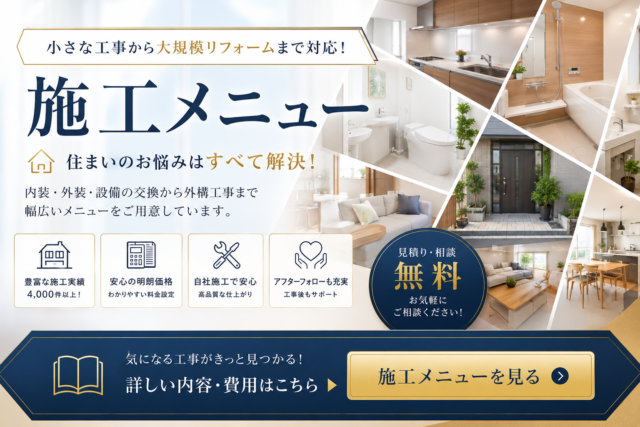
For more details, please check our construction menu and price list!
05[Latest 2026] Subsidies and Grants Available in Kanagawa Ward

One way to renovate used properties and vacant houses cost-effectively is by utilizing subsidy and grant systems. As of 2026, we have summarized the main systems that residents of Kanagawa Ward may be able to use.
*The following information is as of September 3, 2026. The content, duration, and budget of the systems change annually, and many will end once the budget limit is reached. Please check for the latest information with our company or the respective offices before applying. Kakeru Koumuten can assist with confirming the systems and necessary documents, but the applicant and application methods vary by system.
National Program: Housing Energy Saving 2026 Campaign
The government is implementing several subsidy projects targeting energy-saving renovations under the “Housing Energy Saving 2026 Campaign.” Construction for insulation, windows, and water heaters may be eligible for these subsidies.
This program succeeds the “Child-Rearing Green Housing Support Project.” It targets energy-saving renovations that meet certain criteria, including insulation improvements for openings and structures, eco-friendly housing equipment, child-rearing compatible renovations, disaster prevention enhancements, and barrier-free renovations.
The maximum subsidy is 1,000,000 yen per unit for buildings constructed before 1991, and 800,000 yen per unit for buildings constructed between 1992 and 2016. For renovations that meet the obligation standards for the maximum amount, the requirements include “insulation improvements for openings + insulation improvements for structures + installation of specific eco-friendly housing equipment.” For renovations that meet next-generation energy-saving standards, the limits are 500,000 yen and 400,000 yen respectively. Construction must start on or after November 28, 2025, with reservations no later than November 16, 2026, and subsidy applications no later than December 31 (may end early if budget limits are reached). Applications are made by registered contractors. For more details, please check the official page.
This program targets insulation renovations for windows, including the installation of interior windows, replacement of exterior windows, and glass replacements. The subsidy amount is significant and effective for countering cold, heat, and condensation. It can easily enhance the insulation performance of existing homes.
The subsidy amount varies based on the window method, performance, size, and construction type of the house. If the total subsidy amount for one application is less than 50,000 yen, it is not eligible. Applications have been accepted since March 31, 2026, and subsidy applications must be submitted by December 31 at the latest (may end early if budget limits are reached). Applications must be made by registered contractors. For more details, please check the official page.
This program targets the replacement of high-efficiency water heaters such as EcoCute, hybrid water heaters, and EneFarm. It is well-suited for used properties planning to replace their water heaters.
The basic subsidy amounts are 70,000 yen per unit for EcoCute, 100,000 yen per unit for hybrid water heaters, and 170,000 yen per unit for EneFarm. There may be performance bonuses depending on the eligible equipment. Only renovations that start on or after November 28, 2025, are eligible (may end early if budget limits are reached). For more details, please check the official page.
Yokohama City Program
This is a unique system of Yokohama City that supports renovation work to improve the insulation performance of existing homes, for the fiscal year 2026 (Reiwa 8). It targets families with children who are moving to used homes and conducting whole-house insulation renovations, as well as households that continue to live in their current homes while performing whole or partial insulation renovations.
Reservation applications are from April 1 to November 30, 2026, and formal applications are from May 1 to November 30 (may end early if the budget limit is reached). Only registered businesses under the “Yokohama Health and Energy-Saving Housing” can apply; individuals cannot apply directly. There are requirements regarding housing, households, contracts, and businesses. For details, please check the official Yokohama City page.
This is the main system for reinforcing old wooden houses against earthquakes. It is particularly effective for those who are purchasing used detached houses and conducting earthquake resistance renovations.
Eligibility: Traditional wooden individual houses with two stories or less that received construction confirmation before the end of May 2000 and meet the requirements set by Yokohama City. The subsidy amount will be the lowest of the “subsidy limit amount,” “calculated amount based on the subsidy limit unit price,” or “eligible construction costs.” General households can receive up to 1.15 million yen, while tax-exempt households can receive up to 1.55 million yen. Additionally, there is a separate addition system if certain energy-saving renovations are conducted alongside earthquake resistance renovations. Applications for the fiscal year 2026 are being accepted from April 1. For details, please check the official Yokohama City page.
This is for those who have been certified as requiring support or nursing care. Eligible expenses include the installation of handrails, elimination of steps, changes to flooring materials, and replacement of doors and toilets. It can also be utilized when using a used house for two households.
Of the maximum subsidy limit of 200,000 yen, those with a 10% burden will receive 90% (up to 180,000 yen) as a benefit. There may be cases where the burden is 20% or 30% depending on income. A prior application is required before the start of construction. For details, please contact your care manager or the district office.
This is a system for utilizing vacant houses as community contribution facilities (bases for community activities such as child-rearing support, elderly support, coworking, NPOs, etc.). It is aimed at those considering investment and community utilization.
With a subsidy rate of 1/2, you can receive up to 1 million yen for interior and exterior renovations for community contribution facilities, plus up to 1.5 million yen for seismic renovations (a total of up to 2.5 million yen). There are requirements such as being a single-family home in Yokohama, complying with the Building Standards Act, and not being a designated vacant house. For details, please check the official page of Yokohama City.
See also about renovation tax reductions and other systems
- Housing Loan Tax Reduction: If you use a housing loan for renovations that meet certain requirements, income tax and other deductions will be applied based on the year-end balance.
- Renovation Promotion Tax System (Investment-type Tax Reduction): For construction such as seismic, energy-saving, barrier-free, and long-term excellent housing, there may be cases where income tax deductions can be received even with personal funds.
- Reduction of Fixed Asset Tax: There is a system that reduces fixed asset tax for a certain period due to seismic renovations, energy-saving renovations, and barrier-free renovations.
- Kanagawa Prefecture Existing Housing Energy-saving Renovation Subsidy: For the fiscal year 2026, the subsidy rate is 1/3 with a cap of 150,000 yen. The first phase has ended, but additional recruitment is planned from September 7 to September 30, 2026, only via electronic application and on a first-come, first-served basis (approximately 25 cases). Applicants must apply themselves, and construction before the grant decision is not eligible. Please check the official page of Kanagawa Prefecture.
While subsidies and tax reductions can sometimes be combined, there are restrictions on duplication for the same construction. Kakeru Koumuten will organize and propose “which system can be used for your construction” after conducting a site survey.
06Customer Voices
-
customer reviews
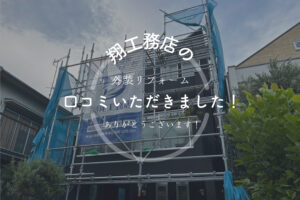
Asao-ku, Kawasaki City | We received reviews about the ridge cap and rain gutter replacement work!
-
customer reviews
Kohoku-ku, Yokohama | We received reviews about the roof overlay (cover method)!
-
customer reviews
Kohoku-ku, Yokohama | We Received Reviews About Exterior Painting!
-
customer reviews
Hodogaya-ku, Yokohama | We received reviews about our exterior fence construction!
-
customer reviews
Tsurumi-ku, Yokohama | We received reviews about roof and exterior wall painting, as well as metalwork and rain gutter replacement work!
-
customer reviews
Higashiyamato City, Tokyo | We received reviews about exterior painting and roof overlay (cover method)!
Roof Replacement Construction Case Studies in Kanagawa Ward
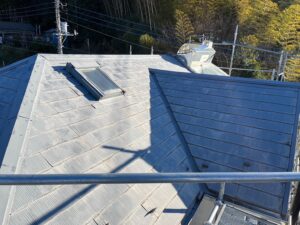
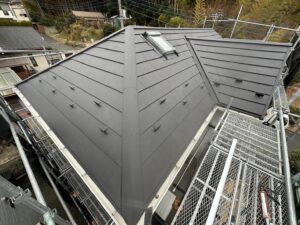
| Construction Location | Kanagawa-ku, Yokohama |
|---|---|
| Work Details | Temporary scaffolding installation / Roof replacement work |
| Existing Roofing Material | Tiles |
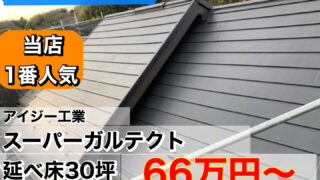
| New Materials Used | Roofing Material: Aijii Industry / Super Galtect Expected Durability: Approximately 35-40 years / Manufacturer Warranty: Coating 15 years, Rust 20 years, Puncture 25 years / In-house Construction Warranty 10 years |
| Price Range | 900,000 – 1,000,000 yen |
| Completion Month | January 2024 |
Our Proposal
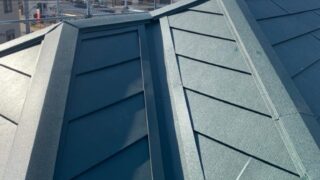
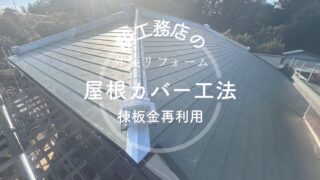
We proposed a plan to remove the existing tile roof and replace it with lightweight metal roofing material. The new roofing material is the Aijii Industry / Super Galtect, which excels in durability and insulation. By replacing the heavy tile roof with a lightweight metal roof, we can reduce the weight on the building, thereby minimizing the burden on it. Super Galtect is a metal roofing material with integrated insulation, making it an excellent choice for those who prioritize long-term durability and maintenance.
▶ Learn more about roof renovations in Kanagawa-ku, Yokohama
Roof Replacement Construction Menu and Costs | Leak Repair in Kanagawa Ward | Exterior Painting in Kanagawa Ward
07How to Choose a Remodeling Contractor for Used Properties and Vacant Houses in Kanagawa Ward
There are many remodeling companies that serve Kanagawa Ward, and it can be confusing to decide which one to choose. When requesting a remodel, be sure to check the following five points.
- Experience in remodeling work
- Check for warranties and after-service maintenance
- Obtain estimates from multiple contractors (at least three)
- Confirm whether they perform remodeling in-house
- Check if they offer color simulations and perspective drawings
1. Experience in Remodeling Work
Many remodeling contractors publish their construction achievements on their websites. If a contractor provides detailed explanations of the process with photos, it can help you visualize the outcome after the request, giving you peace of mind. If you’re unsure, choose a contractor with extensive experience.
Google and review sites can also be helpful. It’s important to check the content of low ratings, the company’s responses, and the timing of the posts. Google reviews are particularly useful, but don’t make your decision based solely on reviews; consider the construction achievements, estimates, and warranty details for a comprehensive assessment.
2. Check for Warranties and After-Service Maintenance
When choosing a contractor, be sure to check for warranties. If repairs are needed within the warranty period, they may be done for free. The duration varies by contractor, type of work, and materials used, but it is often set between 1 to 10 years (emergency repairs and partial fixes are often not covered). Some contractors also offer after-service maintenance in addition to warranties, so be sure to check that as well.
Kakeru Koumuten Co., Ltd. provides a warranty for all exterior renovations and sealing work. We also conduct aftercare maintenance and send out annual notification DM to ensure annual inspections are possible.
Click here for more details about Kakeru Koumuten’s warranty and aftercare maintenance
3. Obtain estimates from multiple contractors (at least 3 companies)
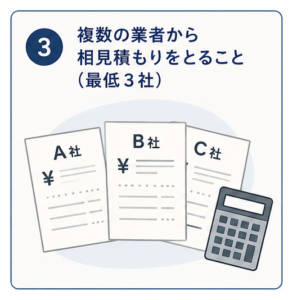
When requesting renovations, be sure to obtain estimates from multiple contractors. Even for the same work, warranties, aftercare services, and prices can vary significantly. Having multiple estimates makes price negotiations easier.
When comparing estimates, it’s important to look at not just the cost but also the “items in the estimate,” “check the undercoat materials, sealing materials, and paint for auxiliary parts,” and “confirm the process.” Lowering the rank of auxiliary parts or skipping steps can reduce costs, so it’s crucial to not judge solely based on price.
Learn more about points to compare estimates
4. Confirm whether the company performs renovations in-house
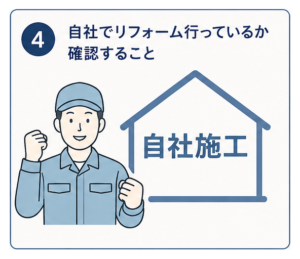
At Kakeru Koumuten Co., Ltd., we conduct detailed hearings and investigations regarding the existing “condition,” “location,” “base materials,” “desired durability,” and “design” to propose the optimal plan. While there is nothing inherently wrong with a system where partner companies perform the work, it is important to confirm whether the contracting company understands the work details and has clear responsibilities for quality control and warranties. If the work is done in-house, it is easier to coordinate with the site, and in case of any trouble, it can be addressed quickly.
5. Check if they offer color simulations and perspective drawings
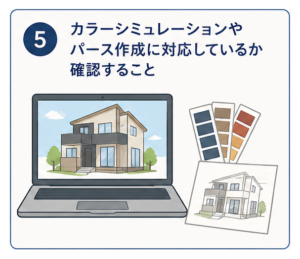
Choosing colors and visualizing the image after construction can be challenging for both exterior and interior work. With simulations, you can reduce the risk of mistakes like “it turned out differently than I imagined.” Since it is difficult to redo once the work is done, it is advisable to choose a company that can provide flexible simulations.
08Reasons why Kakeru Koumuten is chosen for renovations of used houses in Kanagawa Ward

One reason is that Kakeru Koumuten Co., Ltd. serves the Kanagawa Ward, but
our unique approach to vacant house and used property renovations that cannot be imitated by other companies
has received high praise from many customers.
We have absolute confidence in “cost,” “quality,” and “plans” for renovations in Kanagawa Ward. Please compare our estimates with those from other companies.
The most important aspect of renovations is comparing estimates. Be sure to request estimates from at least 3 companies that operate in Kanagawa Ward!
1. Equipment Specialized for In-House Renovations
At Kakeru Koumuten, we have organized warehouses and material storage areas to provide high-quality renovations at low cost. We have 5 bases for material storage and showrooms within Yokohama City.
In-House Scaffolding Materials
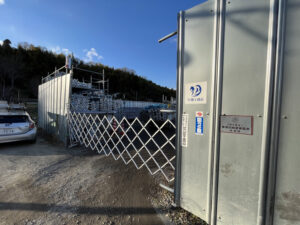
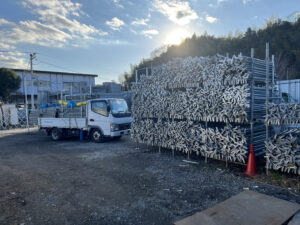
We can construct the temporary scaffolding required for exterior renovations using our own scaffolding materials and in-house scaffolding team. By not outsourcing, we achieve cost reductions on scaffolding work. We own scaffolding materials for approximately 50 houses.
Storage of Materials in Our Large In-House Warehouse
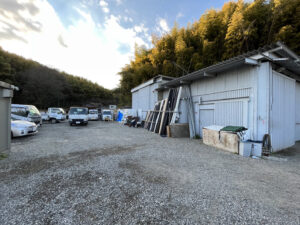
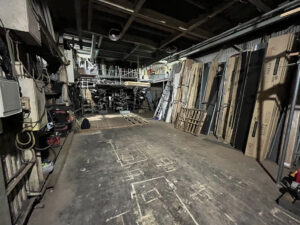
We store roofing materials and paints. By placing large orders at once, we can procure materials at lower prices, and since we always have stock available, we can respond quickly in emergencies. We also have a variety of tools ready for different types of construction, including compressors and cleaning machines.
In-house waste separation
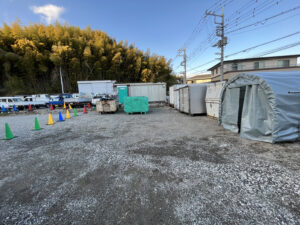
In exterior renovations, various waste materials such as paint, wood, and metal are generated. While many contractors dispose of them all together, our company significantly reduces waste disposal costs by separating and recycling waste materials.
Exterior renovation dedicated showroom
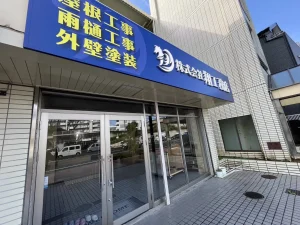
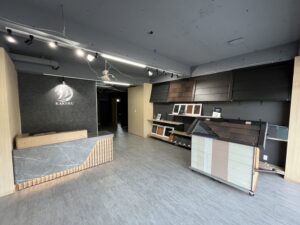
In the showroom, you can not only have meetings but also check the actual paint colors and a wide range of catalogs. You can also confirm heat resistance using color simulations and heat-resistant paint testing machines. The showroom is a 3-minute walk from Eda Station in Aoba-ku, Yokohama. It has good access from within Yokohama city.
2. Complete in-house construction
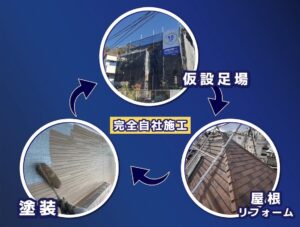
A major strength of Kakeru Koumuten Co., Ltd. is our complete in-house construction. By maintaining a consistent system from inquiry to project completion, we can keep costs down while providing high-quality renovations. A single representative handles everything from the estimate to the completion of the work, ensuring smooth communication without changes in sales or project management. All work, from temporary scaffolding installation to exterior painting and roof renovations, is carried out by our own skilled craftsmen. We are confident in our plans and costs, so we welcome competitive estimates.
3. Various Permits and Skilled Workers
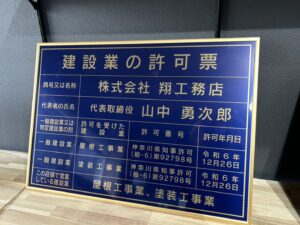
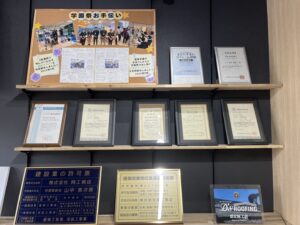
We have obtained permits for the construction industry and for the collection and transportation of industrial waste. We also have nationally certified sheet metal workers and painting specialists, ensuring confidence in our construction techniques. We are capable of handling large-scale painting projects for factories and apartment complexes as well.
4. Warranty and Aftercare

Exterior painting and joint sealing work come with a warranty. Aftercare is available annually, and we send out notification DM each year. If you have concerns about the warranty, please click the image above for more information.
5. Flexible and Prompt Response
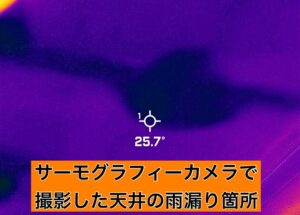
We are equipped to handle various exterior troubles and situations. If you cannot access the roof at height, we can respond using a drone. For leak investigations, we also use a thermal imaging camera. We respond according to our customers’ wishes and also accept emergency measures for sudden leaks from exterior walls.
6. Human Resource Development
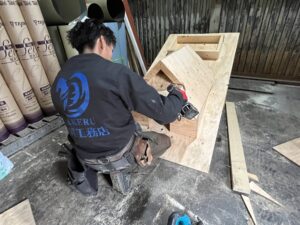
We create various models to enhance skills and conduct practical training. Since the construction methods and materials used for exterior renovations vary depending on the existing materials and shapes, we conduct regular technical training to ensure that each staff member can respond to various sites.
Click here for company information
7. Flexible simulations for both exterior and interior renovations!
Kakeru Koumuten Co., Ltd. is dedicated to helping our customers choose colors and designs for their important building renovations, both exterior and interior, to ensure their satisfaction.
7-1. Exterior Renovation Simulation
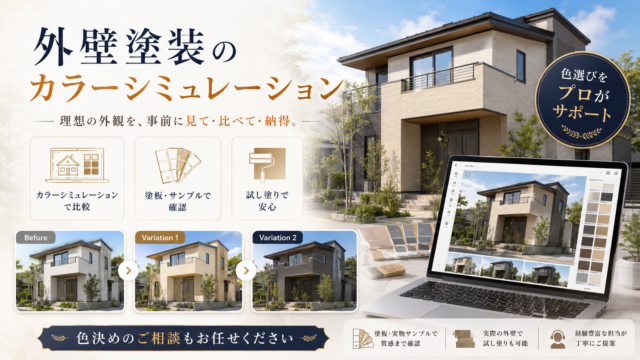
We offer color simulations for exterior wall painting, as well as simulations for metal siding and roof overlays. We can create simulations based on actual photos of your building and suggest several color patterns using our recommended color schemes. We also accommodate “test painting” and “sample board arrangements” to confirm the actual color tones.
7-2. Interior Renovation Simulation
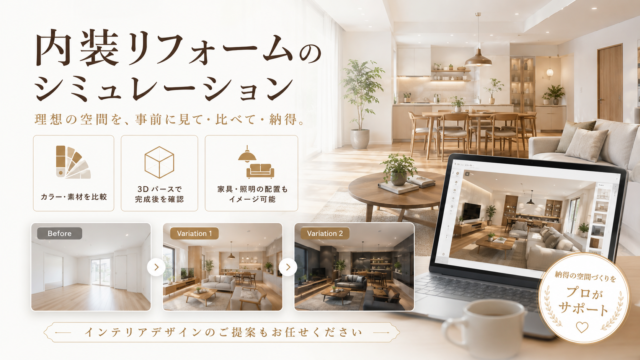
We also provide simulations and perspective drawings for interior renovations. We suggest recommended simulations based on your preferred style, such as modern designs. Realistic perspectives are created from actual floor plans.
8. We also handle solar panel and battery installation work!
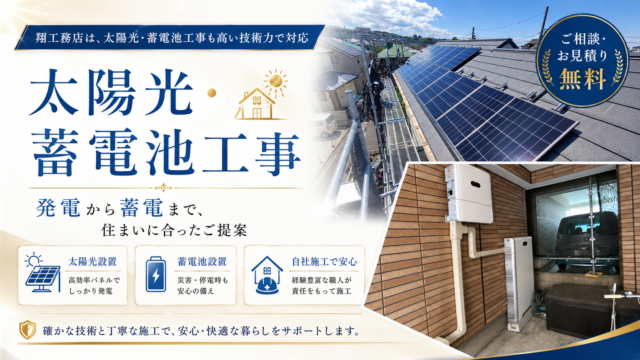
As part of renovations for used properties, more customers are introducing solar power systems, which have generous subsidies available. Kakeru Koumuten Co., Ltd. also handles solar power system installations and can propose solar panels tailored to the shape of your roof. We can also accept requests for estimates and the creation of power generation simulations only.
09Existing and Vacant Home Renovation in Kanagawa Ward | Frequently Asked Questions
Here are answers to common questions from people considering renovation of existing or vacant homes in Kanagawa Ward.
Should I arrange renovations after buying an existing home, or consult you before buying?
If possible, please consult us before deciding to buy. Existing homes may have deterioration that is not visible, and unexpected construction costs after purchase are not uncommon. By checking the condition of the property you are considering and estimating the necessary renovations in advance, Kakeru Koumuten can help you make a realistic financial plan.
Which renovations should take priority in an existing detached house in Kanagawa Ward?
Priorities depend on the building’s condition. We first address problems that can worsen if left untreated, including leaks, termites, structural issues and earthquake resistance. We then determine the order of work on the roof, exterior walls and other exterior elements, the kitchen, bathroom and toilet, and thermal insulation, according to your budget and the impact on daily life. In hillside residential neighborhoods near the city center and coastal areas, roofs and exterior walls may reach the end of their service life first, so we recommend inspecting the entire building, including the exterior.
Kanagawa Ward is conveniently close to Yokohama Station. What should I watch for in an existing detached house?
In Kanagawa Ward, hillside residential areas such as Daimachi and Saitobuncho include older wooden detached houses, so reviewing earthquake resistance and insulation is important. Sloping sites need careful planning for scaffolding and deliveries. Near coastal industrial areas such as Koyasu and Shin-Koyasu, roof and exterior-wall inspections should also consider dirt and damage caused by sea breezes and traffic. We also consider Yokohama City’s seismic retrofit subsidy (general maximum: 1,150,000 yen) and insulation retrofit subsidies.
How much does a full renovation cost?
The cost of fully renovating a detached house varies greatly with the scope and specification. Work focused on partial renovations starts at around 5 million yen, while extensive renovations covering the interior, exterior, kitchen and bathrooms, insulation and seismic upgrades may cost 10–20 million yen or more. We first inspect the property and propose a plan with priorities that fit your budget.
Do I apply for subsidies myself? Is the procedure difficult?
The applicant varies by program. For example, under the national Mirai Eco Housing 2026 program, registered contractors (construction companies) submit the application. Municipal seismic retrofit subsidies and home modifications covered by long-term care insurance generally require the individual to apply, but we explain the necessary documents and steps. We can also help you identify which programs may be available, so please contact us.
What risks arise if a vacant house is left unattended?
Water leaks and termite damage may worsen, deteriorating roofs and exterior walls can reduce property value, and garden trees and equipment may fall into neglect. If the municipality issues a recommendation concerning a poorly managed vacant house or a designated vacant house, the residential land exemption for fixed asset tax may cease to apply. Inspecting the property early and carrying out the necessary work according to your plans to live in, rent, sell or otherwise use it can help reduce costs in the long run.
I am concerned about earthquake resistance. How should I assess an existing detached house?
The construction date is an important guide. Check whether the house was built in or after June 1981 (the newer seismic standards), and in or after June 2000 (stricter rules for connections and foundations). We recommend a seismic assessment for wooden detached houses built earlier. Your municipality also offers subsidies for seismic retrofitting of wooden houses, which can substantially reduce costs if you qualify (see the subsidy section above). Kakeru Koumuten can advise you from assessment through renovation.
Will I need temporary accommodation during construction? How long will the work take?
It depends on the scope of work. Exterior renovations and partial interior work can often be carried out while you continue living in the home, but we may recommend temporary accommodation for extensive full renovations involving the kitchen and bathrooms. Typical durations are about 2–4 weeks for exterior work and about 1–3 months or more for full renovations. We provide a schedule in advance and propose a plan that minimizes disruption to daily life.
Is Kanagawa Ward within your service area? Are there travel charges?
Yes, Kanagawa Ward is within Kakeru Koumuten’s service area. Our headquarters is in Aoba Ward, Yokohama, and we have 5 bases within the city, serving all of Kanagawa and Tokyo. Estimates are completely free, and we do not use persistent sales tactics. Please feel free to contact us.
Leave your renovations in Kanagawa-ku to Kakeru Koumuten!
“I want my renovation to last a long time with just one project,” “I want to keep costs as low as possible,” “I want to improve insulation because my home is hot”—we will propose the best solutions for your specific requests. We will not suggest any unnecessary work that prioritizes profit.
We are confident in our costs, quality, and planning, so we welcome comparison estimates. Estimates are completely free.
Get your free estimate and consultation here
If you find our company to be inferior to others, you are welcome to decline outright.
See Kakeru Koumuten’s construction examples
See construction menu and price list
10Features of Kanagawa-ku
Aoba-ku, Yokohama is located north of Yokohama Station and features residential areas close to the city center such as Higashi-Kanagawa, Shirakubo, and Rokkakubashi, as well as the coastal areas of Koyasu and Shin-Koyasu. It is well-served by JR, Keikyu, Tokyu Toyoko Line, and Yokohama City Subway, providing excellent access to both Yokohama and the city center.
The old wooden houses in the hilly residential areas are reaching a generational transition, and the choice of continuing to live in them through buying used homes and renovating is becoming established. Kakeru Koumuten Co., Ltd. is headquartered in Aoba-ku, Yokohama, and serves Kanagawa-ku from its five locations within the city. We can perform all construction work in-house, including exterior wall overlay methods.
Areas Available for Renovation
Kakeru Koumuten Co., Ltd. accepts requests throughout Kanagawa Prefecture and Tokyo.
Kanagawa-ku, Yokohama Service Areas (Main Regions)
Higashi-Kanagawa / Nishi-Kanagawa / Futatsutani-cho / Daitown / Aoki-cho / Tsuruyamachi / Sakae-cho / Kinkou-cho / Saiwaigaya / Shirakubo / Rokkakubashi / Saito Buncho / Kandaiji / Katakura / Mitsuzawa Kamimachi / Mitsuzawa Nakamachi / Mitsuzawa Shimomachi / Oguchi-dori / Koyasu-dori / Shin-Koyasu / Koyasu-dai / Irie / Matsumi-cho / Nishidera-o / Kaminoki-cho / Hazawa-cho / Hazawa Minami / Sugita-cho / Sawatari and other areas throughout Kanagawa-ku
・Roof renovations in Kanagawa-ku, Yokohama can be found here!
・Exterior renovations in Kanagawa-ku, Yokohama can be found here!
・Roof replacement construction menu and costs
・Renovation case studies by Kakeru Koumuten Co., Ltd. can be found here!
・Construction menu and price list of Kakeru Koumuten Co., Ltd.
・Reasons why Kakeru Koumuten is chosen can be found here!
・Information about Kakeru Koumuten’s guarantees and aftercare
・Company overview of Kakeru Koumuten Co., Ltd.
・Staff blog and announcements of Kakeru Koumuten Co., Ltd.
We also welcome consultations via LINE◎

We are also updating our Instagram regularly◎ Please follow us!

contact Kakeru Koumuten Co., Ltd.
Kakeru Koumuten is a young company whose team is, on average, in their late twenties, but our skills are second to none.
Our greatest strength is that we handle scaffolding, roofing and painting entirely in-house. In an industry where these tasks are usually divided among contractors, our complete service simplifies project management and helps keep costs down. Above all, if a problem arises, we respond promptly.
We proudly describe ourselves as the youngest and most helpful renovation company in Kanagawa!