What is Sealing Work in Large-Scale Renovations? Introducing Its Role, Methods, and Tips to Avoid Failures!

The rubber-like joint material “sealing” around the building’s exterior walls and sashes is often overlooked, but it is actually a crucial element that can determine the success or failure of large-scale repairs.
No matter how sound the tiles or exterior materials are, if the sealing deteriorates, rainwater can infiltrate, leading to leaks and structural corrosion.
As a result, repair costs can escalate, shortening the lifespan of the building.
This is why planned sealing work is indispensable.
In this article, we will thoroughly explain the role and methods of sealing work in large-scale repairs,
cost estimates and points to note.
What is Sealing Work in Large-Scale Repairs?
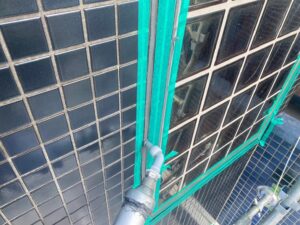
Sealing work refers to the
repair of elastic materials filled in the joints of exterior wall panels, around sashes, and in tile joints.
Buildings are constantly undergoing minute movements due to temperature differences, earthquakes, and wind pressure, and the role of sealing materials is to fill gaps and ensure waterproofing in response to these movements.
In large-scale repairs, it is common to carry out comprehensive repairs simultaneously with exterior wall renovations.
The Role and Function of Sealing
Sealing is an elastic material that fills the “gaps” in exterior materials, sashes, and panel joints, and is a crucial part for long-term protection of the structure.
At first glance, it may seem like a simple filler, but in reality, it serves multiple functions simultaneously, such as waterproofing, accommodating expansion and contraction, and ensuring airtightness.
When these functions work properly, they prevent rainwater and outside air from entering, thereby suppressing the deterioration of the building’s interior.
On the other hand, neglecting deterioration can lead to a chain reaction of issues with the exterior walls and underlying structures, necessitating large-scale repairs, so caution is required.
Here, we will explain the typical roles and functions of sealing in detail, along with their mechanisms.
✔️Waterproofing and Moisture-Proofing Functions
The most fundamental role of sealing is its waterproofing and moisture-proofing function that prevents the intrusion of rainwater and humidity.
There are tiny gaps between the joints of exterior materials and around sashes, and if left as is, wind and rain can directly enter the interior.
By sealing these gaps, the sealing material functions as a temporary waterproof layer, making it easier to protect the structural concrete and insulation materials.
It is said that “many building troubles start from the joints,” making this a critical area, and proper replacement of sealing is the first step toward extending the lifespan of the building.
✔️Cushioning and Expansion Functions
Buildings constantly undergo minute movements due to temperature fluctuations, expansion and contraction, shaking from strong winds or earthquakes, and aging of the structure, so if the exterior walls are fixed in place, it can lead to cracks and damage.
This is where the cushioning and expansion functions of sealing become important.
Materials with rubber-like elasticity follow the movements, absorbing the deformation stress of the exterior materials and suppressing the occurrence of cracks.
When elasticity is lost and hardening occurs, it can no longer follow the movements of the building, leading to joint ruptures and exterior wall cracks, so caution is necessary.
✔️Maintaining Sealing and Insulation
Sealing not only provides waterproofing but also functions as an airtight material that supports indoor comfort.
If gaps occur in the joints, outside air can flow in, reducing heating and cooling efficiency.
This can lead to mold and deterioration of the interior.
Properly filled sealing can block air flow, allowing insulation materials to perform effectively, stabilizing room temperature and potentially reducing utility costs and energy consumption.
Especially in factories and apartment complexes, environmental quality is directly linked to user satisfaction, making regular maintenance essential.
Benefits of Sealing Work in Large-Scale Renovations

Sealing work is a less noticeable process compared to exterior wall painting or tile repairs, but it is an extremely important renovation that fundamentally changes building performance.
Therefore, it should be viewed not merely as maintenance but as a preventive investment to extend the building’s lifespan.
Here, we will explain the specific benefits of implementing sealing work during large-scale renovations from both functional and managerial perspectives.
◎Significant Reduction in Leak Risks
Most rain leaks that occur in buildings are caused by the deterioration of joints around the exterior walls and sashes.
When sealing hardens or cracks, rainwater can enter through tiny gaps, reaching the internal insulation and structure.
If this continues for a long time, it can lead to corrosion, mold, and water leakage incidents.
On the other hand, by renewing the joints through replacement work, the waterproof line is reconstructed, allowing for the blockage of water entry points.
As a result, water leakage troubles are greatly reduced, making it easier to alleviate the burden of unexpected repair costs and complaint handling.
◎Extension of Building Lifespan
Sealing plays the role of “primary waterproofing,” protecting the exterior materials and structure.
If this part fails, moisture can penetrate into the concrete, leading to corrosion of the rebar and neutralization.
This type of structural deterioration is a serious issue that directly shortens the building’s lifespan.
By updating sealing at appropriate intervals, moisture intrusion can be suppressed, maintaining the integrity of the structure for a long time.
Additionally, by carrying out the work collectively during large-scale renovations, synergistic effects with other renovation works can be expected.
As a result, it becomes easier to delay the next full renovation, leading to a reduction in lifecycle costs.
◎Improvement of Comfort and Energy Efficiency
If there are gaps in the joints, outside air can flow in, making it difficult to stabilize indoor temperatures.
This means that heating and cooling efficiency decreases, leading to increased utility costs.
Moreover, buildings with low airtightness are prone to condensation, which can lead to mold and deterioration of the interior.
By repairing the sealing, gaps are sealed, and air flow can be more easily controlled, resulting in a more stable indoor temperature.
This is an important effect that contributes to increased tenant satisfaction.
◎Maintaining Asset Value and Enhancing Tenant Satisfaction
The management condition of a building directly affects occupancy rates and rental levels.
In particular, properties that frequently experience issues such as leaks, condensation, and drafts tend to see an increase in tenant dissatisfaction and a higher turnover rate.
On the other hand, buildings that maintain their exterior, including sealing, appropriately provide a sense of security and cleanliness, leading to an overall higher evaluation.
A trouble-free environment can lead to long-term tenancy and make it easier to stabilize revenue, so planned sealing work is essential for maintaining asset value.
Problems Caused by Deterioration of Sealing

Sealing is a crucial component that protects the gaps in a building, but it is particularly prone to deterioration due to constant exposure to UV rays, wind, rain, and temperature changes.
When the elasticity of the joints is lost, they can no longer exhibit their original waterproofing and flexibility, leading to various problems.
Here, we will introduce typical problems that are likely to occur due to the deterioration of sealing.
Cracking and Hardening
The most common early symptom of sealing deterioration is surface cracking and hardening.
Originally possessing rubber-like elasticity and the ability to follow the movement of the building, the loss of plasticizers due to aging leads to a loss of flexibility, making it unable to accommodate expansion and contraction, resulting in cracks.
These gaps become entry points for rainwater, directly reducing waterproof performance.
Moreover, there are often cases where deterioration progresses more internally than it appears, and neglecting early repairs can lead to peeling and leaks.
Cracking and hardening also serve as warning signs that “the hardening period is approaching,” so if such signs are observed, it is important to take prompt action.
Peeling and Missing Sections
As deterioration progresses, the sealing material may peel away from the joints or partially be missing.
In particular, around sashes and at the seams of exterior wall panels, rainwater can easily enter, significantly impacting the internal structure, so caution is necessary.
Furthermore, the missing sections may expand due to wind pressure and vibrations, making it impossible to address with temporary measures, necessitating a complete replacement, so prompt action is required.
Rainwater Infiltration and Leaks
When the waterproof function of the sealing is lost, it ultimately leads to rainwater infiltration and leaks.
By the time rain stains appear indoors, internal deterioration has often progressed, and the scope of repairs tends to widen.
If interior restoration or equipment replacement becomes necessary, it can lead to unexpected expenses, so caution is required.
By ensuring the waterproof line through sealing replacement, such risks can be prevented in advance.
Decreased Insulation and Airtightness
Gaps in sealing often become pathways for outside air to enter.
When airtightness decreases, indoor temperatures become unstable, reducing heating and cooling efficiency, which can lead to increased utility costs and the occurrence of condensation.
Additionally, condensation can lead to mold and deterioration of interior materials, posing risks to living conditions and health.
Especially in multi-unit dwellings, this can develop into a serious issue that directly affects tenant satisfaction, making it important to properly repair and replace sealing.
Types of Sealing Work in Major Repairs

There are several methods for sealing work, and it is essential to choose the most suitable method based on the deterioration condition, joint shape, and the state of existing materials.
If the appropriate method is not selected, re-deterioration can occur in a short period, necessitating rework, so caution is required.
Here, we will provide a detailed explanation of the typical sealing methods adopted in large-scale repairs and their respective characteristics.
1. Replacement Method
The replacement method is the most standard technique, which involves completely removing the existing sealing material and refilling with new material.
By applying a primer after removing all old sealing material and then installing new sealing, you can expect improvements in adhesion and durability.
Moreover, the biggest advantage is that it can fundamentally restore waterproof performance, making it the most commonly adopted method in large-scale repairs.
Although the initial cost is higher than the overlay method, it is rational in terms of life cycle cost as it aims for longevity.
2. Overlay Method
The overlay method is a simple repair method that fills new material over the existing sealing material.
With fewer removal processes, the construction period is shorter, and costs can be kept low, which is a significant feature.
However, if the existing material is deteriorated, there is a high possibility of poor adhesion and early peeling.
Therefore, it is not suitable for full renovations and should only be used in areas where the condition is good.
3. Bridge Method
The bridge method is a special technique that installs new material over the existing sealing without removal, creating a bridging effect.
This method is often adopted in areas where the movement of existing joints is significant or where removal is difficult, allowing for the construction of a waterproof layer while reducing the burden on the substrate.
One of its features is that there is less noise and dust during construction, minimizing the impact on residents.
However, since the quality of construction is influenced by the condition of the existing material, thorough preliminary investigation is necessary.
4. Wide Joint Refill Method
The wide joint refill method is a technique that widens the existing joint before filling it with new sealing material.
By securing the joint width, the thickness of the material increases, improving flexibility and durability.
This method is particularly suitable for buildings that require long-term durability or for exterior wall areas with significant movement.
Although the initial cost is slightly higher, the period until re-deterioration is extended, making it easier to prolong maintenance cycles.
As a result, many cases lead to total cost reduction, so if you want to reduce future repair frequency, please consider this method.
For large-scale repairs of condominiums, apartments, and factories, trust “Kakeru Koumuten Co., Ltd.”!

Sealing work is a highly specialized task where differences in construction quality directly correlate with durability and waterproof performance.
Every detail, from material selection and compatibility with joint shapes to careful substrate treatment and post-construction finishing checks, influences the outcome.
Choosing a contractor based solely on price increases the risk of early deterioration and rework, so caution is necessary.
Kakeru Koumuten Co., Ltd. provides a comprehensive response from pre-deterioration diagnosis, method selection, estimate preparation, construction management, to aftercare, proposing the optimal repair plan tailored to the building’s use and budget.
Additionally, on-site surveys and estimates are free!
We handle large-scale repairs for all types of buildings, including condominiums, apartments, and factories, so please feel free to consult us if you have any concerns!
Summary
Sealing work in large-scale repairs is a fundamental and crucial task that supports the waterproofing, durability, and comfort of a building.
If the deterioration of joints is left unattended, many problems such as leaks, structural corrosion, and decreased insulation can occur in a chain reaction.
On the other hand, if sealing is replaced or repaired at the appropriate time, it can extend the building’s lifespan and make it easier to control future repair costs.
Therefore, it is important to understand the cost trends and characteristics of methods, and to work with a reliable construction company to proceed systematically.
Kakeru Koumuten Co., Ltd. handles sealing work as well as large-scale repairs for condominiums, apartments, and factories, so please do not hesitate to contact us!
・Aftercare by Kakeru Koumuten Co., Ltd.
・Construction Menu and Price List by Kakeru Koumuten Co., Ltd.
・Staff Blog and Announcements by Kakeru Koumuten Co., Ltd.
・Explaining the Importance of Comparing Estimates!
・What is the Cost Range for Large-Scale Renovations? A Comprehensive Guide on Breakdown and Cost-Saving Tips!
・When Should Large-Scale Renovations Be Conducted? An Explanation of Optimal Timing and Risks of Delaying!
・Estimates are Essential for Large-Scale Renovations! Introducing Comparison Points and Precautions!
・5 Common Troubles in Large-Scale Renovations for Condominiums! A Thorough Explanation of Causes and Preventive Measures!
・What is Waterproofing Work in Large-Scale Renovations? A Comprehensive Explanation of Roles, Signs of Deterioration, and Precautions!
・What to Do When Funds are Insufficient for Large-Scale Renovations… An Explanation of Countermeasures for Funding Shortages and Immediate Preparations!
・What is Surface Repair in Large-Scale Renovations? A Thorough Explanation of Its Importance, Signs of Deterioration, and Types of Work!
・What is Tile Repair in Large-Scale Renovations? An Explanation of Signs of Deterioration, Types of Work, and Cost Range!
・What is the important exterior wall painting in large-scale repairs? A thorough explanation of necessity, signs of deterioration, and cost trends!
We welcome consultations via LINE◎

We are also updating our Instagram regularly◎ Please follow us!

contact Kakeru Koumuten Co., Ltd.
Kakeru Koumuten is a young company whose team is, on average, in their late twenties, but our skills are second to none.
Our greatest strength is that we handle scaffolding, roofing and painting entirely in-house. In an industry where these tasks are usually divided among contractors, our complete service simplifies project management and helps keep costs down. Above all, if a problem arises, we respond promptly.
We proudly describe ourselves as the youngest and most helpful renovation company in Kanagawa!