Leave the repairs and renovations of condominiums and apartments in Chofu City, Tokyo to Kakeru Koumuten Co., Ltd.!
Large-Scale Renovations for Condominiums, Apartments, and Buildings in Chofu City
To owners, management associations, and management companies considering large-scale renovations for condominiums, apartments, and buildings in Chofu City, Tokyo.
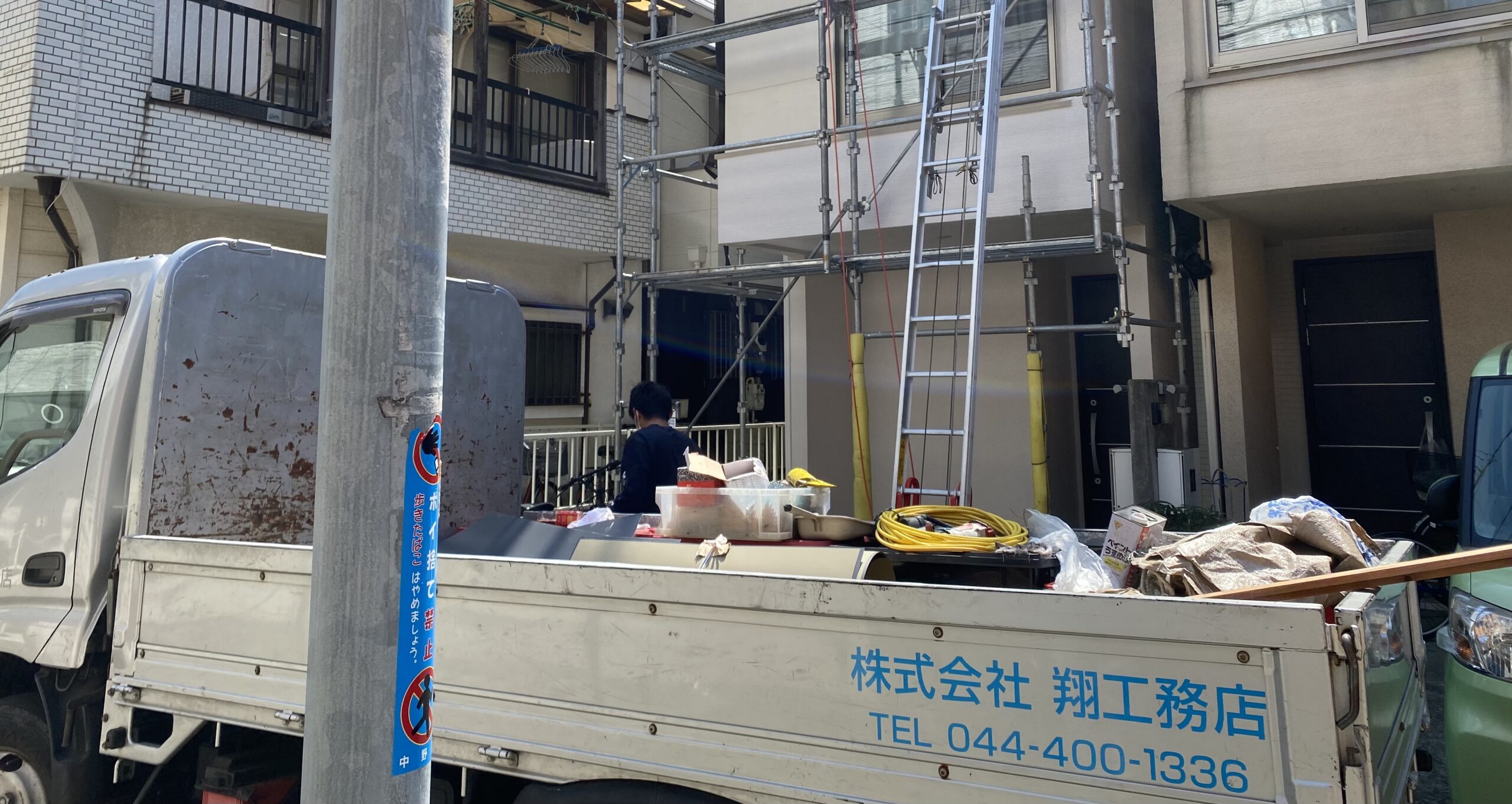
Kakeru Koumuten Co., Ltd. is a company that handles everything from the installation of temporary scaffolding to substrate repairs, exterior painting, tile repairs, sealing, waterproofing for rooftops and balconies, and roofing work, all managed and performed by our own team. In Chofu City, we have undertaken numerous large-scale renovations and exterior reforms for apartments, condominiums, and commercial facilities.
- On-site surveys and estimates are completely free (we welcome competitive estimates)
- Comprehensive management from temporary scaffolding to exterior and roofing work
- For exterior wall color considerations, color simulations and trial painting are available
- Consultations for partial repairs or emergency measures for leaks are also possible
- Cost Estimate / For condominiums, approximately 750,000 to 1,500,000 yen per unit (according to the Ministry of Land, Infrastructure, Transport and Tourism’s survey for the fiscal year 2021, about 70% fall within this range, with the most common being 1,000,000 to 1,250,000 yen. This amount excludes consumption tax and common temporary costs). For wooden apartments, the estimate is 2,000,000 to 4,000,000 yen per building.
- Estimated Cycle / 12 to 15 years. However, the deciding factor is not the number of years but the condition of deterioration.
- Particularly Relevant in Chofu City / Chofu City is a landscape administrative organization, and the entire city is a landscape planning area. According to the city’s page, even condominiums built before the formulation of the landscape plan (February 2014) may require notification for exterior wall repainting or color changes (including changes to the same color), with notifications required 30 days prior to commencement. Key areas include around Jindaiji Street and the Kokubunji Cliff Line.
- Available Funds / There are no subsidies for the overall construction costs of large-scale renovations in Chofu City or Tokyo. If requirements are met, property tax reductions (one-third in Chofu City; applicable to work completed by March 31, 2027), Tokyo’s condominium improvement construction grants (interest subsidies), and the city’s management advisor dispatch (free) may be available.
- Tips to Avoid Mistakes / At least three competitive estimates. Compare not only the amounts but also the quantities, methods, and materials.
Large-scale repair work that can be handled in Chofu City
Large-scale repairs are not just “exterior wall painting” or “waterproofing,” but a project that addresses the overall deterioration of the building while scaffolding is in place. At Kakeru Koumuten, we can handle all of the following work in-house, ensuring clear responsibility and coordination of the process.
| Type of Work | Main Contents |
|---|---|
| Temporary Scaffolding Work | Installed by our own scaffolding team using our owned scaffolding materials. We handle mesh sheets, protection, and fall prevention measures. |
| Substrate Repair Work | Crack repairs, injection of floating mortar and tiles, explosion (exposed rebar) repairs, resin mortar repairs for missing parts. |
| Exterior Wall Painting Work | High-pressure washing, three coats from primer to topcoat, painting of ancillary parts (iron parts, gutters, water cut-offs, etc.). We accommodate radical control type, fluorine, and inorganic paints. |
| Tile Repair Work | Replacement of damaged tiles, joint repairs, clear waterproofing of tile surfaces (such as Seven S). |
| Sealing Work | Replacement and additional application of seals around sashes and exterior wall joints. |
| Waterproofing Work | Urethane waterproofing for rooftops, roof balconies, common corridors, and stairs, PVC sheet waterproofing, and installation of long sheets. |
| Roof Work | Roof painting, roof overlay (cover method), re-roofing, and ridge metal replacement. We have sheet metal craftsmen on staff and can handle large roofs such as factories. |
| Iron and Metal Work | Surface painting of steel stairs, handrails, and PS doors, replacement of coping and water cut-offs. |
| Drainage and Wastewater Work | Cleaning and renovation of roof drains (insertion of renovation drains), clearing of gutter blockages. This work is particularly important for rooftops and balconies where rainwater tends to accumulate during heavy rain. |
| Others | Replacement of rain gutters, rooftop and exterior wall inspections using drones, leak investigations using thermography, and preliminary surveys of asbestos-containing building materials. |
Scope of Major Repairs Determined by Building Diagnosis
It is not always necessary to carry out all of the above works. The extent of the work will be determined based on the results of the building diagnosis. At Kakeru Koumuten, we conduct a free on-site survey to confirm the items below, compile a deterioration diagnosis report with photos, and propose the scope of work.
| Diagnosis Area | Main Inspection Method | Scope of Work Determined by Diagnosis Results |
|---|---|---|
| Exterior Wall (Painted Surface) | Visual inspection, checking the width of cracks and the condition of the paint film | Methods and quantities for crack repair, specifications for painting (whether to repaint or paint after removing the existing paint film) |
| Exterior Wall (Tile Surface) | Sounding inspection. High areas checked with a drone | Scope and estimated quantity for injection and replacement, whether clear waterproofing is necessary |
| Sealing | Checking for cracks, shrinkage, peeling, and hardening | Whether to replace or add to the existing sealant, scope of joints to be worked on |
| Rooftop, Balcony, Shared Corridor | Checking for blisters or breaks in the waterproof layer, puddles, and the condition of drains | Full renovation or partial repair, method (urethane waterproofing, PVC sheet waterproofing, long sheet), whether drain renovation is necessary |
| Leak Areas | Inspection using thermal imaging camera and drone | Identification of the cause and priority areas for repair |
| Metal Parts, Roof, Accessories | Checking for rust, corrosion, lifting, and cracking | Whether it can be resolved with painting or if component replacement or overlay installation is necessary |
| Site and Surroundings | Checking retaining walls, slopes, trees, access routes, and parking areas | Planning for scaffolding and the scope of temporary construction |
Reasons Kakeru Koumuten is Chosen for Large-Scale Renovations in Chofu City
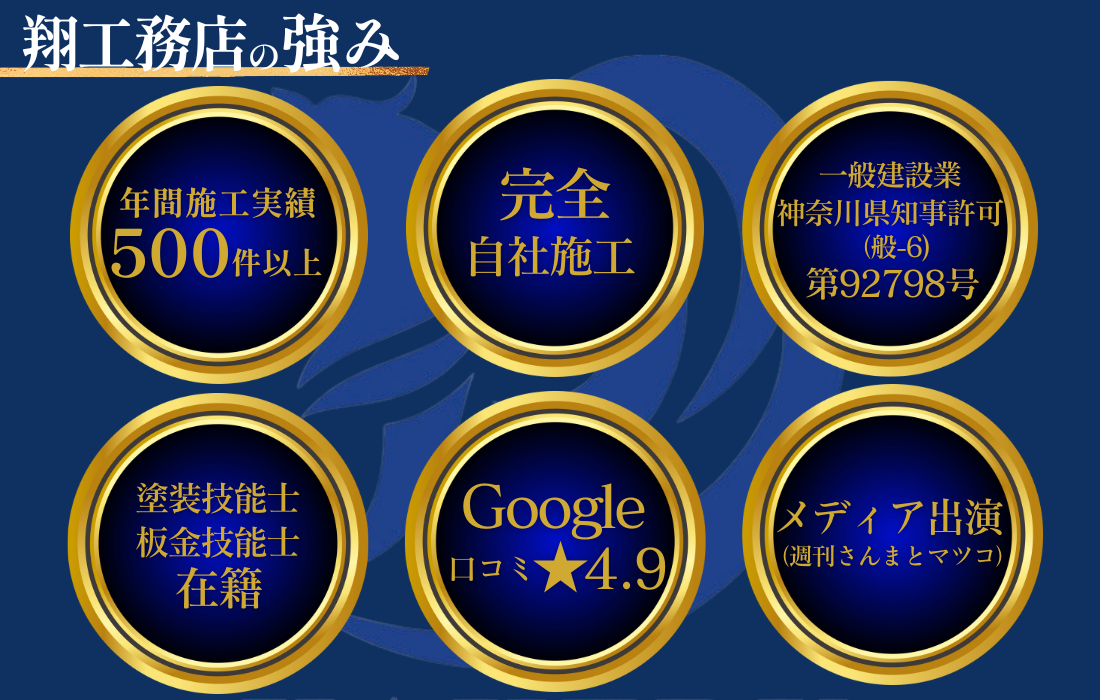
The reason why we can be entrusted with large-scale repairs in Chofu City is our “approach that cannot be imitated by other companies in large-scale repair work”, which has received high praise from many customers.
1. Equipment Specialized for Exterior Renovations
At Kakeru Koumuten, we have prepared the following warehouses and material storage areas to provide low-cost, high-quality exterior wall painting and waterproofing work for large-scale repairs. We have established five bases centered around Yokohama City for material storage and showrooms.
In-house Scaffolding Materials
 We own the scaffolding materials necessary for temporary scaffolding required for large-scale repairs and can assemble the scaffolding ourselves.
By performing scaffolding work with our own scaffolding team instead of outsourcing, we can cut costs for scaffolding work and provide quick and flexible responses.
We have approximately enough scaffolding materials for 100 single-family homes!
Storage of Materials in Our Large Warehouse
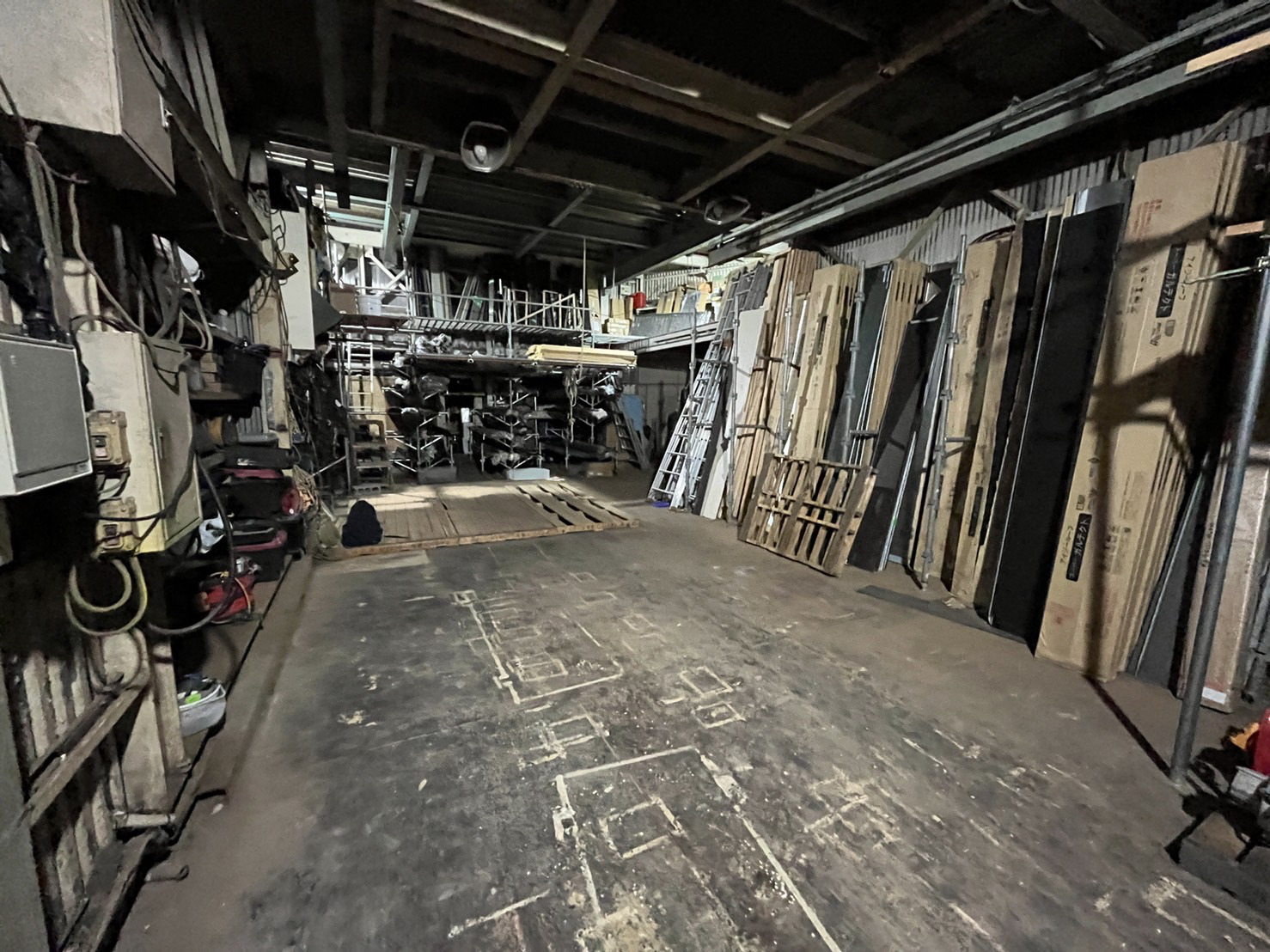 We store paints and substrate repair materials used for exterior renovations. By ordering a large quantity of materials at once, we can procure materials at a lower cost! Additionally, we always have stock available, allowing us to provide swift responses in emergencies!
In-house Waste Sorting
 In large-scale repairs, various waste materials such as leftover paint, metal, and wood are generated. At Kakeru Koumuten, we sort and recycle waste materials in-house, leading to cost reductions in waste disposal.
Showroom Dedicated to Exterior Renovations

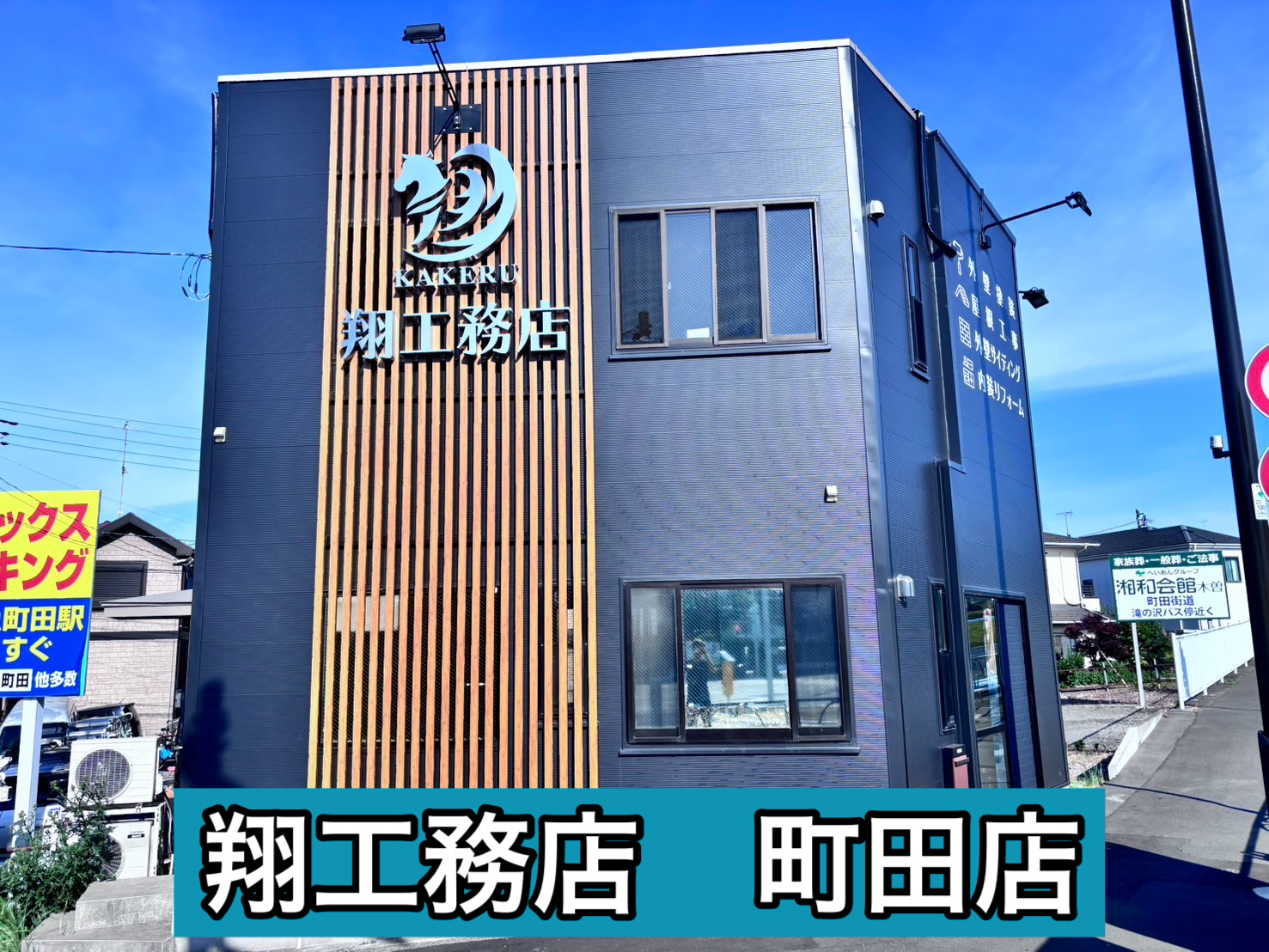
In the showroom, not only can you have meetings, but you can also check actual samples and colors of exterior materials. Color simulations for exterior wall painting and heat insulation tests using a heat insulation testing machine are also available!
2. Cost Reduction through In-House Management and Construction
 One of Kakeru Koumuten’s major strengths is in-house management and construction.
From inquiry to project completion, everything is managed by Kakeru Koumuten in a unified system, allowing for high-quality large-scale repairs at reduced costs. Additionally, one representative will handle everything from the estimate to project completion. Since the same person is responsible for sales and construction management, smooth communication is possible.
We can handle everything from temporary scaffolding installation to exterior wall painting, substrate repairs, waterproofing work, and tile repairs with complete in-house construction! Those with specialized knowledge and experience conduct inspections and actual construction for each process!
3. Obtaining Various Permits and Skilled Workers
 We have obtained construction industry licenses and permits for industrial waste collection and transportation! We also have nationally certified sheet metal and painting skilled workers, and we are confident in our construction techniques. We can also handle large-scale roofing work for factories! We have qualified personnel for asbestos work supervisors and building materials containing asbestos investigators, so we can handle and conduct preliminary investigations of roofing materials containing asbestos.
4. Warranty and Aftercare
Most large-scale repair works, including “painting work,” “substrate repair work,” and “waterproofing work,” come with a warranty!
Aftercare maintenance is available annually, and we send out notification DM every year.
5. Flexible and Prompt Response

Our company is equipped to handle various troubles and situations related to apartments and condominiums.
We can also address exterior walls and rooftops that cannot be inspected from high places using drones! During leak investigations, we can use a thermal imaging camera to help identify the cause of leaks!
We will respond according to your wishes. We also accept emergency measures for sudden leaks! We will promptly respond to urgent requests or emergencies!
6. Staff Development
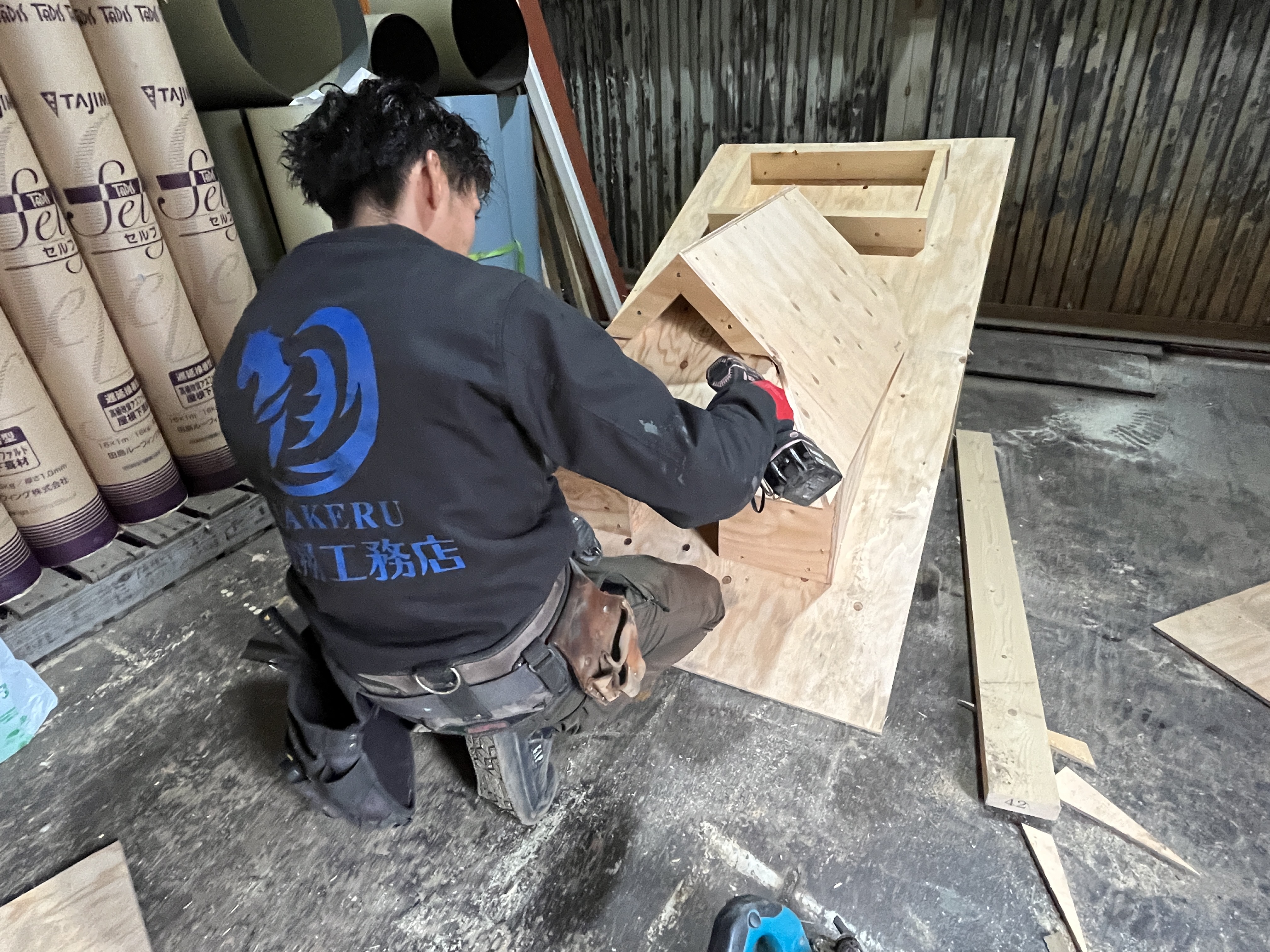
Our staff create various models for skill enhancement and conduct practical training. Since different sites require various processing and techniques, we regularly provide skill improvement education to ensure each staff member can respond effectively. We also educate on points to pay attention to and areas to check during each stage of large-scale repair work.
7. Consideration for Residents and Neighbors
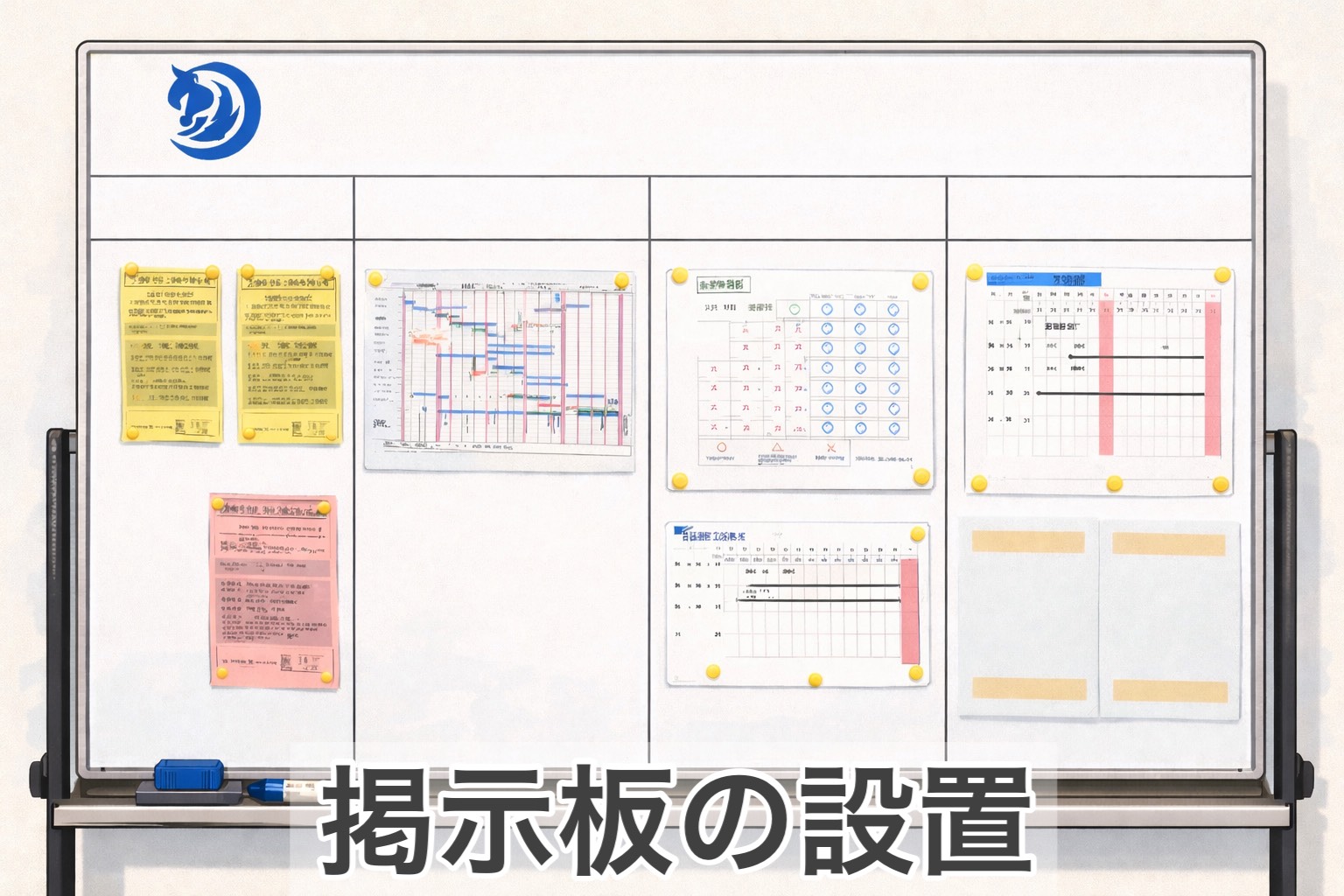
During large-scale repair work, we will not only notify residents and greet nearby residents, but also install a bulletin board at the entrance to display the construction schedule and notices! Additionally, we will thoroughly educate visitors on proper manners to minimize any inconvenience to residents and neighbors.
8. Strict Quality Control
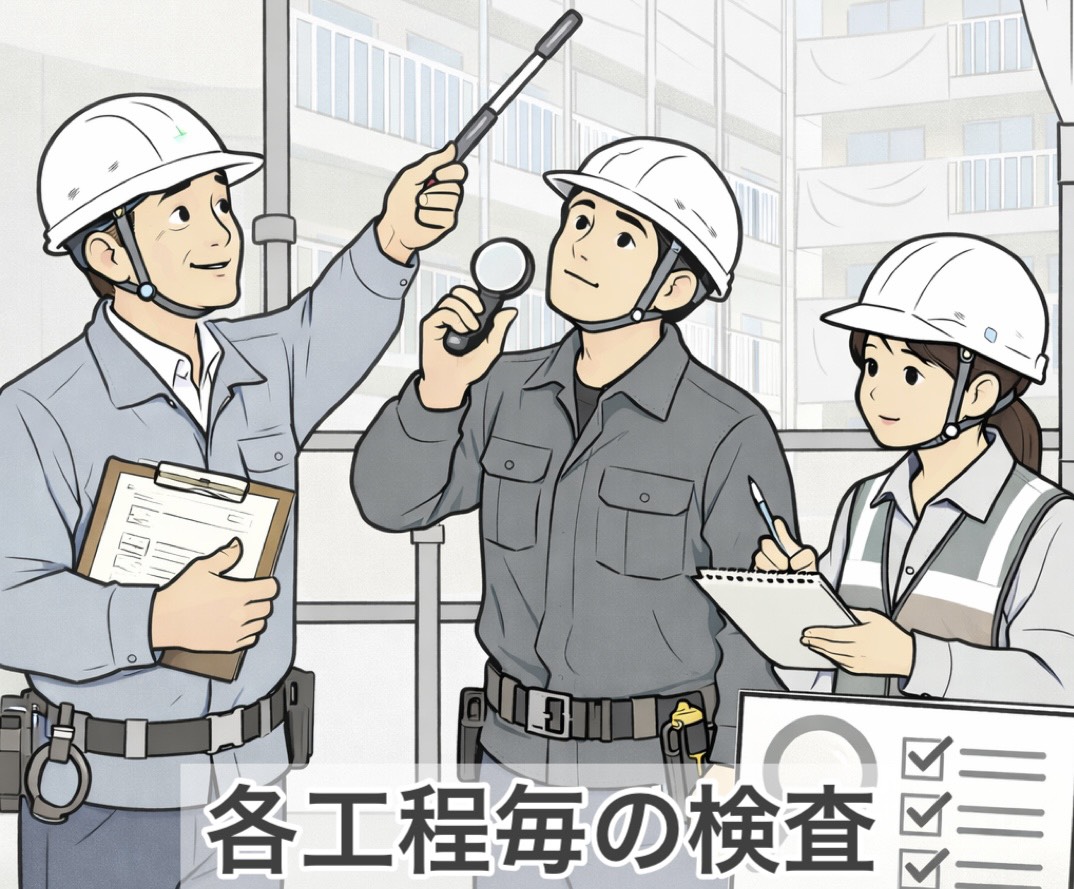
Inspections and detailed construction photographs will be taken by responsible personnel for each process. We use film thickness inspection machines and check sheets to ensure that there are no missed inspections. During exterior wall painting and waterproofing work, we confirm the quantity of used paint cans to ensure that the specified amount of paint is used, and we prevent construction defects by ordering paint directly from our company. Of course, we will also take photographs of the used paint and report them.
9. Exterior Wall Painting Color Simulation
9-1 Self Color Simulation
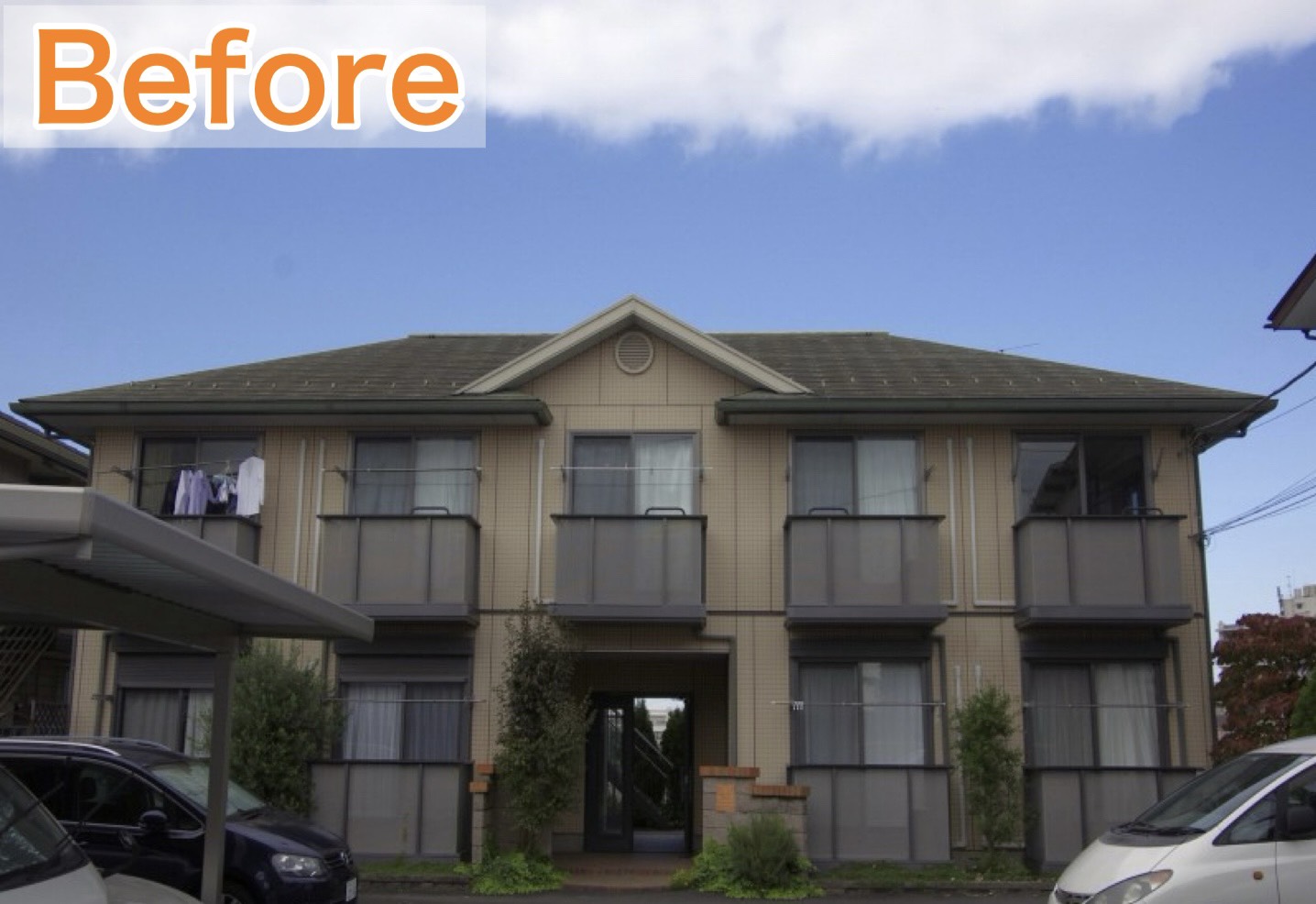
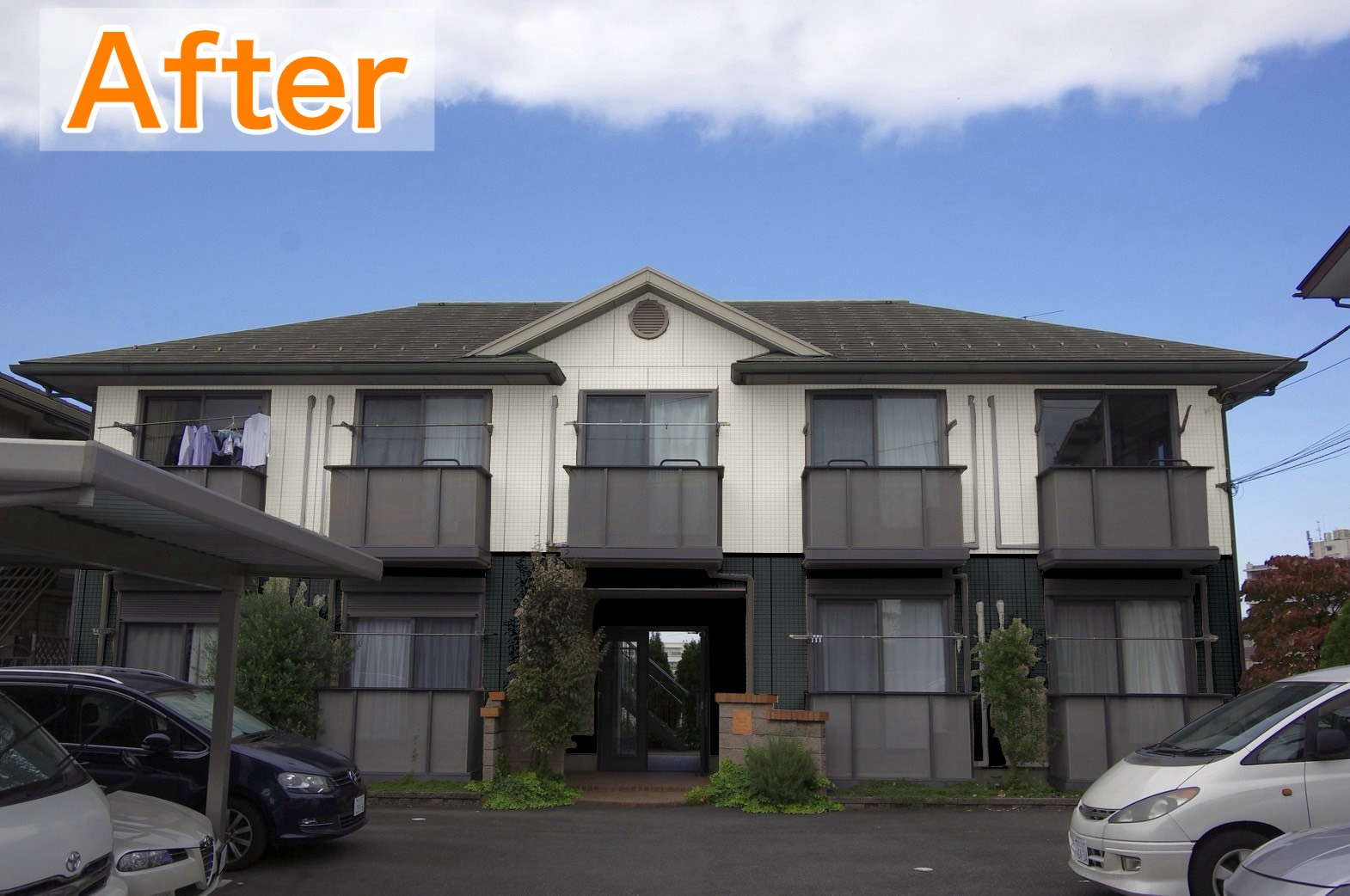
The simulations created by our company can be done using actual photos of your apartment or building!Simulations can also be done on your smartphone or computer. By simulating and then changing to a two-tone color or making an image change, we hope to enhance the stylish appearance and contribute to an increase in occupancy rates! Of course, we can also arrange paint samples for actual color confirmation.
*Chofu City is a scenic administrative organization, and the entire city is a scenic planning area. Changes to exterior wall paint or color (including repainting the same color) may require notification up to 30 days before starting, depending on the location and scale of the building. Since the criteria for large-scale repairs are not clearly stated on the city’s page, prior confirmation is necessary. Having a color simulation screen will make explanations at the neighborhood association or management committee meetings proceed smoothly.
9-2 Confirm the Actual Color with a Test Paint!
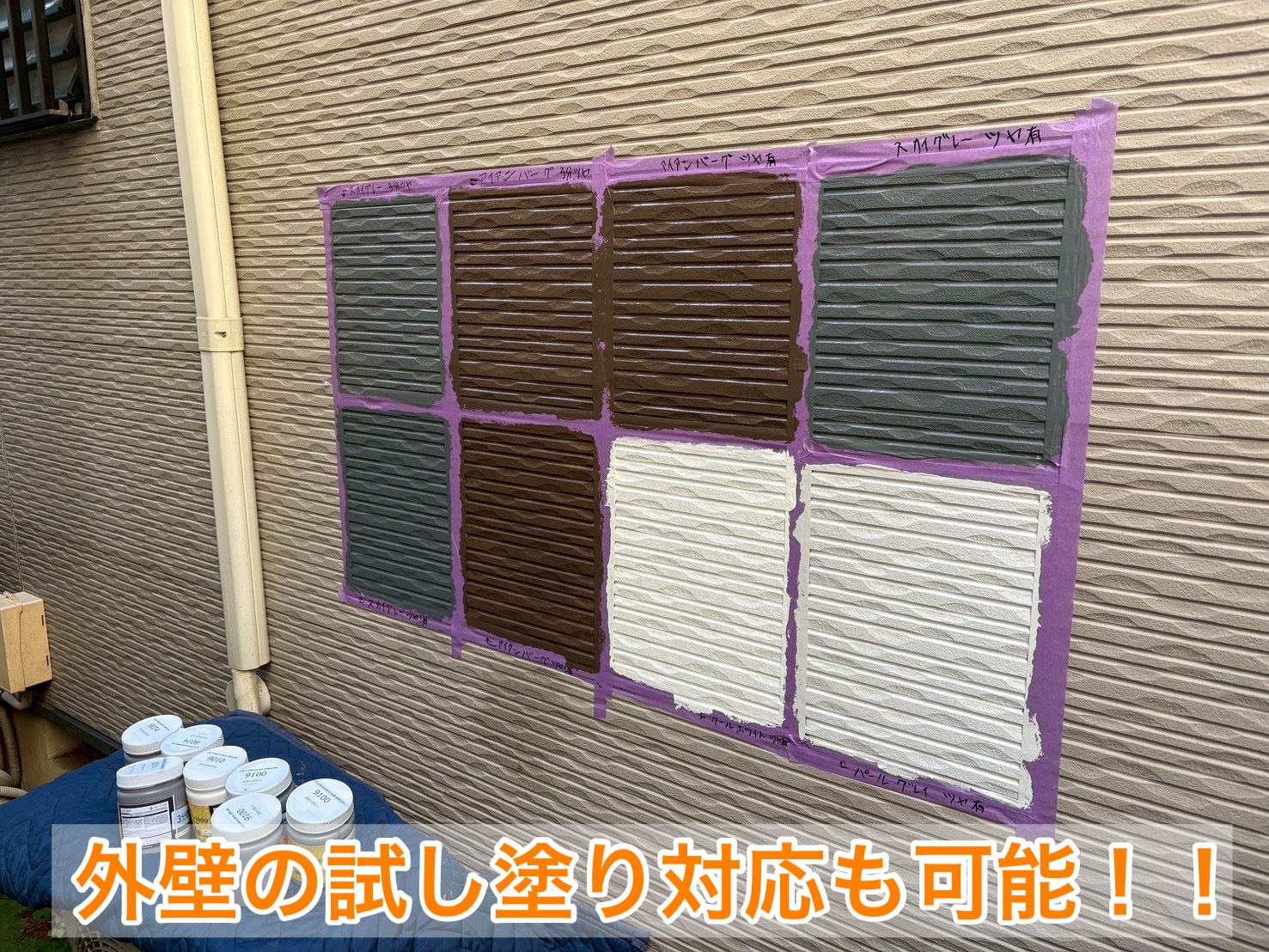 You can order samples of the paint you are considering and conduct a test paint on your exterior wall. By performing a test paint, you can confirm the actual color and gloss!
9-3 Exterior Renovation Simulation
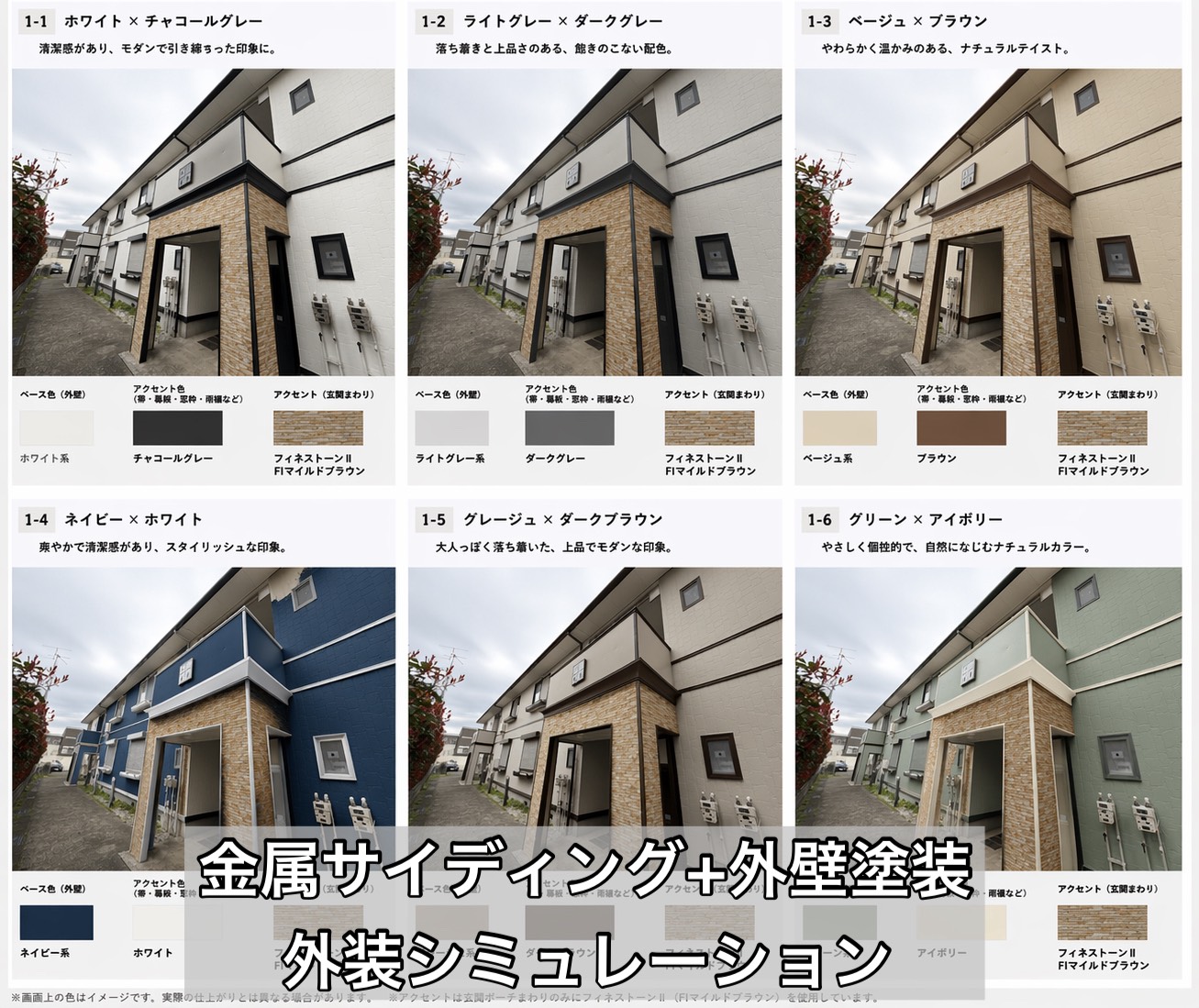
Exterior simulations for apartments and condominiums are also possible!
・Exterior wall color simulation (two-tone colors are also possible)
・Simulation for applying metal siding
・Simulation using accent materials such as cornices and louvers
・Simulation for roof painting and roof replacement work
With the exterior renovation simulation, you can minimize the risk of failure in image change! We hope that renovating the appearance of apartments and condominiums will help increase occupancy rates.
Cost Estimate for Large-Scale Repairs in Chofu City
The cost of large-scale repairs varies significantly based on the size of the building, deterioration status, scope of work, and materials used. First, please refer to the national average based on public statistics, then to our company’s estimates based on construction performance by scale, and finally to unit price examples for each project.
The national average for condominiums is 750,000 to 1,500,000 yen per unit
According to a survey conducted by the Ministry of Land, Infrastructure, Transport and Tourism, which collected 818 construction cases (FY 2021), the construction costs for large-scale repairs are concentrated at approximately 70% in the range of 750,000 to 1,500,000 yen per unit, with the most common price range being 1,000,000 to 1,250,000 yen. Note that this survey’s amounts do not include consumption tax and common temporary construction costs, so the conditions differ from the current total construction amount including tax.
| Construction Cost per Unit | Percentage | Construction Cost per Unit | Percentage |
|---|---|---|---|
| Up to 750,000 JPY | 15.1% | 1,250,000 to 1,500,000 JPY | 17.4% |
| 750,000 to 1,000,000 JPY | 24.7% | 1,500,000 to 2,000,000 JPY | 9.1% |
| 1,000,000 to 1,250,000 JPY | 27.0% (most common) | Over 2,000,000 JPY | 2.8% |
Source: Ministry of Land, Infrastructure, Transport and Tourism “Survey on Large-Scale Renovation Work for Condominiums in FY2021” (200 companies, 818 cases) *Amounts do not include consumption tax and common temporary costs. Percentages may not total 100% due to rounding and non-responses.
Breakdown of Construction Costs (What the Money is Spent On)
| Category | Composition Ratio | Main Contents |
|---|---|---|
| Construction-related Work | 60.3% | About half for exterior walls, about one-third for waterproofing. Substrate repair, tiles, painting, waterproofing |
| Temporary Work | 22.8% | Scaffolding, mesh sheets, protective coverings, etc. (does not include common temporary costs) |
| Miscellaneous Expenses | 10.3% | Site management fees, general management fees, statutory welfare expenses, etc. (9.5%), insurance premiums for large-scale renovation defect insurance (0.8%) |
Source: Ministry of Land, Infrastructure, Transport and Tourism “Survey on Large-Scale Renovation Work for Condominiums in FY2021” (Second aggregation of large-scale renovation work. Overall average is construction-related 59.0%, temporary 22.3%, miscellaneous expenses 9.9%). *The total does not equal 100% because equipment-related work, exterior work, and others are included. This is an average value and is not a criterion for judging the appropriateness of individual estimates.
Estimated Costs by Building Size (Scaffolding, Substrate Repair, Exterior Painting, Waterproofing, Sealing Set)
| Type and Scale of Building | Estimated Cost | Estimated Construction Period |
|---|---|---|
| Wooden Apartment (2 stories, 6-10 units) | 2,000,000 – 4,000,000 JPY | 3 – 5 weeks |
| Steel and RC Apartment (3 stories, 10-20 units) | 4,000,000 – 9,000,000 JPY | 1 – 2 months |
| Mixed-use Building / Small-scale Condominium (4-5 stories) | 5,000,000 – 15,000,000 JPY | 1.5 – 3 months |
| Medium-scale Condominium (30-50 units) | 20,000,000 – 50,000,000 JPY | 3 – 5 months |
| Large-scale Condominium (over 100 units) | Around 100,000,000 JPY – | 6 months – |
*The above estimates are based on Kakeru Koumuten’s construction records and may vary depending on the presence of roofing work, steel work, plumbing, etc. For condominiums, please also consider the amount calculated by multiplying the national statistics (750,000 – 1,500,000 JPY per unit) by the number of units.
Breakdown of Costs for Temporary Works, Substrate Repair, Exterior Walls, and Waterproofing
The estimate for large-scale repairs is broadly divided into “Temporary Works,” “Substrate Repair,” “Sealing,” “Exterior Painting,” “Waterproofing,” and “Miscellaneous Expenses.” Before comparing total amounts, please check what each item includes, how much, and at what cost.
| Item | What to Check in the Estimate |
|---|---|
| Building Conditions | Structure (wooden, steel, RC), number of stories, number of units, exterior wall area, and waterproofing area. Also confirm whether the area is based on drawings or actual measurements. |
| Common Temporary Works and Scaffolding | Area and unit price of scaffolding, contents of mesh sheets, protection, temporary toilets, etc. According to the Ministry of Land, Infrastructure, Transport and Tourism’s survey for Reiwa 3, temporary works such as scaffolding account for about 20% of construction costs (excluding common temporary costs). |
| Substrate Repair | Quantities and unit prices for repair methods such as cracks, lifting, and spalling. Since these items are not confirmed until scaffolding is set up, please check whether the quantities are estimated or settled based on actual numbers, and the settlement method if quantities increase or decrease. |
| Sealing | Whether it is a replacement or additional sealing, length of work (m), and material name. |
| Exterior Painting | Painting area (㎡), manufacturer name, product name, grade of paint, number of coats, and scope of ancillary parts. |
| Waterproofing | Area for each part such as rooftop, balcony, and common corridor, construction method, material name, and whether drain renovations are included. |
| Inspection and Reporting | Whether inspections for each process, construction photos, completion report, and warranty are included. |
| Miscellaneous Expenses | Contents and proportions of site management fees, general management fees, statutory welfare expenses, etc. According to the Ministry of Land, Infrastructure, Transport and Tourism’s survey for Reiwa 3, these average about 10% of construction costs, but they vary depending on the size and conditions of the building, so there is no uniform standard. |
| Tax Classification | Whether the amounts are tax-inclusive or tax-exclusive. Since companies display this differently, be sure to align them before comparing total amounts. |
Examples of Unit Prices for Repair Work
| Repair Method | Materials Used | Cost |
|---|---|---|
| Tile Replacement | Similar Existing Tiles | per piece / 2,000 JPY〜4,000 JPY |
| Repair of Floating Tile and Mortar Areas | Epoxy Resin Injection | per sqm / 3,000 JPY〜5,000 JPY (Varies depending on the degree) |
| Tile Joint Mortar Repair | Mortar for Tile Joints | per sqm / 1,000 JPY〜2,000 JPY (Varies depending on the degree) |
| Concrete Spalling Repair | Reinforcement Rust Prevention + Resin Mortar | per location / 1,000 JPY〜2,000 JPY (Varies depending on the degree) |
| Crack Repair | Filler or Polymer Cement | per m / 100 JPY〜2,500 JPY (Varies depending on the degree) |
| Exterior Wall Painting (3 Coats) | Radical Control Silicone Paint | per sqm / 2,500 JPY〜3,500 JPY |
| Roof Top Urethane Waterproofing (Ventilated Buffer Method) | High Strength Urethane | per sqm / 6,500 JPY〜9,500 JPY |
| Sealing Replacement | Modified Silicone | per m / 900 JPY〜1,500 JPY |
| Temporary Scaffolding | In-house Owned Scaffolding Materials (Wedge Type) | per sqm / 700 JPY〜1,000 JPY |
*Costs and warranty periods vary depending on shape, quantity, substrate condition, and type of materials. If you would like a detailed estimate, please feel free to contact us. Estimates are completely free.
Select Paint and Waterproofing Grades Based on “Years Until Next Repair”
“Good paint does not equal the right choice.” Aligning when to perform the next major repair with the lifespan of the materials is the most efficient way to choose.
| Grade | Estimated Lifespan | Suitable Cases |
|---|---|---|
| Silicone / Radical Control Type | 10-16 years | Buildings that are cycled every 12-15 years. A good choice balancing cost and performance. The lifespan varies by product, so choose specifications that match the cycle. |
| Fluorine | 16-20 years | Buildings that want to set the next repair after 15 years, high-rise or complex-shaped buildings where scaffolding costs are high. |
| Inorganic | 18-22 years | Buildings that want to suppress dirt adhesion. Effective for surfaces surrounded by trees or on the north side where moss and algae need to be controlled. |
| Urethane Waterproofing (Rooftop) | 8-15 years | Complex-shaped rooftops, when wanting to renovate while utilizing the existing waterproof layer. Mid-term inspections and repairs, such as re-coating the top coat, are prerequisites. |
| PVC Sheet Waterproofing | 20-25 years | Rooftops with a large area and simple shape. Short construction time. |
| Asphalt Waterproofing | 15-20 years | Rooftops planned for long cycles. The cost per instance will increase. |
*The estimated lifespan is a general guideline and may vary depending on sunlight, location, and substrate condition. For shaded and humid areas, choosing paints with anti-algae and anti-mold properties can improve durability.
Guideline for Repair Reserve Fund and Options When Insufficient
According to the Ministry of Land, Infrastructure, Transport and Tourism guidelines, the guideline for the repair reserve fund is indicated as a monthly amount per exclusive area. Additional charges are required if there is a mechanical parking lot.
| Building Size (Less than 20 Floors) | Monthly Guideline (Average) | Range Covering Two-Thirds of Cases | Conversion for 70㎡ |
|---|---|---|---|
| Building Total Floor Area Less than 5,000㎡ | 335 JPY/㎡ | 235-430 JPY/㎡ | Approximately 16,500-30,100 JPY |
| 5,000-10,000㎡ | 252 JPY/㎡ | 170-320 JPY/㎡ | Approximately 11,900-22,400 JPY |
| 10,000-20,000㎡ | 271 JPY/㎡ | 200-330 JPY/㎡ | Approximately 14,000-23,100 JPY |
| 20,000㎡ or More | 255 JPY/㎡ | 190-325 JPY/㎡ | Approximately 13,300-22,750 JPY |
Source: Ministry of Land, Infrastructure, Transport and Tourism “Guidelines on Repair Reserve Funds for Condominiums” (Reiwa 6 June Revision – PDF) / National average is 13,378 JPY per unit per month (Reiwa 5 Fiscal Year Comprehensive Survey of Condominiums)
In the Reiwa 5 Fiscal Year Comprehensive Survey of Condominiums, 36.6% of management associations responded that “the repair reserve fund is insufficient compared to the plan.” There are four main options when there is a shortfall.
| Options | Considerations and Points of Caution |
|---|---|
| ① Adjusting the Construction Schedule | Based on the deterioration diagnosis, postpone low-urgency work to the next time. However, it is essential to distinguish between work that can and cannot be postponed, as delaying waterproofing and tile peeling measures will ultimately be more costly. |
| ② Reviewing the Scope and Specifications of Work | Revising paint grades, changing from full renovation to partial renovation, etc. Please consider this separately from “apparent reductions” that skip processes. |
| ③ Utilizing Subsidies and Tax Systems | Subsidies for energy-saving renovations, etc. (to be discussed later). The reduction of fixed asset tax is a system that lowers the tax amount for each individual owner, and does not directly increase the repair funds of the management association. |
| ④ Increasing Reserve Funds, Borrowing, and One-Time Payments | In addition to considering an increase in repair reserve funds at the general meeting, the Housing Finance Agency’s condominium common area renovation loans require no collateral. Interest rates can be lowered by obtaining management plan certification. |
Subsidies, Tax Systems, and Loans to Check for Large-Scale Renovations in Chofu City
In Chofu City, Tokyo, there are no subsidies confirmed that cover the entire construction cost of large-scale renovations. Potential options include free dispatch of condominium management advisors from the city, promotion of seismic retrofitting for older condominiums, Tokyo’s condominium improvement construction subsidies (interest subsidies), national energy-saving subsidies, and reductions in fixed asset tax. The main categories available are broadly divided into the following four types. The eligibility and application status of these systems may change even during the fiscal year, so please be sure to confirm with our company or the respective offices before contracting or starting work.(As of October 15, 2026)
| Type | Details |
|---|---|
| ① Support for Investigation and Consultation | Chofu City’s management plan certification system (certified by the city. Application fee is free), dispatch of city condominium management advisors (free), Tokyo’s condominium specialized consultation, Tokyo’s condominium management advisors, and telephone consultation at the condominium management center. This can be used in the preliminary stage before large-scale repairs. |
| ② Construction Subsidies by Purpose | City’s condominium earthquake resistance promotion project (for buildings that received construction confirmation before May 31, 1981), Tokyo’s “Stay in Tokyo Condominium” subsidy, and Tokyo’s insulation and renewable energy project for owners of entire rental properties. This is incorporated into large-scale repairs. |
| ③ Tax Incentives | Reduction of property tax under the condominium longevity promotion tax system (Chofu City’s reduction rate is one-third). |
| ④ Public Loans and Interest Subsidies | Housing Finance Agency’s condominium common area renovation loans and Tokyo’s interest subsidies (subsidy for condominium improvement work). As far as confirmed, there are no city loan arrangements or interest subsidies available. |
① Condominium Longevity Promotion Tax System (Property Tax Reduction)
If large-scale repairs (including exterior painting, floor waterproofing, and roof waterproofing) that contribute to the longevity of certain qualifying condominiums are carried out, the property tax amount for the following fiscal year will be reduced. The reduction rate is determined by the municipality within the national range (one-sixth to one-half). Chofu City’s reduction rate is one-third (up to the tax amount equivalent to 100㎡ per unit).
| Main Requirements | Built over 20 years ago, with a total of more than 10 units, and more than half of the exclusive area being residential / Previously completed exterior painting, floor waterproofing, and roof waterproofing / Must meet one of the following: ① A condominium with a management plan certification that has raised the repair reserve fund to the certified standard after September 1, 2021 ② A condominium that has received advice and guidance from the city |
|---|---|
| Reduction Rate | Chofu City is one-third. The target is the fixed asset tax amount for an area equivalent to 100㎡ per unit. The 23 wards of Tokyo are set at one-half, which differs from Chofu City. |
| Construction Deadline | From April 1, 2023, to March 31, 2027, it is a condition that large-scale repair work is completed. |
| Application | Within three months from the completion date of the work, you must apply to the Chofu City Citizen’s Department, Asset Tax Division (Phone 042-481-7208・7209). It is advised that the application be submitted by the management association’s administrator, and prior contact with the Asset Tax Division is recommended. The main attached documents include the reduction application form, large-scale repair certification (issued by an architect belonging to a registered architectural firm), past work certification (issued by an architect or condominium management specialist), and documents that clarify the total number of units. For certified condominiums, the certification notification and proof of repair reserve fund increase are required, while for condominiums that received advice and guidance, a certificate of implementation of the advice and guidance (issued by the city’s housing division) is also required. The Tokyo Metropolitan Tax Bureau’s page is based on buildings in the 23 wards of Tokyo and directs applications to the metropolitan tax office within the wards, but buildings in Chofu City must apply to the city. |
| Notes | Reductions for seismic retrofitting, barrier-free renovations, and energy-saving renovations cannot be combined in the same fiscal year (they can be applied separately in different fiscal years). Simply obtaining management plan certification does not qualify; there are requirements such as raising the repair reserve fund. A review of the long-term repair plan is also necessary, so it is recommended to prepare at least one year before the construction. |
② City and Metropolitan Window (Management Associations Start Here)
The window for certification of management plans for condominiums, dispatch of management advisors, and reporting of management status is the Chofu City Urban Development Department, Housing Division (Phone 042-481-7545). Reporting of management status is based on Tokyo Metropolitan Ordinance and applies to residential condominiums with more than six units built before December 31, 1983.
| Contact & System | Details |
|---|---|
| Management Plan Certification System Contact (Chofu City) | Housing Division (Phone 042-481-7545). From April 2023, the city has been handling certification tasks. First, obtain a “Pre-Confirmation Compliance Certificate” through the system of the Public Interest Incorporated Foundation Condominium Management Center, and then apply for certification from the city (the entire process is electronic application). The application fee for certification to the city is free, but there is a separate usage fee for the system used for pre-confirmation. The city has the “Chofu City Condominium Management Improvement Promotion Plan.” The number of certifications and the number of condominium buildings and units in the city cannot be confirmed on the city’s page. |
| Condominium Management Advisor Dispatch (Chofu City) | This service is available for management associations of condominiums in the city and is free. Each session lasts 2 hours, and up to 3 sessions per condominium are allowed. Consultations regarding large-scale repairs are targeted at the consideration stage (investigation and diagnosis of deterioration, consideration organization, construction method, etc.) and the preparation stage (construction content, contractor selection, consensus building, etc.). The creation of repair plans and the deterioration diagnosis survey itself are not included in the consultation content. Applications for the fiscal year 2026 will be accepted from April 1 to December 28, and due to budget limitations, the service may end before the deadline. Applications must be made at least 30 days before the desired dispatch date. |
| Condominium Management Status Notification System (Chofu City) | Residential condominiums with 6 or more units built before December 31, 1983, are subject to notification, with the contact being the Housing Division, Housing Support Section (Phone 042-481-7545). The notification content must be updated every 5 years (the city’s page was updated on October 1, 2021). |
| Tokyo Metropolitan Condominium Management Advisor & Comprehensive Consultation Desk | The comprehensive consultation desk for condominiums can be reached at Phone 03-6427-4900 (free. Available Monday to Friday, and the first Saturday and third Sunday from 9 AM to 5 PM, until 7 PM on Wednesdays). As of April 2024, the costs for management advisors are A Course 16,500 yen and B Course 25,300 yen (both including tax). Applications for dispatch should be made to the Tokyo Disaster Prevention and Urban Development Center, Urban Development Promotion Section (Phone 03-5989-1453). The Condominium Management Center’s phone consultations are for management and regulations at 03-3222-1517, and for buildings and facilities at 03-3222-1519. |
| Consultation on Fixed Asset Tax (Chofu City) | The contact is the Citizens’ Department, Asset Tax Division (Phone 042-481-7208・7209). Reductions for buildings in Chofu City must be reported to Chofu City, not the Tokyo Tax Office. One of the requirements is a certificate from the management association that received “advice and guidance” from the city (Certificate of Implementation of Advice and Guidance), and the notification of the management plan certification is issued by the Housing Division (Phone 042-481-7545). |
| Consultation on Landscape & District Planning | Notifications based on the Landscape Act should be directed to the Urban Development Department, Urban Development Promotion Section of Chofu City (Phone 042-481-7442). Notifications for district planning should also go to the same section (Phone 042-481-7402・7444・7453). Building agreements are handled by the Building Guidance Division (Phone 042-481-7512) (for details, see the next section). |
Source: Chofu City “Condominium Management Plan Certification System”/Chofu City “Condominium Management Advisor Dispatch Project”/Chofu City “Condominium Management Status Notification System”/Chofu City “Property Tax Reduction for Condominiums that Undergo Large-Scale Renovation”/Tokyo Metropolitan Government “Comprehensive Consultation Desk for Condominiums”/Tokyo Metropolitan Government “Condominium Management Advisor System” *The status of the system’s contact points and reception may change.
③ Management Plan Certification System (Entry for Tax and Interest Rate Benefits)
This is a system certified by Chofu City, and upon receiving certification, you can meet one of the requirements for lower interest rates on the Housing Finance Agency’s “Flat 35” and condominium common area renovation loans, as well as the long-term durability promotion tax system (certification alone does not guarantee tax reduction). The certification criteria consist of 17 items in accordance with national guidelines. The main criteria include holding a general meeting at least once a year, organizing management regulations, separate accounting for management fees and repair reserve funds, ensuring that the amount of arrears is within 10% of the total, and “having a long-term repair plan that includes two or more large-scale repair works and is created or reviewed within seven years, with a planning period of 30 years or more.”
*Certification is subject to renewal every five years, and approval from the general meeting is required for the application. For the long-term durability promotion tax system, certification must be valid both on the assessment date (January 1) and at the time of declaration. The city office is the Housing Division, and applications are made electronically. Please check the city’s website for details on procedures and certification criteria.
④ National Energy Saving Support | Housing Energy Saving 2026 Campaign
Changes for Fiscal Year 2026The “Child-Rearing Green Housing Support Project” for Fiscal Year 2025 has been abolished and reorganized into the successor “Mirai Eco Housing 2026 Project.” Additionally, the “Long-Term Excellent Housing Renovation Promotion Project” will end in Fiscal Year 7 and will not be implemented in Fiscal Year 8. Please be careful not to establish financial plans based on outdated information.
Mirai Eco Housing 2026 Project
| Target | Renovations of existing homes built before December 31, 2016, regardless of whether they are single-family or multi-family residences. Management associations and management corporations can also become joint contractors (i.e., can be used for common area renovations). Rental properties are also eligible. |
|---|---|
| Required Work | Insulation renovations for openings, insulation renovations for the structure (floor, walls, ceiling), and installation of eco-friendly housing equipment are mandatory combinations. |
| Subsidy Limit | Depending on the age of the building and the energy-saving performance achieved, 400,000 to 1,000,000 yen per unit (1,000,000 yen for homes built before 1991 that meet the mandatory standards). |
| Period | Subsidy applications are generally made by registered contractors (construction contractors) after the completion of work (the client cannot apply themselves). Reservations for subsidy applications must be made by November 16, 2026, at the latest, and applications must be submitted by December 31, 2026, at the latest (will end once the budget limit is reached). |
Advanced Window Renovation 2026 Project
| Target | Installation of interior windows, replacement of exterior windows, and glass replacement in existing homes (single-family and multi-family) for upgrades to high-performance insulated windows. Subsidy rates are set separately for “low-rise” and “mid-to-high-rise” multi-family residences. |
|---|---|
| Bulk Application for Multi-Family Residences | From May 29, 2026, applications for “bulk subsidy applications for multi-family residences (including reservations)” have begun. The application process is handled by registered contractors (window renovation contractors), and management associations cannot apply themselves, but they can apply for all units collectively, making it a system that works well with large-scale repairs for window and entrance door renovations. |
| Subsidy Limit | For residences, 1,000,000 yen per unit (changed from 2,000,000 yen in FY2025). For non-residential buildings over 240 square meters, 10,000,000 yen per building. |
| Period | Work commenced after November 28, 2025. Subsidy applications are made after the completion and handover of the work, with reservations due by November 16, 2026, at the latest, and applications due by December 31, 2026, at the latest (will end once the budget limit is reached). |
⑤ Subsidies and Support in Tokyo and Chofu City
| Tokyo Metropolitan Apartment Renovation Subsidy (Interest Subsidy) | The management association of fire-resistant condominiums in Tokyo can utilize the Japan Housing Finance Agency’s “Condominium Common Area Renovation Loan,” with the Tokyo Metropolitan Government providing an interest subsidy that lowers the agency’s interest rate by 1% (the interest subsidy period is up to 20 years). The second phase for the fiscal year 2026 is from October 1, 2026, to February 19, 2027, and applications will close when the number of applications reaches 2,500 units or the budget amount is reached (first-come, first-served basis for in-person and mail applications). Buildings constructed under the old seismic standards (before May 31, 1981) require a seismic diagnosis. The contact point is the Tokyo Metropolitan Housing Policy Headquarters, Condominium Division (phone 03-5320-7532). |
|---|---|
| Tokyo Metropolitan Rental Housing Insulation and Renewable Energy Promotion Project | This is aimed at owners of entire rental housing buildings. High-performance insulation windows (up to 300,000 JPY/unit), high-performance insulation doors (up to 270,000 JPY/unit), and insulation material renovations for walls and floors (up to 600,000 JPY/unit) are subsidized at a rate of two-thirds, with energy performance diagnosis and labeling capped at 1,200,000 JPY/building. Solar power generation and storage batteries are also eligible, and when installing solar panels on the flat roofs of existing rental housing, there is an additional waterproofing cost (180,000 JPY/kW). Pre-application for subsidies is from May 29, 2026, to March 31, 2027, and will end when the total application amount reaches the cap. The construction must be carried out by businesses registered with the Tokyo Metropolitan Environmental Public Corporation’s “Cool Net Tokyo.” |
| Tokyo Metropolitan Stay-in Tokyo Condominiums (Fiscal Year 2026) | This is aimed at registered condominium management associations, providing subsidies for disaster preparedness stockpiling, storage facilities, emergency power supplies, elevator entrapment prevention, and flood prevention measures. The subsidy rate and upper limit are set for each project. Applications are accepted from June 5, 2026, to January 15, 2027, but some projects may have earlier deadlines. There is no mention of remaining budget. The contact point is the reception office (phone 03-5989-1547), and for general inquiries about the system, contact the Condominium Division (phone 03-5320-5007). |
| Chofu City Condominium Seismic Reinforcement Promotion Project | This targets condominiums that received construction confirmation before May 31, 1981, and have started construction, consisting of three or more stories, fire-resistant or quasi-fire-resistant buildings made of reinforced concrete, steel, or steel-reinforced concrete (joint housing with two or more owners, with residential exclusive areas. Buildings along emergency transport roads are excluded). Seismic advisor dispatch is free (up to three times), seismic diagnosis is capped at 1,000,000 JPY, reinforcement design is capped at 2,000,000 JPY, and seismic retrofitting, rebuilding, or demolition is one-third of the lower of the actual expenditure and the limit for a total floor area of 1,000㎡ or more (23% for less than 1,000㎡, with a cap of 20,000,000 JPY), and construction supervision is capped at 2,000,000 JPY. New applications are accepted until the end of December (page updated April 16, 2026). The contact point is the Housing Division (phone 042-481-7545). It is not specified whether the costs for large-scale repairs such as exterior walls and waterproofing are eligible. |
| Chofu City Energy-Saving Equipment Subsidy (For Households) | This subsidy is for “households” and covers the replacement of LED lighting, reuse of home appliances, introduction of high-efficiency water heaters, and insulation renovations. Applications are accepted from April 20, 2026, to August 20, 2026, and the deadline is set due to approaching the budget cap (page updated August 12, 2026). It is not specified whether the common areas of the management association are eligible, and this has not been confirmed. For subsidy inquiries, contact the Chofu City Energy-Saving and Renewable Energy Consultation Desk (phone 042-444-1120); consultations are not accepted at the city hall’s counter or by phone. The responsible department is the Environmental Policy Division (phone 042-481-7086). |
* In Chofu City, there appear to be no subsidies specifically targeting the costs of large-scale repairs such as exterior wall painting and waterproofing, based on the information available. There is also no confirmation of subsidies for switching to LED lighting in common areas, grants for asbestos investigation and removal, or financing assistance and interest subsidies for management associations. The Tokyo Metropolitan Government’s “Insulation and Renewable Energy Promotion Project for Rental Housing” is aimed at owners of entire rental buildings, and management associations of condominium buildings are not included as eligible. Please be sure to check the conditions before signing a contract.
- Tokyo Metropolitan Government: Subsidies for Repairs of Condominium Buildings (Official)
- Tokyo Metropolitan Government: Tokyo Stay Condominium Reiwa 8 (Official)
- Tokyo Metropolitan Government: Insulation and Renewable Energy Promotion Project for Rental Housing (Official)
- Cool Net Tokyo: Reiwa 8 Insulation and Renewable Energy Promotion Project for Rental Housing
- Chofu City: Promotion Project for Earthquake Resistance of Condominium Buildings (Official)
- Chofu City: Dispatch Project for Condominium Management Advisors (Official)
- Chofu City: Subsidies for Energy-Saving Equipment and More (For Households, Official)
- Chofu City: Subsidies and Grants Related to Housing (Official)
⑥ Financing System (Housing Finance Agency Condominium Sumairu Loan)
If a management association borrows funds for large-scale repairs, it can utilize the Housing Finance Agency’s “Condominium Common Area Renovation Loan (Condominium Sumairu Loan).”
| Target Construction | Large-scale repairs, seismic retrofitting, flood prevention measures, energy-saving measures, balcony repairs, safety measures for elevators and parking lots, asbestos measures, diagnosis and design costs by experts, etc. |
|---|---|
| Collateral | No collateral required (joint guarantee by the condominium management center, etc.) |
| Repayment Period | Generally 1 to 10 years, 1 to 20 years for specific construction, up to 35 years for seismic, flood, and energy-saving construction after obtaining management plan certification |
| Interest Rate Reduction | ① Holding of Sumairu bonds ② Obtaining management plan certification ③ Implementation of seismic, flood, and energy-saving construction, each reducing by 0.2% per year (maximum 0.6% per year) |
| Main Requirements | Improvement of management regulations, resolution at the general meeting, repair reserve fund delinquency rate generally within 10%. Applications are accepted year-round |
Source: Housing Finance Agency “Mansion Sumairu Loan” (official)
Cases Where Fire Insurance Can Be Used and Cases Where It Should Not Be Used
Damage caused by typhoons, strong winds, flying debris from rooftop waterproof sheets, copings, fences, hail damage, lightning strikes, etc., due to “accidental incidents” may be covered by fire insurance. It is important to separate and record damage caused by accidents from wear and tear during the deterioration diagnosis.
On the other hand, wear and tear itself is not covered. There have been many troubles nationwide with businesses soliciting, “You can repair without out-of-pocket expenses with insurance money,” and the National Consumer Affairs Center has repeatedly issued warnings. False claims may be prosecuted for insurance fraud. Please confirm the eligibility of your application directly with your management association or owner to the insurance company or agent. Kakeru Koumuten will not provide such guidance at all.
Building Conditions and Repair Points in Chofu City
Chofu City is located almost in the center of Tokyo, in the southeastern part of the Tama area, about 15 km from the Shinjuku subcenter. It lies in the southern part of the Musashino Plateau, with the Tamagawa River flowing to the south and the Nogawa River running through the central part of the city. On April 1, 1955, Chofu Town and Jindai Town merged to establish city status. However, this is general information about the city. The age and deterioration condition of your building will be individually confirmed through on-site investigation.
(Reiwa 8, September 1 – City Population Statistics)
(Reiwa 8, September 1 – City Population Statistics)
(April 1, 1955 – City documents)
(City profile)
Source: Chofu City “Households and Population of Chofu City”/Chofu City “Profile of Chofu City”/Chofu City “60th Anniversary of City Status – Our Journey So Far” *Population and household numbers are based on the resident registry, including foreign residents.
Organizing the City and Buildings of Chofu from a Repair Perspective
The table below summarizes only the items that can be confirmed from city and metropolitan public documents. Individual building circumstances cannot be determined from the overall city numbers.
| Item | Verifiable Information | Perspective When Considering Repairs |
|---|---|---|
| History of the Town | On April 1, 1955, Chofu Town and Jindai Town merged to establish city status (the 8th city in Tokyo, with a population of 45,336 at that time). The Keio Line runs east-west through the center of the city, with 9 stations within the city. In 2012, as part of the continuous elevated crossing project near Chofu Station, three stations—Chofu, Fuda, and Kokuryo—were moved underground, eliminating 18 level crossings. According to the 2020 national census, the population was 242,614, with 120,945 households, an increase from 229,061 people and 110,581 households in 2015. | Since the timing of development varies by area, the age of buildings can differ significantly even within the same city. The age of each building will be verified individually. |
| Housing Complexes and Multi-family Dwellings | The city’s district plans include the “Tamagawa Housing Area” and the “Jindai Housing Complex Area.” The Tamagawa Housing Area is a complex developed by the Tokyo Metropolitan Housing Supply Corporation, spanning Chofu City and Komae City, adjacent to the Tamagawa River. In September 2017, it transitioned from a housing complex to a district plan, with city documents stating that “over 50 years have passed since the construction of the complex.” Following the progress of the rebuilding plan for Building H (in Chofu City), a draft proposal to change the layout and scale of district facilities was explained in November 2024. The construction year and number of units for the Jindai Housing Complex have not been confirmed. | Repairs for housing complexes are determined by the management association for condominiums and by the project entity for public rentals. In older complexes, discussions may arise regarding whether to rebuild or renovate. A deterioration diagnosis will help identify the scope of renovations. |
| Condominiums | The city has a management plan certification system (application fee is free), dispatch of management advisors (free), a management status reporting system, and a seismic retrofitting promotion project for older condominiums. The number of condominium buildings, units, and their ages within the city has not been confirmed in city documents. | Management associations with older buildings should expedite the review of long-term repair plans and reserve funds, as this can broaden options such as property tax reductions and consideration for management plan certification. |
| Aging Population and Living Conditions | The percentage of the population aged 65 and over, the percentage of single-person households, and the percentage of households living in multi-family dwellings cannot be verified on the city’s page. | For buildings with long-term residents or a high number of elderly residents, consideration for living conditions during construction is essential. Information about the construction schedule, laundry and ventilation times, and safety in stairways and corridors will be carefully communicated through meetings and postings. |
| Rental Apartments and Vacant Houses | Public descriptions limited to wooden apartments and the number of vacant houses have not been confirmed. | In rental apartments, it is crucial to inform residents and create a construction schedule that accommodates the status of vacancies. The condition of each building will be verified through on-site inspections. |
| Topography and Rivers | Located in the southern part of the Musashino Plateau, the highest point is near Dainichiji North Town 6-chome (elevation 56m), and the lowest point is along the Tamagawa River in Someji 3-chome (elevation 24m), with a height difference of about 32m. The boundary of the terrace is called the Kokubunji Cliff Line (hake), and the underground water that springs from below the cliff serves as the source for the Nogawa, Iruma, and Sengawa rivers. The green coverage rate is approximately 31.0% (as of 2015). | In sites with significant height differences, the way scaffolding is set up and the transportation of materials may change. The position of the building and surrounding conditions will be verified on-site. |
| Assumptions Regarding Floods, Landslides, and Earthquakes | The city’s flood and internal water hazard map (revised March 2023) is based on the maximum flood inundation area maps from the Ministry of Land, Infrastructure, Transport and Tourism for the Tamagawa, Asakawa, and Oguragawa rivers, and the inundation prediction area maps (revised) from Tokyo for the Nogawa, Sengawa, Iruma, Tanizawa, and Marukogawa rivers. The internal water hazard map is created by the city’s sewer division (not based on the Flood Control Act). The landslide hazard map (page updated October 5, 2020) indicates landslide warning areas and special warning areas, listing regions such as Tobitakyu 2 and 3 Chome, Shimoishihara 3 Chome, Nomizu 1 and 2 Chome, parts of Jindaiji, Sasu 5 Chome, Shibazaki 2 Chome, Wakabacho, Higashi Tsutsujioka 3 Chome, and Iruma Town. The anticipated rainfall figures and liquefaction and earthquake damage estimates have not been confirmed. | Please check the city’s hazard map for the assumptions regarding the location of your building. Include the condition of the drainage and waterproofing layers on the roof and balcony in your inspection items. |
| Roads and Delivery | There is no official description available regarding the width trends of municipal roads or parking and delivery routes. When placing scaffolding or morning glories on the road, it is advised on the city’s page that in addition to the municipal road occupancy procedures, consultation with the Chofu Police Station is necessary. | The type of road (municipal or metropolitan) determines the window for occupancy permission. The layout of scaffolding and delivery will be confirmed on-site for each project. |
| Scenery and City Rules | Chofu City is a scenic administrative body, and the entire city is a scenic planning area. Key areas include the “Jindaiji Street Scenic Formation Key Area” and the “Kokubunji Cliff Line Scenic Formation Key Area.” Additionally, there are 15 district plans and 5 building agreements (as of June 2023), along with 2 scenic agreements. The regulations for scenic districts and greening have not been confirmed. | Whether exterior wall repainting requires notification depends on the location and size of the building. Early confirmation is necessary (please see the table below). |
| Prior Coordination with Neighbors | The city has the “Chofu City Hotto Suru Furusato o Hagukumu Machizukuri Ordinance,” which requires prior consultation and notification to neighboring residents for development projects of 500 square meters or more, 15 or more residential units, exceeding 10 meters in height (excluding single-family homes), 4 or more stories above ground, or a total floor area of 1,500 square meters or more. The page does not specify whether large-scale repairs or exterior wall renovations are included (page updated October 15, 2026). | If you are concerned about applicability, please confirm with the city’s Urban Development Promotion Division (phone 042-481-7442). Prior explanations to neighbors are important at any site. |
Four Factors to Consider for Large-Scale Repairs Unique to Chofu City
We have organized four factors to keep in mind for large-scale repairs based on Chofu City’s topography and city rules. The circumstances for each building are different, so individual confirmation will be made through on-site investigations.
① The entire city is a scenic planning area, and notifications are required for exterior wall repainting
The city’s page states that condominiums built before the establishment of the scenic plan (February 2014) are also included, and changes to the exterior or color (including changes to the same color) may require notification. Notifications must be submitted at least 30 days before starting work. We will confirm during the investigation whether it is subject to notification, and incorporate color considerations and notification preparations into the schedule.
② Elevation differences and drainage around the Kokubunji Cliff Line, Nogawa, and Sengawa
The elevation difference within the city is about 32m, and the underground water that springs from the cliffs serves as the source for the Nogawa, Iruma, and Sendagawa rivers. The hazard map indicates both river flooding and internal water issues. The assumptions for each building vary depending on its location. On rooftops and balconies, if roof drains or gutters become clogged during heavy rain, it can lead to puddles and leaks. We recommend conducting inspections and cleaning of the drains, and including renovations in the work items as needed.
③ Regeneration of housing complexes and confirmation of district plans and building agreements
The city has 15 district plans, some of which include housing complexes, such as the Tamagawa Housing Area and the Jindai Housing Complex Area. Notifications for district plans must be submitted at least 30 days before starting, and whether changes in color or exterior walls are subject to this is not specified on the city’s page. Confirm in advance whether it falls under the applicable district. For older housing complexes, we will organize the scope of renovations based on the results of the diagnosis.
④ Roads for scaffolding and Chofu Police Station
If scaffolding or morning glories are to be placed on the road, it is advised to proceed in the following order: temporary application to the Road Management Division for city roads, consultation with Chofu Police Station, formal application, and payment of occupancy fees, as indicated on the city’s page. After the formal application for scaffolding, it typically takes about 10 business days for approval. Our in-house scaffolding team will assess the site and plan the layout of scaffolding suitable for the type and width of the road.
Source: Chofu City “Profile of Chofu City”/Chofu City “Flood and Internal Water Hazard Map”/Chofu City “Landslide Hazard Map”/Chofu City “Chofu City District Plans”/Chofu City “Building Agreements in Chofu City”/Chofu City “Landscape Agreements in Chofu City”/Chofu City “City Planning Regulations for Nurturing a Comfortable Hometown”/Chofu City “Application for Road Occupancy”/Chofu City “Tamagawa Housing Area District Plan” materials
When landscape procedures are required (for buildings)
When conducting exterior wall repainting and other related activities within Chofu City, the notifications regarding landscape and other matters are as follows, according to the city’s materials.
| Area and Scale | Applicable Actions | Procedure |
|---|---|---|
| Chofu City Landscape Plan Area The entire city is a landscape plan area |
New construction of buildings, as well as changes to appearance (repairs, remodeling, extensions), and changes in color (including changes to the same color). Condominiums built before the formulation of the landscape plan (February 2014) are also included. | Notification to Chofu City (at least 30 days before starting work). Urban Development Department, City Planning Promotion Division (Phone: 042-481-7442). It is not clearly stated on the city’s page what scale of large-scale repairs requires notification. If large-scale repairs are planned, it is advised to inquire early during the consideration stage. |
| Priority Areas and General Areas Notification scale for new construction of buildings (as per city guidance) |
In the priority area for landscape formation around Jindaiji Street, all actions are applicable. In the Kokubunji Cliff Landscape Formation Priority Area, buildings over 10m in height or with a total floor area of 500㎡ or more are applicable. In the landscape formation promotion area and general area, buildings over 20m in height or with a total floor area of 3,000㎡ or more are applicable. | New construction of buildings over 10m (excluding single-family homes), 4 stories or more above ground, or with a total floor area of 1,500㎡ or more requires pre-consultation before notification. It is not confirmed whether these scales apply directly to changes in appearance or color. Please check at the counter. |
| District Planning Area Maintenance Plan Area 15 districts within the city |
Building activities within the district maintenance plan area. It is not stated on the city’s page whether changes in color or exterior walls are applicable. | Notification to Chofu City (at least 30 days before starting work). City Planning Promotion Division (Phone: 042-481-7402, 7444, 7453). Please confirm at the counter whether your area is applicable. |
| Building Agreements and Landscape Agreements 5 building agreement areas and 2 landscape agreements |
Buildings within the agreement areas must comply with the provisions of the agreement. It is not stated on the city’s page whether there are regulations regarding exterior walls or colors. | The agreement can be viewed at the counter. For building agreements, contact the Building Guidance Division (Phone: 042-481-7512). |
Source: Chofu City “Notification System Based on the Landscape Act” / Chofu City “Notification for Large-Scale Repairs of Condominiums (Exterior Painting, etc.)” / Chofu City “Guide to Notifications and Explanation of Landscape Formation Standards” / Chofu City “Landscape Formation Guidelines (Color Edition)” / Chofu City “Chofu City District Plan” ※ At the notification counter for landscapes, information regarding “Changes Related to Landscape Notifications Starting October 1, Reiwa 8” is provided. The content has not been confirmed, so please check the latest information before making a notification.
Points of Discussion in Chofu City When Proceeding with Construction
| Issue | Current Situation in Chofu City and Kakeru Koumuten’s Response |
|---|---|
| Exterior Wall Color and Landscape Procedures | Since the entire city is a landscape planning area, repainting or changing the color of exterior walls requires a notification depending on the location and scale. In areas with district plans or building agreements, additional confirmation may be necessary. We will check whether it is subject to notification during the investigation phase, decide on the color through color simulation and test painting, and assist in preparing the necessary documents for the notification. |
| Rainwater Drainage and Drains | During heavy rain, drainage from rooftops and balconies is crucial. We will check the roof drains, gutters, and balcony drainage outlets during the investigation, and if there are blockages or damage to the waterproofing layer, we will include it in our proposal as a work item. |
| Road Occupation for Scaffolding and Temporary Enclosures | If scaffolding or morning glories are placed on the road, permission from the road administrator and a road usage permit from the police are required. For municipal roads, you can contact the Road Management Division (City Hall 7th floor, Phone 042-481-7725), and the city page provides the following steps: ① Submit an application form to the Road Management Division for a preliminary application, ② Bring the returned documents to Chofu Police Station (Main Phone 042-488-0110) for consultation, ③ After consultation, resubmit to the Road Management Division for the formal application, ④ Pay the occupation fee, ⑤ Receive the permit and commence work after the permit date. Scaffolding and morning glories are typically set up about 10 business days after the formal application. For metropolitan roads, the North Tama South Construction Office of the Tokyo Metropolitan Bureau of Construction, Road Management Section (Phone 042-330-1806) oversees Chofu City. The amount of the occupation fee and the contact for national roads have not been confirmed. Our own scaffolding team will assess the site and plan the scaffolding layout according to the road conditions. |
| Narrow Sites and Material Delivery | There is no official description from the city regarding the width of municipal roads or delivery routes. At narrow sites, our own scaffolding team will assess the site and plan the delivery route and scaffolding layout. Vehicles on the side where scaffolding will be set up may need to be temporarily moved, so arrangements for the relocation will be made together about 2 to 3 months before construction begins. |
| Noises, Vibrations, and Neighbors | Whether the dismantling of scaffolding and other work is subject to the Noise Regulation Act and the Vibration Regulation Act for specific construction work depends on the nature of the work. The notification window and deadlines for Chofu City have not been confirmed, so we will check with the city according to the construction content. We will ensure to greet the neighbors and strictly adhere to the working hours. |
| Buildings with Operating Tenants | For buildings where the first floor is a store or office and the upper floors are residential, consideration for business hours and access is necessary. We recommend prior explanations through the management association or tenants, and we ensure thorough greetings, posting of the construction schedule, and adherence to working hours. |
| Plans for Older Buildings and Housing Complexes | For older buildings, understanding the condition of the substrate, tiles, and waterproofing layer through building diagnostics is the starting point. Based on a deterioration diagnosis report with photos, we will sort and propose the construction to be repaired this time, work that can be summarized while scaffolding is up, and work that can be postponed to the next time. For housing complexes considering rebuilding, we will organize whether to minimize the scope of repairs or to extend usage through renovations, in conjunction with the results of the diagnosis. |
* Kakeru Koumuten has established five bases centered around Yokohama City and will visit Chofu City.
Signs of Deterioration and Timing for Major Repairs
Generally, major repairs are estimated to occur every 12 to 15 years. According to a survey by the Ministry of Land, Infrastructure, Transport and Tourism, the actual repair cycle is most commonly 13 years, with about 70% falling within the 12 to 15 year range, and the cycle tends to shorten with repeated occurrences. However, the actual judgment should be based on the condition of deterioration rather than just the number of years, so if you observe symptoms like those listed below, an early on-site inspection is recommended.
| Part | Dangerous Signs of Deterioration if Left Unattended | Main Actions |
|---|---|---|
| Exterior Wall (Painted Surface) | Chalking (white powder on hands), fading, cracks wider than 0.3mm, blistering or peeling of the paint film | Substrate repair + exterior wall painting |
| Exterior Wall (Tile Surface) | Tile lifting or falling off, joint chipping, efflorescence, hollow sound when tapped | Injection for lifting, replacement, clear waterproofing |
| Sealing | Cracks in joints, shrinkage, peeling, hardening | Re-sealing |
| Roof and Balcony | Bloating or breaking of the waterproof layer, puddles, clogged drains, rain leaks to lower floors | Urethane waterproofing, sheet waterproofing, drain renovation |
| Metal Parts and Steel Stairs | Rust, peeling paint, corrosion of treads | Cleaning + rust prevention + painting, component replacement |
| Roof | Lifting of ridge cap, cracking or warping of slate, moss, shifting of tiles | Roof painting, roof overlay (cover method), re-roofing |
| Concrete | Spalling (exposed rebar with rust stains), water leakage from cracks | Spalling repair + resin mortar filling |
| Common Corridor and Stair Floors | Lifting or peeling of long sheets, opening at edges, exposure of substrate | Replacement of long sheets + substrate waterproofing |
Estimated Repair Cycles by Part (Ministry of Land, Infrastructure, Transport and Tourism Guidelines)
| Part/Work | Estimated Cycle | Part/Work | Estimated Cycle |
|---|---|---|---|
| Exterior Wall Painting (Repainting) | 12 to 15 years | Re-sealing | 12 to 15 years |
| Exterior Wall Painting (Existing Removal + Painting) | 24 to 30 years | Metal Parts Painting | 5 to 7 years |
| Roof Waterproofing (Repair) | 12 to 15 years | Water Supply Pipe (Rehabilitation/Replacement) | 19 to 23 years / 30 to 40 years |
| Roof Waterproofing (Removal/New Installation) | 24 to 30 years | Drain Pipe (Rehabilitation/Replacement) | 19 to 23 years / 30 to 40 years |
* The above are reference examples from the guidelines and are not uniform construction deadlines. Actual cycles will be set according to the specifications, location conditions, and deterioration status of the building.
Source: Ministry of Land, Infrastructure, Transport and Tourism “Guidelines for Creating Long-Term Repair Plans” (Reiwa 6 June Revision – PDF) / Ministry of Land, Infrastructure, Transport and Tourism “Survey on Large-Scale Repair Work for Condominiums in FY2021”
Examples of Large-Scale Renovation Work
This is an example of exterior renovation work on a mixed-use building undertaken by Kakeru Koumuten Co., Ltd. The building had leaks occurring from several locations, and we combined clear waterproofing for the tile exterior walls with waterproofing for the roof for the renovation.
Exterior Renovation Work for Mixed-Use Building (Tile Wall Waterproofing + Roof Waterproofing)
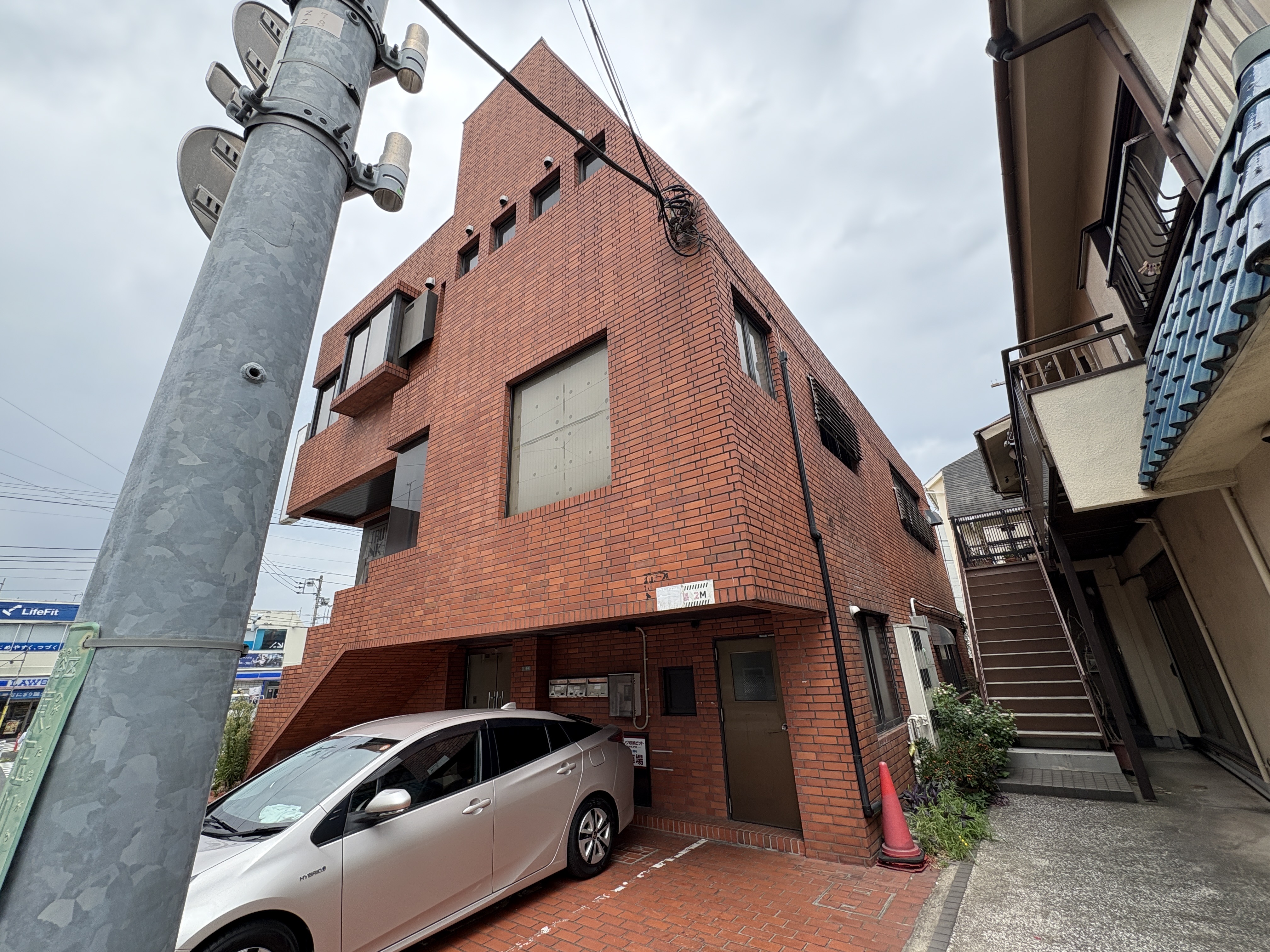
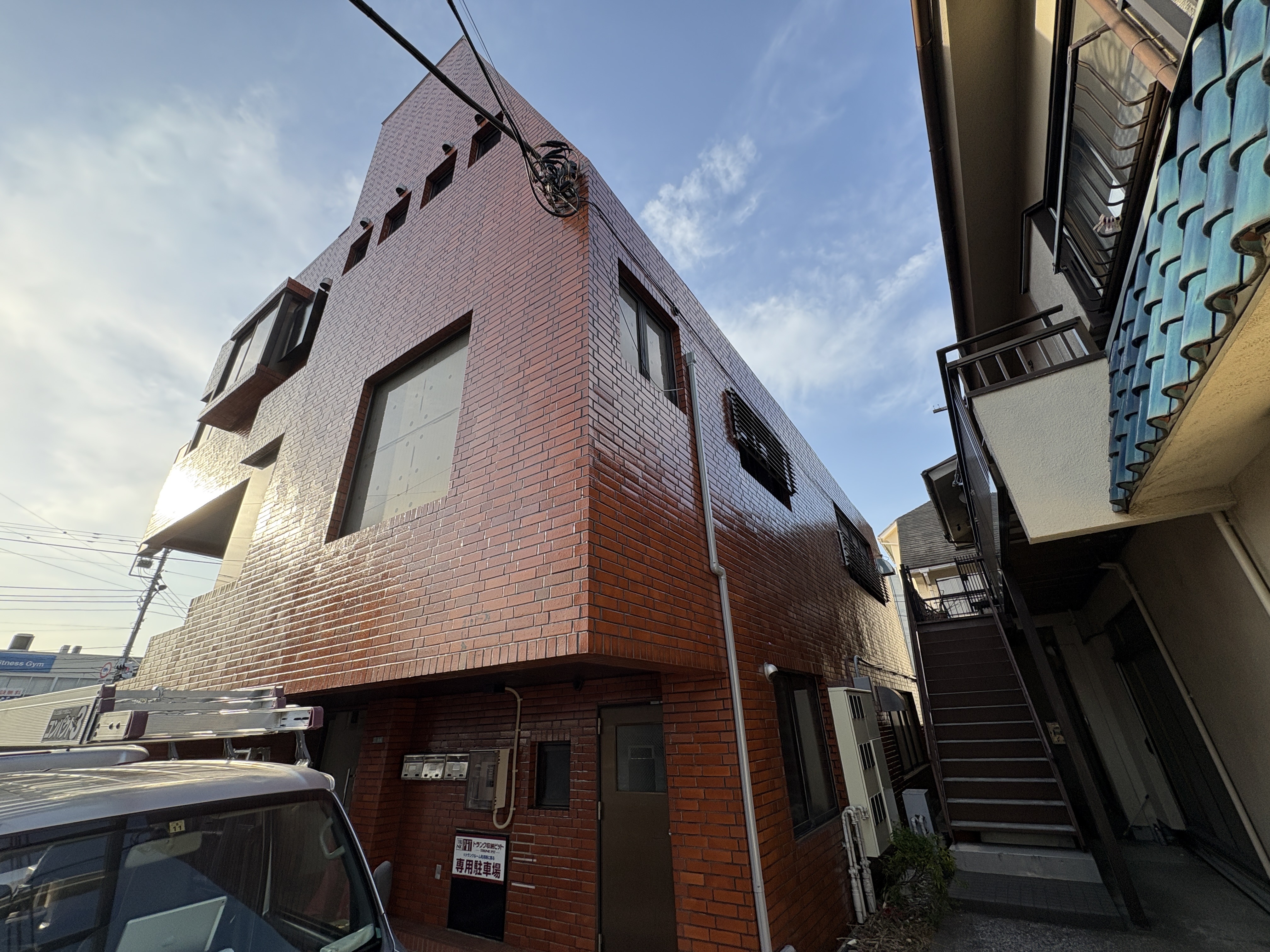
| Work Details | Partial tile replacement / Painting of ancillary parts (pipes, water cut-off) / Roof waterproofing work (urethane waterproofing) / Exterior wall tile waterproofing (Seven S) / Sealing work around sashes / Repair of exterior wall tile mortar joints / Ivy removal |
|---|---|
| New Materials Used | Exterior wall tiles: Kunishiro Tiles / Painting of ancillary parts: Radical silicone paint / Roof waterproofing: High-strength urethane (Sarasene A) / Exterior wall tile waterproofing: Seven S |
| Price Range | 4,000,000 to 4,100,000 yen |
| Construction Period | 45 days |
| Location | Not disclosed |
| Background to the Work | Due to rain leaks occurring from several areas such as the exterior wall and roof, we proposed waterproofing for the entire exterior wall. Seven S is a clear waterproofing material for tile walls, and while it is somewhat expensive, it offers high waterproofing performance, making it recommended for cases where rain leaks are occurring from several points on the exterior wall. |
Customer Feedback
Flow from On-Site Survey to Completion of Work
From the initial inquiry to the completion of the work and aftercare, a single representative will consistently handle your case. For management associations, a resolution at the general meeting is required, so starting the process 1 to 1.5 years before the desired start date allows for a smoother progression.
- Inquiry (Free) Please contact us via phone, form, or LINE. If you have estimates from other companies, just presenting those is also fine.
- On-site Investigation & Building Diagnosis (Free) We will conduct a survey of the exterior walls, check for cracks, sealing, and waterproof layers, and if necessary, investigate the rooftop, high places, and leak areas using drones or thermal imaging. For properties in Chofu City, we will also check the road width, distance from neighboring properties, delivery routes, parking, and drainage conditions of rooftops and balconies.
- Submission of Investigation Report & Estimate We will provide a deterioration diagnosis report with photos and an estimate detailing quantities, methods, and materials for each work item. Proposals for multiple plans are also possible.
- Plan Decision & Contract Confirm colors using color simulations, paint boards, and trial painting. For management associations, we will assist in preparing materials for the general meeting. In Chofu City, some buildings may require notifications for landscape plans or district plans, so we will explain the procedures and considerations for color schemes as well.
- Notification to Residents & Neighbors We will distribute construction notices, visit neighbors for greetings, and set up a bulletin board at the entrance (with a schedule and laundry information). If temporary relocation of parking is necessary, adjustments will be made at this stage.
- Installation of Temporary Scaffolding & Various Works Our in-house scaffolding team will set up the scaffolding, followed by high-pressure washing → substrate repair → sealing → exterior wall painting & tile repair → waterproofing → iron parts & ancillary work in that order. A supervisor will inspect each process and take construction photos.
- Completion Inspection, Scaffolding Dismantling & Handover We will confirm the finish in the presence of the customer and provide construction photos, a report on the paints used, and a warranty certificate.
- Aftercare We will send out annual DM notifications, and inspections can be conducted every year. Simple repairs such as partial sealing are provided free of charge.
Resident Communication, Approval for Additional Work, Inspection Reports
Equally important as the construction itself is “when, what, and with what materials we report”. At Kakeru Koumuten, we provide materials and reports in the following four scenarios.
| Scenario | Materials Provided / Actions Taken |
|---|---|
| Before Construction Building Diagnosis |
We will provide a deterioration diagnosis report with photos. This document summarizes the deteriorated areas and the basis for the proposed scope of work. |
| Before Construction to During Construction Notification to Residents & Neighbors |
We will distribute construction notices, visit neighbors for greetings, and provide information on the schedule and laundry through the entrance bulletin board. |
| During Construction Approval for Additional Work |
For deterioration discovered after scaffolding is erected, we will present photos along with quantities and costs, and proceed with construction after obtaining approval. |
| During Construction to Completion Inspection Report |
A supervisor will inspect each process and take construction photos. Upon completion, we will confirm the finish in the presence of the customer and provide construction photos, a report on the paints used, and a warranty certificate. |
* For management associations, it is smooth to decide in advance who will approve additional work (such as the chairman or repair committee) and the estimated amount that requires approval before the contract.
What Will Life Be Like During Construction? Impact on Residents
Large-scale repairs are principally carried out while residents remain in their homes. However, there will be restrictions on daily life while scaffolding is in place. Most troubles can be prevented by providing advance notice, so Kakeru Koumuten Co., Ltd. thoroughly explains and posts information before construction begins.
| Impacts | What to Expect / Our Response |
|---|---|
| Laundry | On days of high-pressure washing, painting, and waterproofing, outdoor drying is not possible. We will inform you via bulletin boards and each unit’s mailbox about “which side will be worked on today” and will ensure as many days as possible for drying. |
| Window Opening and Closing | In addition to washing and painting days, there may be times when windows cannot be opened due to protective measures, drying, and waterproofing work. We will provide information for each process, so please check the postings and notifications. We will schedule the work to avoid continuous closures. |
| Balcony | During floor waterproofing and handrail painting, we ask for the temporary relocation of personal items, plants, and air conditioning outdoor units. The timing will be notified in advance for each unit. |
| Noise and Odor | The period of substrate repairs (breaking and drilling) will produce the most noise. Working hours are generally from 8 AM to 5 PM, and we will accommodate requests such as refraining from work on Sundays and holidays. Low-odor paint options are also available. |
| Security and Privacy | Scaffolding can become a potential entry point. We can take measures such as blocking sightlines with mesh sheets and installing locks and sensor lights on the scaffolding’s access stairs at night. We also ensure proper etiquette training for all entrants. |
| Parking | Vehicles on the side where scaffolding will be erected will need to be temporarily relocated. Since securing a new parking spot may take time, we will begin securing a new location 2 to 3 months before construction starts. |
| Pets, Small Children, and Working from Home | If you have sensitivities to noise, please inform us in advance, and we may be able to adjust the work schedule accordingly. Please feel free to let us know. |
| Rented Rooms | We can assist property owners in creating notification documents for tenants. If you are concerned about the impact of construction on occupancy rates, we can also suggest a color simulation for an image change. |
How to Choose a Large-Scale Repair Contractor and Ordering Method
There are many large-scale repair contractors that cover Chofu City, and you may be unsure which one to choose. When requesting renovations for apartments, condominiums, or buildings, please check the following four points.
● Extensive experience in large-scale repairs
● Confirm the presence of warranties and aftercare services
● Obtain estimates from multiple contractors (at least 3 companies)
● Confirm whether they are self-managed
Extensive Experience in Large-Scale Repairs
Large-scale repair contractors often have websites that showcase their exterior renovation achievements. If they provide detailed explanations of repair work with photos, it can give you peace of mind as a reference when you actually request work.
Using Google and review sites to evaluate large-scale repair contractors can also be effective! Be cautious if there are many negative reviews. If there are few reviews, also check their construction achievements, explanation content, and management systems.
Large-scale repair work involves not only the construction itself but also the potential for troubles with residents and nearby neighbors. Therefore, it is necessary to post updates on the progress of the work and information about laundry on bulletin boards to prevent issues before they arise. Kakeru Koumuten Co., Ltd. specializes in exterior work, and we receive many requests for exterior renovations of apartments and condominiums.
Check for Warranty and Aftercare Services
When choosing a large-scale repair company, it is important to check for warranties. If any issues such as leaks occur after the work is completed, having a leak warranty from the contractor ensures that repairs can be made at no cost, providing peace of mind! Companies that offer warranty periods demonstrate confidence in their work, making it a key criterion for selecting a contractor.
Warranty periods vary by contractor and the nature of the work, but typically range from 1 to 10 years. Emergency repairs or partial repairs often do not come with a leak warranty. Some contractors also provide aftercare services separate from warranties, so be sure to check for warranties and aftercare services.
Kakeru Koumuten Co., Ltd. sends out annual direct mail for aftercare maintenance, allowing for yearly inspections. We offer free support for simple repairs such as partial sealing.
Obtain Estimates from Multiple Contractors (at least 3 companies)
When requesting large-scale repairs, be sure to obtain estimates from multiple contractors. It is important to get estimates from at least 3 companies and compare their quotes and reports! Even for the same work, costs can vary between contractors, and warranties and aftercare services may differ. Additionally, obtaining multiple estimates makes price negotiations easier.
When comparing estimates, consider not only the cost but also the “items in the estimate,” “methods and materials for substrate repairs and exterior wall painting,” and “confirmation of the process” to make a detailed judgment! If the quality of auxiliary materials is low or if steps are skipped, costs can be reduced, so avoid making decisions based solely on price. Especially since substrate repair work is often not visible from the outside, ensure that the repair methods are suitable for the condition of the substrate!
Check These Points on the Estimate (Checklist)
| Confirmation Items | Points to Consider |
|---|---|
| Is there an excessive use of “one set” notation? | Are the quantities and unit prices clearly stated? With “Exterior Wall Repair One Set,” comparisons and verifications are not possible. |
| Do the quantities match the actual measurements? | Are there any quantities recorded that are far from the drawings or actual measurements? This is the area where inflation is most likely to occur. |
| Proportion of miscellaneous expenses | Details and proportions of site management costs, general management costs, and statutory welfare costs. According to the Ministry of Land, Infrastructure, Transport and Tourism’s survey for the fiscal year 2021, the average is about 10% of the construction cost (excluding common temporary costs), but it varies depending on the scale and conditions of the building, so there is no uniform standard. |
| Are the names of materials written? | Are the manufacturer names, product names, grades, and number of coats for paints and waterproofing materials listed? |
| Treatment of quantities for substrate repairs | This is an item that cannot be accurately measured until scaffolding is erected. It is crucial to specify whether it is “estimated quantity” or “actual quantity settlement,” and the agreements for increases or decreases. |
| Warranty and after-inspection | Warranty period for each construction, frequency of inspections, and scope of free support. |
| Company backing | Types of construction industry licenses, track record of similar scale and structure, presence of qualified personnel. |
Confirm if it is managed in-house
Large-scale repair work includes various tasks such as “substrate repair work,” “exterior wall painting,” “waterproofing work,” and “pipe replacement,” and the plan contents will change based on the actual deterioration state and customer preferences.
In cases where a contractor completely outsources to subcontractors, they may lack knowledge and experience, leading to proposals for repairs in irrelevant areas or unnecessary work. If you request a subcontractor after investigation, it may incur additional time and costs. By having knowledge and experience and managing in-house, responsible construction can be carried out at a reduced cost.
Additionally, contractors that outsource may also be slow to respond in case of any troubles during construction. It is safer to avoid having a company that has not actually met with the customer manage the construction. Kakeru Koumuten performs everything from temporary scaffolding installation to exterior wall painting and waterproofing work in-house, managed by knowledgeable and experienced personnel!
There are three ordering methods. The choice affects the approach.
Especially for management associations, it is necessary to decide “how to request” before “which company to hire.” The main ordering methods are the following three.
| Method | Process | Advantages | Disadvantages |
|---|---|---|---|
| Responsibility Construction Method | The construction company handles everything from investigation, design, construction to management | No additional fees for design consulting (investigation and design costs may be included in the construction costs) / Single point of contact reduces the burden on the management association / Clear accountability / May shorten the period until ordering | Specifications can easily be left to the construction company, making it difficult to compare side by side / Third-party checks are hard to implement, requiring the management association to verify price, specifications, and construction status |
| Design Supervision Method | A design office or consultant conducts the investigation and design, while a different company handles the construction | Allows comparison of construction companies under the same conditions / Independent supervision during construction | Consulting fees are required separately / Caution is needed regarding conflicts of interest and collusion risks / Tends to prolong the duration |
| Management Company Prime Contract Method | The management company acts as the prime contractor, with subcontractors performing the construction | Easy coordination with daily management / Minimal effort required from the management association | Intermediate margins can make it more expensive / Competition principles may not be effective |
Collusion and Improper Consulting Issues in Large-Scale Renovations and Self-Defense Measures
Latest 2026 In the large-scale renovation industry, inappropriate orders linked between design consultants and construction companies have been a long-standing issue. The Ministry of Land, Infrastructure, Transport and Tourism issued warnings and notifications to management associations in January 2017 and April 2023, and on September 28, 2026, the Japan Fair Trade Commission announced that it had issued exclusion orders to 38 companies and payment orders for a total of 1.63788 billion yen to 37 companies regarding large-scale renovation work commissioned by condominium management associations to design consulting firms in the Kanto region (two design consulting firms were also subject to exclusion orders).
※This content is based on the announcement by the Japan Fair Trade Commission (September 28, 2026).
Three Typical Schemes
① Dummy Estimates
A predetermined company is chosen to receive the order, while other companies only submit formal high estimates, creating a “fixed race.” It appears to the management association that “proper competitive estimates were obtained.”
② Collusion with Design Supervisors
While consultants contract at extremely low design supervision fees, they receive kickbacks from the high construction costs of partner construction companies. Design supervision fees that are too low are a warning sign.
③ Back Margin
A certain percentage of the contract amount is kicked back, and that amount is added to the construction costs as an expense. As a result, the management association ends up paying extra.
Source: Yokohama City “What is collusion in large-scale repair work for condominiums?” / Ministry of Land, Infrastructure, Transport and Tourism “On the proper ordering of large-scale repair work for condominiums” (Notification dated April 3, Reiwa 5, PDF)
Self-Defense Measures for Management Associations
- Obtain independent estimates from multiple companies
- Consult with neutral third parties such as condominium management consultants or architects
- Document the vendor selection process in meeting minutes to ensure transparency
- Confirm the reasons for unusually low design supervision fees with the consultant
- Include a penalty clause in the contract for cases of collusion being discovered
- Avoid concentrating information with a single consultant and have the management association verify specifications themselves
Contact Points for Third-Party Consultation
If you are unsure about reading estimates or how to proceed with vendor selection, consulting with a third party separate from the construction company can be effective. The main contact points available for management associations in Chofu City are as follows.
| Contact Point | Details |
|---|---|
| Chofu City Urban Development Department Housing Division | Phone 042-481-7545. This is the contact point for management plan certification, dispatch of management advisors (free), and reporting management status. As far as we can confirm, the city does not offer services for bidding agency or ordering support for large-scale repairs. |
| Chofu City Specialized Consultation | “Real Estate Transaction Consultation” is available every Friday from 1 PM to 4 PM (30 minutes per session, limited to 6 people), and reservations can be made through the Citizen Consultation Division (Phone 042-481-7032). This service is for those living, working, or studying in Chofu City regarding land and building sales, apartment rental contracts, etc. It is not specified whether condominium management or large-scale repairs are included. There are also specialized consultations (reservation required) such as legal consultations (Page updated on August 20, Reiwa 8). |
| Tokyo Metropolitan Comprehensive Consultation Desk for Condominiums | Phone 03-6427-4900 (free). This service addresses consultations including preparations for large-scale repairs. For inquiries regarding ordering large-scale repairs, please contact the Condominium Division (Phone 03-5320-5004). |
| Smile Dial (Housing Renovation and Dispute Resolution Support Center) | Phone 03-3556-5147 (Monday to Friday 10 AM to 5 PM, excluding holidays and year-end/New Year). This service addresses consultations regarding ordering large-scale repairs, and the estimate check service is free. |
| Condominium Management Center | Phone 03-3222-1519 (Monday to Friday 9:30 AM to 5 PM, excluding holidays and year-end/New Year). This service addresses consultations regarding building and facility maintenance. For inquiries regarding the management plan certification support system, please call 03-6261-1274. |
| Condominium Management Plan Certification System Consultation Dial | Phone 03-5801-0858. A condominium management consultant will answer questions regarding certification standards and application procedures. |
Source: Chofu City “Condominium Management Plan Certification System”/Chofu City “Real Estate Transaction Consultation”/Chofu City “Special Consultation (Reservation Required)”/Tokyo Metropolitan Government “Comprehensive Consultation Desk for Condominium Sales”/Tokyo Metropolitan Government “Consultation Desk for Large-Scale Repair Work Orders”/Ministry of Land, Infrastructure, Transport and Tourism “Consultation Desk for Large-Scale Repair Work Orders”/Condominium Management Plan Certification System Consultation Dial
Chofu City Large-Scale Repair Frequently Asked Questions
- How much does large-scale repair in Chofu City cost?
- For condominiums, according to the Ministry of Land, Infrastructure, Transport and Tourism’s survey for the fiscal year 2021, about 70% fall within the range of 750,000 to 1,500,000 yen (excluding consumption tax and common temporary construction costs), with the most common range being 1,000,000 to 1,250,000 yen. Based on our company’s construction records, for a two-story wooden apartment, the estimate is between 2,000,000 and 4,000,000 yen; for a three-story steel or RC apartment, between 4,000,000 and 9,000,000 yen; and for small condominiums or mixed-use buildings, between 5,000,000 and 15,000,000 yen. The costs vary depending on the condition of the substrate and whether waterproofing and roofing work is required, so we will provide an estimate through a free on-site survey.
- How often should large-scale repairs be conducted?
- Generally, a cycle of 12 to 15 years is recommended, and the actual cycle is most commonly 13 years according to the Ministry of Land, Infrastructure, Transport and Tourism’s survey, with about 70% falling within the 12 to 15-year range. However, the decision should be based on the condition of deterioration rather than just the number of years. If deterioration of sealing, tile lifting, or breaks in the waterproof layer are observed, it is better to repair without waiting for the cycle, as this can ultimately reduce costs. We will assess the age and condition of your building during the on-site survey to make a judgment.
- How long does the construction period take? Can residents stay during the work?
- For apartments, the estimate is 3 weeks to 2 months; for small condominiums or buildings, 1.5 to 3 months; and for condominiums with over 50 units, about 4 to 6 months. Residents can stay during the construction. However, while scaffolding is in place, there may be restrictions on drying laundry outside and opening windows, so we thoroughly ensure minimal impact on daily life by distributing pre-construction notices, providing information on the schedule and laundry through bulletin boards, and strictly adhering to working hours.
- How long should I expect from planning to completion of the construction?
- For management associations, it typically takes about 1 to 1.5 years for the establishment of the repair committee, building diagnosis, selection of contractors, and resolution at the general meeting, followed by 3 to 6 months for the construction. Overall, it is advisable to plan for about 2 years to proceed comfortably. If you are using subsidies or tax incentives, please also factor in the time required to obtain management plan certification (procedures for municipal certification).
- Are there any subsidies available for large-scale repairs in Chofu City?
- As far as we can confirm, there are no subsidies for large-scale repair work for condominiums in Chofu City or Tokyo. Potential options include the Tokyo Metropolitan Government’s condominium improvement construction subsidy (interest subsidies for management associations utilizing loans from the Japan Housing Finance Agency), the Tokyo “Stay in Tokyo Condominium” subsidy, reductions in fixed asset tax (one-third in Chofu City), free dispatch of municipal management advisors, and projects promoting seismic retrofitting for old earthquake-resistant condominiums. The city’s energy-saving equipment installation subsidies are for “household use,” and it has not been confirmed whether they apply to common areas of management associations. If the work includes windows and insulation, there is also a possibility of being eligible for “Advanced Window Renovation 2026” and “Future Eco Housing 2026.” The application timing and applicants vary by program, so please check the eligibility conditions and application procedures for each program before contracting and starting construction.
- I heard that fixed asset tax can be reduced through large-scale repairs. Is that true?
- If the requirements are met, it is true. Under the Long-Term Condominium Promotion Tax System, if a condominium that meets the criteria of being over 20 years old and having more than 10 units conducts large-scale repairs that contribute to its longevity (including exterior painting, floor waterproofing, and roof waterproofing), the fixed asset tax for the building will be reduced in the following year. The reduction rate in Chofu City is one-third, applicable to tax amounts for up to 100 square meters per unit (in the 23 wards of Tokyo, it is one-half). The eligible work must be completed between April 1, 2023, and March 31, 2027, and a declaration must be made to the Chofu City Asset Tax Division (phone 042-481-7208・7209) within three months of completion. Prior contact with the Asset Tax Division is recommended. For certified management plan condominiums, it is also a requirement to raise the repair reserve fund to the certification standard, which takes time to prepare, so it is advisable to start the process more than a year before the construction.
- Are there any changes to subsidies starting from the fiscal year 2026?
- There is. The national “Child-Rearing Green Housing Support Project” has been abolished and reorganized into the successor “Mirai Eco Housing 2026 Project.” Management associations and management corporations can also become joint contractors, allowing for insulation renovations in common areas. Additionally, the “Long-Term Excellent Housing Renovation Promotion Project” will end in the fiscal year 2025, and there will be no implementation in fiscal year 2026. The “Advanced Window Renovation 2026 Project” has started accepting bulk applications for apartment buildings from May 29, 2026 (the application process will be handled by registered contractors). Please be careful not to establish financial plans based on outdated information.
- What should I do if the repair reserve fund is insufficient?
- There are mainly four options: ① Postpone low-urgency work based on deterioration diagnosis to the next time, ② Review the scope and specifications of the work, ③ Check for support systems such as subsidies, ④ Consider increasing the repair reserve fund or financing from the Japan Housing Finance Agency. The agency’s renovation loans for common areas of condominiums do not require collateral, and interest rates can be reduced by up to 0.6% per year by obtaining management plan certification and implementing energy-saving and seismic work. Please note that postponing waterproofing and tile peeling measures often ends up being more expensive, so please consult us for decisions on separation.
- Can scaffolding be set up on narrow sites or buildings close to neighboring properties?
- Yes, it can. There are sites in Chofu City with limited road widths and buildings close to neighboring properties. Kakeru Koumuten Co., Ltd. owns its own scaffolding materials and has its own scaffolding team, allowing us to plan the delivery route and scaffolding layout after confirming the site. This is a part where additional costs can easily arise after seeing the site, so it is important to confirm the delivery route during the estimation stage.
- What happens to the residents’ parking during construction?
- Vehicles on the side where scaffolding will be erected will need to be temporarily moved. In buildings where there is not enough parking space on the premises, it may take time to secure a relocation destination. Kakeru Koumuten Co., Ltd. will coordinate with you, including checking the availability of nearby parking, starting 2 to 3 months before construction begins.
- Can I freely decide the color of the exterior walls?
- Chofu City is a landscape administrative body, and the entire city is a landscape planning area. The city’s page states that condominiums built before the formulation of the landscape plan (February 2014) are also included, and changes to the appearance or color (including changes to the same color) may require notification. Notifications must be submitted 30 days before starting work, and the contact point is the Urban Development Department, City Planning Promotion Division (phone 042-481-7442). Since the city page does not specify the scale at which large-scale repairs become subject to this, it is advised to inquire early during the consideration stage. In areas designated by district planning, a different notification may be required (same division phone 042-481-7402・7444・7453). We will also investigate this during our survey. Sharing a color simulation to visualize the completed image can facilitate discussions.
- Why is the north-facing exterior wall particularly covered in moss and algae?
- The north side receives less sunlight throughout the day, and when shadows from trees or neighboring buildings overlap, moisture can accumulate, making it easier for algae, moss, and mold to thrive. This is more likely to occur in locations close to trees. By thoroughly removing it with high-pressure washing and choosing paint with anti-algae and anti-mold properties, recurrence can be suppressed. Additionally, we recommend checking for blockages in roof drains and gutters caused by fallen leaves, as these can often lead to puddles on the roof and leaks.
- Which method should I choose: responsibility construction method or design supervision method?
- In smaller buildings, the burden of consulting fees tends to be heavier, so we believe that the responsibility construction method is often more suitable for small and medium-sized buildings. The design supervision method allows for comparison of construction companies under the same conditions since a third party creates the specifications; however, it incurs separate consulting fees and requires caution regarding conflicts of interest and collusion risks. Even with the responsibility construction method, verifying price, specifications, and construction status is essential. Kakeru Koumuten Co., Ltd. provides estimates that clearly state quantities, methods, and materials for each construction item, allowing you to compare with other companies on the same level.
- How can I detect collusion in large-scale repairs?
- There are three typical tactics. ① Pre-determining the contractor and having other companies submit only formal high estimates, known as “dummy estimates,” ② A consultant contracts at an extremely low design supervision fee and receives kickbacks from partner companies, indicating collusion, ③ Adding a portion of the contract amount as a back margin to the construction costs. Countermeasures include obtaining independent estimates, consulting a neutral third party, documenting the selection process in minutes, and including penalty clauses in contracts.
- How many companies should I get estimates from?
- 最低3社をおすすめします。多すぎると比較しきれず、少なすぎると競争が働きません。大切なのは社数よりも「同じ土俵を作ってから比べること」です。共通の仕様書や数量表を作って同一条件で依頼し、「一式」表記を認めず内訳明細を必須にすると、金額差が範囲の違いなのか単価の違いなのかがはっきりします。
- What is the difference if we have our own scaffolding?
- In large-scale repair projects, temporary construction accounts for about 20% of the total cost (according to the Ministry of Land, Infrastructure, Transport and Tourism’s fiscal year 2021 survey). By not outsourcing scaffolding work, we can easily control costs in this area, and our in-house scaffolding team can flexibly respond to sudden changes in the schedule or additional work. Kakeru Koumuten Co., Ltd. owns scaffolding materials for approximately 100 single-family homes and plans according to the site, even in areas with limited road width.
- I’m in the middle of getting multiple estimates; can I just have a look at the estimate?
- Of course, that’s possible. If you bring in estimates from other companies, we will check for free whether the items, quantities, construction methods, and materials are appropriate and provide you with an estimate under the same conditions. We welcome multiple estimates.
- Can I request just emergency repairs for a leak?
- Yes. As a preliminary step before large-scale repairs, we also accept requests for emergency repairs or partial repairs for leaks. We will identify the cause using thermal imaging and drones and propose the minimum necessary repairs.
- Can you handle roofing or exterior wall materials that contain asbestos?
- Yes, we can. We have qualified personnel who are certified as asbestos work supervisors and building material inspectors for asbestos-containing materials. We handle everything from the legally mandated preliminary surveys to the cover method and removal of asbestos-containing roofing materials. We have not confirmed any municipal subsidies for asbestos surveys and removals in Chofu City. The availability of subsidies may change from year to year, so please check with the municipal office. We will also provide guidance based on the survey results.
- What happens if large-scale repairs are not done?
- There are risks such as personal injury from falling exterior wall tiles, structural deterioration due to corrosion of rebar, leaks, and a decrease in asset value. Furthermore, for buildings subject to regular reporting under Article 12 of the Building Standards Act, investigations through full probing and other methods are required under certain conditions, such as when more than 10 years have passed since completion or exterior wall renovations for tiled or mortar-finished walls. The scale of the joint housing that is subject to this and the timing of the reports can be confirmed in the “List of Buildings and Equipment Subject to Regular Reporting and Reporting Timing” published by Tokyo Metropolitan Government. The applicable uses and scales may be revised, so please check with the Chofu City Building Guidance Division (phone 042-481-7517) for the latest information. Even if not subject to statutory investigations, regular inspections and maintenance are essential, so please consult us if you are unsure about your judgment.
- How much does large-scale repair for an apartment (about 10 units) cost?
- For a wooden two-story building with 6 to 10 units, the estimate is around 2 to 4 million yen, and for a three-story steel or RC building with 10 to 20 units, it is around 4 to 9 million yen based on our company’s track record (including scaffolding, substrate repairs, exterior wall painting, sealing, and waterproofing). It is common to carry out repairs for apartments every 10 to 15 years. For owners, there is an increasing trend to change the appearance with color simulations during repairs to improve occupancy rates.
If you are looking for a large-scale repair contractor in Chofu City, contact Kakeru Koumuten Co., Ltd.
Our company handles many exterior wall renovations and large-scale repairs for condominiums and apartments in Chofu City. We are happy to assist not only with large-scale repair work but also with partial repairs and leak repairs. “I want it to last long with one renovation” “I want to keep costs down as much as possible” “I want to improve insulation performance because the indoors are hot” We will propose the best solutions for your specific requests and future repair plans.
From temporary scaffolding work to roofing and exterior wall painting, all work is performed by our own team. We are confident that we will not lose in terms of cost, quality, and planning compared to other companies, so we welcome multiple estimates!
On-site surveys, estimates, and color simulations are all free of charge
Please feel free to consult us via the inquiry form, phone, or LINE.
It is also fine to just present estimates from other companies.
Large-Scale Repair Work Service Area
Kakeru Koumuten Co., Ltd. accepts requests throughout Kanagawa Prefecture and Tokyo.
Kamikeyu / Iruma Town / Kamiishihara / Kamifutada Town / Kikunodai / Kokuryo Town / Kojima Town / Sasu Town / Shibasaki / Shimoishihara / Shimofutada Town / Jindaiji Kitamachi / Jindaiji Higashimachi / Jindaiji Minamimachi / Jindaiji Motomachi / Sengawa Town / Someji / Tamagawa / Chofu Kaoka / Tobitakyu / Nishi Tsutsuji Gaoka / Nishi Town / Nomizu / Higashi Tsutsuji Gaoka / Fujimimachi / Fuda / Midorigaoka / Yakumodai / Wakabacho
・When should large-scale renovations be carried out? An explanation of the optimal timing and the risks of postponement!
・Estimates are essential when conducting large-scale renovations! Key comparison points and precautions!
・5 common troubles in large-scale renovations of condominiums! A thorough explanation of causes and prevention measures!
・What is waterproofing work in large-scale renovations? A thorough explanation of its role, signs of deterioration, and precautions!
・Not enough funds for large-scale renovations… An explanation of how to deal with funding shortages and preparations you can do right now!
・What is substrate repair, which is important in large-scale renovations? A thorough explanation of its necessity, signs of deterioration, and types of work!
・What is sealing work in large-scale renovations? An introduction to its role, methods, and tips for avoiding mistakes!
・What is tile repair, which is important in large-scale renovations? An explanation of signs of deterioration, types of work, and cost averages!
・What is exterior wall painting, which is important in large-scale renovations? A thorough explanation of its necessity, signs of deterioration, and cost averages!
・For exterior renovations in Chofu City, Tokyo, trust Kakeru Koumuten!
・For roof renovations in Chofu City, Tokyo, trust Kakeru Koumuten!
・For exterior wall painting in Chofu City, Tokyo, trust Kakeru Koumuten!
We welcome inquiries via LINE as well◎

We are also regularly updating our Instagram◎ Please follow us!
contact Kakeru Koumuten Co., Ltd.
Kakeru Koumuten is a young company whose team is, on average, in their late twenties, but our skills are second to none.
Our greatest strength is that we handle scaffolding, roofing and painting entirely in-house. In an industry where these tasks are usually divided among contractors, our complete service simplifies project management and helps keep costs down. Above all, if a problem arises, we respond promptly.
We proudly describe ourselves as the youngest and most helpful renovation company in Kanagawa!